The original blog of writer Graham Milne – content published from 2011-2017

Graham's Crackers

    • Memo to Rand Paul: Free Health Care is a Moral Imperative

      May 25th, 2015

      No picture included today because I’m not having that dead weasel on his head clutter my pretty blog space.

      A statement made a few years ago by Kentucky Senator Rand Paul, now running for the Republican nomination for President, has begun circulating again, presumably so anyone who might be inclined in supporting his 2016 candidacy might be reminded that the interests he is looking out for do not align in any way with what would actually be best for the overwhelming majority of the country.  Here it is.  Try not to vomit.

      “With regard to the idea of whether or not you have a right to healthcare, you have to realize what that implies… I’m a physician, that means you have a right to come to my house and conscript me, it means you believe in slavery.  It means you’re going to enslave not only me, but the janitor at my hospital, the assistants, the nurses… There’s an implied threat of force, do you have a right to beat down my door with the police, escort me away, and force me to take care of you?  That’s ultimately what the right to free healthcare would be.” – Sen. Rand Paul (R-Ky.)

      How does one even begin to deconstruct a statement of such careless, asinine, take-my-ball-and-go-home nincompoopery?  The slavery allegory, deserving a Godwin’s Law of its own, is especially offensive coming from a son of privilege with a Southern accent.  Dwelling on the image, one imagines a ludicrous scene of an army of sick people coughing and hacking as they (weakly) kick in poor gosh-darn put-upon Dr. Paul’s door and demand at the point of a crutch that he hand over the antibiotics.  If there weren’t so many people suffering because they can’t afford to even get into the same room with the elusive golden chalice that is American health care, it would be worthy of a laugh.  If I didn’t know someone personally who was going through a rough time because her access to care is limited by her financial means, I might cluck my tongue as I look down on high from my enviable Canadian system.  But no, Rand Paul, you’ve pissed me right off, and your apparent unfamiliarity with the Hippocratic Oath alone should be cause for you to lose your medical license (the status of which I understand is dubious at best).

      Rand Paul’s problem is that fundamentally, he does not give a rat’s furry arse about anyone but himself (the opposite of the concept of “public servant.”)  He seems to genuinely believe that having to share space with other people unlike himself is an irritant.  I have always found libertarianism as a philosophy to be a giant crock of donkey doo-doo, given that aside from those guys who proclaim their own kingdoms on ranches in the middle of nowhere and usually find their utopias promptly ended by the FBI, no libertarian truly wants to live free of all government.  I mean, surely Rand Paul isn’t in favor of having to pave his own streets, treat his own drinking water and dispose of his own sewage when he has to take a dump, right?  And when Kim Jong-Un finally sends his crack troops to invade Lexington, does Rand want to be out on the front lines at the head of a hastily cobbled militia?  No.  Libertarians like Rand Paul are for all the conveniences of government, they just don’t want to have to deign to pay for them, or obey the laws that they personally do not like.  When it comes to the idea of socialized medicine, for Rand Paul (who is rich, of course), the idea that he might have to sacrifice a few of his pennies so that a single mom working three jobs doesn’t have to sell her furniture when her child develops pneumonia, is toxic anathema to be fought to his dying breath.  Obviously, to him, she just hasn’t worked hard enough to be able to have her child breathe properly, and doesn’t deserve the sparsest notion of help from the rest of her fellow citizens.

      “Are there no prisons?  Are there no workhouses?”  Even Dickens would have found Rand Paul’s point of view hyperbolically cruel.

      Choosing to live in civilization instead of out on the fringes is by its nature accepting a social compact with our immediate neighbours and our countrymen as a whole.  We come to accept that there are certain things we are not permitted to do in exchange for other privileges.  I’m okay with the fact that I’m not allowed to lounge bare-ass naked in the middle of the street in front of my house if it means that my weird neighbour across the way can’t do it either.  We also accept that there are certain public goods and services to which we must each contribute a modest share.  I’m also totally okay with the tiny percentage of my total property tax bill that ensures that my garbage and recycling is collected each week without me having to set up an individual account with and survive three credit reference checks by the ABC Trash Removal Company, and my same neighbour’s potential inability to afford it won’t mean I have to fight off the gulls picking away at the stench wafting from the mountain of used diapers and doggie waste bags piling up on his lawn every time I step outside.  The Supreme Court Justice Oliver Wendell Holmes, a Republican, famously said that “taxes are the price we pay for a civilized society.”  The notion that free health care is not included as one of the core tenets of that civilized society is morally reprehensible.  That a significant segment of the American population fights as hard as it does to ensure the system remains in its crushing, inequitable state is a testament to the brainwashing power of significantly monied interests controlling the message – look no further than dirt poor red staters screaming “socialism!” when the Affordable Care Act (i.e. Obamacare) is mentioned in casual conversation.

      Since there are copious misconceptions about what socialized medicine entails (furthered naturally by those same monied interests noted above), it is probably incumbent on me as a Canadian to dispel them to my American audience by providing a few examples from personal experience.  Here’s how it works when you get sick in the province of Ontario, where I reside:  you call your doctor and make an appointment.  If the doctor can’t see you soon enough for your liking, you can go to a walk-in clinic or, if it’s much more serious, the emergency room.  When you arrive you hand the receptionist a government-issued Health Card, which has your provincial insurance number on it.  That’s it.  You never get a bill, no bureaucratic middleman (or Sarah Palin boogeyman “death panel”) evaluates your claim, nothing.  Your medical records are a confidential matter for you and your doctor.  Nobody else.  If you’re required to be admitted to hospital overnight or longer, you might pay extra (on a willing basis, it’s not mandatory) if you want an upgrade to a semi-private or private room, or if you want additional services like a TV or a phone at your bedside.  But you will never be charged for your health care.  The government pays for it.  And Canadian doctors are not exactly working for slave wages, either.  A 2012 survey found the average family physician making $328,000 a year in Canada.  Even in our system which Rand Paul likens to slavery, no one expects doctors to work for free, and they are most certainly not.

      About fifteen years ago I was hospitalized for a collapsed lung.  I was not working at the time so I had no health benefits or insurance.  The cost for my week-long stay was $12, for said phone.  I wasn’t charged for the painkillers or the sedatives or the tube they had to drill into my side or the electric pump draining the blood and pus from my pleural cavity.  In the likes of Rand Paul’s mind, I should have just died of it and/or gone bankrupt to pay for getting better, instead of burdening millionaires with an extra few dollars on their taxes.  Would that have improved life for everyone else?  Would it be better that my wife never would have met me, or that my adopted son would never have known his father?

      Screw you, Rand Paul.  Screw your privileged pelvis to a rusty cake stand.

      The Canadian health care system is not perfect, and unfortunately important things like eye and chiropractic care that were covered when my parents were alive have been stripped away as the years have gone on and voters have demanded lower and lower taxes.  Dental care has never been covered, which is just stupid as the last time I checked, teeth were part of the body and rotten teeth can impact your entire system.  But no Canadian worries that if they ever have a heart attack, the paramedics will demand to see a bank statement before they apply the defibrillators.  Getting cancer doesn’t mean having to hock the house to afford the chemo.  In fact, our socialized health care system is so deeply ingrained into our cultural identity that our governing Conservative Party, while full of Republican sympathizers who would love to see us embrace a fully privatized health care system – including our prime minister – dares not even approach that third rail lest they face a complete electoral wipeout.  It seems to be understood for the most part among Canadians that we are in this together and we owe it to each other to ensure that illness does not lead to complete ruin.  Part of the problem is that while it has not been as bad here as in the States, we too have felt the effects of the systematic attack against the government social safety net through the insane machete-slashing of corporate and higher-income tax rates that has been going on since the election of Ronald Reagan.  Just make it better for the rich guys, we’re told over and over again, and they will shower the rest of us with prosperity.  I’ve already gone on at length about how fanatically and fatally stupid that argument is.  It makes even less sense to claim that getting the government out of the health care system will lead to its improvement.

      Government is the means by which we pool our resources to provide for the needs that we cannot fulfill on our own.  Individually we can’t afford police or water treatment plants, but we all need to drink water and we need someone to stop the bad guys from stealing our stuff.  And because we collectively pay other people to do this for us through our taxes, we can stretch and contribute to the maximum of our potential in other areas.  The same thinking should apply to health care, and I’m always stymied as to how ostensible economists can’t see the benefits of taking health care out of the personal expense stream.  I don’t know what the going monthly rate for an American health insurance policy is, but I’m guessing if it’s several hundred dollars on the cheap end, that’s several hundred that isn’t going into discretionary spending, you know, the kind that actually boosts the economy.  Cutting a rich guy’s taxes might mean that he can afford a few more flatscreen TV’s for his beach house, but he’s still only one man with a limited ability to make use of multiple televisions, so he’s only going to buy so many.  But if three hundred million people have the cost of health care taken off their monthly balance sheet so that they can now afford a new TV, well, that’s a positive boon for the manufacturers of flatscreens, and that’s a lot of new jobs and economic growth in the flatscreen television industry alone.

      “But a socialized health care system will be too expensive!  We can’t afford it!” cry the Grover Norquists of the world.  Nope, I don’t buy that, pun intended.  The United States is spending $700 billion a year on its defense budget and most of the right wing wants that budget increased.  America has the money.  Gobs of it.  A great deal of it being pissed away on weapons systems that the military doesn’t even want, and in tax breaks and loopholes for dirty energy companies and the like who are quite literally laughing at how easy they’ve got it.  America is awesome at coming up with ways to kill people and pollute the planet (making us all sicker in fact) – not so much at taking care of the inhabitants of the “greatest country in the world.”  Again, that’s by design, and until its people cease swallowing the lies being spoon-fed to them and voting against their own interests, nothing will change.  The American Dream should by its definition include the idea that freedom should also be freedom from the financial burden of illness – the understanding that sometimes, people fall through no fault of their own, and that helping them stand up isn’t coddling them, it’s letting them walk again under their own power.  I do not see how anyone could argue with that, unless they were the sort to derive a perverse joy in watching others be hurt.  (Is that you, Rand Paul?)  Finance shouldn’t even be part of the equation when it comes to this.  Some things are more important in this life than the bottom line.  Any government implementing extreme austerity at the expense of the welfare of its people needs to take a hard look at what exactly it is they’re trying to govern – a great-looking spreadsheet for a realm of ruined faces?

      I could not look that hypothetical single mother in the eye and tell her that she should suck it up and get used to the street with her sick kid because it’s more important that we balance the budget.  If it is, then you know what?  Address the revenue side of the equation.  Raise the taxes.  Make the rich pay more; they’ll survive without that extra flatscreen.  Punish the companies who are offshoring their profits and hoarding their cash, or whining about needing to lay people off because of health care costs (or worse, Hobby Lobbying about what health care they will or won’t cover).  They’re lying.  So long as lives are being destroyed by the unavailability of proper health care, no one who thinks of themselves as moral should rest easy.

      Why isn’t that what’s keeping the Rand Pauls of the world up at night?
      Spread the word:

      • Click to email a link to a friend (Opens in new window) Email
      • Click to print (Opens in new window) Print
      • Click to share on X (Opens in new window) X
      • Click to share on Facebook (Opens in new window) Facebook
      • Click to share on LinkedIn (Opens in new window) LinkedIn
      • Click to share on Pocket (Opens in new window) Pocket
      • Click to share on Reddit (Opens in new window) Reddit
      • Click to share on Tumblr (Opens in new window) Tumblr
      • Click to share on Pinterest (Opens in new window) Pinterest
      Like Loading…
    • Vintage, Part Sixteen

      May 19th, 2015

      vintagetitle

      It’s only going to be four parts, he said, rather short-sightedly last September…

      Update:  content removed.

      Spread the word:

      • Click to email a link to a friend (Opens in new window) Email
      • Click to print (Opens in new window) Print
      • Click to share on X (Opens in new window) X
      • Click to share on Facebook (Opens in new window) Facebook
      • Click to share on LinkedIn (Opens in new window) LinkedIn
      • Click to share on Pocket (Opens in new window) Pocket
      • Click to share on Reddit (Opens in new window) Reddit
      • Click to share on Tumblr (Opens in new window) Tumblr
      • Click to share on Pinterest (Opens in new window) Pinterest
      Like Loading…
    • “FHRITP”: For Hugely Reprehensible Infantile Twits, Period.

      May 16th, 2015

      The video in question.  The language is very NSFW.

      I consider myself young enough and fairly plugged in when it comes to understanding trending memes and so forth (though old and wise enough to know that “bae” is a really stupid expression), so when the furor over “FHRITP” exploded across Canada this past week, it was a touch embarrassing to admit that I had to look it up.  After having done so, however, I wish I hadn’t.  If you’re in the same boat I was, it stands for an extremely vulgar phrase that for reasons making one want to smash one’s head into one’s desk has been a viral video phenomenon for almost two years, and generated its creator – in perhaps the most telling and shameful aspect of the whole affair – more income than most of us will probably see in our lifetimes.  Although, as you’ll know if you’ve been following this story, it’s cost the most recent enthusiast of the phrase his six-figure government job.

      “FHRITP” began as a parody video mocking live news bloopers – going viral presumably because there were no cute cat videos available during the fractional slice of time it slithered onto the Internets – but has spread to the real world, giving rise to a dedicated website, customized merchandise and way too much money for its incredibly smug creator.  It has also become an ongoing videobombing dare whereby assorted dudes in need of reassurance about their masculinity yell the phrase out in the background while female TV reporters are doing on-location work, and run away snickering as though they’ve just passed gas in an elevator.  Shauna Hunt of Toronto’s CityNews, revealing that she is harassed with the phrase constantly, brought it to Canada and the mainstream media’s attention by confronting the “men” – term used only to reference their gender and certainly not their disposition – who’d tried foisting it on her at a Toronto FC game this past Sunday.  The grinning broseph who dismisses her with the justification that he finds it hilarious and then makes a remark about shoving a vibrator in her ear is the one who was identified as an employee of HydroOne and summarily fired for violating their code of conduct.

      Few tears have been shed.

      Social media shaming is a fairly recent phenomenon and has claimed its fair share of both celebrities and ordinary folks over the last few years – the story of the woman who tweeted a joke about how she wouldn’t catch AIDS in Africa because she was white comes immediately to mind.  Certainly this particular individual, late of HydroOne, will be stuck with a label for the rest of his life.  Wherever he goes, whatever new job he attempts to apply for, this ripe turd from his personal history will only be a nanosecond Google search away.  I don’t even want to address the frankly inapplicable issue of freedom of speech that his (sparse) defenders have raised but to say that freedom of speech does not include freedom from the consequences of that speech, and before we drag out the Charter of Rights we might want to remember that this wasn’t an activist protesting against a repressive government, this was a guy who in a moment of extremely questionable judgment that I can’t imagine was his first, chose to act like a sexist jackass on live television.  It was his choice.  He has to live with it.  (Noticeably absent from the individual in the aftermath is any sort of public apology.)

      (UPDATE 5/21/15:  He has written to Shauna Hunt and offered an apology, which she has accepted but is keeping private.)

      My question is why.  Why do this at all.  Why glom onto an utterly tasteless joke whose appeal lies in the basest elements of our nature?  Why present yourself to the world as someone who derives glee from the disrespect of women?  Because he thought it was funny?  Because he imagined high-fiving his fellow bros at the bar later with the legendary tale about how he stuck it to that prissy blond reporter bitch?  Yeah, okay.  How would that elevate his life in any imaginable measure?  Would it assist him in finding a soulmate, paying off the mortgage, advancing his career (oops!), helping the less fortunate or contributing to the welfare of his community?

      I suspect the reason can be traced back to the 15 minutes adage of our old friend Andy Warhol, who made his observation back in an era when obtaining fame usually required a certain amount of work or talent.  There was of course the plain dumb luck of becoming associated with a freakish occurrence that made the news, but the vast majority of us seemed to be fine with realizing that celebrity would remain the unreachable domain of the “other.”  Not so today, when the news cycle and the massive over-saturation and over-availability of content has created a climate whereby it feels like everyone else is getting some without doing much of anything, so I want my share – regardless of the fact that I don’t merit it because I’m really not that special.  Fame used to be a side effect of great achievement; now it’s a singular goal in a culture consumed by narcissism and fixated on immediate gratification without the corresponding expenditure of effort.  How many young kids of our time, when asked what they want to be when they grow up, reply “famous”?  And how many are so desperate for a touch of limelight that they’ll grasp at every chance, deliberately in the worst way possible?  The guy who created “FHRITP” has already grabbed his piece of the fame pie for inflicting this toxin on the public, lowering the bar just that fraction of an inch further.

      “FHRITP” guys are the latest in that rather sad group of sexually frustrated, anonymous, talent-bereft, unremarkable men clutching vainly at the tantalizing, dangling glowy tendrils of fame with this new glimmer of viral hope because the appeal of crank calling radio stations and yelling “Baba Booey!” went out with MySpace.  They are attempting to salve deep feelings of irrelevance and meaninglessness for fleeting moments by demeaning successful women like Shauna Hunt and her colleagues who have worked incredibly hard to achieve their positions in an industry not exactly known for being overly generous to folks who aren’t hetero male.  Is that something to celebrate or defend?  No one stands up for the man who yells fire in the crowded theater, nor should they.  Every man who does his part to renew this meme’s poisonous life by shouting it at the nearest camera for a larf instead of telling the other ones doing it to shut their filthy misogynist mouths and get a collective life, is a statement on how much harder the rest of us need to work to prove that we can be better.  How we need to shout way louder that this garbage isn’t funny and we’re going to turn our backs on the morons who think it is.  Some of my fellow men may not like being lumped into the same category as the douchenozzles in the video above, but, to stay silent is to condone.

      To find any kind of personal satisfaction in “FHRITP” or like behavior, either spread across the world or in private, is to betray oneself as not having evolved above the mentality of the bratty baby proudly waving around his dirty diaper.  If that’s how you want the world to see you, fine – you’re more than welcome to that corner, and may you find some sense of peace in the very lonely life you’re going to have.  I don’t buy the notion that as men we can’t rise above the tendency of our brains to go for the juvenile antic over the reasoned thought every single time.  Nor do I accept that getting a laugh requires treating someone else – especially a woman – as a willing and wanting receptacle of whatever vile, degrading phrases or actions we see fit to dump on her.  As Aaron Sorkin once wrote, “more and more we’ve come to expect less and less from each other.”  We should aspire to more of a legacy for ourselves than a gender-embarrassing collection of jerkwad comments that we know we’ll eventually regret.

      I’m sure there’s one particular person in that video who already does.

      Spread the word:

      • Click to email a link to a friend (Opens in new window) Email
      • Click to print (Opens in new window) Print
      • Click to share on X (Opens in new window) X
      • Click to share on Facebook (Opens in new window) Facebook
      • Click to share on LinkedIn (Opens in new window) LinkedIn
      • Click to share on Pocket (Opens in new window) Pocket
      • Click to share on Reddit (Opens in new window) Reddit
      • Click to share on Tumblr (Opens in new window) Tumblr
      • Click to share on Pinterest (Opens in new window) Pinterest
      Like Loading…
    • Vintage, Part Fifteen

      May 12th, 2015

      vintagetitle

      Part of the fun of not outlining a story like this is seeing the unexpected places it leads you, or in the case of this installment, where it leads you back.

      Update:  content removed.

      Spread the word:

      • Click to email a link to a friend (Opens in new window) Email
      • Click to print (Opens in new window) Print
      • Click to share on X (Opens in new window) X
      • Click to share on Facebook (Opens in new window) Facebook
      • Click to share on LinkedIn (Opens in new window) LinkedIn
      • Click to share on Pocket (Opens in new window) Pocket
      • Click to share on Reddit (Opens in new window) Reddit
      • Click to share on Tumblr (Opens in new window) Tumblr
      • Click to share on Pinterest (Opens in new window) Pinterest
      Like Loading…
    • Vintage, Part Fourteen

      April 24th, 2015

      vintagetitle

      Without further ado, picking up mere seconds from where we left off…

      Update:  content removed!

      Happy weekend, happy reading, and thanks for sticking around!  A break for a day or two, then it’s on with writing Part Fifteen!

      Spread the word:

      • Click to email a link to a friend (Opens in new window) Email
      • Click to print (Opens in new window) Print
      • Click to share on X (Opens in new window) X
      • Click to share on Facebook (Opens in new window) Facebook
      • Click to share on LinkedIn (Opens in new window) LinkedIn
      • Click to share on Pocket (Opens in new window) Pocket
      • Click to share on Reddit (Opens in new window) Reddit
      • Click to share on Tumblr (Opens in new window) Tumblr
      • Click to share on Pinterest (Opens in new window) Pinterest
      Like Loading…
    • “Chewie, we’re home.”

      April 17th, 2015

      werehome

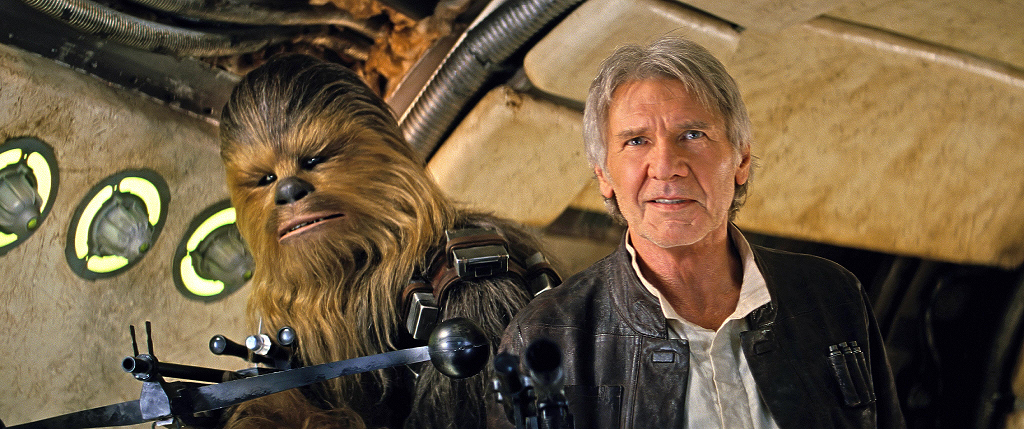
      Three little words.  The first uttered in darkness, the remainder as the lights come up and we behold the weathered features of Han Solo standing next to his furry, lifelong companion, in the aging corridors of the Millennium Falcon.  A clarion call to uncounted legions of dreamers, young and old alike, waiting in what often seemed merely vain hope for thirty-two long years.  We’d seen the Falcon fly in the first teaser, but this was different.  This was an affirmation of something that we’d long been told was never going to happen.  This was a gift.  This was faith rewarded.

      About damn time.

      The Internet has grown far beyond what it was in 1999, when one had to suffer through an agonizing hour of QuickTime buffering through a dial-up connection to behold the reveal, following the Lucasfilm logo, of Trade Federation tanks creeping over a grassy hill.  Certainly, at the time, I pored over the frames of the teaser for The Phantom Menace with unbridled curiosity, clutching at the merest hint of clue to what the story would be, and discussing and debating it at length over pints with fellow Warsies.  We were excited, surely, long having been starved of anything new from the galaxy far, far away, absent the comic books and the Timothy Zahn continuation novels, which, finely crafted as they were, could not quite compare to the idea of a new Star Wars movie rolling across the screens.

      Retrospect (and retconning, to be totally honest) has diminished the sense of anticipation rippling through fandom in those months leading to Phantom Menace‘s opening night.  I was the only one of my friends with free time on the day advance tickets went on sale, and I hauled myself out of bed before the sun came up in April ’99 and drove twenty miles to the theater where there was already a line fifty folks long, prepared to stand there under baking sun until the box office opened at 3 p.m.  People were playing the fresh-in-stores Episode I soundtrack on ghetto blasters, clowning around in Jedi robes and swinging plastic lightsabers, one-upping each other with quotes and character impressions and generally having as good a time as one can in a long queue.  Foolishly, I did not bring any provisions (or even a hat) with me, and wound up having at one point to ask the two guys I’d befriended standing directly ahead of me to hold my place while I hopped in the car and raced off to the most proximate fast-food joint to find a bathroom and some bottled water.  When they finally flung open the doors and I walked away, sunburned but with a whole pile of golden tickets for the 12:01 a.m. showing two weeks hence in pocket, it seemed rather anticlimactic, but I still had the sense of mission accomplished and relief that I wouldn’t have to wait one second longer to see it than anyone else.

      We wanted so desperately for that movie to be everything we’d been hoping for.  It’s tough to remember too that apart from the most deeply cynical cinephiles, everybody loved Phantom Menace on first sight.  No less an authority than the late Roger Ebert said, “My thumb is up, with a lot of admiration.”  But the glow faded very fast.  Loud naysayers started screaming about its flaws, and those of us who’d been soundly in the pro-camp began to realize that beneath the digital veneer and the aura of NEW STAR WARS! was a poorly-written and poorly-performed story locked in to hitting marks and prevented, by its very nature as a prequel, from giving us any surprises.  It was like a long, monodirectional train ride past flashy scenery to a predetermined destination, its characters marionettes against bluescreen, the dialogue stilted and hammy.  And the previously revered George Lucas became a figure of scorn.  We gave him two more chances to right the ship, but as the credits of Revenge of the Sith rolled, and with them the end of Star Wars as we knew it, we sighed at the affirmation of that old axiom that we can’t go home again.  The uneven Clone Wars aside, that was it.  Lucas said he was finished with Star Wars.  He was ready to move on.

      Enter the Walt Disney Company, and later, J.J. Abrams.  The man who’d awoken the dormant Star Trek franchise by infusing it with a healthy dose of Star Wars-style action and banter.  The man who tossed out the story treatments that Disney had purchased from Lucas and said that what he and the fans wanted to see was the return of Luke, Han and Leia.  Sure, we said, good luck getting Harrison Ford back, who had opined with grouchy regularity over the preceding thirty years that he had absolutely no interest in revisiting the character of Han Solo.  The photograph released last April of the new cast sitting in a round, Ford included, was welcome, but could not compare with the reveal in yesterday’s trailer of Han and Chewie, together again against odds, against fate, against belief and probability and all measure of the randomness of how life unfolds.  The gasp heard around the world was very real, and quite deafening, given the three decades we’ve been collectively holding our breaths.

      The Force Awakens will not premiere for another eight months.  In the months prior to the Phantom Menace‘s release, entertainment journalists were speculating about the possibility of it out-grossing Titanic and Lucas himself said with a shrug that it simply wouldn’t happen.  He understood that hyperbole of some aside, he was up against expectations that no one could possibly hope to meet.  Certainly, Episode I could have benefited tremendously from some alternate creative choices here and there, but had Orson Welles come back from the dead to direct it from a script by the equally moldy Billy Wilder, you still would have had a vast majority of fans grumbling that they thought The Matrix was better.  Anticipation is a funny thing in that satisfying it is often an exercise in disappointment.  With tremendous loyalty to Star Wars as a whole still a robust force – pun intended – and the additional burden on its back of overwhelming the lingering sour taste of the prequel trilogy, so too can The Force Awakens not hope to please everyone.

      What it has already done to its betterment is given us a singular moment that we can savor until the cold months return, and a lovely sentiment that we can remember with a smile in years to come, no matter the quality of the end result.  The feeling that we have, if for ever a brief instant, finally come home.

      Spread the word:

      • Click to email a link to a friend (Opens in new window) Email
      • Click to print (Opens in new window) Print
      • Click to share on X (Opens in new window) X
      • Click to share on Facebook (Opens in new window) Facebook
      • Click to share on LinkedIn (Opens in new window) LinkedIn
      • Click to share on Pocket (Opens in new window) Pocket
      • Click to share on Reddit (Opens in new window) Reddit
      • Click to share on Tumblr (Opens in new window) Tumblr
      • Click to share on Pinterest (Opens in new window) Pinterest
      Like Loading…
    • Marvel Fatigue

      April 9th, 2015

      ageofultron

      I come before you today with a problem.

      It is a rather insidious one at that, beginning at the base of my spine and migrating with so many spider’s steps one fraction of an inch at a time up along the vertebrae and couching itself in the recesses of my brain, there to ferment and fester and trickle into the forefront of my thoughts.  It is the contradictory notion of living in the height of the era of fantasy and comic book-inspired film adaptations, long dreamed about since boyhood, and being overtaken gradually by a creeping fog of ennui that threatens to grow into shrugging disinterest.

      You see, I have Marvel Fatigue.

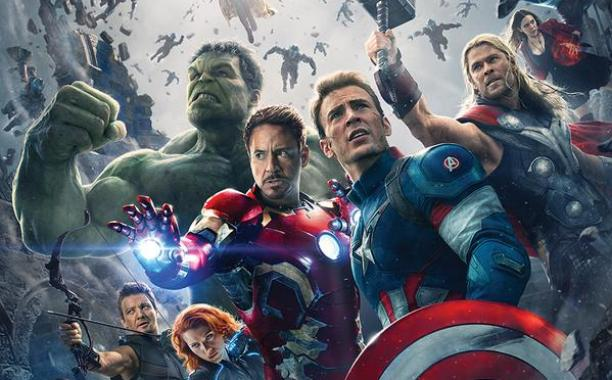
      I know, I should probably be forced to turn in my geek card after a statement like that, and go and lurk the message board of the New Yorker waiting for Richard Brody’s latest bloviation on Antonioni.  But I’m wondering, in the last few weeks before Avengers: Age of Ultron debuts, if we’re just getting too much candy and we’re growing benumbed to its taste.  Since 2008 there have been ten movies set in the Marvel Cinematic Universe, with eleven more slated for release over the next five years (even more if you factor in the X-Men and Spider-Man movies).  And that doesn’t take into account whatever it is DC is doing (which seems to be a late-to-the-party duplication of the Marvel game plan, but with much more depressing product, in keeping with the prevailing dark chic aesthetic of the period), or the various TV iterations of the MCU, be they Agents of SHIELD, Agent Carter or any of the plethora of forthcoming Netflix originals.  We’re way past saturation point now; we’re drowning.  And it would be one thing if the movies were bad – for the most part, they’re all serviceable pieces of entertainment, made with top-notch talent.  But they are all so locked into a shopworn and audience-tested formula that they’ve utterly lost their capacity to do the one thing movies like that should:

      Surprise us.

      The feeling began to bubble up after I saw Guardians of the Galaxy, a movie that was being lauded left and right in the community of fandom as one of the greatest things for those of our ilk to hit the cineplexes since the original Star Wars.   My son, naturally, was presold, but, won over as I was by seeing gushing praise from sources I respected, I even managed to sway my wife to join us.  And apart from a few cute touches here and there, I came away from the screening feeling let down.  The clincher for me was the music, the collection of tracks on Peter Quill’s fabled “Awesome Mix Volume 1.”  Disappointingly, there was not a single song on there that hadn’t been used in at least a dozen popular movies preceding this one.  Perhaps the intent was to feed nostalgia by scoring the story with the songs that would have been popular around the time Star Wars was wowing us all for the first time in 1977.  For me, it was the most blatant possible reminder that these movies are suffering from what I’ve talked about before with cultural karaoke.  Rather than striking out for bold, new, uncharted territory, they’re treading ground that has already been crushed under the weight of heavily booted footprints, choosing always the safe and familiar route.  Every moment is a callback to something else, instead of standing on its own.  You practically need a pop culture dictionary to understand everything that’s going on.

      I enjoyed the first Avengers, but I’ve never watched it again from start to finish, as for me it was rather like a meringue:  sweet and sugary but ultimately hollow and scarcely worth a second taste.  If you set aside the whee! factor of seeing all those characters together in a movie for the first time, the story is paper-thin, and the emotional moments are forced and artificial – I mean, come on, the idea of the bickering team bonding over the death of a marginal character who’d had little impact on the lot of them (and turned out to only be, as Miracle Max would put it, mostly dead) just in time to fight off the alien menace in a CGI orgy of exploding buildings, is pretty flimsy for ostensibly A-list screenwriting.  One can also see, based on the clips released from Age of Ultron thus far, that the sequel will follow the same pattern.  Now that they’ve become an inseparable team, the heroes will find themselves pitted against each other, again – not for any organic reason, but because the Scarlet Witch’s magic messes with their minds – until they again overcome their differences and unite to fight off the robot menace in a CGI orgy of exploding buildings.  Throw in a few pop culture puns delivered from Robert Downey Jr. and you’ve pretty much got the whole movie there in a nutshell, haven’t you?

      I don’t say this all to be snarky for the sake of being a contrarian.  I want to be wowed.  I want to be surprised.  I want the movie to go left when I was convinced it was bearing right.  I want to burst out of that theater and race to the kiosk to buy a ticket to see the very next screening.

      I just have little faith that that’s going to happen.

      I imagine that I will take my son to Age of Ultron, laugh at the parts I’m expected to laugh at, roll my eyes at the showers of concrete from the exploding buildings, and shuffle on home to mark the calendar for when I’ll have to take him to Ant-Man.  Marvel hasn’t shown in its productions thus far, nor indeed, have any of the other superhero movies of the 21st Century, that they have any interest in pushing the envelope and giving us something unexpected.  And why should they?  They have a formula that keeps generating hundreds of millions of dollars annually, a pent-up demand from my generation and our descendants that continues to flow as predictably as Niagara Falls.  You know exactly what you’re going to get when you walk into one of these movies, and it’s foolish to pretend that there is no appeal in that, as anyone who keeps going back to McDonald’s can attest.

      I’m tired of McDonald’s.  Give me a steak.

      Yeats famously said that things fall apart, the center cannot hold.  Eventually, one of these movies is going to fall flat on its face, and questions will be asked, fingers will be pointed, articles will be written and everyone will collectively scratch their heads, wondering where it all went wrong.  There won’t be one distinct answer, other than the notion that by refusing to evolve, by churning out essentially 21 versions of the same story in a period of eleven years, they will have brought on their own demise.  The irony of it all is that it isn’t as though the potential is not there for mind-twisting stories and emotionally resonant moments, given the sheer volume of the source material, and the reservoir of talent bursting to be heard.  But the focus remains only on predictable flash, because that is what a group of accountants in Burbank have decided is what sells – especially to overseas audiences who don’t grasp the puns – and they want their bazillion-dollar Christmas bonuses.

      I’ve simply reached the point where as an audience member, I can’t overlook the hyperkinetic pixels and the stale one-liners anymore.  Yet I cling to a tiny, diminishing reservoir of hope that one of these days, one of these movies will leap off the screen and smack me out of my complacency and remind me why I loved these stories to begin with.  That hope is what keeps me buying tickets.

      But I’m not there lining up on opening night anymore.

      Spread the word:

      • Click to email a link to a friend (Opens in new window) Email
      • Click to print (Opens in new window) Print
      • Click to share on X (Opens in new window) X
      • Click to share on Facebook (Opens in new window) Facebook
      • Click to share on LinkedIn (Opens in new window) LinkedIn
      • Click to share on Pocket (Opens in new window) Pocket
      • Click to share on Reddit (Opens in new window) Reddit
      • Click to share on Tumblr (Opens in new window) Tumblr
      • Click to share on Pinterest (Opens in new window) Pinterest
      Like Loading…
    • Vintage, Part Thirteen

      April 4th, 2015

      vintagetitle

      I have nothing terribly interesting to say by way of introduction today, other than:  Here’s Part Thirteen.

      Update:  content removed…

      Spread the word:

      • Click to email a link to a friend (Opens in new window) Email
      • Click to print (Opens in new window) Print
      • Click to share on X (Opens in new window) X
      • Click to share on Facebook (Opens in new window) Facebook
      • Click to share on LinkedIn (Opens in new window) LinkedIn
      • Click to share on Pocket (Opens in new window) Pocket
      • Click to share on Reddit (Opens in new window) Reddit
      • Click to share on Tumblr (Opens in new window) Tumblr
      • Click to share on Pinterest (Opens in new window) Pinterest
      Like Loading…
    • In Conversation with… Emmie Mears!

      March 27th, 2015

      SIAT COVER2

      It’s my privilege today to welcome back for a chat the fan-dab-tabulous author Emmie Mears, whom you may recall (that is, if you don’t follow her and her works already, double-finger-wag shame on you) from our conversation last year about her then-impending debut superhero novel The Masked Songbird.  Her journey since then has been one fraught with as many sharp curves and unexpected drops as a theme park roller coaster.  Now that things are trending up, big time – think rollicking new novel, new agent and new epic fantasy on the horizon – she’s graciously agreed to return to talk about it, in inimitable Emmie style, and share a few hard-earned words of wisdom.  Hope y’all dig.

      The last time we caught up with you, The Masked Songbird was about to make its debut.  Since then I guess it’s fair to say a heck of a lot has happened.  Can you fill us in?

      Do you have three days and a significant number of Big Macs handy?

      2014 was one of those years that made me wish I had an ejector seat. Or could be cryogenically frozen. Or could become a glittery vampire and frolic away into the tundra. Basically, within about three weeks, all four of the books I had under contract became orphans. Publishing has been undergoing many seismic shifts in the past decade, and with the acquisition of Harlequin by Harper Collins, my imprint got smushed in the plate tectonics. It’s not a hugely uncommon thing to happen, but that doesn’t mean I didn’t spend the day my book disappeared from Amazon under a pile of pizza and Buffy episodes. Also, my former agent (who was and remains wonderful) left the business, so I had to do the query trench thing again. Which was…interesting. I girded myself with my beast of an epic fantasy and waded back in, to a surprisingly cacophonous response. I’m still sort of bewildered by February.

      Ultimately, I decided the best way forward with three urban fantasy novels in a market where most editors have severe urban fantasy fatigue (actual diagnosis) was to put them out myself. My wonderful former agent and friend is making the covers, and they rock. It’s been an overwhelmingly positive experience so far.

      Through a combination of circumstances, Gwen was orphaned.  Now she’s making a comeback.  What’s changed from the first kick at the can with this book – what have you learned, and what, in retrospect, if anything, might you have done differently?

      Hoo, doggies.

      I think the biggest thing I’ve learned about this business is that there is no “the one.” There’s no One Book. There’s no One Deal. There’s no One Agent. Essentially, there is no sovereign specific. I could go with a metaphor about eggs in baskets, etc, but I’d rather just say this: publishing is a rapidly-changing landscape. You have to be adaptable. You have to roll with rejections, and you have to get back up when the business doesn’t pull its punches. I have a pet (very mathematical) theory that…

      Success in publishing = hard work + time(x factors)

      Time can be two months or two years or two decades. (Hell, it can be two centuries — there are enough posthumous success stories out there. GO TEAM ZOMBIE AUTHORS!) The x factor is going to be that weird concoction of the market, industry biases, reader readiness, word of mouth, cultural coincidence, and whatever the fuck (can I say fuck?) else makes a book sell. The x factors can speed up or slow down a single book’s chances of success. But that little time variable is what mitigates their influence. If you work hard for long enough, you might not be grossing Janet Evanovich royalties, but you’ll probably find some sort of success whether you’re shooting for trade publishing (brick and mortar distribution, advances, etc.) or going it on your own.

      Time and hard work also heavily influence a writer’s craft, which also plays a part. My seventh book was infinitely stronger than my first book.

      Book math. It’s gonna be a thing. My equation right now looks like: >6 years working 60-130 hour weeks between full time day job and full time writing shtuff (crowded UF market + uncontrollable publisher movement + 7 years of an established online presence + readers still liking UF) = my first thousand sales. To me that feels like success.

      Please don’t do the math on my hourly wage for the last half decade. (Anyone who ever accuses me of getting into this business for teh moniez is welcome to replicate my equation in their own controlled experiment.)

      How has the progression of real-world events (i.e. the results of the Scottish referendum last year) impacted Gwen’s story, and do you think it has affected the timeliness of the book?

      I was very deliberate when I first wrote Shrike: The Masked Songbird to make the referendum present and important without hinging the book on its outcome. I didn’t want that. A: I am heretofore unsuccessful at predicting the independently concluded thought processes of groups of 4 million people. (Or four people, for that matter.) B: The question behind the book was more “what makes a hero?” than “what will Scotland do?” And on that latter bit, I wanted to explore what Gwen would do. In the USA, there’s Captain America and plenty of homegrown heroes who love their country. Ultimately Gwen is a hero who loves her country.

      There is a sequel coming in September, and it’s followed with the sort of uncertainty that came in the wake of the referendum. Scotland is a very different place today than it was a year ago, and I wanted to show that, as well as the helplessness that comes when someone is swept away on something they can’t control. Shrike: Songbird Risen is very much a book about learning how to wield your power, and I think that remains topical in post-referendum Scotland. It’s a darker book (and I wrote it on deadline pre-referendum, so I was careful to consider how uncertainty shapes people regardless of what happened with the vote), but I think there is a lot of hope in it. Ultimately it’s not superpowers that save anyone — it’s humanity.

      I’m very interested to see what will happen in the coming general election. The referendum galvanized a massively engaged, powerful populace.

      There seems to be a perception, fairly widespread among amateurs, that all one has to do is land representation or get that first book published and it’s money-printing and red carpet time.  The media doesn’t help by hyping overnight success stories.  What’s the reality of a working writer’s life from your perspective?  What does everyone who calls him or herself “an aspiring author” absolutely need to know about making this business of wordsmithery a realistic calling?

      There’s this common joke in publishing circles of the ten year overnight success. Like I said above, there isn’t a The One. No one thing will make you a success. I’d also challenge that those “overnight” success stories are probably not really overnight at all. Nobody waves a hand at a keyboard and poofs a book into existence, and there is no, “Like a good neighbor, IMPRINT is there!” to make an editor magically appear next to you with a contract in hand.

      My reality is something I touched on above. I get up at 5:30 and shower and drag my sleepy butt to the metro. I either write or read on my hour train ride. I work 8-10 hours in the office. I slog back on the train (again writing or reading). I play with my cats, give them their beloved fudz, and write some more. On weekends, I get up and do write-y stuff. Plot, outline, draft, edit, revise, rinse, repeat. I wasn’t joking about the high end of my hours — sometimes I really do work 100+ hours in a week. That’s not everyone, but for me, that’s what it’s taken to get where I am.

      Okay. I hate the word aspire. It sounds like a cloud’s fart.  I’m gonna go all Yoda on you. Do or do not. There is no try. To quote Chuck Wendig and probably a lot of others, writers write. If you write, you’re a writer. If you’ve written a story, you’re the author of that story and therefore an author. You didn’t fart it into existence (unless you have some extraordinary talent, and if so, you are squandering your potential and should have your own reality show), you wrote it. You’re not in competition with anyone.

      If you want to do words as a career, it takes time. It takes that and a lot of effort. There aren’t shortcuts for reading widely in your genre (or in general). You don’t have to reinvent the wheel — I love craft books for learning foundational things like structure — but even learning things on an intellectual level necessitates practice to make them work for you. That said, I’m ten years in and only this year has it begun to look like I could do this full time and pay my bills this way. It’s a long con, and there are setbacks and obstacles at every stage. Getting an agent doesn’t make everything into the dance-y, pre-gasoline fight incident scene in Zoolander. (There might still be freak gasoline fight incidents.) Getting published doesn’t even guarantee your books will be on shelves a year later. *waves little flag meekly*

      The great thing is that today in authordom, there are many paths to readers, and you can pick any or many of them.

      It’s been said about just about every art form, but if you can be fulfilled and happy doing anything else, for Hades’ sake, do that instead.

      What’s your writing routine?  What’s your writing playlist?  Is there one particular song or album that breaks you out of block?

      I carve out writing time wherever I can. My dream schedule would be to wake up, go for a swim or a run, shower, write for a few hours, read, eat, write a bit more, and then play video games till 3 AM and do it again. (I’m allowed to dream, right? That sounds nicer than scribbling on a metro train whilst smelling someone’s BO after getting three and a half hours of sleep…)

      I usually don’t write to music, which may be a surprise. When I do, it’s usually music without lyrics, though it depends on what I’m writing. Writing Storm, I listen to classic rock. For that I blame Supernatural, because even though I wrote the first Storm book before ever seeing an episode of the show, demon hunting and classic rock now just…live together. When writing Shrike, I listened to a lot of Frightened Rabbit. When writing Stonebreaker (my most recent novel), I listened to music only rarely, and it was usually the Lord of the Rings soundtrack, even though the book’s not so LoTR-y except for sharing a genre.

      I want to ask a little about the “We Need Diverse Books” campaign.  Where did this start and what is it all about?  What voices would you like to see get more exposure on the bookshelves?

      This amazing campaign started because of a sort of perfect storm (har har) of things. BEA released their author lineup for 2014 and stats came out for representation in literature, AND there was comparison to census data…it all added up to a rather stark depiction of the lack of diversity in publishing compared to the diversity of the American (and global) people. (They say it better than I.)

      Basically, representation matters. Seeing yourself in media matters. Seeing yourself excluded from media has an impact. Seeing yourself relegated to a set of stereotypes has an impact. In any given adventure movie, you’ll have (usually white, able-bodied, and straight) men playing a number of roles. The brains, the brawn, everything in between. One gets to be a geek, one can be the muscle, one can be something else entirely. They are allowed a diversity of experience. Look at the Avengers for a sort of case-in-point example. Tony Stark is the wealthy genius playboy. Bruce Banner is a gentle — if explosive — also genius. Steve Rodgers is the underdog-turned-hero. Clint Barton is the pensive (at least in the movies), deliberate, competent dude. And Natasha Romanova is a femme fatale. She’s not without nuance, but where guys have four people to find themselves in, women have one. You learn at an early age to relate to people who aren’t you when you are part of a marginalized people group, regardless of whether that means gender identity, race, sexual orientation, disability, socioeconomic status, etc.

      A desire for diversity is a desire to see many facets of experience. Being a straight, white, able-bodied man is not a homogeneous experience, and in all corners of media, they are allowed that diversity. Being a queer woman, or a woman of color with a disability, or a queer man of color? If you see yourself at all, you are conditioned to scramble to pick up the scraps. Diana Pho (editor at Tor) wrote a phenomenal piece on Jim Hine’s blog recently. Go read it. I’ll wait.

      Ultimately books and media without diversity are erasure — if you’re writing a futuristic sci-fi where humans are exploring other worlds and your flight crew is all white dudes? On a lot of levels, that says that the rest of us aren’t welcome in that new world, or that we weren’t even thought of to include. This discussion is about having empathy for experiences outside our own and being willing to learn to see ourselves in people who go through the world in different skin.

      I grew up with two moms, and I’m a bisexual woman. Growing up in the 90s where the only representation of my family that I saw in media was a banned book (Heather Has Two Mommies), I was used to receiving signals that my family was bad or wrong or somehow dirty. A book about a family like mine was banned. People argued about it. That communicates things to children. I remember when Ellen DeGeneres came out. There was this sense of “FINALLY” for me, to see someone I loved like Ellen suddenly having something in common with my family. Representation is powerful. It tells you that you’re not alone. It tells you that you deserve to be here. It tells you that your story matters, and that you can be a hero too.

      Without dropping spoilers, there was a powerful moment in Storm in a Teacup involving consent.  The scene was realized beautifully.  Why don’t others get it – why do you think that there is still so much depiction of non-consensual sex in popular fiction, and what does it take to change that trend?

      Possible trigger warning for my answer here, as I intend to be frank about issues of consent and rape.

      I think that can be boiled down to that concept of rape culture. That phrase alone tends to flip the off switch in some people’s heads, so bear with me. Culturally, we’re taught that men make the first move, that men are the ones who are assertive sexually (or aggressive), and that women are the passive recipients. Phrases like “she was asking for it” (when the she in question was, in a literal way, doing nothing of the sort) and “he couldn’t help himself” reinforce this idea. I think a lot of the issues of consent in fiction are unintentional. I have done it too, without even meaning to. I’d meant something to BE consensual, but after multiple editing passes by multiple people, this scene had slipped by until my editor said, “Huh, just realized this could be interpreted as non-consensual.” And she was right. I was mortified, because that wasn’t what I meant. That’s why getting new eyes on things is important; your experience might filter out some of those interpretations. Someone else might be hyper sensitive to it and save you the heartache of having your words hurt someone else (and obviously, that other someone as well).

      (Also, there’s a difference — sometimes a fine line, sometimes a big boldy thick one — between hurting someone and offending someone. Someone telling me they think my hair is ugly might offend me or dent my delicate fee-fees a little, but someone breaking my trust or plunging me into a triggery situation without warning can do damage. I want to err as much as possible on the side of not hurting people.)

      Non-consensual sex is rape. It’s not sex. Rape is violence, even if terrible politicians try to say that only certain kinds of rape are “forcible.” (They might as well say my rape didn’t count because I didn’t have contusions afterward.) I think the conflation of rape and sex is part of what makes this mess. Participating partners in sex should both want to do it. To me that seems very simple, but somehow that’s an alien thought to too many people.

      What does it take to change it? So many levels of change will be necessary. Demystifying sexuality for children and adolescents, teaching them to engage with the subject thoughtfully and with empathy, giving them the tools (including facts and real information) they need to make informed decisions, teaching them about bodily autonomy and consent (these things are relevant at all ages — I was taught bodily autonomy and consent as a toddler by my wonderful mothers, and their instruction helped me escape a situation where someone tried to molest me). Putting examples of this in art and media — people internalize the stories they see. Many, many levels of change.

      I appreciate your words about Storm. I was intentional about it. I’m glad it came through.

      What are you reading right now?  What does it take to hook Emmie’s interest, and by contrast, what kinds of books would you avoid?

      I’m currently reading The Shadow of the Wind, by Carlos Ruiz Zafon. I just finished Max Gladstone’s Two Serpents Rise and a bit ago, Delilah Dawson’s Servants of the Storm. Great writing hooks me regardless of genre, but I deeply appreciate finding stories that escape the trappings of cliches and tropes. I’ve read some fantastic stories lately. Some authors to watch: Jacqueline Koyanagi, Alis Franklin, Stephen Blackmoore, and obviously the others I’ve already mentioned. They weave gorgeous, rich worlds and tell stories that make me want to live in them. Also, most of the books I mentioned star people of color, and that’s refreshing to me, like that feeling of “FINALLY” I felt when Ellen came out. Yes, more of this please. More stories. More heroes. More people to love.

      Fridged women are the fastest way to get me to tune out. I’m just so tired of seeing that trope over and over. It’s exhausting when your first introduction to a character like you in a world is to someone who’s gone already. Or to always have the damsel distressing as the bait for the beleaguered protagonist. Give me something I haven’t seen ten thousand times.

      You’re doing your own series on the query trenches so I don’t want to step on that, but can you talk a little about how you secured representation with Sara Megibow, and any advice you’d offer to those champing at the bit to be able to publish their much-dreamed about “I FINALLY HAVE AN AGENT!” blog post – even if it’s a hard reality check?

      I found Sara IN THE SLUSHPILE!!! I will crow that loudly to anyone who listens, because I am a firm believer in slush. I wrote a query. I sent it. She requested. She offered. It was the process in its most process-y form.

      My biggest advice is to look over that equation I mentioned above. Hard work + time(x factor). Some things will be harder to sell. Pay attention to the market and what’s happening in publishing. Educate yourself about the business, because even though we venture into it with a dream, it is a business with a bottom line. It (as a business-y bottom line behemoth) does not care about dreams so much. BUT. This business is run by people who are humans and want to find things they love and share those things with readers. Write a fantastic book. Be a professional. Follow directions. If trade publishing is what you want, buckle yourself in for the long haul and start putting in the work. It’s not a fair business. It has systematic and structural issues with diversity, so if you are a diverse author and/or have a diverse story, it could very well be harder even with so many agents and editors asking for just that right now. Just keep swimming. And remember that there are many paths to readers these days.

      Lastly, can you drop any tantalizing hints about Stonebreaker, and when we might feast our eyes on it?

      Ah, this question! Stonebreaker news will happen when it happens (yay, vagaries!), but I can tell you that it is a book, and it is a large book. And there are giant sentient camouflage-able bats in it.

      Curse your sudden but inevitable vagueness!  Oh well folks, I tried.  In the meantime, you can check out Storm in a Teacup, presently ranked #15 in Amazon’s top Dark Fantasy novels.  Thanks so much to Emmie for taking the time to indulge my inner Larry King.  To the rest of you, thanks for reading.  Now get back to work.


      Spread the word:

      • Click to email a link to a friend (Opens in new window) Email
      • Click to print (Opens in new window) Print
      • Click to share on X (Opens in new window) X
      • Click to share on Facebook (Opens in new window) Facebook
      • Click to share on LinkedIn (Opens in new window) LinkedIn
      • Click to share on Pocket (Opens in new window) Pocket
      • Click to share on Reddit (Opens in new window) Reddit
      • Click to share on Tumblr (Opens in new window) Tumblr
      • Click to share on Pinterest (Opens in new window) Pinterest
      Like Loading…
    • Vintage, Part Twelve

      March 21st, 2015

      vintagetitle

      Always hate when I have to make you wait for it.  Allons-y without further ado then.  (This is a lengthy one, so settle in a comfy chair first.)

      Update:  Content Removed.

      Spread the word:

      • Click to email a link to a friend (Opens in new window) Email
      • Click to print (Opens in new window) Print
      • Click to share on X (Opens in new window) X
      • Click to share on Facebook (Opens in new window) Facebook
      • Click to share on LinkedIn (Opens in new window) LinkedIn
      • Click to share on Pocket (Opens in new window) Pocket
      • Click to share on Reddit (Opens in new window) Reddit
      • Click to share on Tumblr (Opens in new window) Tumblr
      • Click to share on Pinterest (Opens in new window) Pinterest
      Like Loading…
    ←Previous Page
    1 … 5 6 7 8 9 … 39
    Next Page→

    Create a free website or blog at WordPress.com.

    Privacy & Cookies: This site uses cookies. By continuing to use this website, you agree to their use.
    To find out more, including how to control cookies, see here: Cookie Policy
     

    Loading Comments...
     

      • Subscribe Subscribed
        • Graham's Crackers
        • Join 6,280 other subscribers
        • Already have a WordPress.com account? Log in now.
        • Graham's Crackers
        • Subscribe Subscribed
        • Sign up
        • Log in
        • Report this content
        • View site in Reader
        • Manage subscriptions
        • Collapse this bar
      %d