The original blog of writer Graham Milne – content published from 2011-2017

Graham's Crackers

    • The elephant test for wine

      April 9th, 2012
      Photo from thelivingwine.com.

      “I know it when I see it,” goes the famous quote from American Supreme Court Justice Potter Stewart.  Stewart was talking about what does and does not constitute pornography, but the statement can go broader than that:  it can be applied to anything that comes down to a matter of individual preference.  I have always enjoyed a good glass of wine, but like many I’ve found the world of the oenophile somewhat daunting, with its stereotypical images of aesthetes with noses held high waxing pedantically about the subtleties of bouquets, the suitability of pairings, the ideal shape and weight of glass and why the ’59 is better than the ’61.  Wine culture seems by its very nature to be impenetrable, a secret club replete with its own terminology and secret handshakes.  As the steward pours out the sample and tells you to be mindful of the scents of currant and chocolate dancing across your palate with each sip, one can feel a spectacular sense of intimidation, or at least the longing to be trained as a sommelier (and possess a doctoral fluency in French) in order to appreciate wine the way it seems you are supposed to.  But good wine is like a good book, a great movie or a beautiful woman – you know it when you see it.

      This past Easter weekend, my better half and I decamped to a brief tour of Niagara’s wineries.  It’s not something we do regularly, which seems a shame given that it isn’t a long drive away.  We have never pretended to be experts in vintages; in fact, the stuff we love to drink would probably be frowned upon by more seasoned wine patrons.  Our cellar, if you can call a wine rack in an unfinished basement that, is a mishmash of gifts from friends and relations and odd bottles picked up randomly throughout our worldly escapades, along with a few regular favourites.  We’d fumble for an adequate response if asked to speculate about tannins, oaking and aging, or the intricacies of merlots versus cabernet sauvignons and pinot noirs.  But we don’t care.  There are few things we love more than a good bottle of South African shiraz with dinner.  The smoothness of an adored wine heightens the elegance of a great meal, softens the mood and loosens the tongue from the awkward requirements of casual conversation about the weather and the plight of the Leafs, revealing a path into deeper, more meaningful interaction and connection.  That’s my attempt at a literary explanation.  More simply than that, it tastes frickin’ amazing – and it makes your food taste better too.

      There is a growing resentment against what one would consider the finer things in life, and wine is often singled out, along with lattes, as a singular example of what separates societal castes – a distinction I’ve never bought into and have railed against in the past, as it seems largely invented by those aspiring to elected office.  Wine is not, nor should it ever be, the sole province of an elite few.  I can find no good reason why a guy who loves his Miller Lite and his double-double can’t appreciate a chardonnay as well.  Nothing prevents him from walking into a winery and trying a few different vintages (it’s usually free to do that).  Forget having to justify your taste with polysyllabic terminology and recitation of arcane lore – the question is just, as it is with anything, do you like it?  No?  Okay, try another one.  The possibility of discovery is tantalizing – you may uncover a true treasure, as we did over the weekend, a rare (for our region at least) 2008 ice wine shiraz that trickles over the tongue like rich nectar.  I don’t think that being able to appreciate that makes anyone a snob, nor should not knowing the history of the soil that grew the grapes or the entirety of Proust’s back catalogue prevent someone from trying it.  Wine, like culture, is there to be enjoyed by all, and the only barriers to that world are those we erect for ourselves.  You don’t need to know everything about wine to love it – to paraphrase Potter Stewart, you’ll know it when you taste it.

      UPDATE:  One of my Twitter connections advises me that the glasses in the above photo are in fact champagne flutes.  Any port – pardon the pun – in a storm.

      Spread the word:

      • Click to email a link to a friend (Opens in new window) Email
      • Click to print (Opens in new window) Print
      • Click to share on X (Opens in new window) X
      • Click to share on Facebook (Opens in new window) Facebook
      • Click to share on LinkedIn (Opens in new window) LinkedIn
      • Click to share on Pocket (Opens in new window) Pocket
      • Click to share on Reddit (Opens in new window) Reddit
      • Click to share on Tumblr (Opens in new window) Tumblr
      • Click to share on Pinterest (Opens in new window) Pinterest
      Like Loading…
    • Tanned, rested and ready

      April 3rd, 2012
      Feels awful. And it works.

      As my better half has pointed out to me on many occasions, men are the ultimate wusses when it comes to getting sick.  Even a mild cold – as it was my oh-so-grave misfortune to suffer over the past few days – is the tribulations of the damned.  What’s more ironic is that it has been ages since I’ve been struck down with a truly dreadful case of sniffles.  I’ve always had a pretty strong immunity; never have I been one to spend a week confined to bed, my head oozing snot from every orifice.  The occasional illness, every six months or so, is overcome within a matter of one or two days, if not hours.  The problem is that when one is accustomed to more or less perfect health, one loses the capacity to endure discomfort of any sort.  Hence the infrequent stuffy nose turning into a harbinger of the apocalypse.  In any case, I think I’ve hit upon a pretty reliable recipe for licking that pesky rhinovirus (at least, it works for me; this should IN NO WAY be misconstrued as any form of medical advice, as I’m not a doctor, nor do I play one on television):  copious amounts of Vitamin C, orange juice and oregano tablets (bring on the spaghetti burps), washing the nasal cavity frequently with a neti pot and the kicker, the “cook it out” method:  basically, wrap yourself in as many sweaters and blankets as you can endure, dope yourself with NyQuil and go to bed, and let yourself sweat.  If you can stand it, the heat basically fries the virus out of your body and dramatically shortens your recuperation time.  The bad news is you have to go back to work that much sooner.  Anyway, I’m back and I’m ready to kick April’s cruel arse into May.

      Nirvana at last.

      As one of my many forays into the digital world, I’m on Foursquare, the social media platform where you earn points and virtual badges by “checking in” at different locations throughout the world (an expensive hobby if you travel frequently and don’t have a good roaming plan on your mobile).  One of my Foursquare contacts lives in San Francisco, another in Washington, and speaking of illnesses, I’m always struck with “square envy” when the cool places they’re visiting pop up on my notification board.  When friends are crisscrossing the continent checking in at places like embassies, monuments and concert halls, your long-held mayorship of the local grocery store doesn’t feel that impressive.  Call it a social media variant on the old “grass is always greener” saw; one of the drawbacks of this new phenomenon of ambient awareness, where everything everyone is posting as their status update seems a lot more profound than what’s going on in your ordinary life.  Then again, it’s all relative – something that seems unique to the first world is our ability to be dissatisfied with abundance, to see existential emptiness within the horn of plenty and to always crave more, or at the least, to crave the idea of not appearing boring to the others around us.  The Buddha was probably on to something with the whole concept of suffering being related to unfulfilled desire.  (Now how is that for a train of thought – from Foursquare to Buddhism in less than 200 words.  If that doesn’t qualify me for the “Downward Facing Dog” badge, I don’t know what does.)

      One final random note for today – finally saw the Season 2 premiere of Game of Thrones and had forgotten that all the Men of the North and the Night’s Watch sound like they should be playing bass in 60’s Merseybeat bands.  I gather that since Sean Bean was cast first as patriarch Ned Stark, they needed to find actors with a similar Sheffield patois in their speech to reflect the idea that they are all from the same family.  Yet it’s interesting how the British accent (and its many regional and even neighborhood variations) seems ideally suited to the fantasy genre (the Lord of the Rings series being another prime example), and how actors speaking about kingdoms and dragons in American midwestern dialects yanks you out of the story faster than you can say “You betcha!”  Indeed, there is a conceit that any period piece, no matter where it is set, seems more genuine when the actors sound like they just graduated from RADA.  It was such an unusual choice of director Milos Forman, when making Amadeus, to allow the actors to speak in American accents, when the safer, more traditional bet would have been to go with the Queen’s.  The movie is set in Austria so British accents would be no more logical for the setting than say, Spanish ones, but still, something still feels a bit off in how people are speaking (then again, you couldn’t exactly have the genuine Austrian Arnold Schwarzenegger playing Mozart).  Of course, the champion of mishmashed dialects still has to be one of my personal favorite movies, The Hunt for Red October, where you have a crew of Soviet submariners captained by a Scot (whose character is actually supposed to be Lithuanian) and made up of Englishmen, New Zealanders, Germans, Swedes, Italians and Frenchmen, with one token Russian-born actor providing a lonely hint of verisimilitude – not that he has any lines in Russian, of course.  I guess what matters most is internal consistency, so if the entire cast of Game of Thrones was Icelandic it would make just as much sense as having them all hail from working-class Northern England.  Wonder if one of the Starks will have to warn the others that “one on’t crossbeams gone owt askew on treadle”?

      Spread the word:

      • Click to email a link to a friend (Opens in new window) Email
      • Click to print (Opens in new window) Print
      • Click to share on X (Opens in new window) X
      • Click to share on Facebook (Opens in new window) Facebook
      • Click to share on LinkedIn (Opens in new window) LinkedIn
      • Click to share on Pocket (Opens in new window) Pocket
      • Click to share on Reddit (Opens in new window) Reddit
      • Click to share on Tumblr (Opens in new window) Tumblr
      • Click to share on Pinterest (Opens in new window) Pinterest
      Like Loading…
    • Every hour should be Earth Hour

      March 31st, 2012

      My daily commute takes me past a small farm with a field where sheep graze every afternoon. Lambs walk with their mothers beneath the sunshine and play at the edge of a small pond where geese paddle lazily and shake droplets from their feathers. No matter how rotten a mood I’m in, how intense the tribulations of the day’s labours past, the innocence of this little place is unfailingly soothing, like visual yoga for the soul. Tonight we are asked beginning at 8:30 pm to turn off our electronics and live in that same silence and simplicity for an hour. Communities around the globe have thrown down the gauntlet to see who can outdo the other in terms of the biggest percentage drop in power demand. The ostensible goal of Earth Hour is to raise awareness of what the consumptive attitude of humanity is doing to its only home. But it behooves us as a species to be aware of the earth every hour of every day; of the treasures it holds and of the unparalleled, impossible-to-duplicate magnificence in something as small as a blade of grass waving in the breeze. Just pause, for one cleansing breath, before we climb back in the SUV and crank up the thousand-megawatt subwoofers.

      This is a tough time for our planet. The human population has surged past 7 billion, and shortsightedness and greed on the part of a wealthy few has led to extreme poverty for the majority. And when the economy slows down, it is left to the earth to make up the difference. Dirty industry flourishes in the interest of quick growth; environmental review processes are gutted to get factories moving fast. Moneyed interests push misinformation about climate change into mainstream accepted thought. Anyone who suggests we slow down and give less destructive alternatives their due consideration is pilloried as a job-killing, tree-hugging, pinko Communist (Stalin’s and Mao’s lasting legacies being their keen environmental stewardship, naturally). The Lorax, the recent movie based on the fable by Dr. Seuss, was trashed in certain segments of the press for pushing an undesirable agenda onto kids, because it dared to suggest that levelling all the trees in sight wasn’t necessarily a good idea. We are in an era of reverse ecology – it has somehow become “cool” to hate the earth, and morally sound to sacrifice it on the altar of the GDP at every opportunity. As a result, turning one’s lights off for an hour one Saturday night a year feels like shouting into the winds of a rising storm.

      The ad hominem counter-arguments will no doubt come fast and furious. “Oh yeah, well, why don’t you give up your car and your computer and go live in a cave somewhere, you stupid eco-fasci-socialist.” I’m not suggesting that the world shut itself off and return to a purely agrarian existence; that’s fantasy. Surely human beings are clever enough to figure out a way to have our toys and clean air too. As Al Gore said in An Inconvenient Truth, what is lacking is the will. How do we change our collective attitude from hungry consumer to responsible warden of a suffering world?

      Maybe it begins with taking that moment to watch the lambs in the field, to reconnect with the innocent. To recognize that whatever you believe put us here – God, evolution or random chance – also gave us the capacity to appreciate and cherish beauty in all its forms, and an abiding wish to not see beauty destroyed for selfish, temporary gain. If it is indeed our duty to leave to our children better than we ourselves have inherited, then we owe each of them the chance to experience the forest, the ocean and the snow-capped mountain peak as we have. This can be the nobler purpose to which we aspire. We can start making the hard choices that reflect both our individual and societal commitment to achieving that purpose – saying no to the cheap and easy solutions and the leaders who peddle them, and embracing our human responsibility to tend the garden of our unique home. For all the beauty present in the world is of the earth, and as the earth dies, so does beauty. No matter our political stripe, we can agree that beauty is worth saving. And it is a solemn obligation that extends far beyond the dying seconds of Earth Hour.

      Spread the word:

      • Click to email a link to a friend (Opens in new window) Email
      • Click to print (Opens in new window) Print
      • Click to share on X (Opens in new window) X
      • Click to share on Facebook (Opens in new window) Facebook
      • Click to share on LinkedIn (Opens in new window) LinkedIn
      • Click to share on Pocket (Opens in new window) Pocket
      • Click to share on Reddit (Opens in new window) Reddit
      • Click to share on Tumblr (Opens in new window) Tumblr
      • Click to share on Pinterest (Opens in new window) Pinterest
      Like Loading…
    • This is not a post, it’s a preview for a trailer for an upcoming post

      March 28th, 2012
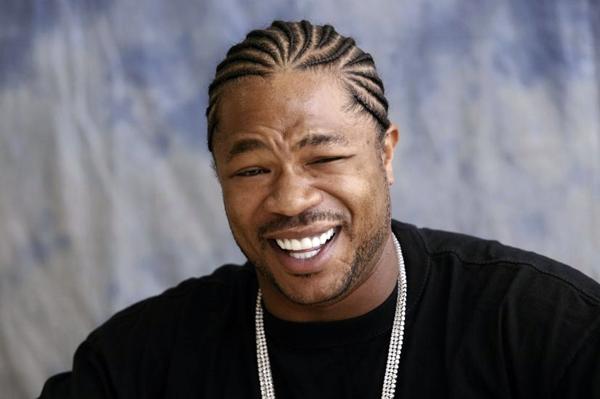
      Xzibit, you are all too knowing. Memegenerator.net.

      It’s been said that we live in an age of lowered expectations; schools expect less from students, audiences expect less from television, voters expect less from their leaders.  But every time you think we’ve bottomed out at the nadir of what is meant to impress us, someone finds a way to dig further down and underwhelm even more.  Recently, we’ve seen the rise of a new low in the aspirations of marketing, like a badly mixed soufflé sputtering to inflate itself in an oven with the fuse burnt out:  the movie trailer trailer.  And that’s not a message from the Department of Redundancy Department.

      Yes, studios have decided now to capitalize on an audience’s hunger for any tidbit of information about an upcoming blockbuster by releasing trailers not for the movie itself, but for a more detailed trailer about the movie.  Prometheus, Ridley Scott’s enigmatic sci-fi prequel to his 1979 classic Alien, got the ball rolling last month, and in the last few days we have had a trailer for the trailer of the unclamored-for remake of Total Recall.  Honestly, if there was any more recycling going on they would have to pack film reels in blue boxes.  Faced with an appalling glut of unoriginality, studio marketers have decided to double down by trying to create buzz not for the projects themselves, but for the very ads promoting the projects.  There is a very popular Internet meme involving Xzibit and Pimp My Ride which comes to mind, an appropriate variation on which would be thus:  “Yo dawg, I heard you like trailers so we made a trailer for a trailer that you can watch in your trailer while you wait for the new trailer.”

      I suppose it might be forgivable if the advertisements being advertised (God, the mind implodes at that) were anything of substance.  The complaint used to be that trailers gave away too much (Cast Away, I still haven’t forgiven you for giving away that Tom Hanks gets off the damn island!), now, they are a big pile of nothing.  The Total Recall trailer trailer tries to entice you by showing everything you’ve seen before:  Colin Farrell being strapped into the same machine Arnold Schwarzenegger was 22 years ago, Kate Beckinsale looking hot and carrying a gun, futuristic cars flying around, some stunt guy leaping out a window.  Even worse than this is the teaser for Breaking Dawn – Part 2, the ultimate Seinfeld of a trailer whose big draw is a shot of Kristen Stewart wearing the same facial expression she’s used in the previous four Twilight movies, only this time with red eyes.  Oooh.  (Of course this movie is ad- and critic-proof as its legions of worshippers will show up at theatres even if the movie is just Stewart and Robert Pattinson staring at each other for two and a half hours – oh, wait, that’s exactly what it is!)

      Naturally, we have only ourselves to blame.  Collectively we’re like the kid shaking his presents three weeks before Christmas listening for the telltale rattle of the Lego set inside, in our obsessive need to know every last detail of a movie before it ever opens – who’s in it, what changes they made from the book, what the characters look like, what stars are actually dating off the set, the shape and substance of every major action sequence down to a beat-by-beat plot description and excerpts of dialogue.  There is a theory among movie marketers, the people who actually cut the trailers together, that audiences won’t go to a movie unless they’ve already seen the best parts.  But thanks to entertainment magazines and Internet gossip sites, we already have, before a frame of actual film crosses in front of our eyeballs.  We know exactly what’s coming, because we don’t want to be surprised – the potential of a surprise carries with it the equal potential of disappointment, and who wants that on a summer night at the theatre?  So the natural response by the people selling these things is to reassure you that you’re going to get exactly what you’re expecting, and it’s why they make trailers for trailers.  It’s a mere taste of the pablum cooking on the stove before Mom spoons out an entire bowl for you; warm, comforting and utterly without flavour.  There is no there there, so all they can sell is hype.  And if you lap it up and buy a ticket to the movie anyway, two hours later that’s all you’re going to come away with.

      Spread the word:

      • Click to email a link to a friend (Opens in new window) Email
      • Click to print (Opens in new window) Print
      • Click to share on X (Opens in new window) X
      • Click to share on Facebook (Opens in new window) Facebook
      • Click to share on LinkedIn (Opens in new window) LinkedIn
      • Click to share on Pocket (Opens in new window) Pocket
      • Click to share on Reddit (Opens in new window) Reddit
      • Click to share on Tumblr (Opens in new window) Tumblr
      • Click to share on Pinterest (Opens in new window) Pinterest
      Like Loading…
    • As a new day dawns

      March 27th, 2012
      Image courtesy of Wikipedia.

      Just to follow up quickly on yesterday’s news:  while yesterday was all about me, today is about you.  Specifically, everyone who drops by to read what I have to say; friends, family, accidental visitors looking for porn.  Writing is really only ever entering one half of an equation, and it’s the reader who supplies the missing element to make it into something truly special.  When I started this journey a little less than a year ago I had no idea what to expect.  I know I did not expect what it’s become, and that is something that has exceeded my hopes at every turn.  With our words we are sending a single beam of light out into the darkness, reaching, hoping to connect.  In The King’s Speech, when he is exposed as having no credentials, Lionel Logue talks about how with speech therapy it’s more important for the patient to know that a friend is listening.  I think of blogging in much the same way.  That you are taking precious time out of your busy lives to listen to what I have to say makes you a friend of mine.  And I’m forever grateful.

      On that note I want to say a special thank you to everyone on WordPress, in particular those of you who are following me and always providing encouraging comments, folks like East Bay Writer, Tele and Samir – people I’ve never met or spoken to in real life but who have become friends in every way that matters.  I love reading what you have to say on your own blogs and I’m delighted every time I see a like or a comment from you.  I look forward to keeping our dialogue going as we all move forward in our writing ambitions to the bright futures I am convinced lie ahead.

      Okay, enough of the mushy stuff.  There’s writing to be done.

      Spread the word:

      • Click to email a link to a friend (Opens in new window) Email
      • Click to print (Opens in new window) Print
      • Click to share on X (Opens in new window) X
      • Click to share on Facebook (Opens in new window) Facebook
      • Click to share on LinkedIn (Opens in new window) LinkedIn
      • Click to share on Pocket (Opens in new window) Pocket
      • Click to share on Reddit (Opens in new window) Reddit
      • Click to share on Tumblr (Opens in new window) Tumblr
      • Click to share on Pinterest (Opens in new window) Pinterest
      Like Loading…
    • In which we pause for some shameless self-promotion

      March 26th, 2012

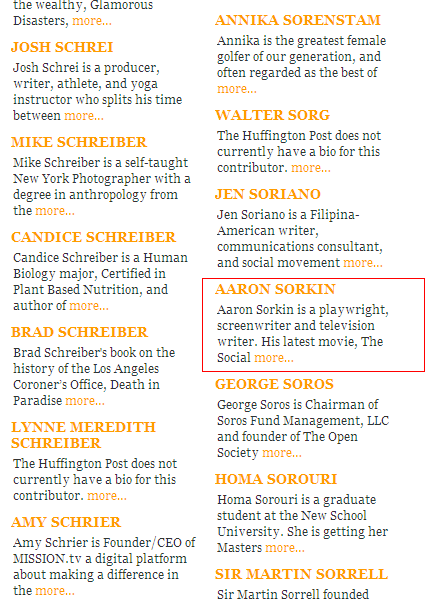
      I’ve got some exciting news to share.  This is an excerpt from the list of The Huffington Post’s alphabetical list of bloggers.  I have highlighted a particular name.

      Further up the list is another name, just added today.

      Yep, that’s me!  How cool is that?  Just goes to show you, never be discouraged – if you believe you can do it, you can make it happen.  Wonder if I can convince Mr. Sorkin to collaborate on something?

      Spread the word:

      • Click to email a link to a friend (Opens in new window) Email
      • Click to print (Opens in new window) Print
      • Click to share on X (Opens in new window) X
      • Click to share on Facebook (Opens in new window) Facebook
      • Click to share on LinkedIn (Opens in new window) LinkedIn
      • Click to share on Pocket (Opens in new window) Pocket
      • Click to share on Reddit (Opens in new window) Reddit
      • Click to share on Tumblr (Opens in new window) Tumblr
      • Click to share on Pinterest (Opens in new window) Pinterest
      Like Loading…
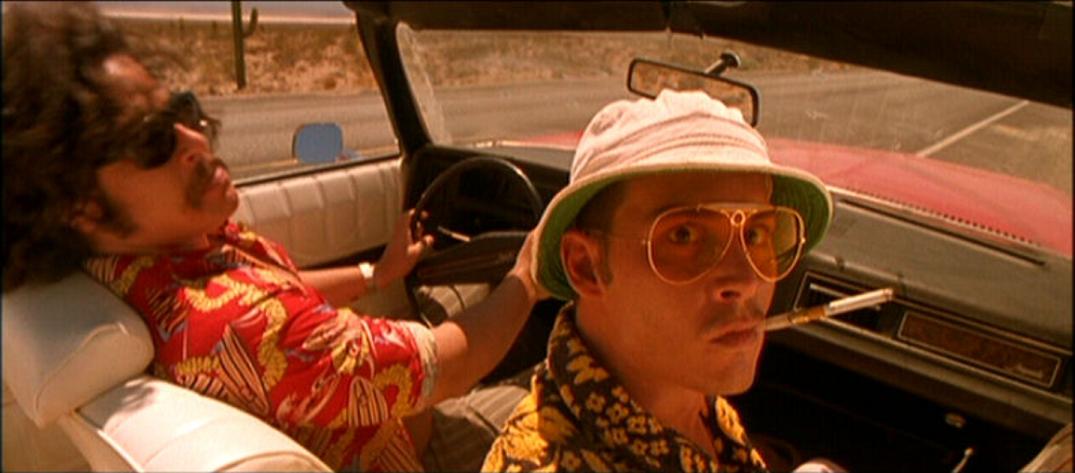
    • We can’t stop here, this is bat country

      March 26th, 2012
      Las Vegas – little fear, some loathing.

      I’ll admit I’ve wanted to use that line for the title of a post for a long time.  Then it occurred to me that it might be best applied to a review of the locale it is describing, and thus a new category is born.  The reality of life and limited vacation days mean that my better half and I don’t get to see as much of the world as we’d like, so we treasure our infrequent voyages abroad and try to pack as much sightseeing into them as we can while setting aside sufficient downtime – no point coming back from holiday feeling more tired than when you left.  Las Vegas, which we visited four years ago, is obviously not a place to lounge around (unless it’s a specific type of “lounge” we’re referring to).  If New York is the city that never sleeps, Vegas is the city that can’t sleep because it’s on a perpetual crack high.  In Hannibal, Agent Starling comments about a letter from Dr. Lecter postmarked Las Vegas that it must be from a remailing service, as Vegas is the last place the cultured killer would ever be.  There is however a culture here; it’s the culture of affluenza in the backyard of the one percent, oozing wealth and fortune and gobs of excess at every turn.

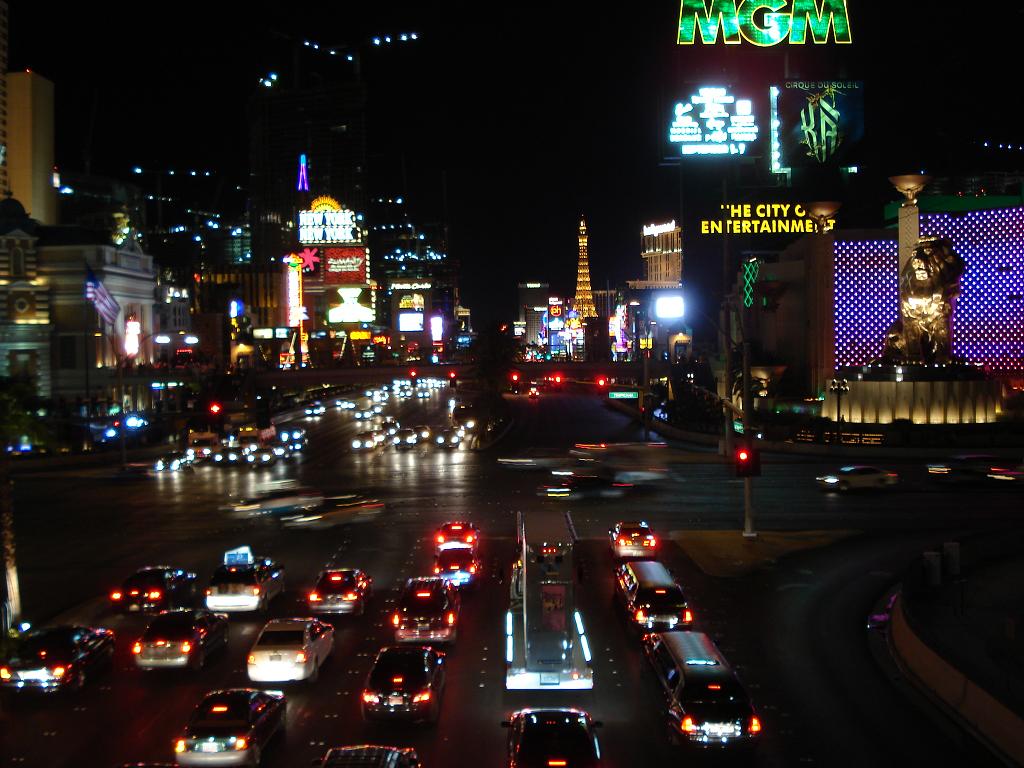
      The Strip at night.

      Monty Python has a bit where Michael Palin, playing a priest, goes on at length about how “incredibly huge” God is.  Your first sight of Sin City from the runway at McCarran International Airport is misleading – you can see the hotels in the distance, but your mind, accustomed to the size of hotels from your hometown, can’t comprehend the sheer scale.  You think, “oh, well it won’t take that long to walk up and down the Strip.”  That is, until the steroid-enhanced architecture of buildings like the MGM Grand, the Luxor, Caesar’s, the Bellagio and so on along Las Vegas Boulevard puts you in your place.  This is the pinnacle of capitalist triumph, built on inconceivable mountains of debt, what the Egyptian pharaohs might have crafted with their armies of slave labor had they been fond of slot machines, gin and neon.  By any measure of sustainable or even logical urban planning, Las Vegas should not exist – it makes no sense to drop a metropolis in the middle of the desert.  But once it’s there, why not go full tilt – let’s have trucks spew diesel fumes up and down the Strip for twenty-four hours straight carrying ads for gentleman’s clubs, let’s install ubiquitous misters to spray what’s left of the Colorado River on sunburned heads, and let’s run enough air conditioning to sear the ozone layer to a crisp.  Of course, that’s part and parcel of the Vegas allure – that with a few lucky hands at the blackjack table you too can afford your own $500-a-round golf course (or, at the least, not blink at the idea of a $6.50 glass of orange juice).

      Taxes and gratuity not included.

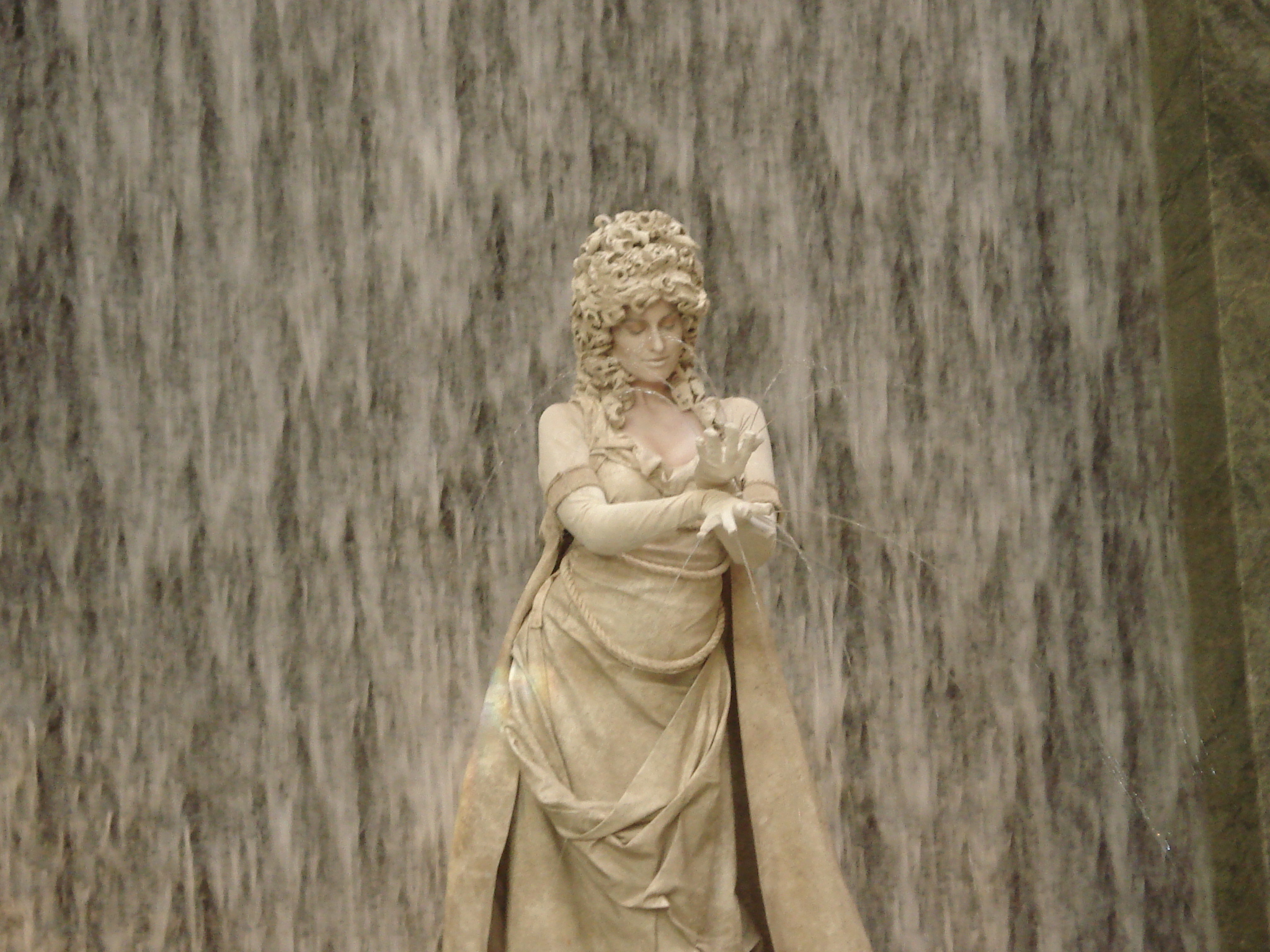
      There is plenty to loathe about the idea of Las Vegas; the excess, the waste, the glorification of wealth as mankind’s most noble ambition, the destitution of the ones who have bet the house and lost.  However, something about it tempts you to say “the heck with it,” set the moral issues aside and plunge yourself headfirst into the Vegas experience.  You can spend a week there, never set foot near a gaming table and still see something different in every passing minute.  Each hotel has its own custom Cirque de Soleil (or Cirque de Soleil-knockoff) show, and any Beatles fan wandering through won’t want to miss the Mirage’s presentation of LOVE, a collaboration setting the spectacle of Cirque to the timeless music of the Fab Four, which will never sound better than it does blasting remastered from a hundred speakers inside the theatre.  If you want kitsch, the cheesiness of “classic Vegas,” well, there is still the topless girlie show at the Tropicana, the men of “Thunder from Down Under” at Excalibur, and “Sirens of T.I.” at Treasure Island, where the spectacle of a pirate ship sinking before your eyes every half hour has been enhanced with a lot of busty, scantily-dressed women.  If you want something you can safely show the kids, take them to the M&M’s exhibit to say hello to a lifesize Red and Peanut, then wander across Las Vegas Boulevard to watch the dancing fountains at the Bellagio and re-enact the final scene of Ocean’s Eleven.  And speaking of fountains, only in Las Vegas will you turn a corner in a casino and stumble across something like this:

      A living statue at the Venetian. See the water pouring out of her fingertips?

      Would I go back?  It shames me to admit, in a heartbeat.  Mainly because I feel like I still need to figure Las Vegas out.  I can sneer at its over-the-top opulence in one breath and revel in its eternal party atmosphere in the next, and for me that contradiction is endlessly fascinating.  There is art and joy to be found beneath the layers of gouda and heartbreak; sensory experiences to be relished, regal comforts to be absorbed.  Perhaps the karmic way to do Vegas is to pledge an equivalent amount of reading Shakespeare and doing charity work for every day you decide to spend under the Nevada neon.  Or, at the very least, tell yourself that the allure and seduction of Lady Vegas will not change you nor what you hold dear.  For bat country may be a nice place to visit, but you probably don’t want to leave your soul there.

      Spread the word:

      • Click to email a link to a friend (Opens in new window) Email
      • Click to print (Opens in new window) Print
      • Click to share on X (Opens in new window) X
      • Click to share on Facebook (Opens in new window) Facebook
      • Click to share on LinkedIn (Opens in new window) LinkedIn
      • Click to share on Pocket (Opens in new window) Pocket
      • Click to share on Reddit (Opens in new window) Reddit
      • Click to share on Tumblr (Opens in new window) Tumblr
      • Click to share on Pinterest (Opens in new window) Pinterest
      Like Loading…
    • Why I’m sick – literally – of shaky cameras

      March 25th, 2012

      We went to see The Hunger Games yesterday.  I haven’t subscribed to the phenomenon of this newest teen read-turned-franchise (the premise of kids forced to kill each other for food strikes me as a tad dark for the age group it’s appealing to) but it’s good to see the emergence of a strong, brave and loyal heroine who isn’t whiny, unrealistically pretty or overly unfeminine, or dependent on the obsessive love of an emo vampire for her self-worth.  With that in mind, bravo to Suzanne Collins’ Katniss Everdeen and the actress who plays her, Jennifer Lawrence.  Bravo too to writer-director Gary Ross, who doesn’t make movies very often but never fails to craft a thought provoking tale when he does (Dave, Pleasantville).  And indeed, healthy kudos to all involved in putting together an entertaining if surprisingly low-key adventure.  My only major complaint is, did the camera have to be so damn shaky throughout the whole thing?

      Th-th-the H-h-hun-ge-ge-ger G-g-ga-me-me-es.

      Hand-held camera work has been popular among filmmakers for some time.  I first became truly aware of it when NYPD Blue premiered in the early 90’s – couldn’t figure out why the camera work was so sloppy!  From a critical standpoint, taking the camera off its mount and letting it bounce around invokes the realism of documentaries, placing the audience member right in the middle of gritty, cheap life and death and not in the safe, million-dollar air-conditioned artifice of a soundstage.  “Shakycam” in the opening sequence of Saving Private Ryan helped to convey the rawness and bloodiness of the D-Day invasion the way the bolted-to-the-floor approach of the 60’s John Wayne war epics didn’t.  And low-budget horror movies like The Blair Witch Project use shakycam to build tension so that those of us watching feel as unsettled as the characters wondering if the axe murderer is lurking beyond the doorway.

      But there is a major difference between being creeped out by a movie and contracting motion sickness from it.  I’m not sure if the shakycam work is becoming more intense these days or I’m just getting old, but the first hour of The Hunger Games had me longing for a barf bag – a reaction I’m certain wasn’t the intention of Gary Ross or his director of photography.  (Luckily once Katniss and Peeta reach the Capitol the camera settles down a bit.)  As much as I loved The Grey, I had the same problem with it.  I could not watch at least half of The Bourne Ultimatum in the theatre; I remember sitting there staring at the back of the seat in front of me hoping my stomach would calm down.  And Blair Witch made me so ill I had to walk out of the theatre twice – and I was 13 years younger then.  As the sensory experience of movies intensifies, with surround sound, digital projection and 3-D, the more shakycam messes with our inner ears, and the more difficult it is to sit through a movie without tossing the candies you just scarfed down.  My question is – the moviegoing experience has become miserable enough with smartphones going off and other audience members yakking at each other and at the screen, do we have to keep adding nausea to the reasons to stay home?

      Shakycam has become so ubiquitous that it pops up in movies where it’s completely inappropriate.  One of the worst recent offenders was Public Enemies, Michael Mann’s story of the pursuit of John Dillinger starring Johnny Depp and Christian Bale.  Mann made the questionable artistic choice of shooting a 1930’s period piece on digital video with plenty of 2000’s shakycam, which pulled me out of the story.  I never believed I was in the 1930’s – the camera work made me feel I was watching a reality show with a bunch of celebrities playing cops and gangsters.  I can’t imagine actors are very fond of it either, particularly if they’re trying to convey nuanced emotional moments while the camera is zipping around their face like a drunken mosquito.  One of the most beautiful elements of The King’s Speech was that the camera work was almost invisible, letting you focus on the words and actions and reactions of the characters.  The anchor of a fixed camera immerses you in that world because you forget the camera is there.  If the aim of a movie is to give the audience an escape, then directors should not erect barriers to losing oneself.  Shakycam does exactly that, even if it doesn’t make you physically sick, by reminding you of the camera present in the room with these characters, and that whoever is operating it probably should have eaten more protein with his breakfast.

      My friends and I made a no-budget, feature-length action comedy in our last year of high school, using my family’s video camera.  Fortunately one of my pals was able to procure a tripod, which we considered a godsend, because the last thing we wanted for our little epic was the unprofessional look of an unsteady camera.  Even in Hollywood, an unsteady camera used to be lambasted as the shoddy workmanship of a bad director; now, those same studio hacks jerk the camera around to up their artistic credibility and are summarily praised for their realistic approach.  Personally, I’m tired of just hoping I’m going to make it to the end of the movie without my stomach leaping out through my mouth.  I think it’s time we thanked the shakycam and packed it off to the realm of the intertitle and other cinematic techniques long since abandoned.  Either that or start selling Gravol at the snack counter along with the Skittles.

      Spread the word:

      • Click to email a link to a friend (Opens in new window) Email
      • Click to print (Opens in new window) Print
      • Click to share on X (Opens in new window) X
      • Click to share on Facebook (Opens in new window) Facebook
      • Click to share on LinkedIn (Opens in new window) LinkedIn
      • Click to share on Pocket (Opens in new window) Pocket
      • Click to share on Reddit (Opens in new window) Reddit
      • Click to share on Tumblr (Opens in new window) Tumblr
      • Click to share on Pinterest (Opens in new window) Pinterest
      Like Loading…
    • The clown princess sings the blues: Dee Dee Bridgewater live

      March 24th, 2012
      Dee Dee Bridgewater.

      Jazz can be too serious.  Images of the angry Charles Mingus, the intellectual Charlie Parker and the humorless Miles Davis haunt the genre.  The blues themselves draw their name from the stories of heartbreak and misery along the Mississippi in turn of the century America.  And there is perhaps no greater jazz tragedy than the too early passing of Billie Holiday at the age of 44 in 1959.  Yet jazz, as I’ve noted before, is a palette of many colours, and as much virtue as there is in the emotionless pursuit of perfection as exemplified by some of the artists noted above, to me, jazz’s most endearing feature is its capacity for fun.  The joy that can come from jazz is deeper, because it does originate from a place of pain.  It is a cathartic release from a soul that has walked through the fire and emerged with a smile, recognizing that the hardest part of life is in the rear view mirror.  Dee Dee Bridgewater, whose performance at the Burlington Performing Arts Centre last evening paid tribute to the late Ms. Holiday, is someone who knows how to find the fun inside the sorrow, how to wring it from the pores and swing it across the stage in golden platform shoes, while occasionally getting caught on the microphone cord.

      In person, Dee Dee Bridgewater is a striking, unusual, inescapably jazz figure – tall, leggy, elegant and glamorous, without a single hair atop her head.  Her background could not be more different than my jazz crush Emilie-Claire Barlow, but they are cut from the same cloth – seasoned performers possessed of extraordinary talent disciplined by impeccable timing and skill.  Bridgewater’s background includes a Tony win on Broadway and work with jazz royalty like Dizzy Gillespie and Dexter Gordon, but even to a modest crowd (that should have been a capacity house – shame on you Burlington) she gives it her absolute all, demonstrating tremendous vocal dexterity by flitting between the notes of Billie Holiday’s best in a flawlessly choreographed dance that with lesser chops could have been a catastrophic mess.    It’s not just a glorified karaoke night – where Billie Holiday’s take on these numbers was one of sorrow, Bridgewater rightly forges her own path, transforming them into songs of power and triumph while still paying tribute to the melancholy voice that originated them.  (Bridgewater can actually do a flawless and spine-chilling impression of Billie Holiday’s voice, but apart from one brief, jaw-dropping demonstration between numbers, rightly steers clear of imitation.)  Songs like “Lady Sings the Blues,” “Lover Man,” and “All of Me” become musical romps.  “Mother’s Son-in-Law” is a sassy double act between Bridgewater and her bass player as she vamps goofily like a way-past-her-prime burlesque madam.  One truly remarkable moment in “Fine and Mellow” sees Bridgewater performing a slide trombone solo – without a trombone.  It borders on comic, even silly as she mimics the movements of the slide, but she captures the sound of the instrument with only her voice, like a jazz Rich Little.  And in “A Foggy Day,” her quartet of piano, bass, drums and sax are each given their moment in the sun, proving that they share Bridgewater’s talent and ability to locate the kernel of joy inside each teardrop and spread it across the stage.

      Improvisation lies at the heart of true jazz – bending and twisting the melody this way and that, playing themes to their outstretched limits.  But as Dee Dee Bridgewater shows, that improvisation doesn’t always have to be so goshdarned dour.  She and her band fuse ad libs, missteps and outright screw-ups into a smooth cocktail of pure entertainment.  Unlike her younger contemporaries, Bridgewater is looking back at a long career and understands that she has nothing left to prove – at this point, she’s doing it for the sheer love of music.  It’s a privilege to spend a few hours in the company of such a genuine performer, and one hopes that should Dee Dee Bridgewater pass through these streets again soon, that many more people will avail themselves of a priceless opportunity to watch a true professor of the spirit of jazz show them what it’s all about, and leave them smiling for their trouble.

      Spread the word:

      • Click to email a link to a friend (Opens in new window) Email
      • Click to print (Opens in new window) Print
      • Click to share on X (Opens in new window) X
      • Click to share on Facebook (Opens in new window) Facebook
      • Click to share on LinkedIn (Opens in new window) LinkedIn
      • Click to share on Pocket (Opens in new window) Pocket
      • Click to share on Reddit (Opens in new window) Reddit
      • Click to share on Tumblr (Opens in new window) Tumblr
      • Click to share on Pinterest (Opens in new window) Pinterest
      Like Loading…
    • This is your brain on digital media

      March 23rd, 2012
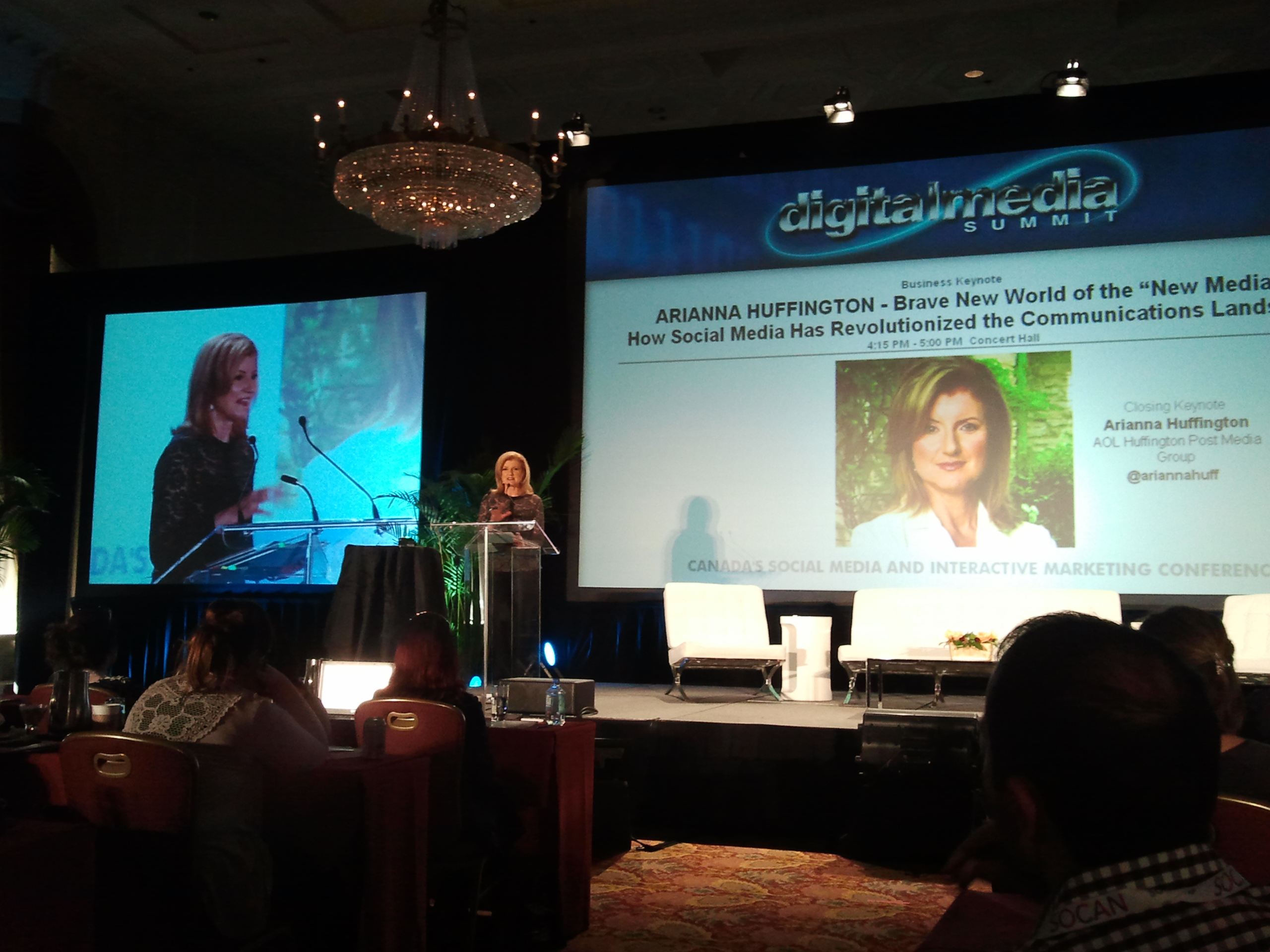
      Arianna Huffington addresses the Toronto Digital Media Summit, photo by yours truly sitting four rows back.

      Johnny Mnemonic features a pre-Matrix Keanu Reeves as a “futuristic” (I put the quotes around futuristic because many of the movie’s concepts have grown quite out-of-date) courier whose packages of data are uploaded directly into his brain.  Eager to take on a high-paying job, Reeves’ character agrees to carry more information than his brain can handle.  I find myself in a similar situation after two days at Toronto’s 2012 Digital Media Summit, having assimilated the insights of dozens of expert speakers and panellists, including representatives from Facebook, Google, LinkedIn and Microsoft, on what this whole concept means and where they think it might be going.  The key word there is “think,” because digital media is progressing too fast for the majority of us to simply keep up, let alone predict.  Today’s phenomenon is tomorrow’s relic, and what seems like a ludicrous concept this morning might be a smash success this afternoon.  The statistics are cosmic in their scope:  2 billion people on the planet access the Internet as part of their daily lives.  52 billion pages indexed on Google, 1.3 million articles on Wikipedia, 100,000 years’ worth of YouTube video shared on Facebook in 2011 alone.  Futurist Michael Tchong, one of the featured speakers this past weekend, refers to it as an ubertrend, which he defines as “a major movement, pattern or wave emerging in the American lifestyle that ripples through society leaving many subtrends in its wake.”  Although opinions on how to harness these ripples are numerous, one fact that seems to be shared is the idea that all of this is fuelled by the human need for connection – and kinship.

      Associated with that need for connection is the humorous acronym FOMO, that Tchong suggests is behind much of the social media explosion – Fear Of Missing Out.  When so much flies by at lightspeed, billions of times every nanosecond, we are terrified that we might not see all of it, whether it be the latest updates from our friends and family, infinite funny cat videos or actual breaking news.  Texting and driving, Tchong says, happens because some of us have decided that being in touch is more important than being alive.  Perhaps, if one can venture down the garden path of existentialism, for many people being in touch is being alive; this idea of ambient awareness that I have discussed before.  But it is far more than simply wanting to know what’s going on – it’s wanting to know.  Arianna Huffington, who gave the closing keynote address yesterday, referred to her early book The Fourth Instinct, which suggests that beyond the usual human needs for survival, sex and power, there is a hunger for spiritual fulfillment and meaning; to answer that fundamental question of Life, The Universe and Everything (yes, Douglas Adams fans, I know it’s 42, but stick with me here).  Digital media is a sublime leap towards the realization of this answer, because it brings people together in a grand unified search.  This is why I put no stock in the philosophy of every man for himself; the mere existence of the ubertrend under examination here suggests that we are inclined towards a sense of community, of belonging, and that the reason why the technology of information has been the fastest to progress (instead of jetpacks) is because it reflects what we want most as a species gifted with intellectual curiosity.

      And as expected, many fear the undiscovered country it is leading us towards.  Misguided approaches to regulate digital media, such as SOPA, ACTA or the Vic Toews nonsense going on in Canada, are the last refuge of an old guard longing for the simplicity of the era when everything could be explained as God’s will.  Ironically, that fear comes from the very same place as the curiosity that drives the democratic exchange of ideas as exemplified by digital media.  When information rested only in the hands of a few, those few were respected and admired as learned leaders.  The more the truth spreads, the less those people are needed – the influence they have built for themselves, out of this same, basic longing for community, diminishes as others cease to listen to them, until they are finally left alone, and forgotten.

      So what then, in a nutshell, could you say is the biggest takeaway from my massive data intake of the last two days?  Certainly enough thought to chew on for the conceivable future (and more than a few blog posts I’m sure), but above all else, reinforcement of the notion that a global community, a global family, is not just a pipe dream of a few starry-eyed prognosticators, it is a place we are going whether we like it or not.  Our existence as individuals in a population of 7 billion mirrors our tiny earth adrift in an incomprehensibly vast universe, and just as each of us longs to find meaning as part of a family, our entire race hungers for meaning within the endless dark.  Why are we here?  Maybe Cousin Phil has an idea – check his status update.  Connection, knowing that we are not alone, is tremendously liberating – it reassures and emboldens us to take the next step.  Host Rob Braide of Galaxie Radio kicked off the conference by invoking the analogy of a drunk who drops his keys on a dark street and wanders to the safety of a street light instead of looking for them straight away.  The connection provided by digital media is that light.  And the more light the better.

      Spread the word:

      • Click to email a link to a friend (Opens in new window) Email
      • Click to print (Opens in new window) Print
      • Click to share on X (Opens in new window) X
      • Click to share on Facebook (Opens in new window) Facebook
      • Click to share on LinkedIn (Opens in new window) LinkedIn
      • Click to share on Pocket (Opens in new window) Pocket
      • Click to share on Reddit (Opens in new window) Reddit
      • Click to share on Tumblr (Opens in new window) Tumblr
      • Click to share on Pinterest (Opens in new window) Pinterest
      Like Loading…
    ←Previous Page
    1 … 27 28 29 30 31 … 39
    Next Page→

    Blog at WordPress.com.

    Privacy & Cookies: This site uses cookies. By continuing to use this website, you agree to their use.
    To find out more, including how to control cookies, see here: Cookie Policy
     

    Loading Comments...
     

      • Subscribe Subscribed
        • Graham's Crackers
        • Join 6,281 other subscribers
        • Already have a WordPress.com account? Log in now.
        • Graham's Crackers
        • Subscribe Subscribed
        • Sign up
        • Log in
        • Report this content
        • View site in Reader
        • Manage subscriptions
        • Collapse this bar
      %d