Our sky is a little dimmer today with the loss of someone who expanded the meaning of stardom out beyond the final frontier. Leonard Nimoy, gone at 83, was an actor, director and photographer by vocation but at heart a storyteller and shaper of one of the most impactful fictional characters of our time, who helped remind millions of us feeling like aliens walking an often confusing planet that we were human after all. And more than that, in an entertainment landscape overrun by buffoons and simpletons elevated by ratings popularity to aspirational figure(air)heads, Nimoy made smart and logical the coolest thing you could hope to be. With his portrayal of Mr. Spock, Nimoy gave the pursuit and value of intellect a mysterious and, dare-one-say-it, sexy side. He gave hope to those of us more comfortable with a math book than a bench press. He showed that brain could be more magnetic than brawn.
When I first watched Star Trek at the age of 10 or so, Spock was the character I was most drawn to. Sure, Captain Kirk was the swashbuckling hero and Scotty had a cool accent, Dr. McCoy was full of Southern charm and Lieutenant Uhura was simply stunning to behold, but Mr. Spock was, if one will pardon the pun, fascinating. A teenage kid struggling with hormones and the associated emotional imbalance, particularly in the wake of the passing of his own father, will naturally find himself captivated by this unflappable figure who sets that troublesome turmoil aside and approaches each problem from the standpoint of clear and logical analysis – while never forgetting the all-important human equation, even if he hasn’t quite figured that out yet. I wanted to learn more about Vulcans and try to emulate their approach to life, even if I didn’t think I would ever become a scientist. More importantly I wanted to figure out if it was actually possible to neck-pinch someone into unconsciousness – would have helped with bullies back in the bad old days.
Our popular culture contains an infinite assortment of characters whose adventures and traits resonate within our collected consciousness long after they have exited the stage. With respect to his successor Zachary Quinto, few characters and performers are as inextricably fused as Nimoy and Spock. Surprisingly, or not, Star Trek creator Gene Roddenberry’s initial description of the USS Enterprise’s Vulcan science officer was the very definition of “broad strokes,” a sketch that could have applied to any generic alien from any cheesy science fiction program of the last century:
…Probably half-Martian, he has a slightly reddish complexion and semi-pointed ears…
As most fans know, NBC was so unimpressed with Spock as he appeared in Star Trek’s first pilot that dumping him was one of their conditions for agreeing to finance a second. Roddenberry refused, of course, and over the original run of 79 episodes, Nimoy took those pencil marks and began to infuse him with depth, gravitas, and even a dose of Jewish mysticism (the source of the famous split-fingered Vulcan salute), creating a lasting icon. As the Star Trek canon became ever more robust, Nimoy seemed to get its characters and the reason for its popularity more than the behind-the-camera talent did. Blossoming into a fine director, he took them helm and helped guide Star Trek on its cinematic journey, and those times where it stumbled were those in which his voice was left unwisely on the sidelines. It would seem strange to wish to try and do anything with Star Trek without the input of Mr. Spock, but so goes the human arrogance that Spock himself would rightfully disdain.
Like so many of his Trek co-stars, Nimoy the actor wrestled with the issue of typecasting. In the 1970’s, he suffered through a bout of fan misgivings after the publication of his autobiography I Am Not Spock, proof that even before social media the public was apt to overreact to things not worth getting upset about. Such was the loyalty to the character he had etched into so many millions of hearts. (Sure enough, when rumors began circulating during the pre-production of Star Trek II: The Wrath of Khan that Spock was to die, a most illogical wave of threats began bombarding that movie’s producers.) When he wrote his sequel I Am Spock so many years later, Nimoy reconciled with his alter ego and with the fans who wanted to see him as nothing else, perhaps recognizing that if one is to be known for just one achievement in one’s lifetime, the definitive portrayal of a character who inspires millions of people is not such a bad legacy to leave.
In his twilight years, as he explored his passion for photography and made the occasional TV or film appearance, Nimoy seemed settled into the idea of himself as elder statesman and philosopher. A few days ago, after he was admitted to hospital, Nimoy’s Twitter account posted several moving messages about life and memory, perhaps from an accepting sense that the days were growing short. It was, in effect, communicating a final wish to the world that it live long and prosper, as he did. In the final scene of Star Trek II, the dying Spock’s thoughts and words are not for himself, but for his ship, his captain, and his friend. “Don’t grieve,” he says. “It is logical; the needs of the many outweigh the needs of the few.”
In the end, Leonard Nimoy is that rare man who can move on from this life with no task left undone and no ambition left to prove. It can truly be said of him that he left things better than he found them – we could wish no more for him, or ourselves. And perhaps as his captain might have put it, “of all the souls I have encountered in my travels, his was the most… human.”
This is going to be one of those posts predicated on an entirely inexperienced and likely uninformed premise, so feel free to take it or leave it as you choose. But I’m just gonna throw it out there and see what you guys think. And that premise is: there is far too much explaining going on in fiction, especially as regards characters with supernatural abilities. I skim through people on Twitter glorifying “highly developed, intricate magic systems” in fantasy novels, and have seen, distressingly, a great number of others complain that Elsa’s powers were never explained in Frozen. I guess the seven-year-old in me is wondering where the magic in magic has gone. Why does every paranormal situation in fiction have to be scienced up with midichlorians? What happened to taking magic on faith?
Magic and other supernatural abilities should never be the raison d’etre of a story; they should be an angle by which a dramatic human conflict is examined. When authors and screenwriters get bogged down in the “why” of magic, the human element is lost. Stan Lee gave an interview around the time the first X-Men movie came out where he explained the genesis of those characters thus: having exhausted the idea of superpowers acquired through gamma ray bursts, radioactive spider bites and the like, labeling the new characters “mutants” eliminated the need to craft complex origins for each of the hundreds heroes and villains who would populate his fictional world. He could just get on with the story. Likewise, though crippled by a low budget forced upon it by a nervous studio unconvinced of the potential of comic book movies at the time, the first X-Men is by and large better than the dozens of other adaptations that followed simply because it doesn’t waste an hour telling you where everybody came from and how they got their powers. They’re mutants, they can do things humans can’t, let’s go already.
In the first Star Wars, the entirety of the Force is explained in one line: “It’s an energy field created by all living things; it surrounds us and penetrates us, it binds the galaxy together.” We didn’t need Obi-Wan going into ten pages of dialogue about the different castes of Force-wielders, the innumerable versions of the specific powers and how Jedi Trance Remix can only be used on Hoth in a Wampa cave by an 18th-level adept wearing green trousers on alternate Thursdays. If you look at the original drafts of Star Wars, George Lucas had included that extraneous crap, but he wisely cut it to improve the story’s pace. (As we know to our eternal lament, he put it all back in for the prequels.) In Frozen, Elsa’s magic also gets one line of explanation, and it’s delivered in a moment of urgency at the beginning of the movie. (If you missed it, the head troll asks her parents, “born with, or cursed?” They answer, “born with.”) What more did the story need? Nothing – because the story was never about Elsa’s powers. They were only a catalyst for a human conflict. The story was about the bond between the sisters, and that’s why it resonated so deeply with audiences everywhere. Emotions are the key, not technical papers about the chemical processes that make fireworks sparkle and go boom.
The obvious, worst case scenario for the inevitable Frozen 2/Frozen Again/Refrozen is that the writers decide to explain Elsa, by revealing that she was actually rescued/adopted from a family of ice sorcerers/arctic spirits/frost giants/magic penguins who return to claim her, and force her to choose between her birth family and “adopted sister” Anna. (Wanna take bets as to whether this is the direction they go in? It’s not one I offer with enthusiasm.) And once you start explaining, you can’t stop. The narrative becomes less a story and more a Wikipedia, where each hyperlinked word leads to another page of definitions and explanations. That’s what wrecked the latter incarnations of the Star Trek series, where crises could be solved over and over with plodding explanations of made-up technology – reconfigured electroplasma conduit taps emitting verteon particles through phased quantum inducers and so on.
Apart from George R.R. Martin’s A Song of Ice and Fire series, the latest of which I struggled to get through, I haven’t read any fantasy novels in a long time, mainly because I grew tired of wading through elaborately constructed and meticulously explained worlds in which nothing interesting ever happened. (I am open to recommendations, author friends, especially if it’s your book.) I understand that world-building can be a consuming exercise, but constructors should remain mindful that the world will only be as compelling as the characters within it. It’s a bit like visiting a foreign country – you don’t conduct a thorough review of its civil and criminal code before sprinting out of your hotel room to hit the sights. Tell us just enough so that we don’t get lost, and not a solitary syllable more. Let us discover the world on our own, hand in hand with the locals.
When a mystery is explained, it loses its ability to compel our interest. Remember how an X-Wing flying through the Death Star trench looked so much cooler before you knew it was a small model filmed and optically composited against a background plate of another small model, and another layer of black velvet curtain with sequins representing the stars? So too is the wonder of magic diminished when we’re told it’s caused by a specific ancient Petrifying Spell developed by the archwizard Grumblethorn during the seventh Marcovian Age, requiring equal portions of Skirbian tree lizard earwax and Boltan’s Smoogrifying Powder, gathered beneath a two-thirds waning crescent moon. I know some readers glom on to that level of detail; I find it tedious. When I’m describing the use of magic in my book, I try to picture it cinematically, as if I was sitting in a theater watching it unfold before me, and imagining the awe I would experience in that moment. What difference does it make how it happens? It’s enough that it does, and that it can be both beautiful and terrifying. And as always, the emotional impact of the spell on both the user and the witness (and/or victim, as befits the scene) is what’s more dramatically interesting – both to write, and to read.
That’s my take, anyway. Could be completely off base in terms of what’s grabbing people’s interest these days. Your thoughts?
The Troggs had it wrong: love is not all around, rage is. At least that’s what it seems when dialing into any form of media of late. We’re a perpetual powder keg, frothing at our keyboards to spew a storm of digitized incendiary rhetoric into the nearest available outlet given the merest hint of provocation. It’s about as ludicrous as that old Simpsons gag where a guy taps another on the shoulder and says “Hey you, let’s fight,” and the other replies “Them’s fightin’ words” and takes a swing at him. We seem to be spoiling for it in our interactions, seeking out opinions (or venturing them) designed to raise blood pressures and elicit profanities and threats of bodily harm. And yet it’s not as though you’re seeing fistfights break out in shopping malls on a regular basis, or a global “Red Hour” – if you remember the Star Trek episode “The Return of the Archons” – where the collective agrees on a time and place where they may just as collectively lose their shit. Day-to-day society proceeds apace, unencumbered by the simmering monster apparently lurking under everyone’s skin ready to Hulk out at the slightest shift in the breeze.
Why are we so angry all the time? One of the most intriguing arguments is that popular culture, the glamorization of “fame” and the gradual dumbing-down of the education system are to blame for creating a perpetual sense of false expectations amidst the great majority of the world’s population who are fated to live quiet and largely unrecognized lives (not that there’s anything wrong with that). Our concepts of “success” and “failure” have been altered to a state where they barely resemble the truth of what they once were. We’ve seen failure removed almost entirely from schools lest the fragile feelings of the precious snowflakes inside be hurt. (As a parent, I don’t mind when my kid flunks a test, because I’d rather he learn that he needs to try much harder to pass rather than know that no matter how little effort he puts in, he’ll always get by.) Consequently you have a generation of children believing for the first eighteen years of their lives that they are perfect and infallible, and when adulthood arrives and they don’t ace that first job interview, or they come up against any task that is beyond them, they implode, as reliably as a calculator attempting to divide by zero. Failure does not compute.
Success, on the other hand, is defined again and again, in a manner resembling brainwashing, in terms frankly unachievable by 99.9999999% percent of the population: seven-figure salaries, a constant stream of supermodel companions, jetting to the Riviera for the weekend to win the Formula One while top-lining the latest blockbuster action movie. You are invited constantly to compare the dregs of your life with the riches and wonders of the lucky few and find yourself forever wanting, while being indoctrinated with the lie that the only thing you need is belief in your dreams (that doesn’t hurt, but it is most definitely NOT the only ingredient). How many people were in that record-retweeted Oscar selfie, versus how many millions more were only wishing that they could have been standing to Bradley Cooper’s right? Is it realistic to think that we can all be movie stars and sports heroes and retire to Malibu mansions overlooking the sea? Yet ask any kid what they want to be when they grow up and the number one answer is “famous.” The purveyors of celebrity gossip have become rich themselves convincing the rest of us that we’re just a happenstance discovery away from the big time. We don’t actually have to do anything to merit it; we’re owed it.
Yet that golden ticket is not going to arrive, and millions grow increasingly impatient for it. And to paraphrase Yoda, impatience turns to anger, anger turns to hate.
Once again, the boys seem to be the greater offenders here. Given that we are prone to insecurity as it is and the media’s far-fetched depiction of what constitutes “manhood,” it is unsurprising to see that fireball into unrestrained fury. I was made aware of a hashtag that circulated Twitter a few days ago, that blissfully I missed out on, #LiesToldByFemales. Basically, a venue for a cabal of misogynists (who would not dare say any of these things to a real-life woman, naturally) to whine about the endless ways women had done them wrong, either in actual fact or perception (I chance to assume the latter). It hearkens back to the redefinition of a successful relationship for a man by countless movies, music videos and men’s magazine articles as: scoring a smokin’ hot chick who will do whatever he wants and subsume her will and personality to his desires, only as long as he deigns to keep her around. A prurient fantasy, which of course does not exist in the real world, but doesn’t stop men from wanting it anyway. They’re entitled to it, the magazines have told them, and the movies have shown, in any number of stories where the beautiful goddess eventually succumbs to the persistent charms of the unwashed, inadequate nerd. Fade to credits before the inevitable consequences of such an ill-gotten romance take hold. But no matter, the lie has been pre-packaged and sold, and the men who fail to replicate it in their own lives have a perfect justification to assist in brewing their lifelong resentment of reality. The perceived “safety” of anonymous online posting of same then entitles them to let it out, so the like-minded can holler “Right on!” and retweet and feel vindicated for harboring the same sentiments. Regardless of how much damage it may do – and how little in fact their lives will change for the better.
That’s the saddest part of this. Where is all the rage getting us? You have a tremendous irony in that profound dissatisfaction with the status quo has fired some of the most expansive changes in our history, and yet, 21st Century rage is an end unto itself. We are furious, yet benumbed. We’re not starting riots in malls. It is enough now to be angry for the sake of being angry, to make a few heated comments on a message board, and go back to the drudgery of the day. We’re addicted to indignation, seeking it out like junkies who can’t abide the space between the highs. The result? A climate where everyone is on edge at every moment of the day, a perpetual chill where many are afraid to speak up because it’s like lighting a match to see how much gas is left in the tank. Reading highlights from the CPAC conference (for the enviably uninitiated, it’s an annual gripe-fest for conservative politicians and celebrities to blame the world’s woes on liberals and their Kenyan Islamofascisocialist president) I can’t help but be reminded of Woody Allen’s character in the 1967 Casino Royale, whose master plan was to detonate a bomb that would render all women beautiful while simultaneously killing all men over four-foot-eleven. I don’t know what pipe dream of a regulation-free, rootin’-gun-totin’ right-wing utopia where anyone with less than a billion bucks in the bank is deported to Mexico drives these folks, but they seem awfully pissed off that they don’t have it, and that they’re getting no closer to it no matter how many veins they burst in their forehead while they rail about Benghazi at the podium. Sponsors are raking in advertising revenue from the anger that Fox News foments, but those in whom it is fomented are no further ahead. In fact, the stress they’re accumulating is shortening the remaining days they have to get angry in.
So much misdirected energy out there. Just imagine what we could do with it if we could find a way to direct it somewhere else.
As always, dear reader, the fault lies not in our stars, but in ourselves. So we need to take a page from the Serenity Prayer – accept the things we cannot change. We need to let go of this idea that we have a divine right to sit at Brangelina’s table, and that Gisele Bündchen only stays married to Tom Brady because she hasn’t met us yet. We need to cement in our minds the idea that a relationship with a real person is infinitely more rewarding than empty fantasies about surgically-sculpted, spray-tanned hot bods. We need to stop thinking that we deserve jobs, fortunes or even people that we haven’t gone out and earned. We need to remember Captain Picard’s one-time advice to Data: “It is possible to make no mistakes and still lose. That is not a failing; that is life.” So yes, we need to accept that by virtue of birth, talent or plain old dumb luck there will always be those individuals who have things better than we do, and that choosing to resent them for having it is truly like that old saw about drinking poison (or ingesting gamma radiation) and expecting the other person to die. They won’t, no matter how many times we swear on Twitter about it.
What if we tried living life to our own standards instead of what is foisted on us by marketing reps who are trying to sell us things? If we were able to take the energy misspent on rage and resentment, pull it out of those bottomless pits and refocus it like a laser in furtherance of working on ourselves and our lives, we’d find the reasons for those feelings diminished. We wouldn’t envy Tom Brady because we’d know what an incredible partner we have standing right next to us and holding our hand at each step. We would not need to be on movie screens entertaining anonymous masses because the people we know, closest to us, would never question how much we value them. We would find ourselves replenished with accomplishment and joy – the kind of deep inner assurance that cannot be bestowed by thousands of screaming fans. Let’s not forget the cautionary tales of those who seemingly “have it all” yet drown and lose themselves in drink and drugs because standing ovations can’t fix pain. No matter where you go, there are you are. Instead, change how you feel about yourself and realize you could have a pretty amazing life if you just started living the one you have and not the imagined one that everything you read and see is telling you that you deserve.
Endless rage will never get us what we really want in life – namely, to stop feeling so angry. It is the very definition of self-defeat. So no, Hulk no need to smash. Hulk need to calm down, be nicer to wife and kid, plant tree and take up productive hobby. Hulk might find he happier and other stuff not bother him so much. And everyone get along better.
My friend George sent me a link to a really long (but interesting nonetheless) rant about Star Trek Into Darkness the other day. The author of said rant was not in any way a fan of Damon Lindelof, the Hollywood screenwriter who co-created Lost and contributed to the scripts of both Ridley Scott’s misfired Alien prequel Prometheus and the most recent reimagining of Gene Roddenberry’s vision. To paraphrase, it’s perhaps enough to say that the author’s main gripe with Lindelof is that his writing forgoes logic, rules and consistent characterization in favor of “gee whiz,” “cool” and giggling at boobies instead. Even as someone who enjoyed Star Trek Into Darkness for what it was, I found it hard to dispute this point. One of the biggest of my own gripes about it was the ending, cribbed almost note for note from the superior Star Trek II: The Wrath of Khan, to the point where it came off as something like a cinematic exercise in karaoke. Movies in this genre nowadays rarely, if ever, make you feel anything. And the reason, plainly, is that they are being made by a generation of filmmakers who have not felt, but rather have experienced life only by watching other movies.
I don’t know Damon Lindelof and I can’t pretend to know what he’s gone through in his life. Certainly his drive and his skill at achieving the career he has is to be admired and envied. But he seems to be one of a breed of young writers and directors from the mold of Quentin Tarantino, who spent their formative years working in video stores, absorbing thousands upon thousands of famous and obscure movies into malleable brains, uploading raw data Matrix-style to that place where the memories of life would normally be stored. The work they produce now as the chief drivers of the Hollywood machine is endless pastiche; pieces of other works recombined and reimagined for modern consumption. I had a discussion with my uncle recently about the decline in quality of movie scripts and I told him it’s because foreign markets make up the majority of a movie’s profit potential, and vehicles driven by visual effects and explosions and “cool!” will do better overseas than more literate works filled with idioms and ideas and cultural mores that don’t translate into Mandarin or Hindi. Studio executives hire filmmakers who can deliver dollars, not philosophy. (If they can do both at the same time, fine, that usually means Oscars, but the former is always preferable). This is where folks like Damon Lindelof find their wheelhouse. (In fairness to him, Star Trek Into Darkness was co-written by Alex Kurtzman and Bob Orci, and certainly director J.J. Abrams had major story input as well). They can deliver the popcorn with consistency and efficiency. But that’s all.
There is a semi-famous story (to Trekkers, anyhow) around the writing of Star Trek II: The Wrath of Khan. When Nicholas Meyer was hired as its director, he was told there were at least five different scripts for it floating around, none of which were suitable to shoot. Meyer suggested a meeting whereby the creative team made a note of everything they liked from any of the drafts – a character, a scene, even something as minor as a line of dialogue. Meyer took these notes away and wrote a draft of what would become the movie we saw in only twelve days, forsaking a writing credit simply to get the movie in shape to shoot. In any other hands such a cut-and-paste job might have resulted in a hackneyed, disjointed mess, but Meyer’s literary background enabled him to infuse a theatrical quality into what was otherwise a straightforward story of revenge and sacrifice. What was most remarkable about the screenplay was that it dared to present its hero as old, tired and washed-up – traits actors loathe playing because they think the audience will project them onto their real-life selves. Meyer was young when he wrote the screenplay, but as a struggling artist he could empathize with those things. Hotshot screenwriters who’ve bounced effortlessly from pre-sold blockbuster to pre-sold blockbuster as the new Star Trek team have done are incapable of this. They don’t know what it’s like to fail, to come up against your own limitations and find yourself wanting. They simply can’t dramatize what they have never felt. And so they reach toward the only place they’ve ever found traces of those feelings – other, better movies.
When I picture Nicholas Meyer writing Star Trek II, I see an angsty face hunched over a typewriter, sucking down his twentieth cigarette, plumbing the depths of his soul as he agonizes over le mot juste, fighting to find the emotional truth of the story. When I picture the story break sessions for Star Trek Into Darkness, I see a room full of young guys in baseball caps scarfing down pizza and Red Bull and trying to one-up each other with statements like “You know what would be totally awesome? A shot of the Enterprise rising out of the ocean.” “How about they come across this ship which is twice their size and totally painted black?” “COOL!” “Hey, guys, check this out. What if the bad guy… is Khan? And the end is exactly like Wrath of Khan only we switch Kirk and Spock’s places?” “Yeah! I love it!” “It’s pretty good, but we need some hot alien chicks with tails. And more Beastie Boys songs, that went over so well last time.”
I had the same problem with Superman Returns, which I watched again recently, and I chalk it up once more to a screenplay written by capable but very young scribes Michael Dougherty and Dan Harris (they have cameos in the movie as high school students) who were great at dreaming up “Cool!” trailer-worthy moments like a bullet bouncing off Superman’s eye but not so skilled at crafting emotions or believable characters. Superman is a difficult character to write even if you’re a seasoned pro, but the main reason that movie didn’t connect with audiences was because Superman really has no story in it. He’s just… there, as lifeless as the dated-looking CGI used to render him in some of the flying scenes. He talks about having been gone for a while but doesn’t seem to have been changed by his experience, or have any compelling reason to have come back (apart from using his powers to stalk Lois Lane in several unnerving sequences). The movie is more interested in the “whiz-bang” spectacle of Lex Luthor’s overly complicated plot to create a new continent in the Atlantic Ocean using stolen Kryptonian crystals and kryptonite, which in the end Superman just ignores as he lifts the entire landmass into outer space (a point not lost on my young son who remarked “isn’t kryptonite supposed to make him weak?”) And for a movie that directly raises the question of whether or not the world needs Superman, it never gets around to debating this point in a satisfactory way. Compare the wafer-thin Superman Returns to the profundity in the Richard Donner original that it is paying homage to, and it comes up extremely short – because the young writers of the former simply don’t have the chops of the great veteran Tom Mankiewicz (whom they crib lines from in the movie’s only memorable scenes, just as Lindelof, Orci and Kurtzman quoted Meyer’s famous dialogue verbatim in Star Trek Into Darkness). Instead, we get dumb gags about dogs eating each other.
Someone once decimated Star Wars: Episode I – The Phantom Menace by pointing out that the plot was a series of scenes of characters going from meeting to meeting to meeting, a reflection of the life of George Lucas at the time. I’m all for encouraging young screenwriters to get their shot at the big time, but as a lover of stories that matter I prefer the visceral resonance you’ll see in works by writers who’ve lived long enough to have had their asses kicked around the block a few times. If you’ve never been the underdog, you can’t know what it’s like to be looking up at the mountain and be paralyzed with the fear of taking the first step. In the absence of those memories you reach for what others have done in older, better movies, and cough up pale copies that rely on flash and swagger to cover the absence of substance. “Yeah, it doesn’t matter that none of these characters say or do anything memorable or touching, ’cause… cool badass aliens with frickin’ laser beams! Like in that other movie that people enjoyed!” The abiding irony in all of this is that as it concerns Star Trek, some of the most memorable dialogue in The Wrath of Khan was itself lifted from other sources, namely Moby Dick et al. But in that movie, it didn’t feel so obviously recycled, because Meyer’s informed writing and directing (and terrific performances, by the by) sold the emotional truth of each word.
I’m not saying there should be some rule that you can’t write a movie unless you’re at least 40, have been divorced once and be suffering a deep psychological resentment of your parents for taking your favorite blankie away when you were four. I’m saying that some of these young guys pulling in six and seven figures for rewrite jobs should perhaps look away from a screen once in a while, get out and live a bit of their lives. Read some classic literature. Rediscover what it means to feel something that isn’t necessarily just the high of sleeping with models after a gala premiere. Worry less about what’s cool and more about what connects. Recognize that what touches us about movies and stays with us long after we’ve left the theater isn’t the awesome shot of the ship tumbling end over end into the atmosphere, it’s the quiet dignity of man in his darkest hour and the deep bonds we forge to fight against our intrinsic loneliness. It’s the humanity. And if you can’t feel that in your own life, you’ll never successfully translate it to the page, let alone to the screen.
Where do you get your ideas? That’s a question that everyone who fancies him or herself a writer is asked by someone at some point, with either a look of wonder or disgust on the questioner’s face (hopefully, it’ll always be the former). The Muse can be an elusive mistress; Lynda, my writing teacher, once advised that waiting around for her was an exercise in futility as she was more likely to dance just out of reach, laughing at you, and that you had to force her to the table by sitting down and starting without her. In that respect, schedules and deadlines certainly help a great deal, as we all know that the easiest thing to do in the world is not write.
Finding a subject for a blog post is not terribly difficult, even if the writing of said post is. There’s always lots going on in the world that we can comment on. I’m of the “more flies with honey” and “current or future employers might read this” mentality, so I’ll usually stop myself from venting about whatever is pissing me off lately and try to either write something positive or find an optimistic take on a particularly frustrating news item. (On a side note, my wife and I are watching the political drama House of Cards these past few nights and I’m finding it difficult to glom onto completely, for the singular reason that it is an utterly cynical program wallowing happily in the most selfish aspects of government service, and I’m much more drawn to the hopeful take offered by The West Wing. But Kevin Spacey is still awesome.) The blog, essentially, is a snapshot of how you’re feeling on any given day. A novel, by contrast, is a long term exercise in exploring an idea to its every possible limit. But which ideas are more deserving of the in depth treatment as opposed to the casual chat? How do you know which is which?
The summer after my mother died, I chained myself to my computer and started writing screenplays. That was what I was into at the time; for more on what led to this check out this previous post. Like many, my first ventures into serious writing were fan fiction, and in my case, Star Trek fan fiction. Although, I never managed to finish any of it – there’s an old hard drive rusting in a landfill somewhere full of the first chapters of stories about the crew of the Enterprise doing… well, not very much, actually. I couldn’t plot worth a damn at the time; I always figured I’d get to that part later on. What was more of a passion in the teenage years was drawing comic books, even though my artistic skill was minimal. And those were always James Bond stories, because they were easier to plot out. Bad guy doing bad thing, Bond must stop him, there’s a girl, a car chase, a gadget or two. For a high school creative project I wrote and drew a 007-Star Trek: The Next Generation crossover, where Bond is beamed aboard the Enterprise-D to help solve a Romulan conspiracy that involves his old adversaries SPECTRE, and along the way he manages to fall in love with Dr. Beverly Crusher (although in a downbeat ending, they have to go their separate ways). My English teacher loved it, her only criticism that it was a shame that I wasn’t using my own original characters. My rationale (read: excuse) was that using established characters freed you from having to introduce and develop your own, and enabled you to get right into the story instead. I didn’t understand at the time that the key to solving my inability to plot was to instead let the story flow out of the characters themselves.
But back to that summer. By that point I was using original characters, even if the dialogue they were speaking was almost entirely borrowed. That was about the time Pulp Fiction had come out and, as a film student at UWO, you could not take two steps into your classroom without hearing someone invoke the mighty Tarantino. I’d like to think that I wasn’t as obviously pretentious as some of the goatee-stroking, beret-wearing pomposities I sat in lectures with, but my work was just as derivative. My first full screenplay was about a group of kids in film school, with exhaustive, profanity-laden monologues about the hidden sexual themes in Star Wars (which, if you’ve seen Clerks, sort of puts the lie to the idea that these were in any way original characters.) I was still convinced that someday, someone would make this movie and I’d be accepting my Best Original (heh) Screenplay Oscar for it (then again, I was 20, recently orphaned and extremely naïve). Once that one was done, I started another, and then another. But they weren’t anything of note or even interest. I began to realize that they had no lasting value – because they weren’t about anything; there was no there there. And they certainly weren’t in my own voice.
The final screenplay was about a group of four 20-somethings who lived in the same apartment building (cough… Friends… cough). I know, it sounds dreadful, but I really enjoyed spending time with these particular people. As bad as some of those other screenplays were, they were an opportunity to hone my skill; to develop dialogue and subtext, to cut the profanity, to shed the influence of His Holiness Pope Quentin. When I typed FADE TO CREDITS, I realized I hadn’t been able to develop the characters in the way I’d wanted – the screenplay was about 170 pages (most genuine ones top out at 120, maximum) and I hadn’t said everything I needed to with these people. I decided to abandon it at first draft and instead turn it into a novel. And for the next two years I labored on this thing on and off. A great deal of my days were spent thinking about the lives of these people: Bryson Reid, aspiring writer and perpetual smartass, Krista Piper, alcoholic figure skater, Scott Shipley, advertising executive on the rise, and Lauren Devaney, Irish barista homesick for her native land. Part of Bryson’s story involved him meeting an entrancing and successful fantasy author named Serena Lane. And interspersed between the chapters about Bryson, Krista, Scott and Lauren were meant to be “excerpts” of Serena’s bestselling novel. The whole enterprise was designed to lead to a “shocking” metaphysical twist (not in the earlier screenplay version) whereby Serena was the same person depicted in the fantasy portions, who had somehow managed to cross into the real world (and it was the Irish barista, Lauren, who had authored the book in the first place, only to have it stolen by a manipulative publisher who was herself the villainess from the fantasy story and had also escaped from page into reality. “Serena Lane” would turn out to be the name of the street on which Lauren grew up in Dublin.) Anyway, it got up to 350,000 words with no end in sight. As I was writing it, I found I was enjoying the fantasy portions significantly more than the real world stuff. Bryson, in particular, although ostensibly the hero, was fundamentally unlikable and there were times I just wanted to smack him upside the virtual head. But I still felt the need to finish it.
Then one summer, I signed up for a local adult education course called “Crafting a Novel.” Naturally I knew how to write a novel, this was just a chance to meet some people (i.e. attractive, single women) with a similar passion. The first night of that class was a smack to the head much larger than the one I had wanted to give my fictional hero – I knew nothing. And I was crestfallen when Lynda told us that even if we had a book we had been working on for years, we were to set it aside and start a new one. To borrow a phrase from William Goldman, this was the ensuing sound inside my head:
AAAAAAAAAAAARRRRRRRRRRRRRGGGGGGGGGGGGHHHHHHHHHHH
Surely she wasn’t serious? My epic of Proustian magnificence deserved nothing less than endless streams of voluminous praise followed by a seven-figure publishing deal and movie rights! How could anyone dare me to set it aside?
In retrospect, thank frickin’ Buddha, but we’ll get to that.
After picking my jaw up from the floor that night, I decided to think about things a little more rationally. I’d slowly developed this fantasy world and enjoyed playing around in it. Couldn’t I set another story in the same place? And since prequels were all the rage, why not one that took place fifty years prior – something that might serve as a setup to the brilliance that was to follow? That took care of the setting, but I still needed characters and a worthwhile story to tell.
A few days later, I’m in a video game store perusing the PlayStation titles, and I wander over to the PC rack. There’s a game there, probably a precursor to World of Warcraft or something similar, and on it is a bunch of sketches of the characters. One of them strikes me. It’s a beautiful woman holding a mystical staff. It’s nothing terribly original; do a Google Images search for “sorceress” and you’ll see thousands of variations on the theme – some gorgeous, half-dressed knockout hurling lightning from manicured fingers. But something about it strikes me. And I ask myself, what must it be like to be her? Truthfully, the magical babe is a pretty boring staple of fantasy stories, either as a love interest, a physically unattainable spirit guide, or a cackling villainess bent on total domination of both the world and the hero’s crotch. In anything I’d ever read or seen up until that point, she was always treated merely as an other to be conquered or otherwise overcome. (Remember the witch in the first Conan the Barbarian movie? Beautiful and exotic, as befits magical babes, but doesn’t get a name and is in the story for all of four minutes, three of which are spent rolling around on the floor with our favorite muscled Cimmerian.) But if what would go through your head if you actually were a creature like that – would you go around thinking to yourself, “I am so willowy and ethereal and mysterious”? Or would your head be occupied by the same mundane thoughts the rest of us have – what to wear tomorrow, whether you left the iron on, did you feed the cat? After appearing and disappearing at will and turning men into pigs for a few hundred years, would you eventually grow bored with your powers? What could the immortal sorceress who has everything possibly want? Anything at all? Or would she be subject to the same emotional needs and longings as the rest of us mere human beings?
And there was the seed of my new story.
Coming up in future posts – more on creating characters, developing the plot, struggling with description, crafting dialogue, the necessary pain of killing your darlings and how Aaron Sorkin helped me find my voice without even knowing I exist.
When my friend Robbie told me that in the afternoon of January 28, 1986, I thought he was kidding. I may have even said “You’re kidding,” in response. For a ten-year-old who’d been fascinated with space exploration and NASA ever since he first asked his father what those little twinkling lights in the night sky were, and indeed for a country accustomed to unqualified success in the exploration of space, it was a kick to the gut. The Space Shuttle Challenger, lost only a few moments after launch on a beautiful Florida morning. How could this have happened? Over the months and years that followed we’d learn about SRB’s, Morton Thiokol and O-rings and shake our heads at the realization that a faulty piece of rubber could have cost the lives of seven courageous astronauts (including the first schoolteacher in space) and dragged the triumphant American space program into a downward spiral of limited ambition.
It’s perhaps a lingering tragedy of the human experience that we quickly become inured to being awed, that the miraculous can become routine in the course of time. The Apollo program ended when the voices questioning its cost finally became the majority, when it seemed that after achieving the ideological goal of beating the Soviets, the moon was “been there, done that.” And the shuttle looked more like the beginnings of the starships we’d watched whipping across the galaxy in our favourite science fiction adventures, but its missions had become predictable, stale – Challenger and her sister ships were workhorses instead of explorers, deploying satellites and touching down again like an orbital version of FedEx. Forgotten, largely, in that routine, was how dangerous space flight remained, even after nearly thirty years. Until 1986, no American had ever died in space – the fire that claimed the lives of the three Apollo 1 astronauts occurred during a routine test on the launch pad. Even the infamous Apollo 13 “successful failure” returned its crew unharmed. It was inconceivable, even as we looked at that strange image of the two-pronged trail of smoke in the sky that such a thing could happen, given the reach of our technological genius. When it did, we were shattered, and we stepped back. And failure became a meme – telescopes broke, probes disappeared without trace and Columbiabroke apart, killing its entire crew (including another first, the first Israeli astronaut), on re-entry in 2003.
Twenty-seven years after the Challenger tragedy, the space shuttle has flown for the last time. In a political climate where the number one obsession is deficit and debt, the expensive notion of space exploration, where the financial return on billion-dollar missions is difficult to explain to the Tea Party congressmen who control NASA’s budget, is unpalatable to say the least. Yet the promise and the appeal of what waits up there remain potent and meaningful, and retain their ability to stir the soul and set dreams alight. Over the last several weeks Canada’s astronaut Chris Hadfield has been tweeting from the International Space Station, offering stunning pictures of our world from high above, where one cannot see a single trace of war, hunger, poverty or pop star shenanigans – merely the peace of a beautiful planet. Hadfield nearly broke the Internet with his much-retweeted exchange with William Shatner, advising the “Captain” that he was in standard orbit and detecting signs of life. When considering the scope of the universe beyond our little world, our recurring conflicts over lines on maps and ever-dwindling resources seem to be the apex of Lilliputian pettiness and futility. Yet we still hope. Could the final frontier unite us as everyone who’s ever seen an episode of Star Trek hopes it will? Could we at long last stop obsessing about who has the most toys and instead devote those energies toward a higher pursuit?
It seems to me that when Challenger died, much of our collective imagination went with it. We chose to cut back, to scale down, to play things safe. To outsource much of the work and the risk to the same Russians everyone was once desperate to defeat in the cosmic theatre. When it comes to the exploration of space, we think small, cheap and forgettable. Newt Gingrich absorbed his fair share of ridicule for suggesting during the GOP presidential primaries that the U.S. should try to build a lunar colony, and as far-fetched as that might seem, so was John F. Kennedy’s declaration in 1961 that America intended to land a man on the moon and return him safely to the earth by the end of the decade. Between promise and realization it took 8 years. What’s even more frustrating is that when Kennedy spoke those words, scientists had no idea how to accomplish the task. Today, we have all the technology we need to get us back to the moon or to Mars or even beyond; we lack only the will to do so. (The cynic in me believes we might get there faster if one of these heavenly bodies is proved to contain vast reserves of oil.)
In his commemorative address offered to the nation on the evening of January 28, 1986, President Ronald Reagan spoke about the sacrifice of the Challenger crew and promised that they would never be forgotten; that the exploration of space would continue. Yet I don’t believe that the lethargic careful dipping of our toes into the interstellar ocean is paying tribute to them in the way the substance of Reagan’s speech intended. We should be doing more. If humanity is fated to disappear from the universe without ever spreading itself beyond the confines of the pale blue dot it inhabits, it will be solely because of our lack of will. Do we truly want our epitaph to be a Douglas Adams-esque pronouncement like “Galactic Chickenshits”? Or is getting the chance to touch the face of God, as Reagan described it, worth the risk? The Challenger crew believed it was. The Columbia crew believed it was. Deep down we know it is too. The greatest tribute we can pay those who have lost their lives is to make their sacrifice mean something – to go on, to shake off the creep of apathy and to continue charging toward the blinking lights in the night sky on a tail of flame, carried by our science and propelled by our dreams – for they, like the spirits of the Challenger crew, truly have no limits.
The first time I saw The West Wing, I was in bed with a bad cold over the Christmas holidays. Bravo was running a third-season marathon and while I’d never paid much attention to the show before, for whatever reason (sluggish, cold med-induced trance perhaps) my finger slipped off the remote as Josh and Donna bantered along through the hallways. It wasn’t two minutes before I was hooked – I had never seen television characters interact like this before, bantering back and forth with sparkling, witty repartee that actually rewarded you for keeping your brain engaged while you were watching (as opposed to almost pleading that you turn it off). After spending the subsequent seven years evolving into whatever the Trekkie-equivalent of a West Wing fan is (Wingnut? Westie?) I look back on the role it played at a transitional time of my life in helping to shape my worldview – already pretty liberal, I was still missing a critical element of the equation. I could never really say why I was a liberal, I just felt more at home in the liberal tent, and progressively disinclined at a gut level towards anything remotely conservative. The West Wing crystallized it for me.
The missing ingredient was the power of people – that famous quotation attributed to Margaret Mead that cautions us to never doubt that a small group of committed citizens can change the world, as it is the only thing that ever has. One of the challenges to anyone’s governing philosophy is deciding which side of that famous dichotomy you sit on – the nature of mankind, whether he is by nature basically good, or basically evil. Whether altruism and compassion are our natural state, or if we’re all fundamentally John Galts out for number one alone. You can find plenty of arguments for and against in the animal kingdom, whether it’s in watching a pride of lions leaving their weakest members behind to the hyenas, or in seeing a herd of elephants gather to bury and mourn their dead. Yet those same lions will tend lovingly to their cubs, and those same elephants will battle each other with their mighty tusks to win the favour of the most comely pachyderm. As human beings we are poised so delicately on the razor edge of that question, crawling along it like the snail Colonel Kurtz rambles about in Apocalypse Now (even he calls it both his dream and his nightmare). We want so much to be the good man that we fight ceaselessly from slipping over the other side. When there are a lot of us gathered together in that fight, we can do some pretty damned incredible things.
In Canada, the CTS network is showing West Wing reruns nightly. CTS is including segments in each act break called “West Wing Attaché,” where a right-leaning media personality provides “balance” (I suppose that’s what they call it, he sniffed derisively) to the ideas the episode is putting forward. The comments offered thus far have been predictably insipid. There has been a question asked many times in many Internet forums over the years as to why there was never a show about the Presidency produced from a Republican or more general right-wing perspective. The answer to that one is easy – because conservatives at heart do not believe in government. To them it’s a nuisance that gets in the way of people making money and living their lives. It is impossible to have a workplace drama where the characters in that workplace don’t believe in what they’re doing, and more to the point, are seeking to dismantle the very structure that provides them employment. Would ER work if the doctors were always looking for a way to reduce services and ultimately close down the hospital? Would Star Trek work if Captain Kirk thought the Enterprise was a bloated waste of tax dollars and his five-year mission better handled by private contractors? Closer to home, you probably know at least one guy in your office who hates being there and bitches constantly about how the whole organization is a joke. How much time do you enjoy spending around that dude? (As an aside, this is why I always laugh – and cry a bit – watching conservatives campaign for office, as they claim government is terrible and evil and horrible and ghastly but they want to be in it anyway. I’d like to try this approach the next time I interview for a job: “Well, I feel that your company should be reduced in size and finally dismantled because it is a grotesque blight on the cause of personal freedom. Hire me please.” The crying is for how often this pitch works at election time.) CTS doesn’t mind the ad revenue they’re earning from airing West Wing, obviously, but I guess they feel they have to stay true to their viewer base by ensuring that not one of them starts to think seriously about the “heretical” ideas it offers up. I will wait patiently for the day they offer similar “balance” by giving a liberal atheist a few minutes of airtime during 100 Huntley Street, and in the meantime, thank goodness for the mute button.
The West Wing characters believed in the capacity of government, whatever its flaws, to be a place where good things can be done to help people in need. Their reward for advancing this philosophy was not wealth, fame or even a healthy family life – it had to be in the knowledge that they had done their jobs well, even if no one else knew it. As a guiding philosophy for our brief shuffle across this mortal coil, not bad. Not the selfish whine of the Ayn Rand devotee looking to cast adrift those who have a harder time of it while they gobble up exponentially more than their share. Not the bottom-line focus of the corporation who cares about people only so long as you keep buying stuff from them. Instead, fighting to do good for good’s sake – and while they’re at it, pausing to enjoy the fight itself (Josh Lyman’s telling a right-wing Senator to shove a Stone Age legislative agenda up his ass still resonates, as does President Bartlet’s utter demolition of his Bush-clone opponent in their debate with “Can we have it back, please?”)
Warren Kinsella talked about how the staff in former Liberal leader Michael Ignatieff’s office was obsessed with The West Wing and how it proved to him that they were headed for a massive electoral wipeout. People in politics, Kinsella argues, are never that smart. Indeed, in some of The West Wing’s more idealistic (and unrealistic, if we’re being fair) moments it counts on the wisdom of the American people to make the correct choice, and again, this is the same country that elected George W. Bush and at this point in 2008 was ready to put Sarah Palin within one John McCain heart attack of the presidency. Yet it’s not fair to write The West Wing off as an unattainable liberal fantasy. Perhaps it’s a long game, something to always strive for, with the recognition that you’ll probably never get there – which doesn’t mean that it isn’t still important to try. It’s ironic that it’s the other side that usually goes on about the importance of belief in those who seek to enter public life, because for a liberal, the pursuit of the greatness a country can attain when the best people lead its government is a true journey of political faith. You could see faith on The West Wing in every episode, even when the characters were beaten down by political realities and implacable foes. Communicating that faith to non-believers is the challenge real-life liberals continue to face. The other side is usually better funded and better at getting its message out, because the other way is just easier – appealing to cynicism and greed and pitting us against them. No one ever went broke riling ordinary folks up against invisible enemies. But as I said in a previous post, faith unchallenged is no faith at all, and the path of faith leads to a more lasting reward. In this case it’s the promise of a better place to live.
Is that the lasting lesson of The West Wing? Well, it is for this Wingnut.
A great deal of blogging advice says you shouldn’t talk about yourself. I think I’ve been pretty good about staying true to that axiom, presenting my take on world events rather than extolling the mundane details of my boring existence. This is one story about me however that I think is worth telling, not only because there’s a good lesson in it but because it involves my closest encounter with one of the biggest entertainment franchises on the planet – and if that doesn’t grab your interest, then don’t worry, I’ll be back to criticizing Republicans soon enough.
We flash back to an era when Star Trek: The Next Generation was coming to the end of its initial television run and Star Trek: Deep Space Nine was taking over as the sole keeper of Roddenberry’s flame. I’d grown a bit disenchanted with TNG as even at that age I had figured out that stories about deus ex machina subatomic particles and other varieties of technobabble weren’t remotely as compelling as the richer, more character-driven pieces DS9 was attempting. The stories were more emotional and more consequential, as the space station couldn’t fly off at the end of the episode as the Enterprise could. Characters had to live with their choices, and their mistakes would continue to haunt them. For a young mind enamored with the idea of making storytelling his life’s pursuit, this was ambrosia. Imagination soared with potential adventures for Captain Sisko and company (yes, nitpickers, I know he was a Commander during the time I’m talking about, but just roll with it, okay?). Fortunately, because of a guy named Michael Piller who was one of the executive producers of the franchise at that point – and had arguably been responsible for turning TNG around after its wobbly first two seasons – those adventures did not have to remain confined to my brain alone.
Breaking into television writing is incredibly difficult because it’s a closed shop. If you have a great idea for an episode of say, True Blood, and mail a script in to HBO, you’ll get it back without it even having been opened. Too much history of litigation brought by angry writers hollering “You stole my idea!” has led to every single series accepting submissions and pitches only through registered agents. Short version – you can’t land a TV writing gig without an agent, and you can’t get an agent unless you’ve had a TV writing gig. When Michael Piller was running Star Trek, however, he enacted an open submission policy. Anybody could send something in and have it considered – didn’t matter if you were a groundskeeper from Bangladesh, so long as you could write in proper teleplay format and enclosed the correct postage, they’d look at it. Ronald D. Moore, who became one of Star Trek’s most prolific writers, working on Next Generation, DS9 and two of the movies before shepherding the reimagining of Battlestar Galactica, was discovered in this way. It was possible – you didn’t need an “in” with somebody who worked there, you just had to write something that grabbed them. You had the same chance as everybody else.
Over the summer of 1993, as friends either slung burgers or soaked up rays on cottage docks, I got to work. I researched how to write a teleplay, learned about scene headings, dialogue formatting and stage direction, and started writing. My premise? It had been mentioned a number of times on DS9 that Dr Julian Bashir had been salutatorian in his graduating class at Starfleet Medical, that he’d messed up on a single question on the final that had resulted in him coming second. Obviously someone had beaten him and been valedictorian. What if this person came to the station? And what if it was a woman with whom Bashir had had a romantic history, but their competitive nature had dashed the possibility of a lasting relationship? What if they were forced back together to solve a mystery that threatened the entire station? Once those questions were in place, the teleplay came together fairly naturally. I opened with a scene on the Promenade between Bashir and Lt. Jadzia Dax. Dax is going over some personnel reports with a bored Bashir who is longing for some adventure to come into his life. (For fun, the names of the crewmembers Dax is discussing are all the last names of my closest friends.) Bashir notices a comely figure strolling across the Promenade – his old flame, the valedictorian herself, Dr. Sabrina Keller. Sparks ensue, old rivalries resurface, and eventually Bashir and Keller have to team up to save the station from a rogue comet that plays havoc with the Bajoran sun – a crisis in which all their shared medical expertise is worthless. I type this up in WordPerfect, print it out on my cheap dot matrix printer, bind it, label it and mail it off to Paramount Pictures, 5555 Melrose Avenue. And wait.
Fast forward to February 1994. I’m home from my first year of university on reading week. My family and I are coming home from an afternoon out when I spy a huge envelope shoved in our mailbox – from Paramount Pictures. It’s my original teleplay being returned, along with a pile of resources – the DS9 writers’ guide, copies of two previously produced teleplays and a form letter from Ronald D. Moore inviting me for a pitch meeting. For a 19-year-old Trekkie, the reaction resembles what happens to Louis del Grande’s character in Scanners.
They weren’t interested in purchasing the script I’d sent them, but they felt that I had shown promise and been able to write the characters’ voices well. They wanted to hear more. A few days later, I received a phone call from a very nice lady named April who was Moore’s assistant. She wanted to know if I’d received the material and if I was interested in pitching. I replied, naively and sheepishly, that I was a Canadian student and couldn’t afford to come to Los Angeles. After what I’m guessing was an eyeroll on her end, she explained that they took pitches over the phone. It’ll be a half hour conversation with one of the show’s writing producers during which you’ll present several story ideas. Well, in that case, of course I’ll do it, said I. Just one caveat – I’ll be back at university so here’s my dorm room phone extension. Thank you, said April, and she hung up, and I was left there feeling a bit shell-shocked, and intimidated that now I had to come up with at least five more stories for this meeting. Well, at least I had a whole month this time, unlike the year it took me to come up with the first one. Gulp.
A month fades away. I banish my roommate one night and sit on the bed awaiting this call, story ideas spread out around me, the Beastie Boys blaring from next door. The phone rings, it’s April again, and she tells me I’ll be pitching to René Echevarria, a writer whose episodes of both Next Gen and DS9 have been among my favourites. Echevarria comes on the line, we exchange brief greetings, and I launch into my pitches – beating down the butterflies roaring away in my stomach.
Star Trek has always been about big ideas couched in science fiction premises. The coolest space anomalies and weirdest aliens are meaningless if there isn’t a strong social message underneath. In coming up with my pitches I tried to start with the social message first and build the plot around it. The first story I pitched was about religious prejudice. The planet Bajor, which the Deep Space Nine station watches over, is a highly religious world. What if, I suggested, there was a minority of Bajoran atheists? And a few of them had done something really awful, like blowing up a monastery, resulting in every Bajoran who doesn’t believe in their religion being treated with disdain – the same way some blame every living Muslim for 9/11? Arriving on the station is one of these atheists, suspected of selling out his world to the Cardassians. He proclaims his innocence, and the Starfleet crew, who are secular, are more inclined to sympathize with him than the religious Bajoran Major Kira, who hates this guy sight unseen. A few twists and turns later, it’s revealed – after the atheist is shot dead while affecting a very unsubtle Christ-like pose on the Promenade – that he wasn’t selling anyone out, he was buying time for his family to escape from Bajor. Bajor’s conservative attitudes take another black eye as Kira is forced to reevaluate what she believes.
Echevarria doesn’t waste a beat. There’s nothing particularly wrong with the story, he says, but for the third season they are trying to reinvent Bajor as a happier, more positive place for the audience to sympathize with and root for, and this would run contrary to that objective. Plus there are a couple of plot holes he doesn’t like. What else ya got?
I move on to my next story. I’d always been fascinated by the concept of the “red shirt” – the nameless, non-speaking security officer who dies and is never thought of again. I opened the story with a shootout on the station, and one of these guys goes down. You are supposed to think nothing of it. But we stay with his story as Security Chief Odo is filling out the paperwork regarding his death. His name is Warrant Officer Charles F. Kensing (deliberate allusion to Citizen Kane, which my film class had screened recently), and as Odo digs deeper, it turns out he wasn’t a random casualty, he was a deliberate target as part of a conspiracy involving Starfleet Intelligence that leads all the way to Commander Sisko himself.
Echevarria isn’t sold on this one either. He doesn’t buy that Sisko would keep Odo in the dark the way I’ve suggested. The entire plot could have been resolved by the two simply having a forthright conversation. Next.
I re-pitch the valedictorian story. I’ve tweaked it since my original script to play up the romance and competition angles, and sharpen the sci-fi mystery element. But it’s still a no-go. Echevarria tells me they featured the valedictorian in a recent episode that has yet to air at the time I’m speaking with him. (When the episode does air, although the valedictorian is female, her name is Dr. Elizabeth Lense, and not only does she have no romantic history with Bashir, she doesn’t even know who he is – and their fairly forgettable encounter is an unrelated B-plot in a story about Sisko and his son Jake building an interstellar sailing ship.)
With his comments about making Bajor a happier, sunnier place, I know he’s not going to like my last story before I even start in on it. It’s a dark tale about a Bajoran militia exercise involving teenage cadets, and Jake Sisko somehow being shoehorned into taking part. Eventually he is forced into killing one of these cadets to save another and grapples with the consequence of having taken a life. I can feel the cringing on the other end of the phone – it just isn’t happening for me tonight.
Finally, Echevarria thanks me for my pitches. He asks a little about me and is surprised when I tell him I’m 19. He also invites me back to pitch again. Clearly he senses that there’s some potential to be harvested here. I’m a bit apologetic about some of the stories that he’s passed on and he laughs it off, saying, and I quote, “you wouldn’t believe some of the shit people pitch.” We exchange goodbyes and I hang up. Looking back on it now I can see how every one of those stories wasn’t ready for prime time, but the experience itself was invaluable. It showed me at a very young age that I could play with the big boys – that my writing was good, that it could stand up to professional scrutiny. And the door hadn’t been closed – they were willing to hear more. I had my “in.”
You may be wondering now, two thousand words on, why I titled the post “Gather ye rosebuds.” As you can gather based on the fact that you’ve never seen my name in the credits of a Star Trek episode, I never took them up on Echevarria’s invitation to pitch again. Not long after this call, my mother’s cancer worsened and she landed in hospital, never to emerge. Star Trek stories were the very last thing on my mind. I don’t blame myself for not ever following up, at least, not to the degree where I mope about it constantly. Life, as John Lennon observed, is what happens to you while you’re busy making other plans. But these days, as I try to build a writing career, I think back to my “big break” and reflect on how I could have made better use of it. Honestly, I was lazy and I chickened out. I made excuses. I could have fought through the grief – used it, shaped my pain into heart-rending adventures for Captain Sisko’s crew. Perhaps. For whatever reason, at the time I was not in the mood to try. So I let the opportunity slip away like sand through fingertips. DS9 is long off the air, Michael Piller has passed on and the open submission policy on television is history. And René Echevarria certainly doesn’t remember me.
As the summer of 2012 draws to a close and new opportunities begin to present themselves, I’m determined to gather my rosebuds while I may, even if they may be fewer. Carpe occasio. That’s the advice I take from my Star Trek experience, and the best advice that the relating of this tale can bestow upon anyone. Don’t chicken out of life. The perfect time never comes. And as they said in Vanilla Sky, every passing moment is another chance to turn it all around. So send that book in. Get your blog going. Publish that article. Submit your screenplay. And if someone gives you a break, grab onto it and push until it hurts, until your fingers are bleeding and your arms are ready to fall off. You have nothing to lose and the world to gain.
“Well sir, I guess there’s just a meanness in this world” – Bruce Springsteen, “Nebraska”
“Ernest Hemingway once wrote, ‘The world is a fine place and worth fighting for.’ I agree with the second part.” – William Somerset (Morgan Freeman), Seven
“Nothing baffles the schemes of evil people so much as the calm composure of great souls” – Comte de Mirabeau
Warren Kinsella is a former advisor to Canadian Prime Minister Jean Chretien and continues to assist the Liberal Party of Ontario during its election campaigns – to put him in West Wing terms, he’s a wartime consigliere. I read his blog frequently and don’t always agree with him (not to sound like the Dos Equis guy here) but respect him for several reasons: one of which is that he says liberals should always be full-throated go-for-the-gut liberals, and another is that he believes in the nobility of always fighting for what is important. (He is the lone liberal voice on Canada’s pathetic Fox News clone Sun News Network, which gives you a sense of his willingness to take the fight to the enemy’s turf.) The other day he posited that he thought the human race was evil and beyond redemption. He cited the examples of the Syrian massacre and a particular website which offers video of disturbing violent acts (which I’m not going to link to for obvious reasons). Clearly, if you want to go down that route, there are thousands of examples more. It’s one of those arguments that you’ll always find more evidence to support if you need it – like “politicians are corrupt,” “democracy doesn’t work” or “Jersey Shore is a blight on society.”
I don’t subscribe to this thinking, because it’s the easy way out. (And in fairness to the usually spunky Warren, he could have just been having a bad day or been thinking about the world his kids are growing up in.) To me, it’s throwing up your hands and surrendering before you even strap on the first shin pad. It’s saying that principles do not matter, values are not important and attempting to live a civilized, moral life is futile. It’s looking at the world’s douchebags living high off the hog and wondering why the hell we’re trying so hard not to be them, with the idea that our way is better for the soul, when we’re getting screwed by the universe anyway while they reap the rewards. Like the worker ant who dutifully and nobly carries food back to the colony day after day only to be scorched to death one sunny afternoon by a smirking brat with a magnifying glass. But it’s ground that I don’t believe the human race as a whole can afford to concede. It’s not a world I want to live in. Indeed, it’s not a world that would live very long.
On Star Trek and its successors, you’d often find the crew visiting planets where everyone wore the same outfit and shared the same opinion. Absent was the dichotomy that defines humanity – the extremes of light and dark and good and evil that share contradictory space inside the soul. The same heart that loves one hates another; the same species that cherishes beauty creates ugliness. But it’s important not to forget that despite the increasing societal obsession with what is worst about us (fostered by media companies trying to scare you into buying things you don’t need), we have truly done some remarkable things in our relatively short time in the cosmos. We have forged incredible works of art, literature, music. We have crafted a society of laws and good governance. We have cured devastating illnesses and been able to shift the focus of our existence from mere survival to the enrichment of our spirit and of our collective consciousness. We have even taken the tiniest of baby steps away from our world into the endless realm of possibility that lies beyond. Why, when looking at this evidence, should we continue to base our opinion of ourselves on the abysses rather than the apexes? Are we really no better than the very worst of us? Are we all hovering forever on a tipping point of evil, just one fragile breath away from unleashing our inner Hitler?
No goddamn way. Call it what you will – even dare to call it faith. But to say humanity is evil and beyond redemption is to admit I am evil and beyond redemption. And I am better than that. I know I am. I know we all are.
A couple of weeks ago I wrote a piece criticizing the conservative moguls funding attack ads against the President of the United States. I submitted it to The Huffington Post and was surprised that they liked it enough to feature it prominently on their Politics page. The response was quite staggering, with what I’d say was probably a 3 to 1 ratio of comments supporting what I had to say versus condemning it. And the ones who condemned it certainly didn’t mince words. But I don’t regret writing the piece. It was something that I felt needed to be said, and a lot of people agreed with me. (Interestingly enough, not that I can claim any responsibility, an article subsequently appeared in Politico where these right-wing sugar daddies are now complaining that they are being picked on, apparently forgetting that one of the tenets of free speech is the right of everyone else to tell you you’re being a dick when you say something they don’t like.) I’ve accepted that I’ll never be a billionaire or wield the kind of influence over the masses that some really awful people do. But my voice will always be my own, and that is something that cannot be purchased from anybody else. And I will continue to use it to advocate the world I want to see, the world I know we can attain, with every single breath, until I can no longer speak. It’s like that wonderful poem from The Grey: “Once more into the fray, into the last good fight I’ll ever know.”
Margin Call, written and directed by J.C. Chandor, is a 2011 movie about the 2008 financial crisis that stars Kevin Spacey, Paul Bettany, Jeremy Irons, Demi Moore, Stanley Tucci and Zachary Quinto (who also produced). It features a topical storyline, some strong, subtle performances (particularly from Irons and Tucci), interesting characters and key ethical questions to be asked about the spiritual worth of the pursuit of money. It is also somewhat difficult to follow if you do not have experience in high finance. Characters drop references to commercial securities, asset valuations and market fluctuations so fast, without pausing for a breath to catch the audience up, that you almost find yourself wishing for subtitles. Even when characters make jokes about not being able to understand what they’re looking at, and plead for facts to be explained in plain English (or as Irons says at one point, as if one is speaking to a small child or dog), what follows remains untranslated biz jargon. Cobbling together what you do comprehend, you conclude that a major investment firm has gotten too greedy and has purchased too many high-risk assets that, due to changes in the market, are about to become worthless, necessitating a massive pre-emptive sell-off that will, in itself, precipitate a further worldwide decline, but may, it is hoped, save a portion of the firm. (I hope you got all that because I’m still trying to figure it out.) The moment this becomes clear is when Irons puts it into colloquial terms, declaring, “The music is about to stop and we’ll be left holding a bag of odorous excrement.”
One cannot help but be reminded of the Star Trek trope where one character proposes a long technobabbling resolution to a crisis, summed up by someone else with a much simpler metaphor: “If we reconfigure the deflector dish to emit a synchronous stream of alpha-wave positrons along a non-linear coefficient curve, we might be able to produce a stable gravimetric oscillation that would divert the asteroid’s course.” “Like dropping pebbles into a pond… make it so!” As tiresome as this became, it was done for a reason. When setting any scene in a foreign environment – be it another country, another world or simply an exotic office – the writer has to walk a tightrope between being truthful to the environment and servicing the demands of drama. The audience has to be able to relate to what’s going on in front of them, or it might as well indeed all be playing out in Mandarin Chinese. Yet you don’t want to dumb things down for mass consumption, and you can’t succumb to the dreaded “As you know, Bob” epic fail: characters stopping to explain things that they already know, and would have no reason to discuss given the course of their day. If you’re an accountant, are you going to spend any time explaining to your veteran colleague what a trial balance is? Is Alex Rodriguez going to pause mid-game for a five-minute exegesis with Derek Jeter on the infield fly rule? Nor does it make any sense for these experienced brokers to sermonize on the basics of brokerage. Usually a writer gets around this by introducing a “fresh-faced intern on his first day” who can ask the “business 101” questions on behalf of us dummies watching.
There are no interns or other such clichés in Margin Call, which chooses not to explain its dialogue in digestible nuggets for the masses. Characters in this glass-enclosed world debate, ruminate, decide what they have to do and proceed with their financial chicanery, complicit in what may turn out to be their own destruction. And after scratching your head for an hour and a half, you discover that what is sneakily clever about Margin Call’s screenplay is how it turns the incomprehensibility of its subject matter into a revelation about its subjects – the wheelers and dealers of the Wall Street world, men and women who are as much prisoners of an impenetrable capitalist system as those of us who can scarcely be bothered to look at our mutual fund statement every month. No one understands this stuff, not really; they just want it all to work seamlessly and invisibly to make them rich, which is part of what makes the system so vulnerable to collapse. Depressingly, here in the real world, four years on, the same cycle of greed has circumvented the installation of proper safeguards to ensure that these mistakes are not repeated. It’s too complicated, no one really gets it, they can’t be bothered, it’s trivial, that’s the other guy’s problem, the market will regulate itself as it always has. But the genie is long out of the bottle. In a moment of insight, Jeremy Irons’ character judges this world thus: “It’s just money; it’s made up. Pieces of paper with pictures on it so we don’t have to kill each other just to get something to eat.”
The problem is we are killing each other over these pieces of paper – we are letting the numbers control our lives, and as Margin Call demonstrates, no one is truly in control of the numbers. It’s all gambling, and as any experienced gambler will tell you, no matter how well you play, in the end the house always wins. I’m not sure who “the house” is in this case, but I’m fairly certain that it isn’t us.


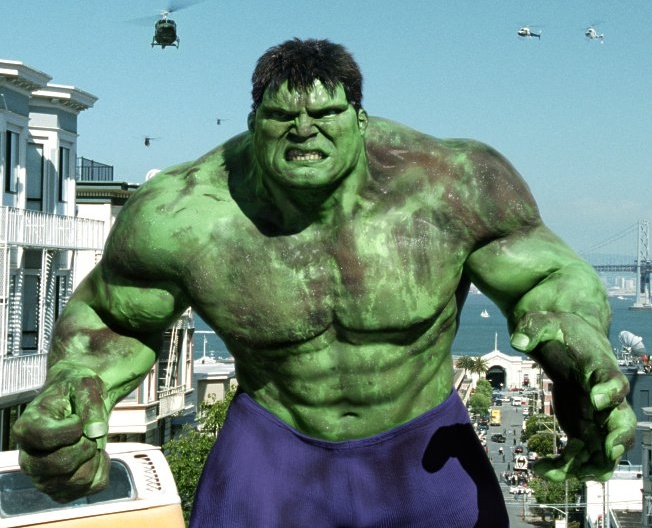

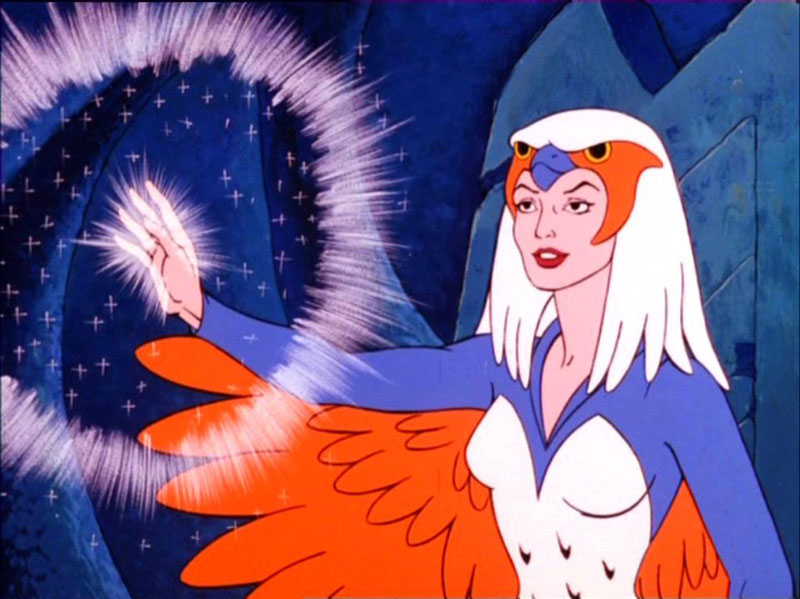

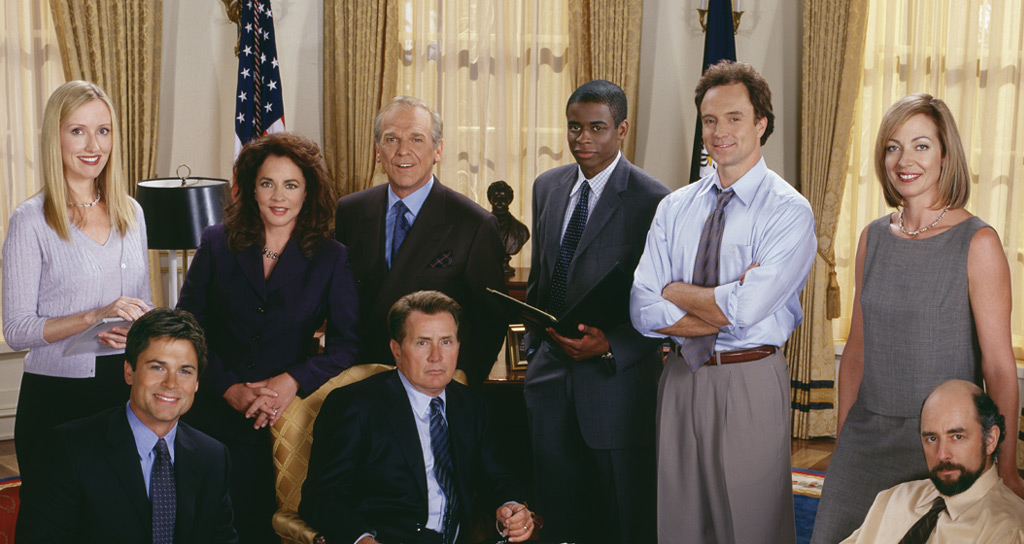


 Graham's Crackers