The original blog of writer Graham Milne – content published from 2011-2017

Graham's Crackers

    • Loud and long and clear

      March 9th, 2012
      David Tomlinson as George Banks.

      The death this week of composer Robert B. Sherman at the age of 86, one half of the famed Sherman Brothers, is a tremendous loss for the world of music.  The name might not immediately ring familiar, but his body of work certainly would.  Beginning in 1961 with The Parent Trap, Sherman’s prolific collaboration with brother Richard was the soundtrack for millions of childhoods – films like The Jungle Book, Chitty Chitty Bang Bang, Bedknobs and Broomsticks and most famously, Mary Poppins.  Kids learned Sherman Brothers songs along with “Mary Had a Little Lamb” and “Old MacDonald.”  They were catchy, upbeat and relentlessly optimistic – songs that just made you feel good and want to learn all the words.  This was all the more remarkable given Sherman’s service in World War II, and that he had led Allied forces into the Dachau concentration camp in 1945 shortly after it had been abandoned by the Germans.  To have seen such horror and to come out the other side with one’s faith in humanity intact is simply remarkable – not to mention retaining the ability to communicate that faith through art.

      It is perhaps that spirit of unflappable positivity that continues to endear Mary Poppins to one generation after another.  To me, the secret of its appeal has always laid in its unsung hero, the man the story is truly about:  uptight financier and family patriarch George Banks, played perfectly by David Tomlinson, an actor who never achieved movie star wattage, but was always highly regarded by his peers as a good and honourable soul – qualities that he brought to what is perhaps his iconic part.  Mary is charming, Bert is a happy-go-lucky goofball (dodgy Cockney accent and all) and the kids are cute without being cloying, but the movie is George’s story through and through.  George starts the movie as a man of business – Ebenezer Scrooge without the cruelty or sneering condescension at the less fortunate.  He is a man locked into the machine, always dressed in black and white, very much accustomed to his place as one of the cogs that drives the British economy.  And he has come to believe that this is how his family should operate as well – his opening number, “The Life I Lead,” details with clockwork precision how he wants his household to run; like a bank.  He has truly put aside childish things and buried his imagination beneath his bowler hat.  Indeed, he is a man for whom the audience feels great sympathy, because he is good and kind, but lost.  His eventual triumph, when, after having been ritually sacked, he bursts into laughter at rediscovering the mirth inherent in life, is like watching pure joy unfold before your eyes.  It’s a liberating reminder that things can indeed be “supercalifragilisticexpialidocious” – it’s all in how we choose to look at them.  And we can find a Buddha-like tranquility and fulfillment in just going to fly a kite.

      One has to wonder if the message would have resonated as strongly without the Sherman Brothers’ wonderful songs to deliver it.  Something that has always perplexed me when it comes to criticism, whether it’s music, film or literature, is the seeming bias against work that conveys a positive message.  Critics tend to go for bleak and raw, the ugliest emotions stripped to their very bone.  Certainly there is merit in such work; we cannot present a fair and accurate portrait of humanity without acknowledging its inherent duality and contradictions, the best and the worst of us.  But uplifting art is often dismissed as candy, as artifice of the most deceptive kind.  No, Mary Poppins is not Taxi Driver, and the Sherman Brothers’ songs aren’t Radiohead.  But ask yourself how you want to feel.  Does anyone really enjoy being depressed?  Do we not always crave the light?  Is there perhaps more truth to be found in the songs of a man like Robert Sherman, who saw the worst of humanity and still found reason to celebrate life, than in those of a  latter day pretender whose worst tribulation was that their high school crush didn’t return their affections?  Would anyone’s needs be served by watching George Banks crashing and burning and leaving his family bereft?  Pish posh, I say.  Instead, we are lifted as he completes his journey and achieves enlightenment.

      To me, art that appeals to our sense of hope is infinitely more valuable and truthful than that which wallows in the cesspool of despair.  It’s easy and a cop out to be depressed at the state of the world.  But let’s be honest – like the Mary Poppins Sherman Brothers song goes, we all still love to laugh.  So I can close today with a quote from George Banks that never fails to make me smile:

      “I know a man with a wooden leg named Smith.”

      “What’s the name of his other leg?”
      Spread the word:

      • Email a link to a friend (Opens in new window) Email
      • Print (Opens in new window) Print
      • Share on X (Opens in new window) X
      • Share on Facebook (Opens in new window) Facebook
      • Share on LinkedIn (Opens in new window) LinkedIn
      • Share on Reddit (Opens in new window) Reddit
      • Share on Tumblr (Opens in new window) Tumblr
      • Share on Pinterest (Opens in new window) Pinterest
      Like Loading…
    • To the other half of the sky

      March 8th, 2012

      As International Women’s Day dawns, one cannot help but look back on the events of the last few days, the last few weeks, even the last few years as arguably the antithesis of everything this day is meant to represent.  It is almost as if, societally, we are seeing a hard return swing of the pendulum, a pushback by the men of the world against the leaps forward made by women over the last hundred years – in some ways an all too predictable accompaniment to the collective freak-out over the uncertainty of the future and the resulting rise of right-wing extremism in mainstream thought.  Neanderthal legislators in several states are ramming through draconian measures forcing women to submit to invasive medical procedures prior to being able to legally terminate a pregnancy.  Even the basic freedom to use contraception is under threat, with the gargantuan gasbag of the airwaves, Rush Limbaugh, suggesting that women who use it are asking for subsidized promiscuity.  Fortunately he’s been subjected to a massive backlash because of his remarks, but it’s distressing that the political climate has become so anti-woman that he felt he could say something like that in the first place – it’s from the same line of thought that allowed the President of Afghanistan to pass a resolution declaring men to be fundamentally more important than women.  Some might ask what the hell has happened lately, but the question goes deeper than that.  It strikes at the very heart of our entire civilization, and the basic fact that men simply cannot understand women – and what they can’t understand, they try to control.

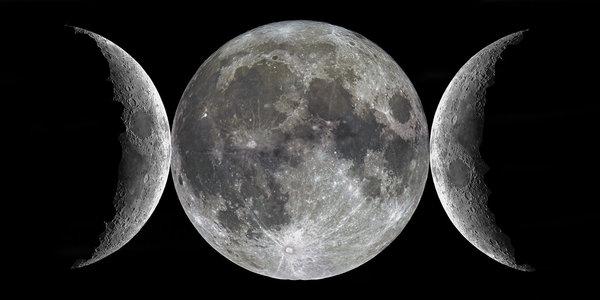
      Monty Python’s Life of Brian features among its many hilarious scenes a bit where the People’s Front of Judea adopts a resolution that one of its male members can have the right to have babies, despite having no womb – “Where’s the fetus gonna gestate?  In a box?”  The fellow at the center of the bit opines that his interest in women comes from his desire to be one – in a way, a basic expression of men’s inability to figure women out.  Pagan beliefs speak of woman as the triple goddess – the mother, the maiden and the crone, a holy trinity of complexity, a balanced equation of purity, maturity, wisdom, emotion and above all, beauty.  Try explaining that to the guys at the bar on a Saturday night in single syllable words using visual aids and pie charts while the game’s on.  And let me know how it turns out.

      There is no way to understand a woman other than being one yourself, and that drives men absolutely bonkers.   Women have a power over men that is inscrutable to men as well as infuriating, because we pride ourselves on our ability to remain in control at all times, indomitable masters of our domain – one glimpse of a beautiful woman walking by and that all goes out the window.  Men’s measurement of their lives, their virility, their achievements, their status, is directly related to how much attention it garners them from women; what women think of them.  Advertisers understand this, which is why you can put the world’s most useless white elephant in the hands of a woman in a bikini and sales will explode.  And it’s why the most confident man turns to an insecure pile of jelly if a woman for whom he feels desire isn’t interested.  His very existence as a man of importance is threatened.  Men don’t like giving up that control to anyone.  To paraphrase Yoda, insecurity then turns to fear, fear turns to anger, anger turns to hate.

      Women are insulted, humiliated, shunned, subjugated, beaten, violated, harassed, dismissed and even murdered because men can’t accept that they are different and special – perhaps, in what is man’s deepest, darkest fear, more special or indeed, better than them.  And men have perfected this pattern over thousands of years to the point where women think it’s their fault.  They are made to feel inadequate, to hate their bodies, to crave a fantasy ideal of physical and emotional perfection that is so utterly foreign to what it truly means to be a woman – because that is what a man thinks they should be.  A powerful, intelligent and confident woman – the actual ideal, at least from this man’s admittedly limited perspective – is dismissed as a harpy, a harridan, or a bitch, and sadly still in many countries, put to death.  Every woman held back from achieving her potential is another notch in man’s ever-lengthening belt of oppression, and every time a woman fails in any way because of a man’s bruised ego, we should all be utterly ashamed of ourselves.  Our collective human potential for greatness will never be achieved until every last one of us, man and woman, is permitted to be who they are, utterly free of the archaic constraints of a patriarchal society that men fail to realize holds them back as much as it keeps women down.  In the end, men don’t need to understand women, they just need to accept them – and let them be who they are.  Despite traditional expectation, we might just find that we enjoy the results.

      Spread the word:

      • Email a link to a friend (Opens in new window) Email
      • Print (Opens in new window) Print
      • Share on X (Opens in new window) X
      • Share on Facebook (Opens in new window) Facebook
      • Share on LinkedIn (Opens in new window) LinkedIn
      • Share on Reddit (Opens in new window) Reddit
      • Share on Tumblr (Opens in new window) Tumblr
      • Share on Pinterest (Opens in new window) Pinterest
      Like Loading…
    • Vroom, vroom, sputter

      March 7th, 2012

      As our civilization becomes more diverse, and more accepting, we still, like a man dangling from a cliff by his fingertips, cling to the traditional sense of what a man and a woman are supposed to be – what they like and don’t like and what they are supposed to be interested in and passionate about.  I wouldn’t under any circumstances suggest that I’m somehow breaking new ground myself – I’m a white guy who likes girls, it doesn’t get more mundane than that.  But I’ve always had cause to wonder why not being in to the same things that other guys of my generation are somehow makes me one of the “other people.”  What we like or don’t is still acceptable grounds for prejudging each other and defining how we stack up against the societal norm – whatever the hell that is.

      I would think that for regular readers my nerdiness has been well heretofore established, what with innumerable references to Star Trek, Star Wars and those nefarious little ponies.  Conversely, I haven’t even a microscopic level of interest in football, hockey, boxing, wrestling, ultimate fighting, nachos, beer (beyond a good pint of Guinness every now and then) or, as I realized while waiting for mine to be fixed, cars.

      Does nothing for me, sorry.

      We do so love our magnificent machines, don’t we.  But not I.  I recall once walking with a group of friends, maybe four or five of them, from my house to some summertime event.  From moment one of this hourlong trek, the conversation did not deviate from engines, cams, rims, horsepower, makes, models, torque, valves, and god knows whatever else.  Every parked car we passed gave additional fuel – pardon the pun – to this ongoing, intellectually numbing dialogue where the underlying theme, if any, was one-upping each other with increasingly picayune displays of automobile expertise – the ultimate irony being that we were all too young to drive.  I think I got maybe one or two words in, likely nothing more profound than “Yeah” and its more insightful variation, “Oh yeah.”  To me, a car has only ever been a necessary tool for getting from one place to another in a world where we’ve spread ourselves out too far.  I don’t enjoy the experience of driving whatsoever.  I’m impatient with other drivers, I’m always convinced I’m going to hit something, and every whiff of exhaust sends me into a mental tailspin about what we are doing to the planet.  If it has four wheels, sitting in it doesn’t feel like being confined in a decompression tank and it isn’t costing me my firstborn to keep running, I don’t care what it looks like or how many cylinders are blasting away under the hood.

      I appreciate that everyone has his passions.  Some are passionate about food, about movies, about designer clothes.  I am most passionate about writing.  The major difference, as I see it, is that I don’t talk incessantly about what colour typewriter or paper stock Hemingway or Tolkien or Ian Fleming used and how many words you can get out of a single strand of typing ribbon (or, rather than dating myself, I don’t know – the accuracy of the Microsoft Word spell check?)  The passion of driving doesn’t compute for me – when you’re writing something you are on a journey of the soul to places and states of being unknown, but when you arrive at the end of a car trip, are you changed?  Have you had an enlightening experience?  Are you somehow physically different because of the type of car you drove up in?  No, you’re just there at your destination, whether you took a Ferrari or a jalopy, whether you experienced the rush of breakneck speed or waddled in at 2 mph.  I understand that there are people who love fixing cars, who love transforming rustbuckets into sleek machines.  That’s fine, and that’s something entirely different – that’s more along the lines of what writing is, the process of creation.  But I still can’t get behind an invention whose existence, like it or not, has led to most of the wars we’ve fought over the last hundred years (and consequently a great deal of our environmental degradation) so Susie can get to the beach in her sweet sixteen present.

      It frustrates me that our society needs the car so much.  I accept that it’s here to stay for the foreseeable future.  I just don’t get why we should celebrate its trivialities at the same time, or why worship of all things automotive continues to be a prerequisite of masculinity.  And I find a bit of hypocrisy in the “racing fan” who is really just there to see those so-called beautiful machines crash and explode, or in the man who will chide his wife for the effort and money she spends on her hair and makeup while fretting lovingly over every stone chip and rubbing baby oil into his leather seats every night.  Perhaps this entire argument veers toward the curmudgeonly; perhaps one man’s passion will always be another man’s waste of time, no matter what it is.  But there is one major difference.  Drunken writing gave us some of the greatest and most spiritually transformative classics of modern literature.  Drunken driving just kills people.

      So there.

      Spread the word:

      • Email a link to a friend (Opens in new window) Email
      • Print (Opens in new window) Print
      • Share on X (Opens in new window) X
      • Share on Facebook (Opens in new window) Facebook
      • Share on LinkedIn (Opens in new window) LinkedIn
      • Share on Reddit (Opens in new window) Reddit
      • Share on Tumblr (Opens in new window) Tumblr
      • Share on Pinterest (Opens in new window) Pinterest
      Like Loading…
    • Fun with words: Brief is best

      March 6th, 2012

      The odd time when I come up short of new things to write, I find it fun, to stoke the muse, to forge a new post by a firm law – thou shalt not use this word or that word, that sort of thing.  This time I opt for a rule whose form I leave, as is my wont, to you to solve.  The sport, or the art, if you will, is in the need to keep the tales sound and full of flow, and the bane is in how few themes of sense and worth can be talked up thus.  It’s by no means the first time this has been done – I just think it’s neat and worth a go of my own.

      What, pray tell then, has the news for us on this day?  A globe on the brink (as per its wont).  The price of gas.  The death of the man who wrote “Feed the Birds,” “Step in Time” and “Let’s Go Fly a Kite.”  Mitt, Rick and Newt.  Rush and his big mouth.  And here at home, more phone calls made to squelch votes.  The reign of the mad, the romps of the rich, the plight of the poor.  Far more, it seems, than can be scribed in just a few brief words.  In a sense, there lies the rub – our Earth and the lives of those who have walked it and walk it still are too big to be shrunk to sound bites, to be dumbed down for mass ears with the truth not then lost in the noise.  I wish we were not as keen on fast news; that we took the time to probe, to ask, and in the end to judge with our own minds, and not on the “facts” of the loud.  Why are we so prone to cede the right to choose our way to the guy with the big bucks – and the brash voice?  We are, each of us, free to think on our own.  To look at each new day with our own eyes, and to not be swayed by the rants of the mean guy next door.  To give up this great right is to say, in fact, that we don’t want to be who we are – we want to be sheep, we want to be led, we don’t want to be forced to pick our own fates.  It is so sad.  You wish you could scream this at the folks you pass on the street.  But it seems that this too is a truth to which we each must come in our own way, in our own time.

      But in spite of this, there is still cause for hope.  The good do wake if they are nudged.  Mean old Rush has lost scores of ads and fans in the past week thanks to his slurs.  This could be, one craves, the start of a trend.  Most of us do not want to hate; we just want to live life, to love and be loved.  We want things to be great.  I have faith, crazed some might say, that at some point quite soon, the scale will tip, and there will come a flood of good men who will say, “No more.  I am my own man, I walk my own path, and lies shall not slow me, make me sad or make me hate.  I choose to go forth.”  That’s how we make it up the next step.  Shall we walk there as one?

      (Hint to those who still want to guess:  The last word there is a clue.  As to if this post is a win or a loss?  That’s your choice to make.)

      Spread the word:

      • Email a link to a friend (Opens in new window) Email
      • Print (Opens in new window) Print
      • Share on X (Opens in new window) X
      • Share on Facebook (Opens in new window) Facebook
      • Share on LinkedIn (Opens in new window) LinkedIn
      • Share on Reddit (Opens in new window) Reddit
      • Share on Tumblr (Opens in new window) Tumblr
      • Share on Pinterest (Opens in new window) Pinterest
      Like Loading…
    • Monday morning madness

      March 5th, 2012
      One ring to marry them all.

      A dear writer friend who passed away a few years ago used to send out regular emails every Monday morning with this title.  They’d consist of a few witty observations on life, stuff that happened on the weekend, what her cats were up to and would often close with a cheesy joke.  Her initials were M.E.S. so she’d sign off with “Jst a Mes.”  In my first writing critique group, she was the first of us to be published – sadly, only posthumously, but she remains an inspiration.  She was one of the guests at my wedding almost five years ago, and it occurred to me that since that day, three of the 64 guests in attendance at our celebration have since departed our company, my dear grandfather among them.  Although, there have been at least three, if not more, babies born to that same group of people as well since that day, so, as the Stranger opines at the end of The Big Lebowski, “I guess that’s how the whole durned human comedy keeps perpetuating itself.”

      Speaking of my wedding, my better half noticed online the other day that the first house we lived in together was up for sale, and had an open viewing this past weekend.  We had only lived there for one year – we were renting, and while we weren’t asked to go we did get the sense that our landlady was keen to sell, and we were fine to find something a little more affordable.  And, although relatively unspoken at the time, there were some troubled memories associated with the house that we were anxious to leave behind.  We had moved in as boyfriend and girlfriend, run the proverbial emotional gauntlet but emerged triumphant as husband and wife.  Anyway, we had to drop by and see how the old gal was getting on.  What struck us most was how small it felt – not that where we live now is a McMansion, but we were boxed in by a peculiar sense of confinement and constriction as we wandered through the rooms.  Perhaps it was an appropriate metaphor for what we were going through at the time, a concentration of emotion and event into limited space from which a stronger bond is eventually forged.  It had been renovated substantially since we lived there, the ubiquitous pink carpet that neither of us cared for replaced with hardwood.  But I still felt a bit of a chill as I stood in the exact spot that five years ago Valentine’s Day, I knelt, opened my hand to reveal a cheap Lord of the Rings replica One Ring – all I could afford at the time – and asked her to marry me.  She has a much nicer one now, and we have a home that feels very open and free, where we can relax and just be – or at the least, plenty of rooms to run and hide in when we (i.e. me) forget to take the chicken out to defrost for dinner.

      I’ve talked about this before, in the context of Twitter, but one of the wonderful things about modern communication is the reduction in distance and increase in intimacy between the artist and the audience, and not, at least when it is used responsibly, in a scary stalker kind of way.  Emilie-Claire Barlow was kind enough to retweet my review of her show to her followers.  Very cool – and just reinforces my point about how awesome she is.  Thanks, Ms. Barlow!  Hmm… Emilie-Claire Barlow, Rob Lowe… I’m sensing a rhyming pattern here.  I should write something about Gwyneth Paltrow and see what happens.

      On a completely different note, I think it’s time to do away with Daylight Savings Time.  A few years ago, it was decided to advance it a month in the calendar, the end result being that as soon as you feel like you’re turning the corner of having to wake up and go to work in the darkness every morning, you get slapped back into it for another month and a half of exhaustion and caffeine injections.  As I understand it, DST was invented to assist farmers in making the most of their daylight hours – given that we are no longer as agrarian a society, perhaps this tradition too can go the way of the telegraph and the wax cylinder recording.  I always feel more tired during the eight-odd months of DST hours than I do on Standard Time – my body really misses that extra hour and never quite adjusts to it.  I guess I probably wouldn’t do very well living in Maine or New Brunswick.

      On a final, hopefully amusing note before we embark on this week’s adventures, a few more of the wacky search engine terms people are finding me with.  Again, not that I mind the site traffic – far from it.  The more the merrier; I just imagine, as U2 would put it, that you still haven’t found what you’re looking for.

      • apollo crackers – Not quite sure what these are, perhaps crunchy space food eaten by Armstrong and Aldrin, or a very ironic euphemism for white people who enjoy Harlem jazz.
      • long psychedelic jams – Groovy, baby!  “They call ’em fingers, but I’ve never seen ’em fing… oh, there they go.”
      • render anime boy – I don’t even know what to say about this one.  It strikes me as vaguely creepy.

      Have a great day, fellow crusaders.

      Spread the word:

      • Email a link to a friend (Opens in new window) Email
      • Print (Opens in new window) Print
      • Share on X (Opens in new window) X
      • Share on Facebook (Opens in new window) Facebook
      • Share on LinkedIn (Opens in new window) LinkedIn
      • Share on Reddit (Opens in new window) Reddit
      • Share on Tumblr (Opens in new window) Tumblr
      • Share on Pinterest (Opens in new window) Pinterest
      Like Loading…
    • Eye of the beholder

      March 3rd, 2012
      Now that I have your attention…

      My good friend George alerted me yesterday to a recent news item from The Hamilton Spectator.  Recently a young student, Paul Gomille, was suspended for two days from a Catholic high school in Ajax for distributing a speech he’d written, which was ironically not about creationism versus evolution, gay rights, racism, terrorism, the existence of God or any of the other subjects that usually raise red flags.  Instead, the piece was a thought-provoking essay on the nature of beauty.  The gist of the suspension was that he had asked his principal for permission beforehand but was refused because of some language in the piece that was considered “judgmental,” and he went ahead and did it anyway.  He was suspended, the school argues, because he had disobeyed staff.  What is remarkable to me is that this is obviously a message Paul felt very strongly about sending out.  His essay, which you can read for yourself at the link above, speaks directly to those who feel marginalized because they do not fit the ideal of the glossy magazine cover, because even though their hearts need love as much as anyone else, they are passed over for failing to live up to an unrealistic expectation set by corporations.  That someone so young should choose to tackle the subject of the beauty of all women, in this climate, when women’s rights are under attack in the United States by impotent old men, when the level of debate among his classmates is pronouncing one girl or another “f—in’ hot” based on the shortness of her skirt, is a cause, in my opinion, for celebration, not suspension.  I get that he disobeyed an order.  Couldn’t he have been asked to write lines a la Bart Simpson instead?

      Beauty is a difficult concept, and its paradoxical nature is one of the many examples of the human contradiction.  We are hard-wired to respond positively to physical characteristics we find appealing – it’s the primate in us, the genetic drive to find the most suitable mate capable of creating the strongest offspring.  Instinctively, I am more attracted to dark-haired women, always have been, can’t help it – it’s my nature.  (No offense to blondes and redheads.)  When a woman catches a man leering at her and accuses him of being an animal, well, unfortunate as it is to society’s mores and the concept of proper behaviour, that is sort of how it’s supposed to work.  There is certainly nothing wrong with physical attraction, indeed, that’s how 99% of relationships start out anyway.  However, it used to be, in the days before mass media saturation, that our ideals of physical beauty were limited to the people we interacted with.  Some historical Don Draper then figured out how to use beauty to sell you his wares – by making you feel ugly and inadequate in a way that only a specific product could cure.  Nowadays, go to Google Images, search for “beauty” and all the pictures that come up will be variations of the same perfected female face, Photoshopped within an inch of her life, staring blankly back at you in an expression meant to be smoldering, inviting, and at the same time, berating.  You don’t look nearly as good as me, but if you buy this lipstick you just might come within a thousand miles.  These non-people are everywhere now, like gods casting wary eyes down from skyscraper billboards at the homely mortals ambling through meaningless lives.  And despite ourselves, we look up to them as impossible ideals.  My better half and I kid each other about our celebrity crushes – I have Kate Beckinsale, she has Alexander Skarsgard.  But there’s every chance that if we were ever to meet either of them we would find them off-putting.  (Particularly Beckinsale – she smokes like a chimney.)  In fact, one can obsess over, but cannot love, a fantasy.  And one should not be intimidated by fantasy either.  What makes us fortunate is that as human beings, we don’t have to be.

      Where we differ from our animal cousins is that our intellect makes us capable of responding to the radiance that lies beyond the physical.  Our desire for love can only be satisfied when our soul connects with another, beyond biochemistry, beyond pheromones.  When we reach beneath the hardened shell to touch dreams, fears, insecurities and longings, and embrace them with our own.  The capability to love and truly devote oneself to another comes when we attain the maturity to see the complete person inside.  Paul Gomille seems to have reached this understanding far sooner than other boys his age, and for that, at least, he should be admired.  The other guys will make the cracks about Mary’s legs and Cindy’s chest, and recycle the cruel joke about the girl who fell from the ugly tree and hit every branch on the way down, but someday, they’ll get it.  At least you hope they will, otherwise they are fated to live very lonely lives.  The beauty of the soul is where it’s at; where lasting and fulfilling relationships are forged.  And where “what’s hot” may be framed by Vogue and Vanity Fair, what’s beautiful is everywhere around us.  Like the movie American Beauty says, look closer.  Look past the physical.  Look into the heart.  Paul sums it up very nicely.  All women are capable of being beautiful.  All women are beautiful.

      Spread the word:

      • Email a link to a friend (Opens in new window) Email
      • Print (Opens in new window) Print
      • Share on X (Opens in new window) X
      • Share on Facebook (Opens in new window) Facebook
      • Share on LinkedIn (Opens in new window) LinkedIn
      • Share on Reddit (Opens in new window) Reddit
      • Share on Tumblr (Opens in new window) Tumblr
      • Share on Pinterest (Opens in new window) Pinterest
      Like Loading…
    • Hey you, get your damn hands off her

      March 2nd, 2012

      I was standing in the express lane at the grocery store, waiting to purchase dinner, tapping away on my smartphone.  Three places ahead of me in line was an older couple who were quite exasperated with the cashier, for reasons difficult to ascertain; something to do with the amount of change being incorrect.  The cashier, a young kid no more than twenty, was doing his best to be accommodating – this did not impress the older man, who decided at one point to slam his hand on the conveyor and yell at him.  Giving the older guy the benefit of the doubt just for the moment, he could have reached the end of his tether after a rotten day.  But that was no reason to take it out on the kid, who was not being rude, or dismissive, or in any way belligerent.  What surprised me most about the whole affair was how my stomach turned at the old guy’s outburst.  You know that scene in A Clockwork Orange where Alex, having undergone the brainwash of the “Ludovico treatment,” starts heaving with nausea at any example of violence?  That was me.  It was this peculiar mix of revulsion and paralysis.  I’ve spent a lot of time in the past few weeks reflecting on this and wondering where it came from, trying to contextualize it in terms of my overall personality.  And the conclusion I have come to is this:  I hate bullies.

      Liberals aren’t supposed to be hateful.  We are supposed to be the compassionate and empathetic turn-the-other-cheekers who look at the world in endless shades of nuance and complexity.  Yet I can summon no sympathy or understanding for anyone who preys on the weak; who tries to get their way by intimidation, smears, threats and the perpetuation of hatred and fear.  It isn’t that I just want to see bullies stop bullying, I want to see them humiliated and utterly destroyed.  I am positively gleeful at the thought of the arrogant asses of the world sobbing in the corner.  I see it as justice and fair retribution for the torment they have inflicted on other people.  And it frustrates me that what seems on the surface to be wishing only for karmic just desserts makes me no better than they are.

      When the news broke of Andrew Breitbart’s death yesterday, I was appalled at my initial reaction, which was, essentially, good riddance.  This man devoted his life and career to spreading hatred of the things that I believe in.  But at the same time, he was somebody’s father and somebody else’s son – a man with a young family and kids that now have to grow up without their dad, a situation I can understand all too acutely.  Andrew Breitbart’s children don’t deserve that, and at the same time, he doesn’t deserve to not be around to watch them grow up.  Maybe that is what makes liberalism such a challenging philosophy to uphold – the need to be able to look deep into the soul of one’s opposition, into the recesses of the ugliness that repels us and tears at our most cherished tenets, and locate the mutual humanity.  As Andrew Shepherd (Michael Douglas) puts it in The American President, “Let’s see you acknowledge a man whose words make your blood boil, who’s standing center stage and advocating at the top of his lungs that which you would spend a lifetime opposing at the top of yours.”  And to that say, Namaste.

      What did I want to do in that moment in line?  What would have sated those intense feelings of anger and hatred simmering inside my gut?  Did I want to take a swing at the old man?  Did I want to excoriate him in a Sorkin-esque blaze of wit and erudition and Gilbert & Sullivan references?  Which of those options would have made it better?  The answer is, neither.

      The perfect illustration of this dilemma, for me, is the climax of the first Back to the Future, when George McFly, thinking he’s playing out a scene to win the affections of Lorraine, realizes to his horror that he is in fact throwing down with his lifelong nemesis Biff Tannen.  Biff is such a detestable character, embodied memorably by Thomas F. Wilson, that everyone who watches the movie can’t help but smile when George finally decks him with one powerful left-handed haymaker.  But the crucial point of the moment is not the defeat of the bully – it’s George’s embrace of the confidence locked away inside him.  Biff doesn’t really learn much of a lesson or even stray very far from his bullying ways – it took two sequels to finally defeat his ilk once and for all – but George is forever a better man.  When we see George at the end of the first movie, he has no trouble dealing with Biff, and again, not because of one bloody nose, but because he recognizes Biff’s failings and pities him.  One can never be threatened by someone for whom you feel pity – it is an irreversible triumph, because it is a triumph of the soul.

      Eventually the cashier and his manager were able to address the problems of the old couple and send them on their way – a happy ending for all concerned.  The rotten feeling I had inside, however, lets me know that I still have work to do on myself – I’m not George McFly at the end of the movie just yet.  And it remains ever difficult to find that pity in a time when bullies run rampant in our governments, our banks, our schools, tearing with greed at the very fabric of our civilization.  Yet ours too is a powerful flame, one that should be stoked constantly to ensure that our collective humanity shines on.  Our lasting impression upon history can be exemplified by the best of us, and those are the people I’d rather stand with.

      Spread the word:

      • Email a link to a friend (Opens in new window) Email
      • Print (Opens in new window) Print
      • Share on X (Opens in new window) X
      • Share on Facebook (Opens in new window) Facebook
      • Share on LinkedIn (Opens in new window) LinkedIn
      • Share on Reddit (Opens in new window) Reddit
      • Share on Tumblr (Opens in new window) Tumblr
      • Share on Pinterest (Opens in new window) Pinterest
      Like Loading…
    • In like a lamb

      March 1st, 2012
      A perfect metaphor for March 1st, 2012.

      Elmore Leonard’s first rule of writing advice is, never open your book with weather.  So with apologies to Mr. Leonard and his learned wisdom, I’m starting off March with a few comments about the state of the climate.  It was not that long ago that I recall temperatures plunging to the minus twenties in the middle of February, jagged sheets of ice coating my apartment windows and blocking the view of the mountains of white beyond.  I’m not going to complain about a more modest than usual February heating bill, but this is ridiculous.  I’ve had to shovel the driveway exactly twice this entire winter.  I missed doing it so much I actually shovelled both my neighbours’ driveways just to get in the extra few minutes of cardio.  My better half’s allergies have been in overdrive all season as it never got cold enough to kill off the mould and spores of autumn rot.  And we did double-takes this morning when birds started chirping outside.  The geese have figured it out – they never flew anywhere this winter.  Think there could possibly be a relation to, well, I don’t know, um, global CO2 emissions being higher than ever before?  Nah, it’s sunspots.  We’re actually in a cooling phase.   It’s just Al Gore, Solyndra and the Islamofascisocialists trying to sell you solar panels.  Think I’ll fill my Hummer with Super-Hi-Grade and then run over a spotted owl.  Suck it, Mother Nature.  FREEDOM!!!

      Yep, it’s gonna be one of those days.

      I love the Search Engine terms tracker on the WordPress dashboard.  It is genuinely amusing to see how people find me, and I can’t help imagining the tremendous disappointment that must occasionally result.  I’ve been fortunate to get a lot of hits from people who saw The Grey and are looking for references to the “Live and die on this day” quote – that at least relates to something of substance.  I get a few from people searching for My Little Pony, The Verve, Coldplay, other search terms that happen to coincide with some of my random word strings, like “grahams wall of sound”.  But some of these other search engine terms are just plain bizarre.  The one that really made me laugh was “kesha good looking”.  Someone on the hunt for images of Kesha for what I’m certain are nothing less than the purest of purposes ended up here?  Granted some of what I write can hopefully be very thought-provoking, but those are definitely not the thoughts I’m trying to provoke.  Eeeww.  We won’t have none of that ‘ere, mate.  Keep calm and carry on.  Besides, silly rabbit, you should know that “Kesha” and “good looking” are not terms that relate.  Ooh, how catty of me.  Thanks, try the veal.

      I wonder what it must feel like to have a voice that other people love to impersonate.  Do they ever listen to themselves and think, “good God, do I really sound like that?”  My own voice is quite unremarkable, so I enjoy dressing it up with different accents whenever the opportunity arises.  The other day I was watching a YouTube clip of Michael Caine doing an impression of himself, or more accurately, Michael Caine doing Peter Sellers doing Michael Caine.  It was all in good fun, of course, but how frustrating must it be that almost everyone you meet will be some wag who thinks he can “do you”?   As I’m certain even ordinary lads from Glasgow or Belfast must roll their eyes at attempts by continentals to affect their unique, history-nurtured tones.  One of the cardinal rules on whatever film set he happened to be working was that no one was allowed to impersonate Sean Connery, which I’m sure didn’t stop them from trying to slur “Missh Moneypenny” behind his back.  That is the problem, naturally – everyone thinks they can mimic Sean Connery and almost no one can pull it off.  The same goes for John Wayne, Jimmy Stewart, Ronald Reagan, Richard Nixon, Johnny Carson and most of Rich Little’s repertoire.  Voice actors, I’m told, often start from a celebrity impersonation when they’re working up a new character.  The scratchy warbles of The Simpsons’ Moe the bartender began from what his performer Hank Azaria called a bad Al Pacino impression.  Somehow I doubt anyone will ever be accused of doing a bad Graham Milne impression – except maybe myself.

      So what are my goals for this month?  Thirty-one days of possibility lie ahead, full of opportunity for both triumph and tragedy.  Gonna try to keep blogging as close to daily as I can, have a new screenplay to start working on, and, because I find that putting it out there publicly is a good way to motivate myself, I’m going to begin sending out my long-gestating novel to agents and publishers.  Hopefully the response will be as promising as that which has greeted my musings here.  If all goes well, maybe, by the 31st, I will, like the lion, have a good reason to roar.  Stay tuned!

      Spread the word:

      • Email a link to a friend (Opens in new window) Email
      • Print (Opens in new window) Print
      • Share on X (Opens in new window) X
      • Share on Facebook (Opens in new window) Facebook
      • Share on LinkedIn (Opens in new window) LinkedIn
      • Share on Reddit (Opens in new window) Reddit
      • Share on Tumblr (Opens in new window) Tumblr
      • Share on Pinterest (Opens in new window) Pinterest
      Like Loading…
    • He shoots, he scores

      February 29th, 2012
      You can hear it in your head, can't you?

      My tastes in music have always been a bit of a joke among my closest friends.  I was about five years late to the party buying a CD player, and my first CD purchase wasn’t the White Album, or any of the chart-topping or even lesser known indie bands at the time – it was the soundtrack from Kevin Costner’s Waterworld, not even a movie for which I had any particular affection.  In fact, over the years I’ve probably purchased dozens of soundtracks from movies I didn’t like that much, swelling to a collection of hundreds.  The sole reason?  I loved the music.

      Music and film have long been committed companions, from the beginnings of the silent era when a live musician would sit in the theatre and play piano to dramatize the grainy black-and-white images flickering across the screen.  The coming of the talkies, thankfully, did not diminish the need for music to continue its cinematic journey.  Early composers like Max Steiner, Erich Korngold, Alfred Newman and Miklos Rosza developed upon the traditions of the classical masters to fashion, together, a new musical language for the 20th Century’s most popular new art form, a tradition expanded upon by men like Bernard Herrmann, Maurice Jarre, Nino Rota to name but a very few.  How many of the incredible movie moments have been etched into our collective memories in large part because of their music?  Scarlett’s longing for the halls of Tara in Gone with the Wind.  Janet Leigh’s shocking death in Psycho.  The lonely trumpet that opens The Godfather.  Robert Redford’s home run blast in The Natural.  Rocky Balboa’s race up the Philadelphia steps.  The mere glimpse of the photo above can conjure immediately the haunting John Williams motif of the yearning of the hero to set out on adventures bold, much as thoughts of sharks can summon his remarkably economical two-note overture for Jaws.  The movie score is its emotional brush, painting the subtext of the characters’ deepest passions directly onto our hearts, uniting the audience in a shared experience of joy, pain, despair, and most endearingly, hope.

      The 1990’s were a rough era for lovers of orchestral soundtracks.  Madonna’s Music from and Inspired By Dick Tracy begat a misguided and disappointing era of music marketing whereby soundtracks were reconfigured as pop/rock/rap compilation albums that had little to do with the movie itself – maybe one or two songs at most were used in the film and the rest were chosen at random by committee.  And yet some brilliant scores were flying beneath the radar.  I’ve been listening a lot lately to American composer Thomas Newman’s work on 90’s epics like The Shawshank Redemption.  Newman’s music isn’t as recognizable as someone like John Williams, who works very much, particularly in his Spielberg and Lucas collaborations, in the mode of leitmotif – assigning a specific theme to each character and recurring emotional beat.  Newman’s music is always more subtle, relying on gentle piano, soft percussion and swaying strings, yet its emotional resonance is just as strong.  His scores for American Beauty and Road to Perdition are a masterwork of forlorn and melancholy understatement, letting you peel layers from the characters and see directly into their wounds.  American Beauty in particular is a movie that would not work with the more upfront, heroic style that Williams is so good at – as Wes Bentley’s character Ricky describes being overcome by the beauty he sees in the world, even in innocuous things like a plastic bag floating in the wind, Newman’s soft piano embraces both him and us, and just for a moment we can see through his eyes.  In a sense, the music is that intangible, untouchable beauty, capturing the moment in a way that dialogue, performance and image cannot.

      Joseph Campbell suggests that amidst our billions of stories, there is only one – the journey of the hero with the thousand faces.  Cinematic scores likewise number in the thousands, some remarkable, some forgettable, but singular in their indispensability as storytellers.  They can be our emotional anchor as we fly off into the strange new worlds of the imaginations of directors, writers and actors, and a truly magnificent score can come to define moments in our own lives as well as the ones we see on the screen.  Truly, who hasn’t imagined the music swelling at our most heroic, and even our most despondent hours?  Stories, like our emotions, are our universal connectors – and music goes with us on the journey as a narrator, speaking the truth in notes and phrases through all barriers to comprehension when words sometimes fall short.

      Spread the word:

      • Email a link to a friend (Opens in new window) Email
      • Print (Opens in new window) Print
      • Share on X (Opens in new window) X
      • Share on Facebook (Opens in new window) Facebook
      • Share on LinkedIn (Opens in new window) LinkedIn
      • Share on Reddit (Opens in new window) Reddit
      • Share on Tumblr (Opens in new window) Tumblr
      • Share on Pinterest (Opens in new window) Pinterest
      Like Loading…
    • Painting with notes: Emilie-Claire Barlow live

      February 28th, 2012
      Emilie-Claire Barlow.

      Jazz is probably the only form of music that is equal parts sexy and frustrating; like a beautiful woman in a smoke-draped bar who slips you her phone number on a napkin, only for you to discover that it’s written in an encrypted quantum algorithm.  Emilie-Claire Barlow has the former aspect nailed, with a voice at home in both swinging English and seductive French that can run like the sleekest saxophone.  As for the frustrating part, not a problem – she retains the freshness of the improvisational nature of jazz, but applies a bottomless bag of tricks to an open and accessible package.  Two magnificent hours at the Oakville Centre for the Performing Arts this past Friday exemplify her appeal.  A striking presence, strutting confidently about the stage in a sleek silver mini-dress amidst her all-male backing band, she defies the expectation that someone so good-looking and talented should be an unapproachable diva.  Despite legs that go all the way to the floor (thanks Aaron Sorkin for the metaphor), she’s a supermodel you somehow don’t feel quite so intimidated about walking up to greet.  She deserves to be much more famous than she is – worthy of the echelon of Michael Bublé – but hopefully time and more great albums and performances will take care of that.  Indeed, one all-too-brief night in the company of her voice is enough to get you hooked.

      It’s struck me how similar jazz is to painting, and it’s no coincidence that many of the greatest jazz performers, Frank Sinatra and Tony Bennett included, were also painters.  If you think of both arts as the careful application of individual colors towards a composite whole, then you have a fairly good sense of how the comparison fits.  On The Beat Goes On, her album of covers of 60’s rock and folk songs that was the centerpiece of Friday’s performance, Barlow has done far more than pour old wine in new bottles, she’s splashed it against her own unique canvas.  She has reinvigorated tired, cheesy karaoke favorites like “Breaking Up is Hard to Do,” “Raindrops Keep Fallin’ On My Head” and “These Boots Are Made For Walkin’”, playing around with time signatures and tempos and layered them with her breezy intonations, turning them into new creations that would feel right at home at the Bourbon Street Bar around two in the morning.  The title track is a surprising new take on the Sonny and Cher attempt at Dylanesque relevance (that felt dated when it first dropped with goofy lyrics like “Electrically they keep a baseball score”), which hums along crisply before revealing its greatest treasure – that it’s a mashup with Quincy Jones’ danceable “Soul Bossa Nova” (better known as Austin Powers’ theme, or, if you’re a Canadian of the right age, the theme to the gameshow Definition).  Barlow strolls through these songs with ease, but is equally at home with musical standards like “Surrey with the Fringe on Top”, haunting ballads like “So Many Stars” or her Piaf-conjuring French-language take on “Dream a Little Dream,” just a few of the other selections from earlier albums she dazzled Friday’s audience with.

      Brandi Disterheft.

      Barlow’s opening act, jazz bassist and singer Brandi Disterheft, is an intriguing performer in her own right, her tiny fingers dancing across the strings of a massive instrument she can barely lift and drawing out a rush of incredible sound.  Disterheft’s music veers more toward the make-it-up-as-you-go, hipster style of jazz, but there’s so much raw talent there you’re happy to come along for the ride, even if you don’t quite understand where you’re going or the what the deal is with the scenery flying by.  She had the crowd enraptured merely in two brief numbers to kick off the evening, with a style and presence all her own – if Emilie-Claire Barlow is the traditional sultry jazz siren, Brandi Disterheft is Tinkerbell, her practiced ease with her craft making it seem as though the notes that spring forth are indeed the result of pixie magic. 

      Speaking of the crowd, one cannot forget to mention their giddiness at hearing Barlow’s closing encore – the Brazilian ditty “O Pato (The Duck).”  Barlow confessed to us after the show that she had dropped it from her setlist for a time but found audiences were asking for it back; indeed, a few “quackers” on Friday were quite insistent on hearing it, sparking many giggles from the enchanting songstress during her stage banter.  If you haven’t heard it, it’s a funny number about a duck who loves to dance the samba and gets his friends the goose and swan to join in – three and a half minutes of unadulterated, swinging joy.  In a way it’s fitting that it has inadvertently become something of a signature song for her, as it sums up her style, this strange, alluring combination of sex appeal and approachable goofiness that is still jazz through and through.  That she’s able to slice off the frustrating aspect and make amazing sounds for the masses is nothing but a credit to how good she is.  Because all the talent in the world is useless if no one gets it.

      Spread the word:

      • Email a link to a friend (Opens in new window) Email
      • Print (Opens in new window) Print
      • Share on X (Opens in new window) X
      • Share on Facebook (Opens in new window) Facebook
      • Share on LinkedIn (Opens in new window) LinkedIn
      • Share on Reddit (Opens in new window) Reddit
      • Share on Tumblr (Opens in new window) Tumblr
      • Share on Pinterest (Opens in new window) Pinterest
      Like Loading…
    ←Previous Page
    1 … 29 30 31 32 33 … 39
    Next Page→

    Blog at WordPress.com.

    Privacy & Cookies: This site uses cookies. By continuing to use this website, you agree to their use.
    To find out more, including how to control cookies, see here: Cookie Policy
     

    Loading Comments...
     

      • Subscribe Subscribed
        • Graham's Crackers
        • Join 6,281 other subscribers
        • Already have a WordPress.com account? Log in now.
        • Graham's Crackers
        • Subscribe Subscribed
        • Sign up
        • Log in
        • Report this content
        • View site in Reader
        • Manage subscriptions
        • Collapse this bar
      %d