Gert Frobe as Auric Goldfinger, stunningly predicting the rise of the iPod Shuffle.
I was at a birthday party many, many moons ago when the kid’s parents stuck a tape in their VCR and unveiled Goldfinger. It was the first James Bond movie I’d ever seen, and where the rest of the kids were more eager to play with newly acquired Transformers and G.I. Joes, I was glued to the screen as unforgettable images reeled across my retinas: Sean Connery in his prime. The silent henchman with the steel-brimmed bowler hat. The amazing Aston Martin DB5. The near-castration by laser beam. “Operation Grand Slam.” Pussy Galore’s Flying Circus. And the girl covered in paint… gold paint. A revelation to a kid whose usual cinematic fare up until that point had been parent-approved rereleases of old Disney movies.
I’m biased towards liking Goldfinger more simply because it was my first, and because it kicked off years of bonding – pun totally intended – with my dad as he brought home a new 007 adventure from the video store every Friday night for us to watch together, or made a point to rearrange his calendar so we could stay up late when they were shown on television. But even as a now embittered, cynical adult (he jested), Goldfinger is still an amazing ride. Connery owns the role here the way he never would again, as in later films he is increasingly, and visibly, bored with becoming something of a prop in ever more elaborate set pieces. But here he is smooth and unflappable; long gone is the eager 30-year-old Scot in his first big break barking dialogue at a machine-gun clip. He is the epitome of Bond, fusing his own irreplaceable appeal with Fleming’s words and Savile Row tailoring to become that mythic apex of 60’s masculinity – anachronistic putdowns of the Beatles aside.
Sir Sean is matched effectively by German actor Gert Frobe as the bullion-obsessed Auric Goldfinger (“Sounds like a French nail varnish”), the first of many Bond villains to be obsessed with a particular commodity. Goldfinger is larger than life, but never unbelievable – indeed, in a modern context he doesn’t seem that far removed from the likes of the Koch brothers. He and Bond share a grudging respect, and Goldfinger’s choice to keep him alive through the second half of the film stems much from Goldfinger’s desire to defeat him socially – a wish shared by many villains that follow, and the source of many (easily escapable?) elaborate death traps. And one would be remiss to leave out the junior member of the film’s evil duo – Harold Sakata as the legendary Oddjob. Oddjob never speaks, but Sakata manages to inject a sinister form of charm into the part as he maintains a fastidiously tidy appearance even while committing the most savage of murders. Another highlight is Desmond Llewelyn, in the second of his appearances as Q, beginning to flesh out the part by turning the eager-to-please armorer from From Russia with Love into a curmudgeonly public servant beleaguered by Bond’s continual disdain towards his precious equipment. The “Q scene” would become a staple of the films from here on out, with Llewelyn remaining in the role until his tragic death in a traffic accident following the release of The World is Not Enough.
Third film, so naturally, three different Bond girls! Shirley Eaton is sexy in various states of undress (black bikini, men’s dress shirt and finally nothing but gold paint and a strategically placed pillow) as Jill Masterson, Tania Mallet is sweet but equally short-lived as her vengeful sister Tilly, and Honor Blackman as the infamously-named Pussy Galore (almost called Kitty Galore for fear of the censors) does a good job of giving 007 as good as she gets until she finally succumbs to him – and who wouldn’t, of course. Fleming’s portrayal of Pussy Galore in the book was rooted in embarrassing old school machismo, referring to her as a capital-L lesbian throughout, but the movie jettisons any such clumsily executed questions of gender identity. The focus is adventure, not what a crusty old English sod thought of women he couldn’t charm.
John Barry is in top form here, building on what he began in the previous movie. The brass section cuts loose here in what comes off as spy meets boogie-woogie, particularly in the famous title song belted out at eleven by Shirley Bassey in her introduction to the world of Bond. One standout in the score is the haunting, finger-curling marimba piece that plays as the laser draws ever closer to 007’s waist, ratcheting up the suspense to unbearable levels. Ken Adam and his production design team also kick things up a notch, with his imaginative set for the interior of Fort Knox (they weren’t allowed inside for reasons of security and had to guess at what it looked like) providing a visually sumptuous setting for the movie’s final showdown.
Still, none of this workmanship would matter if the screenplay wasn’t there, and writers Richard Maibaum and Paul Dehn provide the perfect blueprint on which to build. Goldfinger is the Bond movie with all the best lines, bar none: “Do you expect me to talk? No, Mr. Bond, I expect you to die!” “Ejector seat, you’re joking. I never joke about my work, 007.” “Choose your next witticism carefully, it may be your last.” And so on, with the focus of the dialogue less on exposition and more on playful banter, almost like a comedy of manners playing out against the backdrop of a threat to the economy of the entire world. In a sign that adherence to the Fleming works was becoming less important as the series gained in popularity, precious few of these lines came from the book. Indeed, Goldfinger was the last Bond movie produced while Ian Fleming was alive. Stress and hard living finally took its toll on the author, who passed away in August 1964 just before the movie was released. The script does correct an outright miscalculation by Fleming by changing Goldfinger’s plot from robbing Fort Knox (Bond points out it would take twelve days) to irradiating it with an atomic bomb borrowed from China, heightening the stakes and adding in that critical ticking clock – which Bond is able to stop with 007 seconds left. Leaving Fleming behind would prove to be a controversial choice as the series wore on, with the producers finding time and again that the further they strayed, the less audiences were amused. But more on that another day.
From start to finish, Goldfinger is a feast for the Bond fan, with every element firing on all cylinders. It set a standard that the twenty films to follow would often struggle to meet, and some might argue never have.
24 days. 24 reviews. The James Bond saga continues.
The closing credits of Dr. No began with what would turn out to be a highly premature announcement of “The End.” After the first James Bond film exploded into a massive worldwide hit, a sequel was inevitable. Armed with a bigger budget and one supposes an equal measure of increased confidence, producers Albert R. “Cubby” Broccoli and Harry Saltzman embarked on their second big screen Bond, emboldened perhaps by President John F. Kennedy’s choice of From Russia with Love as one of his ten favourite books.
Everything about From Russia with Love is bigger and better, beginning with a screenplay that adds layers of intrigue to Ian Fleming’s original novel about dastardly Soviets out to kill James Bond for causing them so much bother. In the movie, the architects of this Cold War affair are now the notorious SPECTRE, led by cat-stroking (and Dr. Evil-inspiring) Ernst Stavro Blofeld, eager to pit East and West against each other, with Bond’s death merely a fortunate bonus. To this end they enlist the innocent Russian corporal Tatiana Romanova (Daniela Bianchi) in a scheme to lure Bond with the promise of a Russian “Lektor” cipher decoding MacGuffin as the prize, and assign ice-blooded killer Red Grant (Robert Shaw) to act as Bond’s shadow as he journeys through the underworld of Istanbul, unable to sense the slippery arms of the villains closing in until it is almost too late. It’s a movie full of surprises and turns, riveting chases, locations lush and rich, performances pitched just right and a pace that never relents. It’s also the only movie where Bond finds himself as a pawn of greater forces, almost an accidental hero, rather than the usual valiant knight riding in on the white horse to bring down the dragon and his kingdom of darkness.
The pressure of carrying the picture doesn’t seem to weigh on Sean Connery as much this time, and you can sense him beginning to enjoy himself, bringing sharper timing to his delivery of his lines and walking through scenes with much greater confidence. The supporting players are a more capable lot this time as well, beginning with the only Bond actress to ever be mentioned in the Great American Songbook: Lotte Lenya (of “Mack the Knife” fame) as the slimy Colonel Rosa Klebb, with her oily accent and spike-toed shoes. Robert Shaw, light-years removed from Jaws’ Quint or A Man for All Seasons’ King Henry is a triple threat: sinister, sadistic and silent, conveying an unnerving menace absent from other screen villains who were frequently neutered by censors in that era – slinking through the first half of the movie seemingly as a mindless brute and yet able to turn on an English congeniality when he finally introduces himself as “Captain Nash” and makes the fatally revealing mistake to culture snob Bond of ordering red wine with his fish. Bond and Grant’s final fight scene aboard the Orient Express is to this day cited as one of the best such encounters ever put on film. One can even see inspiration for future Bond villain Javier Bardem’s Oscar-winning turn in No Country for Old Men in Red Grant’s dead-eyed stare.
The greatest accolades however have to go to Pedro Armendariz as Bond’s Turkish intelligence contact Kerim Bey, a jovial old spy with a penchant for nepotism (employing his sons in every key position) and an appetite for women that rivals 007’s. He radiates Old World charm, with a wily sense of humor, deep sense of honor and ownership of the movie’s most quotable dialogue. What is even more remarkable about the performance is that Armendariz pulled it off while he was dying of cancer. He created such an indelible imprint on the Bond series that the producers have been trying ever since to include character performers who could possibly measure up – they even cast Armendariz’s son in a small part in 1989’s Licence to Kill. Leading lady Daniela Bianchi as Tatiana (again, dubbed by another actress) is a more modest sort of Bond girl, not quite as awe-inspiring in her uniforms and suits as Ursula Andress in the white bikini, and uncomfortable in scenes where she is required to play the seductress. But she’s adequate for a story where Bond’s romantic entanglement takes a distant backseat to the more fascinating spy saga. Preserving the requirement for pulchritude in excess, ravenous feminine wiles are displayed in a girl-on-girl barefoot fight scene in a gypsy camp.
Several important tropes that would come to further shape and define the cinematic James Bond are introduced in this movie: the pre-titles teaser, the title song, the character of Q (Desmond Llewelyn) and his gadgets, and perhaps most important of all, the John Barry musical score. Barry’s duties on Dr. No were confined to arranging the famous James Bond theme, but here he was given full control over the music and crafted a gorgeously orchestral score, fleshing out the Bond theme with explosive horns and layering in percussive instrumentation evocative of the Turkish locale to create a stylish, suspenseful, indubitably 60’s sonic accompaniment to Bond’s adventures. Matt Monro, sounding something like an English Andy Williams, sings the song over the closing credits, and while “From Russia with Love” didn’t exactly burn up the charts, it laid the groundwork for an entire catalogue of sometimes brilliant, sometimes regrettable themes to follow.
In From Russia with Love, the rougher edges of Dr. No have been smoothed out, the production values amped up and the entire enterprise given a massive jolt of adrenaline. In the annals of Bond fandom, there are two major camps – those who like their Bond gritty and down to earth, and the ones who relish extravagance and the kitchen sink approach. This movie is something of a benchmark for the former, a standard to which all that follow are often compared. (Indeed, when auditioning new actors to play Bond, the producers typically use the scene where Bond and Tatiana meet for the first time; DVD box set owners have likely seen both James Brolin and Sam Neill’s attempts at it.) From Russia with Love is absent perhaps only the concept of the individual, flamboyant villain who battles Bond on an intellectual level as well as a physical one – contrasted as the remorseless counterpoint to Bond’s relentless crusader. But it is a solid spy tale replete with twists Alfred Hitchcock would have approved, and it remains the work of artists at the top of their game creating an indelible entertainment that can still excite an audience after so many of them have long since departed this realm. Top marks, 007.
It’s been a bit of a dry spell for us fans of James Bond of late, a drought not seen since the dreaded 1989-1995 hiatus when a combination of lawsuits, hostile takeovers and general public ennui made it seem like 007 had had his day. The financial woes of the legendary MGM have kept Bond off the big screen since 2008, but as anyone who’s seen the trailers for Skyfall can attest, he’s ready to roar back in a big way, with Academy Award-winning director Sam Mendes at the helm and a powerhouse A-list cast including the likes of Javier Bardem, Ralph Fiennes and Albert Finney. It occurred to me this morning that there are 24 days until the movie is released here in North America, and that there have been 24 James Bond films preceding this one (if you include the “non-official” 1967 Casino Royale and Never Say Never Again). What better way to celebrate this new Bond than to review one 007 adventure a day culminating with my take on Skyfall (because you know I’ll be there on opening night)? So let’s get down to it then – with the movie that started this 50-year rollercoaster ride.
Dr. No seemed an unlikely choice to kick off the film series in 1962 – it was Ian Fleming’s sixth James Bond novel and hardly the most cinematic of the ones he had written up to that date – to say nothing of that oddball title, a moniker probably more suited to a goofy 1930’s Flash Gordon-type serial. True enough, producers Albert R. “Cubby” Broccoli and Harry Saltzman had wanted to make Thunderball first, but it was tied up in litigation. And the unknown Sean Connery was not anybody’s first choice for the leading role – Fleming himself wanted David Niven, and offers had been rejected by bankable stars of the day like Cary Grant, James Mason and Patrick McGoohan. Yet it’s difficult to imagine any of them defining the role the way Connery did, particularly in his introductory scene. There’s a sort of laissez-faire to the way Connery announces “Bond… James Bond,” cigarette dangling from his lips, like he just doesn’t give a rat’s arse whether you care who he is – he’s that confident in his awesomeness. (One can imagine Grant delivering the line with his customary wink and smile – James Bond would have been Cary Grant, not the other way around.)
There has been a copious amount of criticism written around the “James Bond formula” – the exotic locations, the women, the cartoonish megalomania of the villains. Many of the elements are introduced in Dr. No, but almost seem like they’re in rough draft form; indeed, it’s difficult to look at the movie objectively 50 years on. The plot is probably one of the simplest of the film series – a British agent is murdered in Jamaica after looking into reports of radio interference with American space launches, and James Bond is sent in to investigate. Bond is assisted by CIA operative Felix Leiter (Jack Lord) and local boatman Quarrel (John Kitzmiller), and eventually crosses paths with the half-German half-Chinese, handless Dr. No (Joseph Wiseman), agent of SPECTRE (Special Executive for Counterintelligence, Terrorism, Revenge and Extortion), who is using his private nuclear reactor to knock the American rockets out of the sky. And of course there’s eye candy in the form of Eunice Gayson as Sylvia Trench, Zena Marshall as Miss Taro, 1961’s Miss Jamaica Marguerite LeWars as a photographer, and most famously, the voluptuous Honey Ryder (Ursula Andress), whom Bond famously encounters as she strolls out of the ocean in a white bikini, knife on her hip, singing “Underneath the Mango Tree.”
Dr. No is a tough sell to modern audiences if it isn’t the first Bond movie you’ve ever seen. It was made on a shoestring budget of $1 million (nowadays, that wouldn’t even pay for a third of an episode of CSI) and a lot of it does look very cheap. The acting is pretty painful across the board, and Connery himself tends to flap his gums and yell his lines as he tries to figure out the character, not yet realizing that intensity doesn’t require volume. Andress begins a long tradition of Bond girls having their lines completely dubbed by another actress, and the effect can be greatly distracting. Apart from Wiseman, who is aware of his character’s cartoonishness and underplays to compensate, none of the villains are terribly menacing. The fight and chase scenes are nothing special. The “dragon tank” is a goofy excuse for a prop that belongs on Gilligan’s Island. The latter half of the film, once Dr. No finally enters the picture, slows down and drags where it should be building tension to a breaking point, such that the climactic battle between Bond and the villain seems a bit like an afterthought. Apart from the singular James Bond theme (which is regrettably hacked up in the opening credits) the musical score is cheesy and instantly forgettable. Yet compared to the largesse of some of the later films, there is a rawness to this adventure and more of a sense of Bond as a bruiser of a man relying on his skills, wits and fists to extricate himself from sticky situations, rather than the finely-tailored dandy with nary a hair out of place who always has the right gadget at the right time. When a bloodied, battered Bond is crawling through an air vent to escape Dr. No’s lair, you truly worry whether he’s going to make it out alive. And there are several memorable scenes that help to define Bond as a new kind of morally uncompromising hero, most notably when he shoots an unarmed man in cold blood, and callously turns a woman he’s just slept with over to the police. Bond is always at his best when he’s being an unrepentant badass.
In most recaps of the Bond series, Dr. No tends to rate around the middle, which is where I’d probably place it. It’s a little low-key for how I like my James Bond, and really shows its age in certain places, particularly in its pacing. It has not yet acquired the panache and greater sense of fun of the mid-60’s Bond pictures, and the cheapness of its budget is quite evident throughout. In recipe terms, Dr. No is a soufflé with all the right ingredients that doesn’t quite manage to rise all the way. But you certainly cannot argue that without it and its success to set the stage, we would never have had the James Bond that we’ve grown up with all these decades and continue to love. That alone tends to earn it both a pass for its faults, and a greater appreciation of what it is – a competently-executed thriller bursting with promise for what is to come.
“Once you’ve tasted it, it’s all you want to drink.”
“I had never tasted anything so cool and clean. They made me feel civilized.” Ernest Hemingway on martinis, in A Farewell to Arms
Sitting here this morning listening to Adele’s new Skyfall theme song – a definite callback to the heady days of Shirley Bassey after the well-meaning but ill-advised collaboration that was Jack White and Alicia Keys’ “Another Way to Die” for Quantum of Solace – it’s a struggle to encapsulate in less than several thousand long-winded words exactly the impact James Bond has had on my life, how he has been a reliable friend in darker times and something of a model for far more men than just I as what exactly it is to be a man. I can admit that Ian Fleming is probably the third in the holy trinity of writers who have helped me forge my own style, along with Gene Roddenberry and Aaron Sorkin – less in the overall philosophical approach of the latter two but more in how to shape narrative, twist one’s plots and compel readers to turn pages. But enough about all that. It’s James Bond Day and it’s an occasion to celebrate literature and cinema’s most enduring secret agent. Today I’m veering away from the usual heavy stuff and talking about drinks. In particular, James Bond’s drink of choice: the Vesper martini. As originally described in the Casino Royale novel, to be served in a deep champagne goblet:
“Three measures of Gordon’s, one of vodka, half a measure of Kina Lillet. Shake it very well until it’s ice-cold, then add a large thin slice of lemon peel. Got it?”
I love martinis. They are a drink of sophistication and elegance – with a martini glass in your hand it’s natural to find yourself standing a little straighter, feeling a suaveness surging through your veins. Perhaps they even brace you with enough confidence to approach the voluptuous brunette in the slinky dress at the end of the bar who might just be a Russian agent. The effort to prepare the martini just right, as opposed to say, simply pouring a scotch over some ice, only adds to its charm. Admittedly, the definition has gotten a bit fuzzy as they’ve become more popular, to the point where simply putting anything in the right glass is considered a “martini.” But even though I might enjoy the diversion of a chocolate or berry martini from time to time, when it comes to the martini experience in its purest form, you have to go back to something like the Vesper.
Ingredients for the perfect Vesper are not as easily found as you might think, making the experience of one a rare sensory pleasure. The first wrinkle in the ointment is the Kina Lillet. Lillet is not vermouth, it is what’s called an aperitif wine. Kina Lillet, unfortunately, isn’t made anymore. The substitute is Lillet Blanc, and even that can be tricky, but not impossible to track down. The fortunate thing about it is unless you are planning on having two or three of these daily, one Lillet bottle should last a good while. Your choice of gin and vodka matter also – I’ve read that the process of manufacturing them has changed somewhat since Ian Fleming’s time, and that the typical Gordon’s or Smirnoff/Stoli/whatever else available commercially are not as strong as they would have been in 1953. The impact for me seems to be largely in the vodka. 80 proof is the strongest you can purchase in Canada, so I’ve made it a point to stop in at the duty free whenever we’re vacationing across the border and pick up the 100 proof blue-label Smirnoff. I have noticed, and those I’ve served it to have commented also, that the stronger vodka seems to cut the intensity of the gin somewhat and make for a smoother drink. Above all, it’s critical that the mixture remain ice cold – a warm Vesper can taste a little bit like lighter fluid. I find it helps a little to pre-chill the glasses, then pack the shaker with as much ice as it can reasonably handle before adding the ingredients and shaking away. If one measure as described above = one shot, you will usually have enough to serve two completed drinks (depending how you pour) and don’t forget the critical slice of lemon peel. Or, you can try the Felix Leiter variation from the movie: “Bring me one as well, keep the fruit.” I find that the citrus oils from the freshly sliced lemon are a nice accent though, and after all, the best way to enjoy a Vesper is just the way Bond ordered it.
The quote accompanying the photo is accurate – the Vesper spoils you, it’s that good. Next to it, appletinis and crantinis and other varieties of fruitinis might as well be watered-down Kool-Aid. The Vesper is more than a drink; it’s a statement, a marking of one’s territory as a man of refined taste, someone who can cut through the superficial and home in on the richness of life lurking beneath the surface distractions. There is a world-weariness to James Bond the character – he is essentially a contradiction of a man who is cynical about civilization but still finds it within himself to fight for his ideals of good versus evil. In his reflective moments, Vesper in hand, the potent potion trickling through his bloodstream, he may find himself questioning the point of it all – why fight on, why continue posing as St. George, when there will always be another bad guy – another dragon – around the next corner? It is in the fight itself that the resolve of one’s character is proven, win or lose, and like it or not, Bond is not Bond without that fight. Nor are we. (See, I can’t escape the philosophical stuff even when I try.)
An uncounted number of stand-up comedians, both the successful and the ones who continue to toil away on the circuit to scattershot laughs, have worked the quirks and foibles of air travel into their routine at least once in their career, for the simple reason that it’s a universal experience that no one has less than a strong opinion about. The old saying about how God would have given men wings if he had been meant to fly encapsulates the concept that the sky will never be our natural home – why else would we have to design and build these garish winged steel cylinders to get us above the clouds? It seems too, of late, that fiscal austerity has conspired to make the experience as miserable as possible for the vast majority of passengers. Even those of us who are just old enough to remember getting a full meal with actual metal cutlery on Wardair can cringe at stories about airlines reducing leg room yet again to cram in three more rows of chairs. Airline advertising to the contrary, getting there isn’t half the fun, it’s just something you have to endure. But as passengers, we make it worse for ourselves. Expecting that the trend is not likely to change on the airline’s side in the near future, there are still a few things that could be adjusted to make the trip moderately more enjoyable, and none of them require the airline doing a blessed thing. It’s just a question of some additional personal responsibility:
Pre-boarding. When the gate attendant advises that passengers with small children or those requiring special assistance in getting onboard the aircraft can come up first, why does it seem like everyone else in the damn departure lounge assumes they can as well? Unless you are carrying three screaming terrors or are so elderly you can barely stand, wait for your turn. What perplexes me most is that there’s no prize for getting on first – you don’t get to leave earlier and you certainly don’t get a lapdance from the stewardess or even an extra bag of peanuts. You are trading in a precious few more minutes in the wide open lounge with its ready access to expansive, clean washrooms for the claustrophobia of the passenger cabin and the smelly steamer-trunk sized toilet. Just chill and stand up when they call you.
The “fresh air vents” above the seats. I have opened these exactly twice during my history of air travel. Both times I have come down with horrendous, hacking coughs and colds. The problem is that when the outside temperature up above the clouds is about -40, real “fresh air” would freeze the plane. So the dirty secret – pun intended – is that this so-called fresh air is just recycled cabin air, which means you’re inhaling every filthy little germ that has had the temerity to sneak through security to make the journey with you. You are basically asking to get sick by opening these things. If you don’t know the person you’re sitting next to, do them a solid and keep your vent closed, no matter how much you want to feel any semblance of breeze on your face. Their lungs will thank you, and so will yours.
On the subject of germs, personal hygiene. I don’t care if you think you’re one of those people who can get away with bathing every other day. You’re about to inflict your natural odor on dozens of strangers who, stunningly enough, won’t find it as sexy as you think your partner does. When you know you’re going to be flying within the next six hours, please, shower, slap on that Speed Stick and keep your arms at your sides at all times.
Reclining seats. I have noted above the progressive decrease in the amount of leg room available on each flight, and while you at five-foot-two may see nothing wrong with kicking back after the seatbelt sign has been turned off, the gentleman behind you who exceeds six feet (eg. me) doesn’t relish feeling like the proverbial sardine for the next three and a half hours. The very least you can do is ask. I might be in a good mood and have absolutely no problem with it. But if you just arbitrarily decide to force your seat back into my face without asking, I reserve the right to shove it back upright with equal discourtesy, and you shouldn’t act shocked. And let’s be honest, these aren’t exactly La-Z-Boys – the amount of extra comfort you’ll achieve by reclining those three entire inches is infinitesimal at best, particularly when it compares to my level of frustration at having your seat back under my nose for the whole flight. Stay vertical and keep the peace.
Freaking out audibly at every little bump. I get that it can be a little unnerving, but let’s just try to accept that air is mobile and constantly changing and the same forces that give us the rain we need to grow things for us to eat and keep our lawns green are what cause our planes to rattle around sometimes. There are thousands of flights all over the world every single day and the media’s propensity to hype the hell out of the odd one that goes wrong has led average people to believe that they have something like a one in three chance of actually surviving a flight through rough weather. The airline has nothing to gain by killing two hundred of its customers, so they don’t fly through this stuff if they don’t think they can make it. Just pretend you’re on a roller coaster.
Clapping when the flight lands. This has made me roll my eyes since my very first flight. I get that it’s ostensibly a way to thank the pilots, but the clapping always sounds like it’s less out of gratitude and more out of white-knuckled relief – like it’s somehow a God-ordained miracle that the plane arrived safely, and the same thing didn’t actually happen twelve hundred more times across the world that very same day. I know this isn’t likely to change, but while we’re on the subject of the end of the flight, can we perhaps not all jump up at once the instant the seatbelt sign is off and perhaps just file out in a little more orderly fashion – again, recognizing that between Customs and the wait for your bags you still won’t get out of the airport any faster?
Complaining and acting as though the airline has engaged in a massive conspiracy specifically to screw you. We are all in the same damn flying metal tube of doom, brah, and what’s happening to you is happening to all of us. None of us are getting where we want to go any faster or any more comfortably. I was flying home from Calgary once and what was meant to be a short stop in Edmonton turned into a two-hour stay on the tarmac while a thunderstorm moved overhead (ground crews aren’t allowed out if there’s risk of lightning). While we sat there, hot, frustrated and increasingly impatient, the drunken douchebag next to me felt it necessary, every five minutes or so, to exclaim with great erudition and wit, “Get this f—in’ thing in the air!” Hearing this, the pilots sprang to action and revved up the engine and… well, no, they didn’t do anything other than continue to wait for safety clearance, as they would have had this assbutt remained silent – the only difference would have been a much calmer, more congenial atmosphere in the cabin – manna for some very tired and upset passengers. You’re not being funny, or any kind of hero by expressing what we might be thinking. You’re just being a dick, and as I think the Emperor Constantine once observed, no one likes flying with a dick that isn’t theirs.
So there you have it – seven easy tips that will cost you absolutely nothing, require the airline crew to expend zero effort, and may result in a much more pleasant trip for all involved. What the airlines themselves can do to ameliorate the trip is a much longer list, and is more of a pipe dream in terms of it possibly happening in my lifetime. But there is one thing – during the safety presentation, I think we can agree that at this point we all basically understand the general principles of how to operate a seatbelt, right?
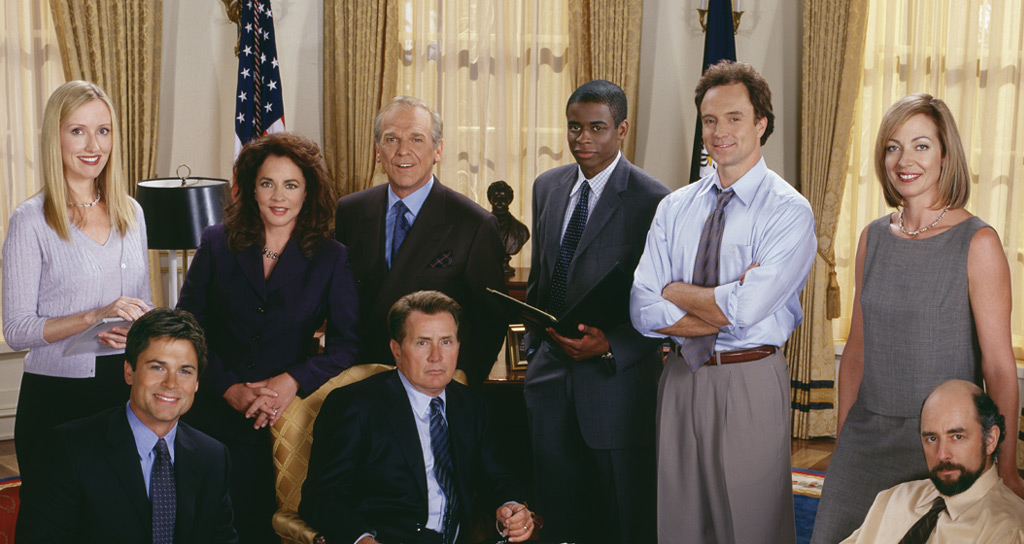
The first time I saw The West Wing, I was in bed with a bad cold over the Christmas holidays. Bravo was running a third-season marathon and while I’d never paid much attention to the show before, for whatever reason (sluggish, cold med-induced trance perhaps) my finger slipped off the remote as Josh and Donna bantered along through the hallways. It wasn’t two minutes before I was hooked – I had never seen television characters interact like this before, bantering back and forth with sparkling, witty repartee that actually rewarded you for keeping your brain engaged while you were watching (as opposed to almost pleading that you turn it off). After spending the subsequent seven years evolving into whatever the Trekkie-equivalent of a West Wing fan is (Wingnut? Westie?) I look back on the role it played at a transitional time of my life in helping to shape my worldview – already pretty liberal, I was still missing a critical element of the equation. I could never really say why I was a liberal, I just felt more at home in the liberal tent, and progressively disinclined at a gut level towards anything remotely conservative. The West Wing crystallized it for me.
The missing ingredient was the power of people – that famous quotation attributed to Margaret Mead that cautions us to never doubt that a small group of committed citizens can change the world, as it is the only thing that ever has. One of the challenges to anyone’s governing philosophy is deciding which side of that famous dichotomy you sit on – the nature of mankind, whether he is by nature basically good, or basically evil. Whether altruism and compassion are our natural state, or if we’re all fundamentally John Galts out for number one alone. You can find plenty of arguments for and against in the animal kingdom, whether it’s in watching a pride of lions leaving their weakest members behind to the hyenas, or in seeing a herd of elephants gather to bury and mourn their dead. Yet those same lions will tend lovingly to their cubs, and those same elephants will battle each other with their mighty tusks to win the favour of the most comely pachyderm. As human beings we are poised so delicately on the razor edge of that question, crawling along it like the snail Colonel Kurtz rambles about in Apocalypse Now (even he calls it both his dream and his nightmare). We want so much to be the good man that we fight ceaselessly from slipping over the other side. When there are a lot of us gathered together in that fight, we can do some pretty damned incredible things.
In Canada, the CTS network is showing West Wing reruns nightly. CTS is including segments in each act break called “West Wing Attaché,” where a right-leaning media personality provides “balance” (I suppose that’s what they call it, he sniffed derisively) to the ideas the episode is putting forward. The comments offered thus far have been predictably insipid. There has been a question asked many times in many Internet forums over the years as to why there was never a show about the Presidency produced from a Republican or more general right-wing perspective. The answer to that one is easy – because conservatives at heart do not believe in government. To them it’s a nuisance that gets in the way of people making money and living their lives. It is impossible to have a workplace drama where the characters in that workplace don’t believe in what they’re doing, and more to the point, are seeking to dismantle the very structure that provides them employment. Would ER work if the doctors were always looking for a way to reduce services and ultimately close down the hospital? Would Star Trek work if Captain Kirk thought the Enterprise was a bloated waste of tax dollars and his five-year mission better handled by private contractors? Closer to home, you probably know at least one guy in your office who hates being there and bitches constantly about how the whole organization is a joke. How much time do you enjoy spending around that dude? (As an aside, this is why I always laugh – and cry a bit – watching conservatives campaign for office, as they claim government is terrible and evil and horrible and ghastly but they want to be in it anyway. I’d like to try this approach the next time I interview for a job: “Well, I feel that your company should be reduced in size and finally dismantled because it is a grotesque blight on the cause of personal freedom. Hire me please.” The crying is for how often this pitch works at election time.) CTS doesn’t mind the ad revenue they’re earning from airing West Wing, obviously, but I guess they feel they have to stay true to their viewer base by ensuring that not one of them starts to think seriously about the “heretical” ideas it offers up. I will wait patiently for the day they offer similar “balance” by giving a liberal atheist a few minutes of airtime during 100 Huntley Street, and in the meantime, thank goodness for the mute button.
The West Wing characters believed in the capacity of government, whatever its flaws, to be a place where good things can be done to help people in need. Their reward for advancing this philosophy was not wealth, fame or even a healthy family life – it had to be in the knowledge that they had done their jobs well, even if no one else knew it. As a guiding philosophy for our brief shuffle across this mortal coil, not bad. Not the selfish whine of the Ayn Rand devotee looking to cast adrift those who have a harder time of it while they gobble up exponentially more than their share. Not the bottom-line focus of the corporation who cares about people only so long as you keep buying stuff from them. Instead, fighting to do good for good’s sake – and while they’re at it, pausing to enjoy the fight itself (Josh Lyman’s telling a right-wing Senator to shove a Stone Age legislative agenda up his ass still resonates, as does President Bartlet’s utter demolition of his Bush-clone opponent in their debate with “Can we have it back, please?”)
Warren Kinsella talked about how the staff in former Liberal leader Michael Ignatieff’s office was obsessed with The West Wing and how it proved to him that they were headed for a massive electoral wipeout. People in politics, Kinsella argues, are never that smart. Indeed, in some of The West Wing’s more idealistic (and unrealistic, if we’re being fair) moments it counts on the wisdom of the American people to make the correct choice, and again, this is the same country that elected George W. Bush and at this point in 2008 was ready to put Sarah Palin within one John McCain heart attack of the presidency. Yet it’s not fair to write The West Wing off as an unattainable liberal fantasy. Perhaps it’s a long game, something to always strive for, with the recognition that you’ll probably never get there – which doesn’t mean that it isn’t still important to try. It’s ironic that it’s the other side that usually goes on about the importance of belief in those who seek to enter public life, because for a liberal, the pursuit of the greatness a country can attain when the best people lead its government is a true journey of political faith. You could see faith on The West Wing in every episode, even when the characters were beaten down by political realities and implacable foes. Communicating that faith to non-believers is the challenge real-life liberals continue to face. The other side is usually better funded and better at getting its message out, because the other way is just easier – appealing to cynicism and greed and pitting us against them. No one ever went broke riling ordinary folks up against invisible enemies. But as I said in a previous post, faith unchallenged is no faith at all, and the path of faith leads to a more lasting reward. In this case it’s the promise of a better place to live.
Is that the lasting lesson of The West Wing? Well, it is for this Wingnut.
A friend directed me to a recent piece in The Toronto Star about how Ontario schools have seen a surge in parents requesting that their children be excused from classrooms when the subject being taught conflicts with their religious beliefs (eg. evolution). This follows the incident several months ago involving a Catholic school board leader who was pilloried in the press for breaking Godwin’s law while trying to explain why her board refused to permit gay-straight alliance clubs on campus (she infamously and quite stupidly said “We don’t allow Nazi groups either”). This is one of those areas where there seems to be no middle ground; you either believe these parents are standing up for their faith and their most cherished values against offensive secular indoctrination, or you think they’re utter ignoramuses trying to shield their poor kids from truth and consequently crippling their ability to function in the real world.
If you have to pin my belief system down to a single philosophy for the sake of reference, I’m probably closest to what’s called a secular humanist. I like to know how things work and I’m unsatisfied with the explanation that life functions as it does because of the will of an insubstantial being who decided my fate long before I was born. Yet I acknowledge that there are numerous things I don’t understand and never will – and I’m okay with that. Rather like how not knowing the ending encourages you to keep reading the book, I’m happy for the continuing mysteries of the universe, because they keep me asking questions, keep me exercising my intellect in pursuit of truth. I recognize that I will never know everything, but I can always learn more. A man does endless reps on the rowing machine not because there is an acme of idealized muscular strength he needs to reach, but because he wants to make himself ever stronger. That’s the most wonderful thing about learning; there will always be something new to learn, and, if one is to extend the metaphor of the gym, simply working your chest and avoiding the leg press will only make you look like Donkey Kong. Shutting out the acquisition of knowledge because said knowledge fails to dovetail with ideology results in a state of imbalance – an inability to complete the equation or to advance the cause of truth.
Faith is not an easy journey. Whether it is faith in God, faith in one’s fellows or faith in oneself, it requires strength. Where extreme believers such as those who demand little Johnny not hear a peep about Charles Darwin fail their children in teaching them that lesson is in sending them the message that their faith is so brittle it cannot stand challenge. Unchallenged faith is no faith at all – it’s blind obedience, and I also suspect that the vast majority who consider themselves spiritual do not like to think of themselves as mindless followers. I have also never understood why some can’t accept the precepts of science while continuing to keep faith, that every word of the Bible has to be literally true for any part of it to have any weight. After all, scientific thought built the iPad on which you’re tweeting your screed against the evil atheist school system. It would seem to me that anything as universal as “God” cannot and should not be codified in human language, that the very concept defies the limits imposed upon it by the twenty-six letters of our alphabet. It remains an unanswerable question, but one that demands pursuit. Faith, then, is the sense that there is an answer worth going after – and if one is to approach understanding, then you can’t arbitrarily discount the information that might help you get that infinitesimal step closer. Deciding that my mind’s made up and I’m going to stick my fingers in my ears when someone says something that contradicts it, is sacrificing that most precious gift of free will, the most important quality that guides our brief journey across life.
I’m not saying that what I believe is what you should believe. Everyone deserves the chance to figure it out for themselves, because that’s the only way it’s going to work. It’s our mandate as human beings to not abdicate our responsibility to learn all we can while we’re here, otherwise life is truly Shakespeare’s poor player strutting and fretting his hour upon the stage, the tale told by the idiot full of sound and fury and signifying nothing. Let the kids learn about science in school. Let them learn about God in church. And most importantly, let them learn enough to be able to make up their own minds.
Scary! Screen cap from the ad featuring Shona Holmes blasting Canadian health care.
She’s back. Shona Holmes, the Hamilton, Ontario native who became a poster child for the American right wing in 2009 as the debate over health care reform roared to life, is starring in a new Koch Brothers-funded Super PAC ad warning voters about the pitfalls of socialized medicine – and not only that, she’s hanging around the Democratic National Convention in Charlotte all week and available for interviews. Given all the talk about the tidal influx of corporate money into the American electoral process since the Citizens United decision, if the best spokesperson the Kochs can come up with to star in their $27-million fear-mongering campaign against the ACA is an outsider whose complaints about her native land’s health care system have been thoroughly debunked, that’s some pretty weak-ass sauce – or, dare I say it as I put on sunglasses, unhealthy? YEAAAAAAAAAAHHHHHH!!!! Can you imagine the reaction on the right if an Obama-supporting Super PAC ran an ad featuring Canadians demanding higher taxes on the rich? Cries from the Fox News cabal about filthy foreigners tampering with the sacred trust of American elections would be positively deafening.
The message of the ad is essentially that because the Canadian health care system allegedly failed Ms. Holmes, Americans should run as fast as they can in the opposite direction. This one Canadian (out of 34 million) claims she had a bad experience, so let’s stick with the disastrous version we have now rather than pursuing a model that is so treasured by the Canadian people because of its success that no party dares broach the subject of changing it lest they suffer massive electoral blowback. I find the right wing’s approach to attacking programs they don’t like (read: they haven’t figured out a way to make money off) amusing in that it’s always the all-or-nothing gambit. They’re always looking for the insignificant opening into which they can bludgeon the moneyed weight of their angry wedge. A single slip-up, to them, warrants the dismantling of an entire organization – just as the appearance of a couple of bad apples in a malicious, heavily edited, out-of-context amateur video was grounds for taking apart ACORN (the real reason being that ACORN was instrumental in getting a lot of Democratic voters to the polls). It’s as facetious and flimsy a position on which to build an argument as suggesting that if a single brick in the Great Pyramid of Giza cracks, the entire thing might as well be dynamited. But it’s all you have when the only reason you can offer for being against something is that you don’t happen to like it very much.
It’s telling indeed that Shona Holmes is the only Canadian the Kochs could find to speak against Obamacare, and that she would be dragged out again three years after her initial appearance on the scene. They probably couldn’t find anyone else. For Canadians, what is almost as universal as our health coverage is our pride in our system – and our gratitude that getting sick in Canada doesn’t mean a financial death sentence. Several years ago I was hospitalized for a serious lung condition, requiring X-rays, painkillers, and finally an intercostal tube drainage treatment. My total bill for my week-long stay: $12, for the optional phone at my bedside. Everything else was covered by the program I pay into with my taxes, and nothing required was withheld because it wasn’t on my plan or whatever other spurious reasons the private companies invent to deny care in the U.S. And my experience is not unique. As to the myth of Canadians dying as they wait for needed surgery, it’s just that. The Canadian system is based on triage – urgent cases go to the front of the line and everyone else is placed in priority sequence. Decisions about who goes first are made by medical personnel (with apologies to the ex-Governor of Alaska, not once has any Canadian been forced to file a request with their local Member of Parliament before calling their doctor). In the case of Shona Holmes, she was diagnosed with a benign cyst and panicked, and rather than waiting as recommended by a doctor she chose to cross the border and pay over $100,000 to the Mayo Clinic to have it removed immediately. And with respect to her complaints about being attacked for expressing her opinion, if you are going to become a shill for U.S. corporate and political interests by spreading specious half-truths to every camera in sight because you didn’t get your lollipop right when you wanted it, you can’t be that shocked if more than a handful of folks decide to disagree with you. Free speech goes both ways – that’s how the concept works. (People shouldn’t have been calling her home to yell at her of course, but that’s just more proof of how passionately Canadians support and believe in their system of health care.)
It took an incredible effort on the part of President Obama, the Democratic Party and its supporters to overcome the blockades thrown up by Republican obstructionists, corporate lobbyists, lawsuit-happy state attorneys general and Tea Party zealots to get the ACA passed, half-baked half-measure as it may seem to many liberals and progressives who were longing for something more transformative. Building on this act to craft a truly fair health care system where no one ever needs to fear getting sick in America ever again is going to take even more, and unfortunately the political damage borne by the Democrats for taking it on has made the issue something of a third rail. But it should provide some comfort to those Americans dreaming of a single-payer program like Canada’s to know that the side fighting to keep the status quo has no real argument to make. They may have more financial resources, more members of Congress in their pocket, but at the end of the day, it’s all smoke and mirrors – their hand is empty. They just don’t like health care, and if you’re looking to win the conversation with the people, truth and facts are a much better starting point.
A great deal of blogging advice says you shouldn’t talk about yourself. I think I’ve been pretty good about staying true to that axiom, presenting my take on world events rather than extolling the mundane details of my boring existence. This is one story about me however that I think is worth telling, not only because there’s a good lesson in it but because it involves my closest encounter with one of the biggest entertainment franchises on the planet – and if that doesn’t grab your interest, then don’t worry, I’ll be back to criticizing Republicans soon enough.
We flash back to an era when Star Trek: The Next Generation was coming to the end of its initial television run and Star Trek: Deep Space Nine was taking over as the sole keeper of Roddenberry’s flame. I’d grown a bit disenchanted with TNG as even at that age I had figured out that stories about deus ex machina subatomic particles and other varieties of technobabble weren’t remotely as compelling as the richer, more character-driven pieces DS9 was attempting. The stories were more emotional and more consequential, as the space station couldn’t fly off at the end of the episode as the Enterprise could. Characters had to live with their choices, and their mistakes would continue to haunt them. For a young mind enamored with the idea of making storytelling his life’s pursuit, this was ambrosia. Imagination soared with potential adventures for Captain Sisko and company (yes, nitpickers, I know he was a Commander during the time I’m talking about, but just roll with it, okay?). Fortunately, because of a guy named Michael Piller who was one of the executive producers of the franchise at that point – and had arguably been responsible for turning TNG around after its wobbly first two seasons – those adventures did not have to remain confined to my brain alone.
Breaking into television writing is incredibly difficult because it’s a closed shop. If you have a great idea for an episode of say, True Blood, and mail a script in to HBO, you’ll get it back without it even having been opened. Too much history of litigation brought by angry writers hollering “You stole my idea!” has led to every single series accepting submissions and pitches only through registered agents. Short version – you can’t land a TV writing gig without an agent, and you can’t get an agent unless you’ve had a TV writing gig. When Michael Piller was running Star Trek, however, he enacted an open submission policy. Anybody could send something in and have it considered – didn’t matter if you were a groundskeeper from Bangladesh, so long as you could write in proper teleplay format and enclosed the correct postage, they’d look at it. Ronald D. Moore, who became one of Star Trek’s most prolific writers, working on Next Generation, DS9 and two of the movies before shepherding the reimagining of Battlestar Galactica, was discovered in this way. It was possible – you didn’t need an “in” with somebody who worked there, you just had to write something that grabbed them. You had the same chance as everybody else.
Over the summer of 1993, as friends either slung burgers or soaked up rays on cottage docks, I got to work. I researched how to write a teleplay, learned about scene headings, dialogue formatting and stage direction, and started writing. My premise? It had been mentioned a number of times on DS9 that Dr Julian Bashir had been salutatorian in his graduating class at Starfleet Medical, that he’d messed up on a single question on the final that had resulted in him coming second. Obviously someone had beaten him and been valedictorian. What if this person came to the station? And what if it was a woman with whom Bashir had had a romantic history, but their competitive nature had dashed the possibility of a lasting relationship? What if they were forced back together to solve a mystery that threatened the entire station? Once those questions were in place, the teleplay came together fairly naturally. I opened with a scene on the Promenade between Bashir and Lt. Jadzia Dax. Dax is going over some personnel reports with a bored Bashir who is longing for some adventure to come into his life. (For fun, the names of the crewmembers Dax is discussing are all the last names of my closest friends.) Bashir notices a comely figure strolling across the Promenade – his old flame, the valedictorian herself, Dr. Sabrina Keller. Sparks ensue, old rivalries resurface, and eventually Bashir and Keller have to team up to save the station from a rogue comet that plays havoc with the Bajoran sun – a crisis in which all their shared medical expertise is worthless. I type this up in WordPerfect, print it out on my cheap dot matrix printer, bind it, label it and mail it off to Paramount Pictures, 5555 Melrose Avenue. And wait.
Fast forward to February 1994. I’m home from my first year of university on reading week. My family and I are coming home from an afternoon out when I spy a huge envelope shoved in our mailbox – from Paramount Pictures. It’s my original teleplay being returned, along with a pile of resources – the DS9 writers’ guide, copies of two previously produced teleplays and a form letter from Ronald D. Moore inviting me for a pitch meeting. For a 19-year-old Trekkie, the reaction resembles what happens to Louis del Grande’s character in Scanners.
They weren’t interested in purchasing the script I’d sent them, but they felt that I had shown promise and been able to write the characters’ voices well. They wanted to hear more. A few days later, I received a phone call from a very nice lady named April who was Moore’s assistant. She wanted to know if I’d received the material and if I was interested in pitching. I replied, naively and sheepishly, that I was a Canadian student and couldn’t afford to come to Los Angeles. After what I’m guessing was an eyeroll on her end, she explained that they took pitches over the phone. It’ll be a half hour conversation with one of the show’s writing producers during which you’ll present several story ideas. Well, in that case, of course I’ll do it, said I. Just one caveat – I’ll be back at university so here’s my dorm room phone extension. Thank you, said April, and she hung up, and I was left there feeling a bit shell-shocked, and intimidated that now I had to come up with at least five more stories for this meeting. Well, at least I had a whole month this time, unlike the year it took me to come up with the first one. Gulp.
A month fades away. I banish my roommate one night and sit on the bed awaiting this call, story ideas spread out around me, the Beastie Boys blaring from next door. The phone rings, it’s April again, and she tells me I’ll be pitching to René Echevarria, a writer whose episodes of both Next Gen and DS9 have been among my favourites. Echevarria comes on the line, we exchange brief greetings, and I launch into my pitches – beating down the butterflies roaring away in my stomach.
Star Trek has always been about big ideas couched in science fiction premises. The coolest space anomalies and weirdest aliens are meaningless if there isn’t a strong social message underneath. In coming up with my pitches I tried to start with the social message first and build the plot around it. The first story I pitched was about religious prejudice. The planet Bajor, which the Deep Space Nine station watches over, is a highly religious world. What if, I suggested, there was a minority of Bajoran atheists? And a few of them had done something really awful, like blowing up a monastery, resulting in every Bajoran who doesn’t believe in their religion being treated with disdain – the same way some blame every living Muslim for 9/11? Arriving on the station is one of these atheists, suspected of selling out his world to the Cardassians. He proclaims his innocence, and the Starfleet crew, who are secular, are more inclined to sympathize with him than the religious Bajoran Major Kira, who hates this guy sight unseen. A few twists and turns later, it’s revealed – after the atheist is shot dead while affecting a very unsubtle Christ-like pose on the Promenade – that he wasn’t selling anyone out, he was buying time for his family to escape from Bajor. Bajor’s conservative attitudes take another black eye as Kira is forced to reevaluate what she believes.
Echevarria doesn’t waste a beat. There’s nothing particularly wrong with the story, he says, but for the third season they are trying to reinvent Bajor as a happier, more positive place for the audience to sympathize with and root for, and this would run contrary to that objective. Plus there are a couple of plot holes he doesn’t like. What else ya got?
I move on to my next story. I’d always been fascinated by the concept of the “red shirt” – the nameless, non-speaking security officer who dies and is never thought of again. I opened the story with a shootout on the station, and one of these guys goes down. You are supposed to think nothing of it. But we stay with his story as Security Chief Odo is filling out the paperwork regarding his death. His name is Warrant Officer Charles F. Kensing (deliberate allusion to Citizen Kane, which my film class had screened recently), and as Odo digs deeper, it turns out he wasn’t a random casualty, he was a deliberate target as part of a conspiracy involving Starfleet Intelligence that leads all the way to Commander Sisko himself.
Echevarria isn’t sold on this one either. He doesn’t buy that Sisko would keep Odo in the dark the way I’ve suggested. The entire plot could have been resolved by the two simply having a forthright conversation. Next.
I re-pitch the valedictorian story. I’ve tweaked it since my original script to play up the romance and competition angles, and sharpen the sci-fi mystery element. But it’s still a no-go. Echevarria tells me they featured the valedictorian in a recent episode that has yet to air at the time I’m speaking with him. (When the episode does air, although the valedictorian is female, her name is Dr. Elizabeth Lense, and not only does she have no romantic history with Bashir, she doesn’t even know who he is – and their fairly forgettable encounter is an unrelated B-plot in a story about Sisko and his son Jake building an interstellar sailing ship.)
With his comments about making Bajor a happier, sunnier place, I know he’s not going to like my last story before I even start in on it. It’s a dark tale about a Bajoran militia exercise involving teenage cadets, and Jake Sisko somehow being shoehorned into taking part. Eventually he is forced into killing one of these cadets to save another and grapples with the consequence of having taken a life. I can feel the cringing on the other end of the phone – it just isn’t happening for me tonight.
Finally, Echevarria thanks me for my pitches. He asks a little about me and is surprised when I tell him I’m 19. He also invites me back to pitch again. Clearly he senses that there’s some potential to be harvested here. I’m a bit apologetic about some of the stories that he’s passed on and he laughs it off, saying, and I quote, “you wouldn’t believe some of the shit people pitch.” We exchange goodbyes and I hang up. Looking back on it now I can see how every one of those stories wasn’t ready for prime time, but the experience itself was invaluable. It showed me at a very young age that I could play with the big boys – that my writing was good, that it could stand up to professional scrutiny. And the door hadn’t been closed – they were willing to hear more. I had my “in.”
You may be wondering now, two thousand words on, why I titled the post “Gather ye rosebuds.” As you can gather based on the fact that you’ve never seen my name in the credits of a Star Trek episode, I never took them up on Echevarria’s invitation to pitch again. Not long after this call, my mother’s cancer worsened and she landed in hospital, never to emerge. Star Trek stories were the very last thing on my mind. I don’t blame myself for not ever following up, at least, not to the degree where I mope about it constantly. Life, as John Lennon observed, is what happens to you while you’re busy making other plans. But these days, as I try to build a writing career, I think back to my “big break” and reflect on how I could have made better use of it. Honestly, I was lazy and I chickened out. I made excuses. I could have fought through the grief – used it, shaped my pain into heart-rending adventures for Captain Sisko’s crew. Perhaps. For whatever reason, at the time I was not in the mood to try. So I let the opportunity slip away like sand through fingertips. DS9 is long off the air, Michael Piller has passed on and the open submission policy on television is history. And René Echevarria certainly doesn’t remember me.
As the summer of 2012 draws to a close and new opportunities begin to present themselves, I’m determined to gather my rosebuds while I may, even if they may be fewer. Carpe occasio. That’s the advice I take from my Star Trek experience, and the best advice that the relating of this tale can bestow upon anyone. Don’t chicken out of life. The perfect time never comes. And as they said in Vanilla Sky, every passing moment is another chance to turn it all around. So send that book in. Get your blog going. Publish that article. Submit your screenplay. And if someone gives you a break, grab onto it and push until it hurts, until your fingers are bleeding and your arms are ready to fall off. You have nothing to lose and the world to gain.
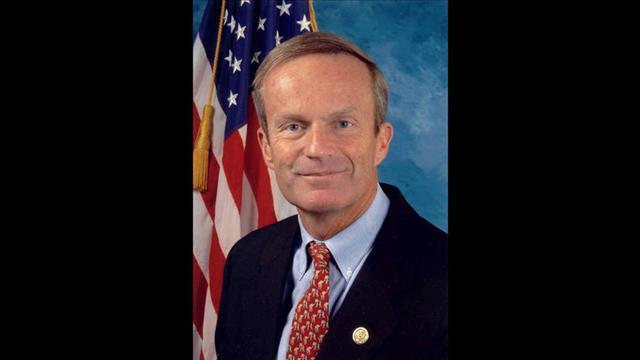
Rep. Todd Akin, Republican candidate for Senate (Missouri). Not pictured: Todd Akin’s brain.
By now, everyone with even a passing interest in the U.S. election has heard of Republican Senate candidate Todd Akin’s remark that “legitimate rape,” whatever on earth that is, doesn’t cause pregnancy. Compounding the sheer idiocy of this comment was Akin’s follow-up non-apology apology, in which he claimed he misspoke and pivoted as hard as he could without acquiring whiplash to bashing President Obama on his handling of the economy. It’s been observed that Akin likely isn’t sorry at all that he said what he did, that his original remarks come from a place of deeply-held convictions fuelled by religion and God knows – pun intended – what else. Saying “I misspoke” is poll-tested politicalspeak for “I know what I said will probably lose votes but I don’t want to outright disavow it because that will lose the votes of my base and I really don’t want to be portrayed as a flip-flopper or give my opponent something they can use against me in a TV ad and… SQUIRREL!” Akin’s hoping to ride out the news cycle and trusting that the rubes who would vote for Vlad the Impaler so long as he was running on a Republican “values” platform will still put him and his 15th Century views on women in the Senate chamber come November. That’s what “I misspoke” really is, no matter who uses it: a Get Out of Jail (or at least a Get Your Foot Out of Your Mouth) Free card. It’s a stopgap half-truth designed to soothe the angry, reassure the faithful and ultimately prove what a spineless weasel the candidate is – a small person without courage, without integrity, and without any business occupying elected office.
Real men own their mistakes. If Todd Akin says he’s going to take out the garbage and forgets, what does he say to his wife? “In reviewing my remarks to you at the dinner table earlier this evening, it’s clear that I misspoke in our discussion and it does not reflect my deep empathy for the millions of trash bags left rotting at the curb every year as the truck drives away. This is clearly a result of President Obama’s failed waste collection policies and an example of why we need new leadership in Washington.” Wonder how that doesn’t end with him sleeping on the couch for a month? If this hypothetical situation goes down, what really happens is that Akin begs on his knees for forgiveness, buys Mrs. Akin flowers and a spa day and never forgets to take out the garbage again. Why don’t we demand the same level of accountability for those we entrust with the public purse? Why are they allowed to say “I misspoke” and get off scot-free – or worse, get into office where they can screw our lives with impunity before retiring on a glorious pension after utterly hosing the millions who voted for them in the first place?
When you think about it, the “I Misspoke” is genius. It has the effect of feigning contrition where there is absolutely none – where the costs of doing so are deemed by a focus group to be politically suicidal. It sounds amazingly remorseful, yet isn’t in the slightest. From what I’ve observed, there are essentially three components to the “I Misspoke,” and none of them involve acknowledging responsibility:
Point out that there may have been some confusion about the intent of the remarks. Even if the remarks were abhorrent, it’s always about the confusion. Shorter version: It’s your fault you’re upset by what I said.
Claim I’m really a nice guy because I love flowers and rainbows and kittens and I feel really bad for people who have to go through hard times (the subtext being, elect me and I’ll vote to cut funding for every single one of you, you freeloading bastards).
Pivot to something completely unrelated as long as it’s a poll-tested, campaign-approved message. “Yes, I probably should not have expressed my admiration for the German economy of the 1940’s but man, did you get a load of Ryan Lochte’s abs? And what’s the deal with Nyan Cat?”
Notice too that the word “sorry” seldom, if ever, appears in the context of the “I Misspoke.” That’s only used by people who feel genuinely distraught about the weight of what they’ve done, and intend by whatever means necessary to rectify it. If Todd Akin is elected to the Senate, he will not experience any road-to-Damascus conversion and suddenly become a champion of abortion rights and women’s issues. He’ll vote according to what was on display in that original interview, saying “aye” to every mandatory ultrasound-requiring, Planned Parenthood-defunding, women’s health care-eliminating bill that comes his way. If Akin is upset at all it’s that he’s put his Senate bid in jeopardy – he does not give one-tenth of a rat’s ass about women, which is why his non-apology apology rings so false. As Rihanna might opine, “don’t tell me you’re sorry ‘cause you’re not, when you’re only sorry you got caught.”
Because voters treat political parties like baseball teams, supporting their side to the bitter end regardless of faults (Jan Brewer winning re-election as Arizona’s governor after spacing out during the gubernatorial debate is a prime recent example), Akin stands little chance of seeing any serious long-term blowback on this issue – despite calls for him to stand aside as the Republican nominee for the Missouri Senate seat, calls which as of this writing he is brushing off. If I were Todd Akin’s campaign manager right now, I’d tell him to stay the course, that Missouri trends right and so long as he stays on message for the rest of the campaign (read: Obama bad! Taxes bad!) he’ll probably win anyway, thanks largely to Karl Rove and Super PAC money. But I wouldn’t be his campaign manager, because I’d never support such a backwards-thinking, poorly-educated head-in-the-sand empty shirt for an office of such stature. See, the problem with the “I Misspoke” isn’t that people use it. It’s that we have lowered the bar so far that people can “misspeak” and carry on regardless. So long as we fail to hold our elected officials accountable when they reveal their true character as Todd Akin has, and like Akin, refuse to accept responsibility for their dumbassery, we will continue to be outraged instead of inspired, and dragged down by the worst of us instead of lifted by the best.







 Graham's Crackers