The original blog of writer Graham Milne – content published from 2011-2017

Graham's Crackers

    • James Bond: What’s next?

      January 24th, 2013
      Looking to the future.
      Looking to the future.

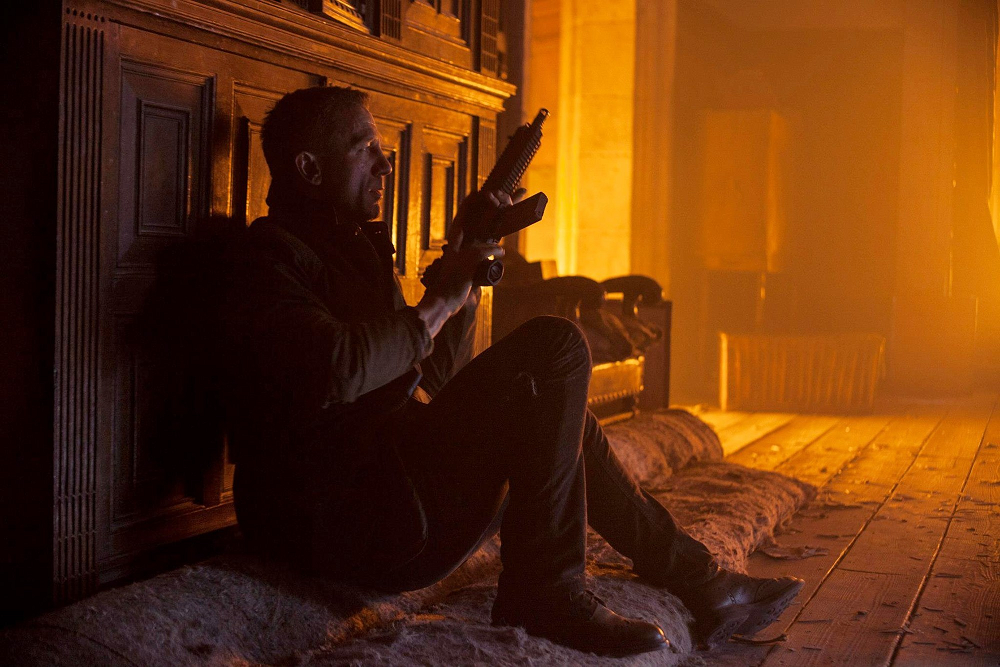
      With what can now safely be called the Bond Begins trilogy coming to a close, as Skyfall ends, in essence, right where Dr. No commences (at least thematically if not quite chronologically), the logical question becomes, where does James Bond 007 go from here?  Absent any hard information about Bond 24 for the time being (save a confirmation of Skyfall’s John Logan returning as screenwriter), 007 fans will return to their usual far-fetched speculation about titles, creative personnel and theme songs, while every D-list actress and reality starlet’s publicist will plant specious stories about their perpetual wannabe clients being pursued by “desperate” 007 producers to star as the new Bond girl (can we collectively agree going forward that after stacking up massive critical acclaim – including five Oscar nominations – and grossing over a billion dollars on Skyfall, Michael G. Wilson and Barbara Broccoli are anything but desperate?)  What is of interest to me is not the minutiae of who plays whom and who directs what; it’s what will be done with the character of James Bond.  With the ghosts of Vesper Lynd and M laid to rest, anything is possible for the next chapter.  But will the producers slip lazily back into formula, or will they push through to something new and untested?  Even Skyfall borrowed from previous Bonds, using a facially-scarred former MI6 agent as the villain (Goldeneye) and centering the plot on M’s dark past (The World is Not Enough).  There is an obligation now, it seems, to outdo past glories yet again, lest the disparaging reviews write themselves (“Well, it’s no Skyfall, but…)  Is James Bond finally trapped by his own success into running aimlessly like a tuxedoed mouse on a wheel?  I’m sure no one wants to return to the era of Bond in the 80’s, where an aging star creaked his way through formulaic plots assembled lazily by committee with no deeper insight into Bond’s character.

      I’ve lurked on the message boards of major and lesser-known James Bond websites for years, and it’s always mildly amusing to read the ideas that are pitched for future adventures.  Some are quite awful.  Others are simply impractical.  A great number are recycled, whether deliberately or in subconscious plagiarism, from what has gone before.  What is most interesting though is the almost uniform approach these well-meaning fans take – to whit, the place from which they begin:  the villain and the plot.  The bad guy should be this, that or whatever (usually a fairly one-dimensional stock madman) and his plan should be to threaten to do this.  And in fairness, some of the plots that are concocted are fairly elaborate, if awfully familiar.  The biggest question that arises when reading these synopses is, where is James Bond?  (He often isn’t plugged in until the third paragraph, usually in afterthought:  “…and Bond has to stop him.”)  With apologies to my fellow Bond fans, they’re all missing the most crucial ingredient for any story that draws inspiration from the classical hero’s journey – what is that journey?  Why is he taking it?  What will he learn about himself along the way?  How will he forever be changed by it?  Anyone trying to dream up a realistic Bond 24 plot needs to answer these questions before they start dreaming up cheesy names for seductive, large-breasted henchwomen.

      To resolve the issue of where does Bond go, we have to look back at where he’s been over the last three films.  He has loved and been betrayed (Casino Royale), he has learned the futility of vengeance (Quantum of Solace), and in Skyfall he has buried his “mother.”  What do you take away from the man who’s lost everything?  I mentioned in one of these 007 posts somewhere along the way that there is a theme running through the entirety of the Bond series – less pronounced, perhaps, in some of the more pedestrian efforts – that being James Bond withers the soul; that his life, despite its exotic trappings, is not one to be envied or emulated.  What keeps Bond going is what Silva mocks him for in Skyfall:  “England, the Empire, MI6… so old-fashioned.”  Even in Quantum of Solace, as Bond seeks to strike at the organization responsible for Vesper’s death, duty remains paramount in his mind, cemented by his final declaration to M that “I never left.”  The films have never touched on in any great detail where Bond’s sense of duty comes from.  As an orphan he seeks to identify with any parental figure, and given that governments are frequently described both in positive and negative terms with parental analogies, it’s not too difficult to see why such a “maladjusted young man,” as Vesper calls him, might gravitate toward public service – first, as indicated in Bond’s official biography, in the Royal Navy, and ultimately in its Secret Service.  Queen and country is what drives Bond, ironically, even with his “pathological rejection of authority based on unresolved childhood trauma.”  In reviewing The Man with the Golden Gun, I talked about the oddity in the construction of the plot that had Scaramanga scheming to create a monopoly on solar power that would drive the oil companies out of business – something of a laudable goal, not your typical supervillain scheme that threatens the entirety of humanity.  Yet Bond is still driven to stop him by any means necessary, out of fidelity to England.  Scaramanga himself points this out when he tells Bond, “You work for peanuts… a hearty ‘well done’ from Her Majesty the Queen and a pittance of a pension.  Apart from that, we are the same.”  Skyfall literalizes this sense of duty to country by personifying it as M, and yet, even after her death, Bond’s England soldiers on – as does he, recommitted fully to his work and arguably, his destiny, as he happily accepts a new assignment from M’s successor before the final fade out.

      But what if this were all taken away?

      What has never been examined in any great detail in any of the 007 films is Bond’s moral compass, absent his loyalty to England.  What if England itself was the enemy?  Who is Bond then?  What if Her Majesty’s loyal terrier is compelled to break off the leash – what if doing the right thing means betraying queen and country?

      Some might argue that Licence to Kill touches on this briefly, as Bond walks away from M and England to pursue private vengeance, but the film features only one brief scene set on British soil (not even filmed there, ironically) and Bond never actually questions or betrays his fidelity to his homeland, he just considers retribution for Felix Leiter to be more important at the time.  So as far as I can tell, this is completely unknown territory.  (Quantum of Solace did flirt with this idea of Bond being considered a rogue by his own government, but the screenplay was so underwritten it never took the time to explore this idea to its fullest extent.  In that movie, despite pretensions of being on a mission of vengeance, Bond is really doing Her Majesty’s work his own way, and simply not stopping to file the required TPS reports.)

      I’m not saying I expect Bond 24 to follow this line of thought.  Such questions tend to veer into the realm of the political, and Wilson and Broccoli, like her father before them, shy from making political statements.  Villains of a particular nationality are usually portrayed as rogues, with a sympathetic character from the same homeland always included to disavow all official connection with them – witness the genial Soviet General Gogol versus the crazed General Orlov in Octopussy, or the conciliatory North Korean General Moon against his megalomaniacal son in Die Another Day.  From Russia with Love’s adaptation changed the bad guys from the novel’s Soviet Union to the stateless SPECTRE.  Yet you can see the groundwork laid for an exploration of these shadows in Quantum of Solace – the usually reliable CIA (at least in the Bond movies) are portrayed as willing accomplices in a Bolivian coup d’état, and one of the leading members of Quantum is a “Guy Haines,” said to be a top advisor to the British Prime Minister, and whose fate is left unresolved at the end of the film.  And the worldwide audience is at a place now where trust in government is at a record low.  Corruption and incompetence is expected and tolerated; democracy is an exercise in spending rather than ideas.  And yet one can see the threads of the greatness that once was drifting in the cynical wind – hope has not been extinguished yet.  Where is Bond’s Britain on this new political map?  Is David Cameron meant to be the “PM” whom Q, Tanner and Mallory worry about in Skyfall?  Does Bond worry about what cuts to the National Health Service may mean for his martini-damaged liver?

      In Skyfall, we saw a James Bond who wasn’t sure he wanted to be 007 anymore – addicted to painkillers and doing tequila shots at a beach bar, before family loyalty called him back into service to try and regain his classic self.  The man who stumbles around in exile in the first act, drinking Heineken (horrors!) as he can barely be bothered to notice the beautiful girl lying next to him, is a man without purpose.  At the end, as he stands on the rooftop of Regent’s Park contemplating the promise of the morning sun and the Union Jack soaring in the breeze, Moneypenny hands him his final gift from M – her prized porcelain British bulldog; bequeathing M’s sense of duty to a greater calling that she knew in her dying moments that he shared.  A powerful gift – and if it is somehow taken away from him, what becomes of Bond then?  Bond vs. England to save it from itself would be a powerful story, with Bond forced to question everything about who he is and whom he’s chosen to align himself with.  From this seed, the rest of the story can spring forth.  Then you can start figuring out the shape of the ideal, modern villain who could somehow turn Bond against his own homeland, and a love interest who can help Bond smash the conspiracy and restore honor to his life.

      I should be clear – I am not interested in a rehash of the exhausted “one man must clear his name, the villain is his former mentor” trope that was every action movie released in the late 90’s.  Nor do I want to see Bond turn into Jason Bourne, pursued relentlessly by agents of the organization he is trying to leave behind.  This would be Bond choosing to betray his country for a compelling reason, and the consequences of that betrayal.  Testing whether Bond’s loyalty is truly to Her Majesty or to a deeper moral code, hidden somewhere in the murky ambiguity that accompanies a licence to kill.  Stripped of any issues of loyalty, where is James Bond on the grand divide?  Can a man who murders people for a living be, fundamentally, a good man?  That’s the question my hypothetical movie would want to examine, and my starting point for developing the screenplay.  If, you know, I got the call from Eon.  That phone can ring anytime, guys.

      Wherever John Logan, Michael Wilson and Barbara Broccoli choose to take 007 next, just as a fan I hope for two small things, both involving the leading lady – first, I really hope we’ve seen the last of the “Bond’s equal” female spy, a la Jinx, Wai Lin, Anya Amasova, etc.  As I’ve said before it’s an unimaginative stock character that gets shoehorned in when there is no more logical reason for having a love interest in the movie.  And second, after three movies where Bond ends his adventure alone, it would be nice to see the poor guy have a walk-into-the-sunset moment with a gorgeous companion at his side, in a cleverly-written scene that doesn’t involve puns about how many times Christmas comes in a year.  Everyone Daniel Craig’s Bond has slept with has died, and he’s earned an old-fashioned Connery-in-the-raft ending, methinks.

      Sigh… long wait to November 2014.
      Spread the word:

      • Click to email a link to a friend (Opens in new window) Email
      • Click to print (Opens in new window) Print
      • Click to share on X (Opens in new window) X
      • Click to share on Facebook (Opens in new window) Facebook
      • Click to share on LinkedIn (Opens in new window) LinkedIn
      • Click to share on Pocket (Opens in new window) Pocket
      • Click to share on Reddit (Opens in new window) Reddit
      • Click to share on Tumblr (Opens in new window) Tumblr
      • Click to share on Pinterest (Opens in new window) Pinterest
      Like Loading…
    • The road from ideology to idiocy is paved with tanks

      January 18th, 2013
      A patriot defending against tyranny.
      A patriot defending against tyranny.

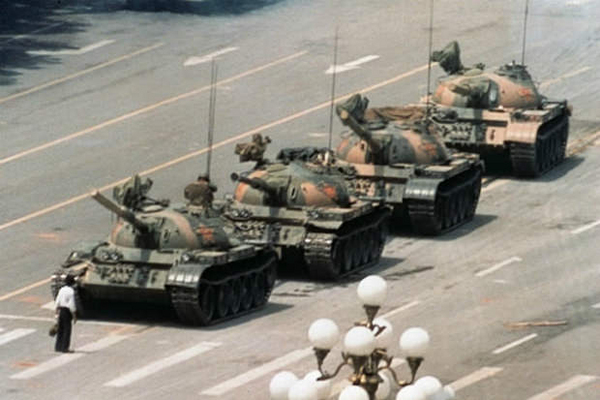
      So this morning, I’m following this Twitter exchange between Van Jones, former advisor to President Obama, and some mostly anonymous American gun lovers who are blowing collective gaskets (or is that muskets) over measures announced by the President this last week to try and curb armed violence in America.  The righties are coming at Jones with the suggestion that ever-more-powerful arsenals are needed by “the people” to combat government “tyranny” (the latest buzzword, like socialism, used to define a paranoid’s impression of some indefinable monster lurking in the shadows:  “I sure don’t know what it is, but I’m damn sure agin it!”)  Jones counters by asking what would be enough for these same people to be able to successfully subdue U.S. soldiers acting on behalf of this hypothetical tyrannical government – chemical weapons, nukes even – and calls what his opponents are suggesting, i.e. firing on American servicemen and women, treasonous.  At which point one individual says Jones is being ridiculous and in the event of this prophesied calamity of Biblical proportions, “the soldiers will be on our side.”  To which I’d say, please see Square, Tiananmen.  But it got me thinking about the course of the entire discussion, where no minds will be changed, no needles will be moved and no one will come away with anything but a heated temper and a more intractable position on the issue.  We act like this is a phenomenon unique to the era of Fox News and infinite blogs and talk radio shows, but the power and the rigidity of belief, whether it is political or spiritual, is one of the defining aspects of humanity.  We’ve seen in countless examples how it is both our greatest gift and our greatest curse.  The noblest accomplishments we have ever achieved have come from strong beliefs, and sadly, so have our greatest evils.

      As a liberal humanist, I’ve chosen my spot on the spectrum and have as much of an ideology as the next guy.  Yet I temper my beliefs with reason and my own personal notion that faith unchallenged is not faith:  one must question everything and back up one’s claims with concrete, scientific, provable evidence.  And one shouldn’t linger in the comfort of one’s own “side,” as it were – you owe it to yourself to look at what the opposition thinks and try to figure out the reasoning behind their points of view.  As I mentioned in my piece a few weeks ago about the Newtown shooting, the obsession with guns comes from a place of fear – as does a great deal of the conservative mindset.  Fear of the untrustworthy, the indigent, the other.  Bad people. Bad people are coming to hurt you, so you need a gun to protect yourself.  Bad people want to steal your money and spend it on other people, so you want taxes cut.  Bad people overseas want to blow you up for reasons you can’t understand, so you want a huge military arsenal to defend your shores.  Bad people want to force you to sleep with men.  Bad people want you to stop going to church.  Bad people this, bad people that.  There seems to be a need to collect all this fear and focus it against a single, identifiable target, hence the evil liberal menace, stoking this fear into the hatred that naturally follows.

      Fear, of course, isn’t unique to conservatives.  Liberals fear plenty of things – the devastation of our planet due to wars, environmental pollution or outright greed, religious extremists forcing antiquated and in many cases physically harmful doctrines on the masses, losing our democratic voice to an ever-encroaching corporate plutocracy.  The major difference I see in how a liberal approaches the world is that for liberals, there are no absolutes – and we are more willing to admit that we might be wrong.  On Real Time with Bill Maher a while back, someone, I can’t remember whom, was sparring with a climate change denier and made the argument that if he was wrong about global warming, no big deal, but if the denier was wrong, everyone and everything on Earth would die – so why not try to mitigate the problem anyway?  But a conservative will cling to the same tenets no matter how many times he is proven to be in error; for him, flexibility is weakness.  There was a story a few months ago how Senate Republicans suppressed a study that proved conclusively, through decades of evidence, that tax cuts do not spur job growth.  Canada’s Finance Minister Jim Flaherty, during our 2011 federal election, kept insisting that corporate tax cuts were desperately needed or this hazy figure of “400,000 jobs” would be lost.  The meme was repeated, unquestioned, ad nauseum by friendly media and likely helped throw more than a few votes his party’s way.  Less than a year later Flaherty was out begging corporations to please oh please if you wouldn’t mind sir, kindly use your hoards of cash we just gifted you to hire a few folks, y’know, if it’s not too much trouble.  Yet you won’t see Flaherty calling for his tax cuts to be repealed, no matter how much red ink is generated, how much proof he is shown that said cuts are as helpful to the economy as fairy dust.  Night after night conservatives yell the fallacy that “tax cuts increase revenue!” as government after government that follows their approach spirals down into deficit and debt (see:  Greece).  Either it’s a massive conspiracy to “starve the beast” – personally, I don’t think most people are that clever – or these folks genuinely believe the fiction they’ve been sold, and like all conservatives, won’t change their minds no matter how often their approach flounders in the practical world.

      Ironically, there is a singular example of a near-universal experience of a belief being undone by reasoned analysis.  Nearly all Western children grow up believing that Santa Claus delivers gifts to them every Christmas Eve.  Yet as they age, cracks begin to appear in the story; perhaps some wisenheimer at school brays snottily, “You know it’s just your mom and dad, right?”  (I still remember the name of the kid who did that to me – thanks a lot, Chris Campbell, wherever you are.)  Perhaps they start to do the math and realize it’s physically impossible for one man with one sleigh to deliver billions of toys in less than 8 hours, and they’re less and less satisfied with the explanation that it’s because Santa is magic.  How many adults, even conservatives, still believe in Santa Claus?  But the same method of examination and deduction fails for almost everything else, resulting in decade after decade of the same flawed ideas being offered up regardless of how badly they’ve gone in the past.  It’s like how in Ontario, Conservative leader Tim Hudak has reignited a debate on privatizing the LCBO (the government-owned corporation that manages the sale of alcohol throughout the province and generates loads of income to fund our social programs), despite the utter financial shambles that was his party’s decision to sell off our only toll highway to a Spanish corporation for a song when they were in power, and which we’re still paying for.  And just like how for the National Rifle Association, the answer to the problem of guns in schools is more guns in schools.  Part of this, as I’ve pointed out, is their executive looking out for sales opportunities for gun manufacturers, but this absurd notion would still be defended to the death (or to the cold, dead hands, as they like to put it) by regular rifle-lovers with no financial interest in the outcome.  Apparently, to admit one’s logic is perhaps flawed is to expose a chink in the armor – to risk the entire house crashing in on top of you.  Perhaps that’s the ultimate fear.  Fear of the shell being stripped away to reveal… absolutely nothing.

      So long as we’re speaking about shells being ripped away, it’s an interesting happenstance of linguistic evolution that the words “ideology” and “idiocy” both begin with “id” – Freud’s concept of the impulses of the inner self unleashed, at their wildest, with none of the rational examination of said self needed for it to function within the framework of a civilization.  Likewise, beliefs – and indeed, faith – cannot function to the betterment of ourselves and those with whom we share the planet without critical examination.  Be open.  Be open to being wrong.  Those who enter into a debate should entertain the possibility that their beliefs may be changed by the discussion that follows, as much as you are attempting to change the beliefs of those you’re debating with; otherwise, you’re left with people hurling abuse at one another for no perceptible reason other than getting one’s rocks off by being an idiot.  And we all remember the last time being an idiot worked out toward the improvement of the human condition.

      Spread the word:

      • Click to email a link to a friend (Opens in new window) Email
      • Click to print (Opens in new window) Print
      • Click to share on X (Opens in new window) X
      • Click to share on Facebook (Opens in new window) Facebook
      • Click to share on LinkedIn (Opens in new window) LinkedIn
      • Click to share on Pocket (Opens in new window) Pocket
      • Click to share on Reddit (Opens in new window) Reddit
      • Click to share on Tumblr (Opens in new window) Tumblr
      • Click to share on Pinterest (Opens in new window) Pinterest
      Like Loading…
    • Around the world in 80 clicks

      January 14th, 2013
      50 Shades of Orange and Red.
      50 Shades of Orange and Red.

      The “views by country” application on WordPress holds endless fascination for me.  As I’ve said before it’s a reminder of how small the world has become in the digital age and how one does not need a multi-million-dollar book deal or internationally syndicated column to have a reach that spans the globe.  Since my last update, we’ve now filled in the entire north coast of Africa, all of South America save Guyana and French Guinea, Belarus finally got on board to complete the Eastern European bloc and the U.S. has regained the all-time lead from Canada following last June’s spike (thanks neighborinos!)

      I wonder about some of the countries where the total number of views is in the low single digits.  What were they looking for, did they find me by happenstance, and did they at least enjoy what they stumbled upon?  I wonder about those nations where the Internet is guarded tightly by the government and who seem to be, at least for now, the Holy Grail in terms of getting a blog hit – places like China, Iran, Cuba, North Korea.  (Don’t know what Greenland’s excuse is.)  We know that in those countries, a privileged few do indeed enjoy unrestricted Internet access so the possibility exists.  There was an interesting article released last week about Jimmy Dushku, a 25-year-old American who for whatever reason is one of three accounts being followed by North Korea’s official Twitter account.  Though considering what goes on in that despotic mess of a country, I can’t say I’m that eager to fill my map in.

      What’s the scoop, fellow WordPressers – anybody out there get a hit from somewhere completely unexpected?

      Spread the word:

      • Click to email a link to a friend (Opens in new window) Email
      • Click to print (Opens in new window) Print
      • Click to share on X (Opens in new window) X
      • Click to share on Facebook (Opens in new window) Facebook
      • Click to share on LinkedIn (Opens in new window) LinkedIn
      • Click to share on Pocket (Opens in new window) Pocket
      • Click to share on Reddit (Opens in new window) Reddit
      • Click to share on Tumblr (Opens in new window) Tumblr
      • Click to share on Pinterest (Opens in new window) Pinterest
      Like Loading…
    • May the Mouse be with you

      January 2nd, 2013
      Above:  The single coolest image of a Jedi battle ever seen anywhere.
      Above: The single coolest image of a Jedi battle ever seen anywhere.

      It’s old news now, but given that it happened in the midst of my James Bond countdown and then the holidays and a bunch of other things hit at once, I never took the opportunity to comment on the revelation that sent Star Wars fans into a Force-induced tizzy – that George Lucas has sold Lucasfilm Ltd. to The Walt Disney Company for $4.05 billion, and accompanying this massive corporate transaction was the equally hefty revelation that Star Wars Episode VII will be released in 2015.  Ever since Revenge of the Sith in 2005, Lucas has been insisting up and down that Star Wars as a cinematic enterprise is finished, done, or, as Emperor Palpatine would put it succinctly, “complete.”  Yet the Mouse House confirmed in the same press release that there would be many further trips to that galaxy far, far away.  Star Trek has been going strong in multiplexes, despite a few missteps, for eleven movies now with a twelfth on the way, so shouldn’t la guerre des étoiles be able to blaze across our screens for as long as the medium is viable?  Clearly Disney thinks so and has immediately begun soliciting creative talent to assemble the next voyage.  J.J. Abrams turned down an offer to direct, citing loyalty to the other space franchise he helped relaunch.  Michael Arndt, a screenwriter whose credits include Little Miss Sunshine and Toy Story 3, has been chosen to pen the next instalment, with Lawrence Kasdan – who wrote the masterful The Empire Strikes Back and co-wrote the not bad Return of the Jedi before opting to sit the prequel trilogy out – in the wings to script further adventures.  It’s safe to say that these titanic moves were not on anyone’s radar, and that Star Wars fandom, which has struggled in recent years to reconcile their love of Lucas’ creation with their hatred of his incessant (and yet perfectly legitimate, as far as I’m concerned) tinkering with it, has seen its universe upended, with resignation about the quality of the prequels now sprinkled with optimism about what the future might hold.  What I’m not sure about is how Disney intends to treat them – as much as some fans like to dump on George Lucas for the reason of the moment, I don’t know if the fans recognize how good they’ve had it under the amiable real-life Galactic Emperor, and how things may change for the worse.  And I say this as an admitted lover of Disney!

      It’s not necessary to rehash the cultural phenomenon that is Star Wars – the marriage of Joseph Campbell’s monomyth with science fiction to craft an enduring story that inspires little boys to wave flashlights around against an imaginary Darth Vader.  In the real world the bad guys win much too often; in the world of Star Wars, good always triumphs over evil, and the nobility of sacrifice for one’s fellow human being (or Wookiee) is the greatest cause to which one can aspire.  We still talk about Greek myths over two thousand years on, and so this trilogy of movies from the late 70’s and early 80’s is a relative zygote in terms of how long it’s had to inspire its audience.  Yet its reach is unparalleled – movies, TV and literature across every genre can get an immediate laugh by dropping in a quote from Star Wars, and everyone can smile and feel like they’re part of the world’s biggest and most inclusive club – one that stretches across all cultural and regional divides.  One of the most enduring traits of Star Wars is its ability to be passed on, down through generations now as the kids whose eyes opened wide at the scratchy print in the rickety old movie house alongside their parents now watch the same adventures with their own children in the comfort of a surround sound-equipped home theatre.  And many who touch the flame of Star Wars use it to fire their own creative candles, as those who first heard the stories of the Greek gods offered their own interpretation of those tales to new audiences.  Star Wars likely holds the record – if indeed, it were possible to count – for the sheer volume of unofficial derivative works, written, sketched, painted, sewn, sculpted and filmed parodies, homages, tributes and other acknowledgements of what has become a shared universe.   (A quick search for “star wars” on YouTube yields 1.4 million hits, ranging from remixes of John Williams’ iconic theme song, Lego recreations of famous Star Wars scenes, animations of dancing stormtroopers, girls in Princess Leia’s metal bikini and Zeus knows what else).  That universe, the most remarkable example of remix culture, has been, until now, watched over in silent guardianship by George Lucas, who has permitted these myriads of creations so long as they are not for profit.  What then do we make of the stewardship of Star Wars and all it represents being entrusted to the company that famously sued a daycare for painting Mickey Mouse on its walls?

      The world has changed tremendously since that notorious incident, which predated the Internet and the lingering question of copyright in the digital era.  Progressive media companies and celebrity brands like J.K. Rowling understand the tremendous value to be found in allowing fans to play in their sandbox, realizing that it’s about building a community (and receiving free advertising), and that ultimately, the vast majority don’t mind paying for officially licensed offshoots, be they yet another Blu-Ray boxed set or endless waves of toys.  For decades however, Disney has been the most trigger happy of the lot, ready to unleash their armies of attorneys at whosoever dareth trespass against them.  I’m just saying there’s a reason why you won’t find a lot of Donald Duck stories at fanfiction.net, nor will you find Walt Disney in Love on YouTube.  As someone who has created his own fictional universe and wonders idly about the future day an aspiring scribe decides to pen their own fan fiction trilogy using my characters and settings, it would be tremendously flattering to know I’d inspired someone like that – and truthfully, why else are we writing except to inspire – but if another someone decided to reap financial gain from my work without my by-your-leave I’d be Scanners-head-exploding livid.  I’d be equally as upset if someone produced a derivative work that was pornographic, excessively violent or simply insulting to the spirit of my original.  The trouble is you can’t seem to have one without the other, that either all copyright is enforced to the limit of the law, thus creating the perception that you’re a grouchy Lars Ulrich type and hate your fans, or you go for George Lucas’ approach and accept a certain percentage of the bad stuff (what a retail outlet would call “shrink”) with the understanding that most will be positive and done out of love and only help your brand reach new heights.

      The lingering grey area for Star Wars fans is whether Disney will continue what Lucas started, if they will accept that Star Wars is its own entity and deserves a freer hand than what has typically been Disney copyright policy in the past.  After Return of the Jedi in 1983, Star Wars entered a long dry period where nothing save a few crude cartoons and made-for-TV Ewok movies was forthcoming from the Lucasfilm vaults, and instead the creations of the fans, whose interest never waned, kept blowing oxygen on that dwindling spark, until Lucas was finally ready to go back to the well, knowing that he had legions out there who remained loyal to him and to his universe because they felt like they owned a piece of it – an emotional piece that could not be quantified in financial or percentage terms.  Once described by Campbell as his single best student, Lucas always understood that a myth cannot thrive in the care of a single person, and in commenting on selling his baby to Disney he spoke about needing Star Wars to go on without him.  In many ways it already has, and the nightmare scenario of Disney being Disney and starting to remove the likes of Chad Vader: Day Shift Manager and Troops and Eddie Izzard’s “Death Star Canteen” routine from YouTube will be the beginning of the end of Star Wars as the force – yeah, I went there – for uniting people and unleashing their imagination and creativity that it has become.  The hope is that Disney too has evolved since the daycare incident and understands just what they’ve managed to acquire; a property that has become the unofficial property of millions of people the world over.  People may wear Mickey Mouse ears, but they don’t go around pretending to be Mickey Mouse in the way kids want to be Luke and Han and Leia.  Fingers crossed that the lawyers of the Walt Disney Company don’t cease-and-desist them out of their dreams.

      Spread the word:

      • Click to email a link to a friend (Opens in new window) Email
      • Click to print (Opens in new window) Print
      • Click to share on X (Opens in new window) X
      • Click to share on Facebook (Opens in new window) Facebook
      • Click to share on LinkedIn (Opens in new window) LinkedIn
      • Click to share on Pocket (Opens in new window) Pocket
      • Click to share on Reddit (Opens in new window) Reddit
      • Click to share on Tumblr (Opens in new window) Tumblr
      • Click to share on Pinterest (Opens in new window) Pinterest
      Like Loading…
    • Woohoo! 2012 in review!

      December 31st, 2012

      It was the best of times, it was the worst of times; etcetera, etcetera.  Thanks to the WordPress helper monkeys for providing this handy little summary.

      Here’s an excerpt:

      4,329 films were submitted to the 2012 Cannes Film Festival. This blog had 28,000 views in 2012. If each view were a film, this blog would power 6 Film Festivals

      Click here to see the complete report.

      On a personal note, I want to thank everyone who stopped by to read my ramblings, whether you came here accidentally in search of naked pictures of Carice van Houten (a very popular search engine hit, and sorry to disappoint – although you should follow her on Twitter, she’s funny), you decided to browse further because of my contributions to The Huffington Post, or you’re a personal acquaintance and you feel obligated out of guilt to click that link that shows up in your Facebook news feed.  A special thank you to Justin Trudeau and Emilie-Claire Barlow for using their celebrity clout to send more than a few readers my way.  A very special thank you to the Fabulous Five (you wonderful folks know who you are) and three in particular for proving that friendship in the digital age doesn’t require face-to-face meetings, although some day it sure would be nice to shake your hand and buy you a drink.  Who knows, maybe 2013 will offer up that chance.  An extra special thank you to my father-in-law, whose comments have done much to bolster my confidence, and who’s unfortunately spending New Year’s Eve in the ER.  Faigh go maith go luath, Dave.  Copious thanks to his daughter, my better half, without whom this wild and unpredictable enterprise never would have begun.

      As I look to “lucky” 2013, I look forward to a year of chances taken, opportunities seized, fortunes made, friendships solidified and most importantly, words written.  Hope everyone out there has a very happy New Year.  As one of my favorite singers, Richard Ashcroft, once opined, see you in the next one, have a good time.

      Spread the word:

      • Click to email a link to a friend (Opens in new window) Email
      • Click to print (Opens in new window) Print
      • Click to share on X (Opens in new window) X
      • Click to share on Facebook (Opens in new window) Facebook
      • Click to share on LinkedIn (Opens in new window) LinkedIn
      • Click to share on Pocket (Opens in new window) Pocket
      • Click to share on Reddit (Opens in new window) Reddit
      • Click to share on Tumblr (Opens in new window) Tumblr
      • Click to share on Pinterest (Opens in new window) Pinterest
      Like Loading…
    • Fear and loathing: Christmas 2012

      December 21st, 2012

      stuffychristmas

      It’s emblematic of our age that when a major event occurs, we are guaranteed to know what every person with a computer thinks about it, in various degrees of legibility and/or sanity.  The thoughts expressed following the Sandy Hook massacre have been a virtual deluge of sympathy, anger, regret, confusion, disbelief, shattered faith and predictable political posturing, from both prominent public figures and unpronounceable cyber aliases.  There is a compulsion to find sense in the senseless, meaning in the unimaginable.  To ask how something like this could happen and ensure it never happens again.  For many it’s too late for that; a resignation that these mass shootings are an inevitable consequence of the path the United States is on, where the power of the NRA has made firearms regulation a political third rail and attempts at increasing access to proper medical care lead absurdly to mass protests and election losses.

      The little bodies were barely cold before the trotting out of the usual canards began – Republican congressman/professional moron Louie Gohmert (the slightly more evolved protozoan who was screaming a while back that “anchor babies” were the latest terrorist threat) wished that the teachers had been packing heat so they could have pulled the Charles Bronson routine against the killer.  He and others of his ilk think the answer to every mass shooting is to increase the supply of guns amidst the populace – the idea, if you can dignify it with that word, being that potential mass murderers will be deterred from carrying out their insanity if they think it’s possible that one of their targets might shoot back.  Setting aside the fact that not a single gun massacre has ever been stopped in this way, what message are Gohmert and his cretinous colleagues trying to send?  That in the Greatest Country in the World™, people, little children even, should be walking around every day scared to their britches that someone’s going to pull a gun on them?  Please define for me how that constitutes greatness – a land where everyone you pass on the street is a potential murderer to be horrified of.  The other day a boy in Utah was arrested for bringing a firearm to school because he thought someone might shoot him.  I have no doubt that Gohmert et al will hold this boy up as a patriotic defender of liberty instead of the terrified little child that he is, who should be playing with teddy bears and Lego instead of Glocks and Smith & Wessons.

      The text of the Second Amendment reads:  “A well regulated militia being necessary to the security of a free state, the right of the people to keep and bear arms shall not be infringed.”  I’m no Constitutional scholar (nor, I suspect, are 99.9999998% of the people who howl about the sanctity of these words) but it’s my understanding based on my read of American history that this was written in light of the fear that the British might return and civilians needed to be able to fight back if the regular American army wasn’t able to get there in time.  Perfectly logical, one supposes, for the late 1790’s, when the fastest public alert system was a guy on horseback yelling that the British were coming.  But scanning through comment sections on news websites, one finds a different argument, that the citizenry must be able to own and wield guns in case the government needs to be violently overthrown (memories of Tea Party Senate candidate Sharron Angle and her infamous “Second Amendment remedies.”)  The same folks who wail “Support the Troops!” every time they are sent into battle (whether or not the cause is just) think that on a whim these same heroes of unimpeachable virtue will transform into mindless pawns of the Antichrist dictator and begin sweeping through the streets mowing down patriotic citizens.  In the highly unlikely (if not utterly impossible) event that ever happens, quite frankly, the government has the 82nd Airborne and stealth bombers and you’ve got three guys with shotguns in a Dodge Durango – I don’t like the odds.  And of course, the government only has those stealth bombers and an entire range of invincible high-tech weaponry because the same people who cite the above logic of the Second Amendment continue to vote for the party who thinks cutting defense spending for any reason is an act of sedition.  If one feels the onset of a migraine at these unfathomable leaps in logic, one must remember that these arguments are not even in the same stadium as logical reasoning – they come entirely from a place of fear.

      Fear is the one emotion common to every creature that walks the earth.  It has been ingrained in our being ever since we were swinging through trees to avoid being eaten by something bigger and stronger.  As our minds have developed across the eons, gaining the ability to reason, we have still never shed this most basic instinct.  Fear can, if properly tempered and managed, drive us to achieve greatness.  In The Dark Knight Rises (ironically, a movie tainted by its association with a mass shooting), Bruce Wayne finds it impossible to escape a prison without the motivation of the fear of dying in the attempt.  But fear run rampant is endlessly destructive, and there will always be those who understand this and prey on fear to make money.  The political lobbying of the NRA and its offshoots, despite repeated publicly stated intentions of preserving freedom and promoting responsible gun ownership, is about the freedom of weapons manufacturers to continue to sell their product, regardless of whether those who purchase those weapons are the slightest bit responsible.  And if you are not afraid of a big scary bad guy breaking into your house or the faceless drones of the evil government coming to drag you off to the gulag, what do you need a gun for?  So it is in the interest of companies who sell guns and by extension advocacy groups like the NRA to keep the masses as scared as possible.  They no doubt revel in the free assistance provided to them by the media who splash every act of violence across newspapers, television screens, websites and smartphones and then conduct weeks-long investigative reporting into every single facet of the event and how YOUR FAMILY might be threatened.  Gun sales explode following gun massacres, ostensibly from the fear of being targeted next but really because somehow the government might actually get off its ass and do something about the absurd ready availability of deadly weapons, and nobody wants to be last to the buffet table.  The government, in turn, rarely does anything because it’s too afraid of the ability of the NRA to swing elections, nor does it want to be labelled anti-business by regulating, sanctioning or otherwise restricting gun manufacturers.  And so the cycle of fear creaks on, until it reaches its bloated tentacles into the one place in the world that should be utterly free of fear – a public school.

      The children of Sandy Hook Elementary were not feeling any fear that morning.  They were probably excited about Christmas, writing letters to Santa and helping to decorate the classroom with styrofoam snowmen, popcorn garlands and candy canes and reindeer cut from colored construction paper.  They could never have fathomed in their innocent young minds that someone was coming to take everything away in a hailstorm of bullets.  Why would they?  They hadn’t yet had the chance to be properly programmed by the great slouching mass of fear that oozes from society’s pores unchecked by reason and common sense.  Our collective inability to recognize the difference between vigilance and paranoia and to silence those who would exploit our fear for financial gain.  I have to laugh, sadly, when I hear politicians talking about the necessity of beefing up arms and equipment stockpiles to protect our shores from unseen external threats.  Yet what indeed is all this meant to protect?  In a world where everyone has guns, how can anyone ever feel safe?  Indeed, our very failure to check the expansion of the world’s supply of firepower, while enriching those who make the tools of murder, has only aggravated the foreboding hanging perpetually over every human head; like the famous doomsday clock inching ever closer to midnight, we seem to be willing accomplices in our own destruction, ensuring that we remain drugged with constant fear of our neighbour and ever readier to set off the fuse at the slightest provocation.

      The suggestion purported by some that every school should post armed guards would be laughable were it not so tragic.  They forget the subliminal lesson the presence of a scary uniformed guy packing an obvious .45 engraves upon the impressionable child’s mind – that the world is a frightening place to be regarded with suspicion and mistrust.  The millions of kids who came home from school safely that terrible day would be full of questions, with parents and guardians struggling desperately for reassuring answers.  It is simply not enough to reach for the usual prayers, platitudes and bromides and change the channel until the next incident occurs.  We often speak about the kind of world we are leaving our children, whether it will be a better, more prosperous life, or something out of the most nightmarish dystopian fiction.  What is needed to achieve the former – beyond the immediate fixes of an increased focus on mental health care and sensible, effective gun restrictions – is a fundamental re-examination of the wisdom of the agenda of fear:  the invisible conspiracy convincing the world that we need to jump at our own shadows, not because shadows are scary, but so we’ll be the first in line to purchase deluxe-grade shadow repellent.  We are hooked on fear like the proverbial junkie chasing his next fix.  And in one area, I find myself in agreement with some of the Second Amendment advocates, in that I don’t think gun control is the panacea, although it will certainly help start the journey.  When we learn to shun the fearmongers, when we evolve away from this notion that we need an arsenal to protect ourselves from the boogeyman lurking in the alleyway, when we celebrate the good instead of constantly giving airtime to the bad, when we reject the concept that safety only comes through deterrence, and when we recognize that the right of children to attend school free of fear should always trump somebody else’s freedom to blow a deer’s brains out, and resolve to do whatever it takes to make that happen, then we will be able to finally crawl out from the iron grip of fear, and into a better future.  We owe it to those dear lost children who won’t be celebrating Christmas this year.  The alternative – the slow, doomed march of the status quo – is simply too frightening to contemplate.

      In any event, now you know what this anonymous idiot with a keyboard thinks.  And my hope is that you and your family have a joyful, celebratory holiday season utterly free of fear and loathing.  See you in the next one, and let’s get on with things, shall we?

      UPDATE:  The NRA has officially responded and predictably, they’ve blamed everything but guns and suggested the answer is more guns in schools.  Armed guards in every school, which won’t necessarily have to be police but volunteers (because armed guards are wonderful but amateur armed guards would be even better!)  And the taxpayer would of course be the one to pick up the tab for the huge bill the weapons manufacturers would then get to send to the government.  NRA Vice President/Gun Pimp Wayne LaPierre says that “the only thing that can stop bad guys with guns is good guys with guns.”  And while he was speaking, someone shot and killed four people in Pennsylvania, wounding two state troopers in the process, who, presumably, were armed.

      Your move, America.

      Spread the word:

      • Click to email a link to a friend (Opens in new window) Email
      • Click to print (Opens in new window) Print
      • Click to share on X (Opens in new window) X
      • Click to share on Facebook (Opens in new window) Facebook
      • Click to share on LinkedIn (Opens in new window) LinkedIn
      • Click to share on Pocket (Opens in new window) Pocket
      • Click to share on Reddit (Opens in new window) Reddit
      • Click to share on Tumblr (Opens in new window) Tumblr
      • Click to share on Pinterest (Opens in new window) Pinterest
      Like Loading…
    • Paying it forward – part deux

      November 23rd, 2012

      Confession time:  I’ve been negligent again.  In the middle of my somewhat obsessive trip through Bondage of late, the ever-awesome Samir from Cecile’s Writers was kind enough to nominate me for the One Lovely Blog Award.  It’s always terrific to be acknowledged in this way by our fellow scribes; as I’ve observed in the past, what else is blogging or indeed writing but the cry into the lonely wilderness hoping for an answer?  Samir and his colleagues over at Cecile’s are really quite amazing; you should check them out, and often – there is always something different to peruse, a new, insightfully crafted exploration of this mad journey of stringing together words to form images and ideas we have chosen to undertake, whether for the love of language, the desire to reach or simply because we were intoxicated at the time.

      I’ve also observed that the words matter more than the man behind them, and so in that respect it’s difficult to come up with seven random things about me that would garner any interest beyond that of my immediate family.  Most of what I would consider important to understanding who the guy behind the glasses is has already been divulged in the course of the 175 essays that precede this one.  But I shall give it the old college try:

      1.  I have a crippling addiction to red velvet cake.  If there is ever an “RV-Anon,” I could easily be its spokesperson.  Assuming my arteries haven’t been completely clogged by cream cheese icing first.

      2.  The only accent I cannot mimic well is Afrikaner.  I can usually spout off a few brief phrases before it starts to devolve into pidgin-Australian meets effeminate German.

      3.  I was once chased away from near the exterior set of Days of Our Lives at the NBC lot in Los Angeles because I was wearing a Universal Studios jacket.

      4.  Over 90% of my music collection is movie soundtracks – and not those half-assed packages of unrelated pop songs that are released purely for marketing purposes, but genuine orchestral scores.

      5.  On a related note, when I am really in a serious spot of writers’ block, the album that has never failed to save me from it is U2’s The Joshua Tree.

      6.  Queries for my novel have (finally) gone out to literary agents.  More to come and good news (if any, hopefully) to be shared here first.

      7.  I currently (for November, at least) sport a moustache.  Squint your eyes at my gravatar pic and imagine the horrors.

      Writing is about breaking rules sometimes too, and to that end, I’m going to deviate from the last requirement of this award just a little bit.  You’re supposed to nominate an additional 15 blogs that you think merit consideration as well.  But I find myself unable to do so.  For one thing, ashamed as I am to admit it, I don’t read that many blogs that regularly – I have the “fabulous five” that are linked on my front page which I of course recommend heartily to anyone in search of wordly (not a misspelling) fulfilment.  I have a few more that I follow and enjoy from time to time.  However, stretching the list to fifteen – arbitrarily slapping a few extra names on there just to reach an artificial threshold would be unfair to the authors of those blogs, and would serve, I think, to diminish the worthiness of their efforts.  WordPress is a vast and welcoming sea, and the task should be not for me to point you hither and yon based on what could very well be a fleeting fancy of mine, but for you to plunge in without a lifejacket and discover the many sumptuous treasures for yourself.  So instead of hyperlinking fifteen blogs, I’m going to nominate every WordPress blogger who dedicates his or her words to improving our human condition, to expressing positivity and hope.  To everyone who wants their work to create a smile somewhere out there in the world – to everyone who wants the words they etch in the unforgiving cement of the Internet to be an enduring message of joy and celebration of all we are and all we can achieve.

      This award is for every last one of you, and that’s the best part – you already know who you are.  You don’t need me or anyone else to tell you.

      Spread the word:

      • Click to email a link to a friend (Opens in new window) Email
      • Click to print (Opens in new window) Print
      • Click to share on X (Opens in new window) X
      • Click to share on Facebook (Opens in new window) Facebook
      • Click to share on LinkedIn (Opens in new window) LinkedIn
      • Click to share on Pocket (Opens in new window) Pocket
      • Click to share on Reddit (Opens in new window) Reddit
      • Click to share on Tumblr (Opens in new window) Tumblr
      • Click to share on Pinterest (Opens in new window) Pinterest
      Like Loading…
    • Get Up the Road: Henry Rollins live

      November 21st, 2012

      Jon Stewart once said about Bruce Springsteen that when the Boss performs on stage, he empties the tank.  Some performers endure with unapproachable intensity, defying their age and it would seem even the limits of physics as they keep the needle in the red long after most of the audience is ready to collapse from sheer exhaustion.  Paul McCartney remains that in his 70’s.  And so does Henry Rollins.  From the moment he walks out on the bare stage and grabs his instrument – the microphone – Rollins seizes his audience by the balls, locks them in a vice and doesn’t give them nor himself a single breath until he’s done, two and a half hours later; at which point he marches off without looking back, point made, job done.  Rollins is a rare breed and like the most fascinating people, a walking contradiction – a master raconteur absolutely without cynicism; an angry, tattooed punk who rages for the cause of hope.  He spits in the face of authority not out of misguided emo angst, but because he’s been to every corner of the world he’s been warned not to visit and has found a common humanity wherever he’s walked.  Rollins is a modern pilgrim and is only too eager to share what he’s learned, to put it out there without judgement and have you decide for yourself whether you think he’s onto something or not.

      I’m not going to pretend that I have any kind of penetrating insight into punk rock; apart from occasionally digging the odd Sex Pistols, Iggy Pop or Ramones tune it’s a stratum of society that is pretty foreign to a kid whose chosen muses growing up were James Bond and Star Trek.  But it’s an interesting exercise to compare the sentiments of someone like Johnny Ramone, who admired George W. Bush and opined that punk was essentially right wing at heart, to Rollins, who rejects the absolutism that frames a conservative’s morality (he refers to Mitt Romney as a “feckless douche” and mocks the Republicans’ deep-seeded fear of “le vag”) and understands that people everywhere just want a better life for their kids and are at their best when they work together for the benefit of everyone.  One could hardly find a sharper contrast to the Ayn Randian mentality that characterizes today’s right wing (and contributed greatly to their shellacking down south on November 6th).  What I suspect informs at least some of Rollins’ more collectivist thinking as it applies to punk rock is the ability of music to unite everyone, regardless of background, in a shared experience.  To show that someone else gets it.  Rollins’ spoken word shows carry on that tradition as well.  He admits that he both loves and fears his audience, but one thing is for certain:  he can unite them.

      Perhaps atypically for what one (or, more accurately, “the man”) would expect from a punk, Henry Rollins doesn’t believe in anger without purpose; he quotes Iggy Pop, who, when asked why he was so angry all the time, replied that “I work at it.”  We’ve all felt that directionless anger many times in our lives, and rather than throwing up his hands and deciding that humanity is headed to its smouldering doom in the proverbial flaming handbasket, rather than simply stumbling out drunkenly in the night looking for an innocent face to throw a punch at, Rollins channels his anger into positive work.  He relates a tale of bringing soap and soccer balls to a shattered community in Haiti, and laments playfully lifting a child into the air when a line of hundreds of them then formed expecting a similar ride from an increasingly sore back that wasn’t physically up to the challenge.  He talks about befriending the driver of a broken-down tour bus in Cuba who could only manage a few phrases of broken English (among them “baseball”).  He shares a story of meeting a fan who listened to Rollins’ records to gather the courage to come out to his staunchly conservative parents.  He tells of a troubled young girl who sent him an email full of naked pictures of herself asking if he thought boys would like her, and of his response, both fatherly (gently assuring her that she doesn’t need to run at that part of her life when it will come naturally in time) and terrifying (talking about the permanence of the Internet and painting a graphic picture of what might happen should the wrong person decide to take an interest in her).  And he finds the most clever ways to stick it to the man, as in when requesting that his share of the profits from a poster promoting a festival in Austin, Texas be donated to the local chapter of Planned Parenthood in order to give a smirking middle finger to Governor (and Planned Parenthood foe) Rick Perry.  One thing I do understand about punk that many seem to miss is its wry sense of humor, and Rollins could easily be thought of as punk’s happy warrior.  For a guy who looks like he’d just as soon kick your ass as look at you twice, Rollins does a magnificent job of making people laugh – not with puns or punch lines or observations about airline food, but with tales of the richness and the wackiness that is the life available to us if we’re willing to leap at it the way he does – even if we’re not all as eager to throw back two shots of cow urine on camera.

      I’ve seen Henry Rollins live six times now, trying to make it out to his show every time he’s in the neighbourhood, and fortunately, as the self-professed “work slut” and Canada enthusiast proclaims, that’s often, usually once a year.  The stories change but the message remains the same, and it continues to simmer in the recesses of one’s thoughts long after Rollins has said good night and soldiered back to his utilitarian hovel.  Seeing Henry Rollins is not a passive experience where you let the words wash over you, laugh a few times and then forget it as soon as you’ve left the theatre.  What Rollins wants, and the gauntlet that he lays down, is for each person sitting there listening and laughing to join with him in the spirit with which he journeys through life.  To cast aside the filter of fear erected to obscure the truth of our world by people who are trying to sell us things.  To come together in the common cause of getting everyone a little bit further up the road.  Fundamentally, to find and latch onto that little piece of punk inside that Rollins knows can be harvested to do amazing things.  And if nothing else, to rock out to the Ramones.  I don’t know about you, but that makes me seriously consider getting some ink – or at least cranking up “Blitzkrieg Bop.”

      Hey, ho, let’s go.

      Spread the word:

      • Click to email a link to a friend (Opens in new window) Email
      • Click to print (Opens in new window) Print
      • Click to share on X (Opens in new window) X
      • Click to share on Facebook (Opens in new window) Facebook
      • Click to share on LinkedIn (Opens in new window) LinkedIn
      • Click to share on Pocket (Opens in new window) Pocket
      • Click to share on Reddit (Opens in new window) Reddit
      • Click to share on Tumblr (Opens in new window) Tumblr
      • Click to share on Pinterest (Opens in new window) Pinterest
      Like Loading…
    • The countdown concludes: Skyfall

      November 12th, 2012
      Only a fool fights in a burning house.

      Well… was it worth the wait?

      I can’t speak for you of course, I can only offer my own opinion.  And if you haven’t seen it yet, I’d encourage you to bookmark this, close the window and come back later.  Skyfall is a movie loaded with surprises, and it would be a shame to spoil any of them for you.  Go on then, go check it out.  I’ll be here when you get back.

      When MGM was forced to file for bankruptcy in 2010, it looked for Bond fans as though we might be in for a repeat of the long dark night of the early 90’s.  Those whose appetites were left wanting by Quantum of Solace were forced to grapple with the notion that it could possibly be the last one for a long time.  But as has happened before, events for 007 had a way of working themselves out, and this case, very much for the better.  The most inspired stroke was the hiring of director Sam Mendes, a veteran of the British theatre whose first movie American Beauty had secured Academy Awards for Best Picture, actor Kevin Spacey, screenwriter Alan Ball and of course himself as Best Director.  Mendes had followed up on this achievement with the visually captivating Road to Perdition, which featured in its star-studded cast an up-and-comer at the time named Daniel Craig.  Mendes’ name got the A-list to sit up and take notice, and so for Skyfall, instead of the usual roster of capable if mostly unknown performers, we have the most pedigreed assemblage of genuine movie stars to ever take part in a Bond adventure; actors who would likely have turned up their noses in decades past.  And Mendes gets everyone to give their absolute all – there is no phoning it in, no dodgy line delivery, no short-shorted twenty-year-olds trying to explain nuclear physics phonetically.  It’s critical because Skyfall is a story, like the best of the stage, that depends on great acting.  It is not a battle for the fate of the world – it’s a struggle for the life of one very important person.

      As the movie opens, Bond and junior field agent Eve (Naomie Harris) are struggling to clean up an operation gone bad in Istanbul, where a gun-for-hire named Patrice (Ola Rapace) has murdered several British agents and made off with a hard drive that contains a list of every embedded NATO agent in every terrorist cell across the entire world.  The mission goes truly awry when on orders from M (Judi Dench), Eve shoots and appears to accidentally kill Bond.  Patrice escapes, and M is hauled on the carpet by Gareth Mallory (Ralph Fiennes), the bureaucratic chairman of the British intelligence service.  His government is convinced that the kind of human intelligence that MI6 represents is no longer needed in the absence of clearly defined enemies like those of the Cold War.  Returning to the office, M receives a mysterious transmission telling her to “think on your sins” and watches helplessly as MI6’s London headquarters explodes, killing several of her operatives.  A very much alive Bond, who has used his presumed death to disappear to a remote part of the world and has become addicted to painkillers and drink, finds out about the attack and decides to return to service, although he is a worn out shell of the specimen he once was.  Despite failing his physical and mental readiness tests, Bond is sent by M to Shanghai to follow up on the location of Patrice.  It’s there that Bond meets the beautiful yet emotionally scarred Sévérine (Bérénice Marlohe), who reluctantly leads him to her employer – Raoul Silva (Javier Bardem), a former MI6 agent (and former “favourite” of M) who was abandoned to torture after his identity was compromised, now living only for vengeance against “mommy.”  Although he cannot save Sévérine, Bond is successful in capturing Silva and returning him to London, thanks to a revolutionary gadget supplied by the young Q (Ben Whishaw) called a “radio.”  However, the capture of Silva seems to be a component of the villain’s master plan, which sees him promptly escape custody and go after M as she is attending a government hearing on her competency as head of MI6.  Bond realizes he needs a home field advantage, and so absconds with M to Skyfall Lodge, his empty childhood home in cold, rural Scotland, which is still being tended by gruff but lovable gamekeeper Kincade (Albert Finney).  Armed with only a handful of hunting rifles, Bond’s Aston Martin DB5 and a good helping of ingenuity, Bond, M and Kincade stand off against Silva and his men in a final brutal showdown which sees everything Bond believes in tested one final time, and his world changed forever – ironically bringing him back after a three-movie arc to where James Bond 007 as we know him truly begins.

      In reviewing the preceding 24 Bond films over the last month, the trend that has emerged most strongly for me is the struggle to maintain balance between spectacle and substance; to ensure that along with the dessert goes a healthy but not too plodding serving of meat and potatoes.  The problem is that the eye candy is diverting, but we need a compelling reason to care about what’s going on in front of us, apart from just thinking that James Bond is cool and we don’t want him to die.  In Skyfall, as befits the CV of Sam Mendes, the stakes have never been more personal or more emotional for James Bond – you know going in you’re not going to get the downright stupid antics of A View to a Kill or even the mind-numbing kill-a-thon of Tomorrow Never Dies.  And the story is crafted by screenwriters Neal Purvis & Robert Wade (their 007 swan song, apparently) and John Logan (Gladiator, The Aviator, Star Trek Nemesis) to move away from mechanics and big machines – the villain as a mere extension of evil technology – to hinging on the consequences of personal choices.  In fact, the McGuffin of the stolen hard drive is more or less forgotten about by the middle of the second act, but by that point we realize it doesn’t matter in the larger scheme, because we care more about the people than the plot.

      My own Bond girl observed to me that she was most impressed by the calibre of acting this time around, that there isn’t a weak performance in the bunch, and she’s correct.  Fiennes gets to dial it down a notch after finally escaping from Voldemort purgatory to portray a public servant struggling with the demands of accountability to a public (and a government) that sees the world in black and white and his recognition of the world of shadows within which M and MI6 operate.  Finney, with whom working was apparently an unfulfilled lifelong ambition of the late Albert R. “Cubby” Broccoli, is wonderful as the cranky old Scotsman who raised Bond after the death of his parents, and his chemistry with Judi Dench provides a gentle human contrast to the pyrotechnics of the final act.  Harris is a flirty and fun companion to Bond, and their relationship, which consists largely of verbal sparring (and one close shave) is clearly never going to progress to Vesper Lynd levels, but the reason why makes perfect sense as the movie draws to a close.  I don’t have the words to capture even a fragment of Bérénice Marlohe’s exotic, soul-shattering looks, but her Sévérine is a classic tragic Bond girl in the tradition of the Ian Fleming novels, her inner wounds elevating her from vampy, dragon-manicured femme fatale to a richly rounded human being, whose only failing is she isn’t on screen long enough for my liking – although perhaps that’s just my hormones talking.  The competing spy series XXX tried to introduce the idea of a young gadget-master in the vein of Q, but wound up with an unfunny scenery-chewing hack; Whishaw shows how to do it right, with low-key self-awareness that never veers into the smug smartassed techno-geekery that would make you want to punch him.  He is, like the other supporting players, the perfect foil for 007.

      But Skyfall is the trifecta of performances that form its sad emotional core – the mother and her two sons.  Raoul Silva is perhaps the most unique Bond villain in decades; a former agent, once dedicated to the cause, who has suffered tremendously and is now driven and remorseless – his own kind of blunt instrument.  Yet Silva is also flamboyant and colourful in a way that none of 007’s foes have been in recent memory, prone to fits of tortured laughter as he struggles to hold himself against the insanity that boils beneath the surface, the inner physicality ravaged by a failed cyanide capsule, keeping himself together long enough to complete his mission of vengeance against M, a woman for whom he once held tremendous feelings of loyalty and the love one would have for a mother.  Particularly telling is his final confrontation with her, when he notices that she is wounded and still finds it within himself to care about her pain – seeking, at the end, to free them both from it.  As the audience we too feel sympathy for Silva despite his acts of terrorism; we cannot fully condemn the path he has chosen, as much as we don’t want to see him win.  With his complex and layered performance here, by turns charming and skin-crawlingly creepy, Javier Bardem has set a bar for James Bond villains as high as that achieved by Heath Ledger as the Joker in The Dark Knight, and one does not envy the task awaiting the next actor or actress who must don this imposing mantle.

      When Judi Dench was first cast as M for Goldeneye, it was a novelty – here was the world’s most famously sexist spy taking orders from a woman for a change.  The filmmakers quickly wised to the capabilities of the actress they had enlisted for this previously inconsequential role and beefed up M’s contributions from film to film.  The World is Not Enough was the first real attempt to expand the role of M, but like the rats so frequently mentioned by Silva in this movie, it only scratched very tenuously at her surface.  Casino Royale and Quantum of Solace recognized the maternal aspect of M and began to subtly play up this new angle, but in Skyfall that metaphor is the crux of the movie:  M is the leading lady this time.  It is Bond’s loyalty to her that brings him back to her side over the cynicism and disillusionment he feels, inasmuch as it is Silva’s loyalty to her that lies at the heart of his feelings of betrayal.  However, M’s loyalty has always been to the mission – the greater good of queen and country – and Bond’s and Silva’s inability to comprehend that the devotion shown to them is not personal leads both men to choose radically different paths; only one on the side of the angels.  Dench is magnificent as this most inscrutable of mothers, who clearly cares about the agents whose careers she has nurtured but fights to keep that sentimentality under control, and is filled with regret for the decisions she’s had to make that have gone against the mother’s instinct to protect her children.  Does M’s gender make her a better intelligence chief or a lesser one?  Skyfall seems to suggest that despite the predictable harsh consequences to a woman’s soul, it favours the former – M’s final confession to Bond being the proof.

      Famous actors who have allegedly turned down the role of James Bond have described him by turns as boring, frivolous or simply immoral.  I would argue that Bond is in fact one of the deepest, most fascinatingly ambiguous characters on the silver screen, and with Skyfall, Daniel Craig has finally nailed him.  If in Casino Royale he was figuring himself out, and if in Quantum of Solace he was simply angry, Craig is confident enough here to play Bond torn apart – almost literally by bullets – and reassembled piece by shattered piece, emerging at the end as James Bond in all his classic glory and ready for new adventures bold.  Craig asked for more humour in the script this time, and Bond is much quicker with his wit than he has been for a while, with Craig surprisingly deft with a clever, well-written wisecrack after having seemingly cemented himself as the brooding man’s James Bond.  His Bond is also refreshingly less than superhuman, his strength failing and his marksmanship suffering, with sheer determination and adrenaline making up for what his skills lack.  The “old ways” which come so sharply into focus in the finale are in fact the only way to defeat a techno-genius like Silva, much as one needs a Daniel Craig in comfortable, fighting form to share the screen with a performer like Javier Bardem and not be completely blown off it.  If any doubts yet remained, Daniel Craig is James Bond for our generation, and the last two or three people left in the world who don’t agree can frankly suck it.

      Skyfall is such a sumptuous feast of a 007 movie that I could probably go on for paragraphs more in dissecting its every precious component and why it is such a triumph, but rather than risking the old tl;dr, I have to make at least a brief mention of the cinematography of Roger Deakins, which is the most polished and gorgeous photographic work seen in a Bond movie likely ever.  Whether it’s in the neon flash of the lights of Shanghai, the bleak moors of Scotland or simply making Bérénice Marlohe look like a goddess made flesh, Deakins crafts a sublime palette for the story to unfold upon.  It’s been suggested that he should receive an Oscar nomination for his work here and I heartily agree.  I also want to note the welcome return of Daniel Kleinman to the position of main titles designer after the boring one-off that was MK12’s contribution to Quantum of Solace – Kleinman has always treated the titles as a chance to advance the story through abstract, artful imagery instead of just a “commercial break” with random silhouetted women gyrating in shadows, and he backs Adele’s haunting theme song with a sequence that plays almost like a graphic journey into the depth of Bond’s soul.  And last but not least, everlasting gratitude to Sam Mendes and second unit director Alexander Witt for holding the camera still.  My eyeballs thank you, and my stomach thanks you.

      So that’s it, and after a month of journeying through the highs and lows of 50 years of movies I’m saying goodbye to James Bond for now.  I may have further reflections at a future time, once the memory of Skyfall has firmly entrenched itself in my brain and whether my opinion evolves upon further viewings.  Since we started this voyage back in the middle of October, the world has tumbled onward and given me plenty of new things to write about, and it’s time to get on with that.  As the new M tells Bond at the end of the movie, there’s plenty of work to do, and as Bond replies in turn, it’s my pleasure.

      Cue the explosive horns and electric guitar of the James Bond theme.  Over and out.

      Spread the word:

      • Click to email a link to a friend (Opens in new window) Email
      • Click to print (Opens in new window) Print
      • Click to share on X (Opens in new window) X
      • Click to share on Facebook (Opens in new window) Facebook
      • Click to share on LinkedIn (Opens in new window) LinkedIn
      • Click to share on Pocket (Opens in new window) Pocket
      • Click to share on Reddit (Opens in new window) Reddit
      • Click to share on Tumblr (Opens in new window) Tumblr
      • Click to share on Pinterest (Opens in new window) Pinterest
      Like Loading…
    • Skyfall Countdown Day 1: Quantum of Solace

      November 9th, 2012
      Daniel Craig aiming at the 185235th person to complain about the movie’s title.

      Those who prefer their film franchises with rock-solid continuity are best steering clear of James Bond.  It is impossible to square the various circles that arise each time a new movie is released, even with the occasional tip of the hat to Bond’s past that might be included.  Roger Moore’s seemed to be if you consider the opening of For Your Eyes Only, but is Timothy Dalton’s James Bond meant to be the same man who married and then lost Tracy di Vicenzo?  How are we to believe that Blofeld could not recognize Bond in On Her Majesty’s Secret Service when they just met in You Only Live Twice – and what happened to his scar?  Is Felix Leiter a short old guy with a dorky hat or is he Christian Shephard from Lost or McGarrett from Hawaii 5-0?  Is Judi Dench’s M the same person who managed Pierce Brosnan’s veteran James Bond for four adventures and then promoted Daniel Craig’s James Bond to 00-status?  The mind wants to see logical connections, and will grasp at the flimsiest rationale to justify them.  But James Bond never cooperates.  It’s best – to preserve one’s sanity – to approach each movie as its own, individual entity.  Of course that doesn’t work when considering Quantum of Solace, the first direct Bond sequel.  Taking its title but nothing else from the Ian Fleming short story about James Bond attending a boring dinner party, it picks up literally five minutes after Casino Royale ended and sees Bond criss-crossing the world in pursuit of the shadowy terrorist organization that robbed him of his love Vesper Lynd.

      Delivering the wounded Mr. White (Jesper Christensen) to an MI6 safe house in Italy, Bond and M are shocked when M’s personal bodyguard turns out to be in league with White and allows the mysterious bagman to escape.  A clue among the bodyguard’s possessions leads an angry but determined Bond to Haiti, where he encounters Camille Montes (Olga Kurylenko), a Bolivian secret service agent in pursuit of the exiled General Medrano (Joaquin Cosio), the former dictator of Bolivia who was responsible for the murder of her father and rape of her mother and sister.  Medrano is being aided in an imminent coup d’etat in his former nation by environmentalist Dominic Greene (Mathieu Amalric), whose organization is arranging Medrano’s return to power in exchange for a supposedly worthless tract of Bolivian desert.  Eager for this coup to go forward are the CIA’s South American station chief Gregg Beam (David Harbour) and his deputy Felix Leiter (Jeffrey Wright, reprising the role), in exchange for a share of the oil bounty rumoured to exist beneath the desert.  Following Greene to Austria, Bond snoops on a meeting Greene attends at a lavish lakeside production of Tosca – whose other participants are global power players and members of the secret organization to which Mr. White belongs, including a senior advisor to the British Prime Minister.  When Bond blows their cover and is blamed for the death of the advisor’s security man, M cuts off all 007’s financial support and forces him to seek the aid of former ally René Mathis (Giancarlo Giannini).  The two journey to Bolivia, where it turns out that talk of oil is smoke and mirrors to fool the superpowers into looking the other way:  Greene is after Bolivia’s water supply, which he intends to sell back to Medrano for twice the current price after installing him as President of Bolivia.  However, Greene’s people are deeply entrenched – Mathis and fellow agent Strawberry Fields (Gemma Arterton) are murdered, Bond is held responsible and the CIA is closing in.  Tipped off by the ever-reliable Leiter, and with little but Camille’s help and the lingering trust of M, Bond pursues Greene to an explosive showdown in the middle of the desert, where he must stop the coup, allow Camille to have her vengeance, and find out just who is masterminding this secret terrorist organization, called Quantum.  A coda in Russia sees Bond confronting Vesper’s former boyfriend, also a Quantum operative, who is being used as a honey trap to seduce highly placed female agents into giving up valuable classified information.  Bond finishes his adventure alone once again, leaving Vesper’s necklace behind in the snow before the famous gunbarrel roars across the screen to close this second chapter of James Bond 2.0.

      Deleted scenes on a DVD are a fascinating glimpse into the filmmaking process, but it’s readily apparent why they were lopped out of the movie – they weren’t necessary to advance the story.  In much the same way, Quantum of Solace feels like the deleted scenes of Casino Royale.  Bond himself has taken a step backwards from where he found himself at the end of the first movie, as Vesper had proven, even in death – by giving up Mr. White – that her love for Bond was genuine, as was her remorse for betraying him.  But here Bond seems to have forgotten all of that; it’s as though the last twenty minutes of Casino didn’t happen, and he is still furious with her and unable to forgive.  And quite frankly, James Bond is not really a pleasant person in this movie.  He is cold, distant and often silent, a blunt, charmless instrument.  I suppose these traits are appropriate given Bond’s presumed state of mind, but the movie doesn’t take the time to address them.  Director Marc Forster has said he wanted the movie to be tight and fast, and true enough, Quantum is lean and mean at 107 minutes versus Casino’s 145, but part of the joy of watching a Bond movie is taking the time to appreciate the locations, the characters and the atmosphere.  Quantum of Solace feels a bit like the film projector is running too fast, it’s in such a hurry to get to the end.  Part of the issue as well was that the movie laboured under the Writers’ Guild strike of 2008, and scenes were being rewritten minutes before being shot, with Daniel Craig confessing that with the writers on the picket line, the task was left largely to him and Forster.  Even though Paul Haggis receives official writing credit (along with the apparently tenured Neal Purvis and Robert Wade again) what dialogue there is feels clunky and disjointed and has none of the zip and panache that accompanied the exchanges of Casino Royale.  Characters contradict each other, forget things they’ve just learned and offer witticisms that make no sense.  (There is really only one good line in the movie, and it’s in Spanish – when Bond explains how “teachers on sabbatical” can supposedly afford to stay at La Paz’s most palatial hotel.)

      Without a solid script this time, Forster has to focus on what he can do with the action and the visuals.  Despite an unfortunate borrowing of technique from the Bourne movies and their damnable shaky cameras, for the most part the action scenes are well-executed, if routine and lacking somewhat in innovation.  Forster uses an interesting approach in that each of the movie’s four major action beats are based on a classical element of nature – the opening foot chase (earth), the Haiti boat pursuit (water), the battle in the skies above Bolivia (air) and the final explosive showdown (fire).  But Forster’s best work is to be found in the Tosca sequence, with villains hiding in plain sight as the brutal imagery of Puccini’s famous drama plays itself out in front of them, and the striking chase and gunfire exchange that follows with no sound but that of operatic voices singing their lament.  Here, Quantum of Solace nears the realm of exceptional cinema, even if the rest of the movie doesn’t quite live up to the promise.

      The actors try their best despite the underwritten material, but the only real standout this time is Judi Dench, as the motherly M who both frets over and grows frustrated with her prodigal “son.”  The angle of a villain character pretending to care about the environment to hide the destructive nature of his true ambition is worth much more exploration than it receives here – while he is an excellent actor, Amalric doesn’t have much opportunity to develop his sinister power broker, and the only moment in which Greene reveals anything about his background is interrupted.  The filmmakers also missed their chance, given the South American setting, to feature the first Latina Bond girl, casting Ukrainian-born Olga Kurylenko with a spray tan and wobbly accent as Camille instead (and explaining it with a throwaway line about her Bolivian father having a “beautiful Russian wife… a dancer.”)  The characters of Bond and Camille seem to be in two different movies – indeed, they have two different missions – and their physical interaction is limited to one little kiss after the quest has ended and they are about to part company forever.  Camille herself has little personality; the more exuberant of the standard two Bond girls is Arterton as Fields, who unfortunately isn’t on screen very long.  Nor is Italian film legend Giannini, returning as Mathis only long enough to be killed off by Greene’s thugs (in a glaring continuity error that smacks of deleted scenes, Mathis turns up battered and bruised in the trunk of Bond’s car only about two minutes after we see him alive and well at Greene’s party – that was one quick beating!)  The remainder of the cast is unmemorable – particularly pointless is Anatole Taubman as Greene’s henchman Elvis, who has a silly bowl cut hairdo, follows Greene around in silent awkwardness while trying to look menacing and gets blown up before he even gets the chance to fight Bond.

      What is most frustrating about Quantum of Solace is that one can see the seeds of a better movie scattered throughout, and a few alternate creative choices might have made for a more robust experience.  Had the story not been tied so irrevocably to Casino Royale, had the pace slowed and given the characters more time to flesh themselves out, and most importantly, had Bond himself had a different journey instead of the too-familiar path of vengeance, it’s very possible that Quantum could have met or even exceeded the expectations left in its parent movie’s wake.  As it stands, Quantum of Solace is like how many viewed the last half hour of The Lord of the Rings: The Return of the King, keeping an old story going on and on long after the audience has arrived at a satisfactory emotional conclusion, and diminishing the impact of Casino Royale.  Even at the end, Mr. White is still missing and there are lingering questions of how far Quantum’s reach stretches inside the British government, suggesting that there is still more to tell, long after our interest has waned.  I’m encouraged that Skyfall is its own stand-alone story, with this movie’s ghosts put to rest for the time being.

      Speaking of which – John Lennon says life is what happens when you’re making other plans, and as much as I was looking forward to seeing Skyfall tonight, because of other personal commitments it won’t be happening.  So you’ll have to wait till the beginning of the week for my take on it.  Sorry about that, folks, but I figure if you’ve been with me up until now, you don’t mind waiting a few more days.  In the meantime, thanks for coming with me on this retrospective, which hopefully has been as fun to read as it was to write, and if you are heading out to Skyfall tonight, I hope I’ve helped get you a little in the mood.  Stay shaken, not stirred.

      Spread the word:

      • Click to email a link to a friend (Opens in new window) Email
      • Click to print (Opens in new window) Print
      • Click to share on X (Opens in new window) X
      • Click to share on Facebook (Opens in new window) Facebook
      • Click to share on LinkedIn (Opens in new window) LinkedIn
      • Click to share on Pocket (Opens in new window) Pocket
      • Click to share on Reddit (Opens in new window) Reddit
      • Click to share on Tumblr (Opens in new window) Tumblr
      • Click to share on Pinterest (Opens in new window) Pinterest
      Like Loading…
    ←Previous Page
    1 … 19 20 21 22 23 … 39
    Next Page→

    Create a free website or blog at WordPress.com.

    Privacy & Cookies: This site uses cookies. By continuing to use this website, you agree to their use.
    To find out more, including how to control cookies, see here: Cookie Policy
     

    Loading Comments...
     

      • Subscribe Subscribed
        • Graham's Crackers
        • Join 6,280 other subscribers
        • Already have a WordPress.com account? Log in now.
        • Graham's Crackers
        • Subscribe Subscribed
        • Sign up
        • Log in
        • Report this content
        • View site in Reader
        • Manage subscriptions
        • Collapse this bar
      %d