The original blog of writer Graham Milne – content published from 2011-2017

Graham's Crackers

    • Johnny, we hardly knew ye

      April 12th, 2013

      I feel as though I have been writing a lot of tribute pieces lately, both for people I’ve known and those whose stories have come to me through the perpetual tide of information that is our 21st Century, digitally connected world.  Today, on what would have been his birthday, I’d like to spend a few words on someone who wouldn’t have known a Tweet if it pecked him in the eye – my grandfather, Jack.

      It seems to be a recurring theme of my life that some of my closest family bonds have been forged with people I’m not physically related to; the same goes with the only grandfather I ever knew.  My mom’s father passed away when I was three, and my paternal grandpa died before I was born.  Jack himself had another family before encountering my widowed Nana.  Born in 1927 as the second oldest of four, he served in the Canadian Air Force and worked most of his life at a packaging company in Toronto – back in the era when you worked at one company for life and retired at 65 with a healthy, well-earned pension.  His first marriage, while ending sadly in divorce, did see him have one son, with whom he’d have a complicated relationship until the very end.  He met my grandmother in the late 70’s, and they were inseparable from then on, dividing their time between his cottage home in Muskoka and her winter retreat in Florida before finally tying the knot just a few short years before her passing in 1993.  But to us, he was always “Uncle Jack.”

      I wish I had more to relate about his history, but that was Jack – unlike the yarn-spinning stereotype of the happy grandpa, he rarely talked about his past.  He did like to chat, but the stories were always recent, within the last few months.  Jack never once talked about the war, or his first marriage.  He was very much a man who bore his history quietly, preferring to live in the moment and look to the future.  One of the stories I do remember fondly was his tale of his exploits at the aforementioned packaging company.  I don’t recall the name of the firm (or whether they even exist anymore), but they handled printing the boxes for several large corporations, one of which was Labatt’s (one of Canada’s biggest beer companies, for the uninitiated).  After a long night printing boxes of Labatt’s Blue, it was time to swap out the plates for the next run, which happened to be for feminine hygiene products.  However, apparently the ink had become saturated in the rollers and when the machine started up again, boxes of “Labatt’s Maxi Pads” began tumbling off the line.  (I’m all in favour of brand diversification, but that might have been a stretch of a sell.)

      After my father died, Jack was the man I looked up to, and even though I only saw him five or six times a year, he did his best to fill that mentoring void.  And frankly, there were times I resented it.  I didn’t understand why whenever we visited his cottage, I’d be stuck helping him rebuild his bathroom on a sunny hot day while my mom and sister got to play in the lake.  I hated being reminded constantly to stand up straight or hold the door open for the ladies first.  For a while I thought he just didn’t like me, or that he was trying to make up for his awkward relationship with his son.  Yet the lessons were seeping through – the love of the peace of nature, the appreciation for the music of the past.  Practical skills like the few handyman tasks I actually know how to do, how to tie a tie, how to drive a car.  But above all else, the abiding respect for women.  If my father planted the seeds in me of what it means to be a man, Jack taught me how to be a gentleman.  He was a sterling example of how to carry oneself with dignity, poise and confidence, in the old-fashioned manner that most will agree has been lost nowadays, to our detriment.

      When he sold that cottage on Muskoka’s Birch Island, I was furious.  It was a formative piece of the world for me – we’d spent a part of every summer there and even a few winters, back when it got so cold that the lake froze over solidly enough to drive across.  I learned to fish, windsurf and drive a boat there.  I developed my first real crush on a girl there – the beautiful and wild Christine Moody, whose family owned the cottage next door.  (You can imagine how damaging to a young ego it was to learn later that she actually dated the elder son of the couple who bought the place from Jack).  I can close my eyes and picture with laser-like clarity the smell of the air, the sound of boats driving by in the night and recollect the emotions I felt in almost every step I took up the winding, woodchip-strewn path, lighted by lamps that resembled giant mushrooms.  I could not believe it wouldn’t always be there, and I know I was angry with Jack for a while because of it.  In August of 1989, on our final visit to Birch before its new owners took possession, I decided I wanted to do something special as a final goodbye to this magical place.  Across the water from Jack’s dock was a much larger island, probably about half a kilometer away.  Years earlier my father had swum that distance, and I wanted to pay tribute to him by doing the same.  Despite my chilly, immature sentiments toward him for selling “my” cottage, Jack drove me across in his boat, I hopped out and began swimming back.  He stayed alongside me the whole way, until I climbed wearily out onto his dock again to the smiles of the rest of my family.  A quiet guardian, never too far from view; that was Jack.

      He was with me at every atrocious school band concert I ever played in.  He was with me when I went off to university for the first time.  Even as I grew older and we fell out of touch for a while, he was with me.  Jack was fortunate that in his last few years he had the company of a truly remarkable woman named Fran, whom we still talk to and visit from time to time.  At my wedding six years ago, Jack and Fran were caught in traffic and were late.  They caught only the tail end of the ceremony.  Jack’s health had started to waver and he wasn’t the sturdy, imposing man with the rock solid handshake grip I’d always remembered.  At one point during the reception, after my new wife and I had surprised the guests with our choreographed first dance (a cha-cha to Keith Urban’s “Somebody Like You”) he came up to me, shook his head and whispered two words that remain with me to this day.  A rare display of emotion from a fairly private yet thoroughly good-hearted old man who’d taken this dumb kid under his wing and made it his responsibility to be the best role model he could be.

      “You’re amazing.”

      How do you respond to something like that?  You don’t.  You give your dear old grandpa the biggest hug you’ve ever given him in his life.  And you carry those words with you to the last of your days.  Reflecting on Jack today I wish I’d been a little more patient with his lessons, wish that I hadn’t been so preoccupied with my own juvenile troubles that I’d taken more interest in his life and learned more of his history, that I might be able to share it with his great-grandson.  We kind of assumed that Jack would always be there.  I guess in many ways he will be.  You just have to lift your head from the water and look to your left.  He’ll be steering that red and white boat with the 70 horsepower Evinrude outboard motor alongside, keeping your course straight and true.

      Smooth sailing, Uncle Jack.
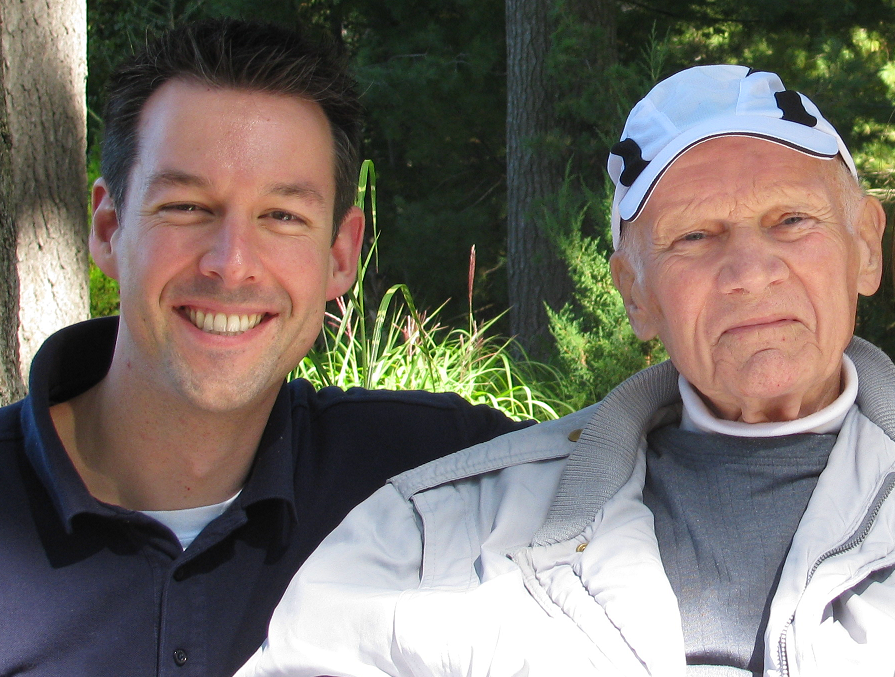
      jack

      Spread the word:

      • Click to email a link to a friend (Opens in new window) Email
      • Click to print (Opens in new window) Print
      • Click to share on X (Opens in new window) X
      • Click to share on Facebook (Opens in new window) Facebook
      • Click to share on LinkedIn (Opens in new window) LinkedIn
      • Click to share on Pocket (Opens in new window) Pocket
      • Click to share on Reddit (Opens in new window) Reddit
      • Click to share on Tumblr (Opens in new window) Tumblr
      • Click to share on Pinterest (Opens in new window) Pinterest
      Like Loading…
    • Seriously, what the hell is wrong with you people?

      April 11th, 2013

      Amanda Todd.  Steubenville.  Now Rehtaeh Parsons.  When declaring one’s opposition to bullying seems to be the most in vogue catchphrase nowadays, why is the act itself still happening?  Why do young people continue to think that assaulting girls, sharing photographic evidence of same to Facebook and then tormenting the victim relentlessly until she takes her own life is within a galaxy’s reach of acceptable?  Why are wealthy libertarian op-ed writers continuing to excuse this utterly reprehensible behavior in the guise of “freedom of speech,” “boys will be boys” and “she was asking for it”?  Joseph Welch famously brought an end to Senator Joe McCarthy’s career by saying “At long last, have you left no sense of decency?”  In a similar vein, I am left to ask, “seriously, what the hell is wrong with you people?”  Truly, what in the name of God has gone cockeyed in the wiring deep in the cobweb-strewn recesses of your addled little misogynist brains?  How many more young women are going to have to suffer before you grow your ass up and act like a goddamned man?

      I don’t understand it.

      I went to my share of house parties when I was young.  I was intoxicated at a few of them.  I was surrounded by intoxicated women.  Some of them were very beautiful, and being near them in that kind of environment would stir the expected physical reaction.  Yet never once did I or any of my friends take advantage of a girl in her most vulnerable moment or try to document the act to laugh at later on.  No matter what might have been aching down below or how much beer was flowing through my veins I never forgot about the humanity of my fellow partygoers, and never failed to treat them with the respect they deserved.  Perhaps it was how I was raised.  What I don’t get is why respect for women by men seems to be considered in many circles effeminate; that the way to get on with “the boys” is to describe in nauseating detail the perverse sexual acts one would like to perform on the stunning blonde who just sauntered by (that is, if, in reality, the one doing the boasting could manage to get his pants off before an, um… early finale.)  No one is telling any man that you don’t have to enjoy the sight of a beautiful woman or relish the desire that she makes you feel.  But you’re not a hulking, lumbering cro-Magnon who has to stick it in every available hole and then publish the evidence to the Internet while your buddies giggle like glue-sniffing hyenas.  You are better than that.  Despite what you may believe, the brain in your head can actually overrule the one in your boxers.  You can tell your pals that “that’s not cool, bro,” and see that the girl who’s had too much to drink makes it home safely and unharmed.  You can tell classmates who mock her to shut their filthy mouths.  That’s being a man.  And I wish so desperately that someone could have been a man for Rehtaeh Parsons.

      A few weeks ago, I wrote a piece about International Women’s Day in which I stated that I was ashamed of my gender for some of the things men have done.  An anonymous commenter whom I imagine was short of a few IQ points (not to mention the cojones to use his real name) suggested I should seek therapy, and whatever happened to personal responsibility?  That is the essence of the problem, right there.  We don’t take responsibility for each other.  We watch acts of misogyny and femicide on the news and shrug.  We let our governments slash funding for social programs that help the less fortunate so we can buy a new iPod with the few bucks we save on our tax bill.  We have “professional,” highly-paid mouth-breathers with massive bullhorns like Tom Flanagan polluting our discourse by asserting that looking at child pornography is a victimless crime (because for him it’s a question of individual liberty, or some other “don’t tread on me” bullshit) or Barbara Amiel claiming that had only the girl in the Steubenville case been wearing something like a burqa, the jumped-up little cretins who attacked her might have been able to resist their primal urges.  We reduce everything to right versus left and shun compromise and common sense in favor of ideological purity.  I am sick to death of society washing its hands of crimes like this one with the cop out that “it’s not my fault.”  We are all at fault because we don’t challenge each other to better ourselves.  “I’ve got mine, to hell with all of you” is going to be the epitaph of humanity.  Homo sapiens may endure for some time yet, but humanity will be lost in a flood of apathy and indecency if we don’t start working to correct this right now.  Let’s not lie to our kids that it gets better and then do jack to actually make it better.

      As the father of a son on the cusp of his teenage years, when hormones he can’t control start flooding his body with feelings he can’t manage, it is my responsibility to teach him the importance of respect and what it really means to be a man when it comes to how he treats women and indeed anyone who is vulnerable.  As long as I’m breathing he will never be one of those fratboy douchebags who would stand idly by while a girl is being violated, or worse, record it and share it with the world.  He’s going to be the guy who escorts her out of danger and threatens to kick the ass of anyone who gets in his way.  So help me, he’s going to be a crusader for girls and women, the way real men are.  And he’s going to pass the same lessons on to his friends and his children and everyone else he meets.

      I mourn Rehtaeh Parsons deeply.  A light in the world that should have shone for decades has gone out.  And I fear that unless we change our ways she won’t be the last.  One looks at the U.S. and how even after schoolchildren were massacred by a gunman, outraging the world, they still can’t pass any kind of sensible gun control legislation because of too many powerful people whining about “personal liberty.”  In a world where children’s bodies can be shredded by a legally purchased firearm, and where a young woman is driven to kill herself by a pack of hormonal cowards shaming her on social media for something that wasn’t her fault, no one is free.

      We should all be ashamed.  What the hell is wrong with us?

      Spread the word:

      • Click to email a link to a friend (Opens in new window) Email
      • Click to print (Opens in new window) Print
      • Click to share on X (Opens in new window) X
      • Click to share on Facebook (Opens in new window) Facebook
      • Click to share on LinkedIn (Opens in new window) LinkedIn
      • Click to share on Pocket (Opens in new window) Pocket
      • Click to share on Reddit (Opens in new window) Reddit
      • Click to share on Tumblr (Opens in new window) Tumblr
      • Click to share on Pinterest (Opens in new window) Pinterest
      Like Loading…
    • Cat’s in the cradle

      April 3rd, 2013
      A fairly accurate representation of my state of mind.
      A fairly accurate representation of my state of mind.

      Most men first find out they’re going to be fathers when a little plastic stick turns blue.  While the mood swings and crazy demands that often accompany the pregnancies of their partners may give them the vaguest sense of the responsibility and adventure to come, realization doesn’t strike them until they first hold their little wriggling, blanket-swathed miracles in their arms and recognize that they’ve been thrust into an irrevocable new job with absolutely no sense of what to do next.  My journey to paternity has followed a different path; after struggling with fertility and even the question of whether we wanted to be parents at all, my wife and I decided that our family would expand through adoption.  That was well over a year and a half ago; between then and now came extensive training, invasive interviews, traumatic phone calls, a few thousand miles logged on the car, hopes both raised and dashed and a thorough exploration of every single point on the emotional spectrum.  Was it worth it?  Listening to my new son laughing when my wife chases him up the stairs after he’s stolen her slippers should be evidence enough.

      Fatherhood was never really on my radar.  In fact, the very concept of the father and the son has been something that  I’ve thought and talked about largely in theoretical terms, relating it to imagery found in literature, cinema and religion.  In a way, that’s all I’ve had to go on.  My father died when I was eleven, and strong, positive and consistent male role models were largely absent from the years that followed.  Like President Barack Obama, I’ve had to rely on dreams of my father, the images growing cloudier as the years slip away.  And it doesn’t feel that long since the days of the smoke-filled dance clubs (back when you could still smoke in them), sharing crude opinions on the hotness of the assorted females with no greater aspirations for myself than a night of physical fun with a nameless partner.  Sometimes I wake up in the morning incredulous that I even managed to get married – how in the hell did I suddenly become somebody’s father?  Yet there he is, playing on his laptop and asking if he can watch Star Wars again.  Every time he calls me “Dad,” I have to stop myself from turning to see if he’s talking to the guy behind me.  Even after a mere three weeks together I’m humming the lyrics to Harry Chapin’s melancholy anthem about fathers and sons and wondering if we’re losing out on oh-so precious time.

      My son was one of the thousands of older children living in foster care waiting for a forever family, because a large swath of potential parents looking to adopt, if not the majority of them, insist on babies.  They want to give their child his or her name, witness the first steps and first words and other milestones they can photograph and post for their Facebook friends.  However, fewer and fewer babies are available.  If you don’t have the financial resources to look privately or overseas, or you’re unable to take on a baby with a lot of special needs (and heaps of praise are due to those who do), you’ll likely see retirement cheques before you find an infant in the public system.  And as the years go by and so many of these kids linger on in foster, it’s almost as though they pass their “use-by” date.  Couples start to think that if no one has adopted them by now, there must be something seriously wrong with them.  But there isn’t.  Of course there will be emotional trauma that needs to be addressed with patience and love, and perhaps even a few minor medical issues, but for the most part these are kids like our son – a good boy who’s had a rough start to his life and just wants a mom and dad to love him.  And not to diminish the hard work of the many giving foster parents out there, but according to the National Center for Mental Health Promotion and Youth Violence Prevention, 40% of kids in foster care don’t graduate high school, and only 3% of them go on to any kind of post-secondary education.  These boys and girls need more than parents; they need relentless, even to the point of being obnoxious at times, bullhorn-wielding advocates who will scrape and claw for every precious inch of progress. They need a family who will never give up on them no matter how rocky the road gets.

      Is that me?

      There’s an exchange between Peter Facinelli and Kevin Spacey in The Big Kahuna that comes to mind.  Facinelli’s character, a junior salesman about to experience his first convention, says that it’s time to throw me in the water to see if I can swim.  Spacey retorts that no, we’re actually going to throw you off a cliff to see if you can fly.  Adopting an older child, a little person with his own name and with a personality already shaped and molded by total strangers is kind of like the Sanka of fatherhood:  instant and occasionally might not taste that great.  You do have to grieve the loss of a lot of those firsts, including the loss of the not-unsubtle desire to pass on one’s genes and traits, the loss of ever seeing what that indelible combination of you and your spouse would have looked like.  During initial weekend visits as the new family adjusts to each other before final placement, it feels at times like you’re just babysitting someone else’s problem, resulting in massive feelings of guilt when you feel relieved after he’s picked up on Sunday evening.  And you have to try and “deprogram” a bit of the stuff that you likely would not have encouraged had you been raising him from birth and replace it with hobbies and habits that you know will help him grow (i.e. perhaps we can cut back a little on the 10 hours of video games per Saturday and replace it with at least one hour of reading – no, doesn’t have to be Hemingway or Dostoevsky just yet – and put away the Nerf gun before we accidentally shoot the cat?)  But at the same time, there are still lots of firsts to look forward to.  First birthday and Christmas together, first date, first time driving the car. First overnight away from us.  Figuring out how to have “The Talk.”  Graduation day.  Heading off to college.  Watching him grow from this shy, awkward kid into the amazing, confident man you know he has the potential to be, terrified all the while that you’re just making things worse.  I suppose there is a term for all of that:  being a parent.

      I didn’t have my father to guide me through my teenage years, so I have no point of reference on which to base how I’m going to do it with my son.  My father was long gone before I could talk to him about my huge crush on the beautiful blonde in the other Grade 6 class, or the boundless depth of my everlasting 13-year-old love for the 18-year-old brunette who used to drive me to band practice, and my utter cowardice in being able to verbalize those feelings to their subjects.  I want my son to be able to seize the moment and not be caught up in his feelings.  I want him to be able to avoid some of the mistakes I made, and yet instinctively I know he has to be free to make them and learn from his failure.  Put simply, I want to be the example I never had, and as I sit here typing this I’m increasingly doubtful of my ability to do it.  I’ve had a lot of friends and colleagues tell me how touched they are about our adoption of our son, and how lucky our son is to have us.  Yet I still feel like a bumbling idiot who’s doing everything wrong.  Chapin’s final words haunt me in my sleep.  I can’t figure out my own life most days.  Do I really want him to grow up to be just like me?

      Perhaps the best advice is to draw from the Buddha (or Winnie the Pooh) and to just be.  To let the good times roll with the bad and to take each day as it comes without ruminating endlessly on the shape of the overall to the point that it distracts from the little moments that truly matter.  Without letting the perfect become the enemy of the necessary.  For better or worse, I’m this kid’s father now.  He is part of the legacy that I will leave behind long after everyone’s forgotten about little ‘ole me – a legacy that includes my father as well.  I may not be passing on my genes, but I can pass on my values, my beliefs, the things I consider important to cherish in our ever-so-brief walk across this world.  The same stuff I got from my dad in the times we were able to share.

      Maybe one day my son will sit down and write a blog post (or whatever the new equivalent is by the time he’s ready for it) about what he thinks about becoming a father himself, and maybe he’ll praise or damn the example set by his old man.  Maybe he’ll understand some of what I’m feeling right now.  Maybe he’ll finally understand why I don’t want him signing up for that online game that requires a valid credit card number.  Maybe the stern looks and the lectures and the occasionally too-obvious frustration on my face will finally make sense.  Maybe he’ll think it was silly that I worried so much.  Sure hope so.  Harry Chapin tells us that the lives of a father and son are cyclical, repeating themselves in familiar patterns as each succeeding generation emulates the precedent it was shown.  What better advice is there, then, than to work even harder to be a better me?  I told my son last night that if he looks after himself he has a chance to see the dawn of the 22nd Century.  (Wonder if there will be phasers?)  The greatest gift I can give him is to do my best to ensure that he will watch sunrise on January 1, 2101 with a big smile on his face, secure in the knowledge that it was, indeed, all worth it in the end.  That’s what this strange concept of “fatherhood” has come to mean to me, even after just a few weeks.  In the meantime, I know when I’ll be coming home, son, and we’ll get together then.  You know we’ll have a good time then.

      Spread the word:

      • Click to email a link to a friend (Opens in new window) Email
      • Click to print (Opens in new window) Print
      • Click to share on X (Opens in new window) X
      • Click to share on Facebook (Opens in new window) Facebook
      • Click to share on LinkedIn (Opens in new window) LinkedIn
      • Click to share on Pocket (Opens in new window) Pocket
      • Click to share on Reddit (Opens in new window) Reddit
      • Click to share on Tumblr (Opens in new window) Tumblr
      • Click to share on Pinterest (Opens in new window) Pinterest
      Like Loading…
    • Fishing for the little pellets of love

      March 28th, 2013

      water

      Some depressing Graham’s Crackers statistics to start off with.  Total posts, March 2012:  26.  Total posts, March 2013:  2 (including this one, 3 if you include the piece I did for HuffPo about International Women’s Day).  And the frogurt is also cursed.

      Yes, I know, oh mighty gurus of blog, you’re not supposed to post about how you haven’t posted in a while.  But this is my sandbox and my rules and prithee, I shall beg indulgence while I raise a kerchief to my brow and lament in plaintive tone the lack of productivity shown these past fortnights.  It isn’t as though there’s nothing to write about, after all.  Nay, verily, my literary cup runneth somewhat over.  I do admire though, those who can juggle the heavy spheres of work and family and simply keeping up with the pace of life and still churn out a few thousand words each day.  Something one should aspire to as well, if one were not such a piss poor scheduler of one’s time (guilty, Your Honors).

      To that end I am raising a metaphorical glass to my friend Tele Aadsen of Hooked for her much-deserved accomplishment of landing a publisher for her memoir.  Now, Tele and I have never met or spoken to one another and our interaction has been entirely in reading each other’s writing and exchanging comments and tweets.  But ours, I think, is a kinship of letters, of recognizing and appreciating the power of the written word and how we can use it to connect across otherwise impassable chasms of time and distance.  Would I, a dude of a somewhat insular urban upbringing in the Greater Toronto Area, have ever assumed that I would have the slightest thing in common with an Alaskan fisher poet?  Yet I do, and I’m grateful, and my life is the better for it.  Anyway, there was a Twitter hashtag that was trending a few days about people you’d most like to meet, and predictably, the most common answers were celebrity names (Bieber again?  REALLY?)  Tele’s at the top of my list.  Someday soon, I hope – that is, if I haven’t now come off sounding like Creepy Stalker Guy™.  If for nothing else than just the chance to say thank you.  And get a personalized, autographed copy.  It’s not for me, it’s for my friend of the same name.

      Onwards and upwards then.  Amongst my pursuits I am occasionally fortunate enough to attend digital media conferences.  Toronto held its second annual Digital Media Summit last week, gathering a roster of experts and thought leaders from across the industry of ye olde cyberspace – names like Don Tapscott, Erik Qualman, Cindy Gallop, Amber Mac and Neil Shankman among dozens of other luminaries delivering informative addresses to hundreds of lanyard-wearing, smartphone-tapping digital worker bees.  I was there on behalf of my employer, of course, but I still view things through the filter of writing and how what they were all saying could be used to further a writer’s reach (who are we kidding – my reach) in this rapidly advancing age.  You know, sometimes one can get a bit cynical as one carefully strings his words together and hits “publish” and… nothing much happens.  Admit it; on the surface, we’re all happy for the blogger who rejoices “I got Freshly Pressed on my very first post!” while inside we seethe that our own 189 pearls of literate wisdom usually go unnoticed by all but a select (if wonderful) few.  If you can take your ego out of the equation, it’s not difficult to understand.  Time is precious, an individual’s time is even more precious, and in order for them to grant you even a few seconds of theirs in between bathing the dog and walking the baby, you have to touch them with something that inspires real passion.  There was an interesting statistic revealed at DMS that on Facebook, even posts by the most famous, highly-liked brands only reach about 15% of their followers.  (That’s why, even though in between Facebook, Twitter, LinkedIn, G+ or whatever else you’re linking your blog posts to you may have a thousand connections, hits on your latest and greatest might not top a hundred.  At least, that’s how it works for me.)  And just because you get them, it doesn’t mean you’ll keep them.  I’ve received a couple of (relatively) huge traffic spikes that have come from famous people tweeting links to my blog.  But they don’t last – after a few days the hits drop to their usual, more stable level.  Maybe you retain one or two, but the vast majority treat you like a cheap motel along I-75, moving on once the new day has dawned and the open road beckons.  And that’s cool.  I mean, how many blogs have I looked at once because they posted something I wanted to learn more about only to forget about them thirty seconds after hitting the red X?  It’s life, and if you want to be loved, adopt a golden retriever.

      Those moments when you do tap into something and really connect with people, well, I suspect there are few varieties of crack cocaine that can measure to the high.  Someone at the DMS called them “little pellets of love”; you know, the tiny charge that you get when you open your Facebook and see the little red number in your notification section.  “People are interested in me!  Yay!”  Same goes on Twitter when we get a retweet, or a new follow, or a reply from a celebrity we really admire, or on WordPress when we get the notification that somebody liked, commented or shared our work.  When one finally does cross that fabled Rubicon from giving it away for free to receiving the first cheque for something we penned, does that vindication truly compare to the spiritual fulfillment of knowing that someone, even a stranger, really digs us?  I suppose in those cases by contrast when we’ve written something that really pisses people off, the money compensates for the death threats.

      What then, is the lesson for today?  It’s karma, sports fans.  Ya gotta put it out to get it back.  And as my learned better half is wont to tell me when I sink into the occasional bout of self-pity, you need to write to touch people, not to prove how smart you are about things no one cares about.  You’ll see, I’m sure, when Hooked is released, how Tele does it.  Hopefully as I continue along here I’ll get better at it.  And we’ll see where the ocean takes us.

      Spread the word:

      • Click to email a link to a friend (Opens in new window) Email
      • Click to print (Opens in new window) Print
      • Click to share on X (Opens in new window) X
      • Click to share on Facebook (Opens in new window) Facebook
      • Click to share on LinkedIn (Opens in new window) LinkedIn
      • Click to share on Pocket (Opens in new window) Pocket
      • Click to share on Reddit (Opens in new window) Reddit
      • Click to share on Tumblr (Opens in new window) Tumblr
      • Click to share on Pinterest (Opens in new window) Pinterest
      Like Loading…
    • Five things to hate about pop culture references in novels

      March 5th, 2013
      Aren't those the Spice Girls?
      Aren’t those the Spice Girls?

      Whether by coincidence or not, I’ve come across a few articles recently about the wisdom (or folly) of including snippets of song lyrics in your novel.  The consensus seems to be that it’s a bad idea.  Allen Klein is dead but those who adhere to his mantra are still far and wide squeezing the vice of legality against the temples of well-meaning, starving scribes who seek to pay a tiny bit of homage to that epic anthem that helped get them through a rough patch of their lives, or, more cynically, want to drop in an overly familiar reference point that will elicit immediate emotional identification without putting in the effort to craft their own.

      I get it.  It’s difficult, and even a bit scary, to risk originality in a self-referential culture where everything seems to link back to something else like a giant Wikipedia.  Going where no one has gone before is even more daunting given that every time you think you’re venturing down a fresh trail, you find someone else’s bootprints on it.  There are simply too many of us writers attempting to figure out the human experience.  It’s inevitable that more than a few will reach identical conclusions – sort of the thousand monkey/thousand typewriter argument featuring mildly more intelligent monkeys.

      In one of my more wrenching experiences as a gestating writer, I lent a draft of the novel that preceded my current opus to my best friend for his feedback.  I can still recall with gut-churning anxiety the pregnant pause that hung between us one afternoon when I was forced to ask him the question that chills all writers’ bones as it spills across our lips:  “So, what did you think?”  I don’t think the word had entered the zeitgeist yet, but his reaction was the equivalent of “meh.”  I should point out here that my friend is not evil nor inconsiderate of others’ feelings.  But like the most ideal of companions he will never let you twist out in the wind with your pants down if he can help set you right.  And his most germane suggestion, while wounding to anyone convinced of one’s own genius as most beginners tend to be (and I certainly was back then), was not only invaluable, but continues to inform me when I compose fiction.  Paraphrased, it was simply this:

      “Cut the pop culture references.”

      Between the tears and the simmering hatred (which quickly subsided – we’re still besties, no worries folks), it was a cloud-parting Voice of James-Mason-as-God moment – and yes, Eddie Izzard fans, I am aware of the irony of using a doubly-meta pop culture reference to illustrate this point – that I could not believe I had not seen before.  And it reinforced the notion that you can’t write in a vacuum.  Because I never would have come to that conclusion at that time in my life, and yet it was exactly what I needed to move forward and become a better writer.  Whether it’s in using song lyrics, referencing TV shows or framing your character’s predicament in terms of how much it makes them feel like Ryan Gosling in The Notebook, there are, to me, five main reasons why popular culture should be flung far from the pages of your book:

      1.  It dates you

      And not the good dinner-and-a-movie type either.  Pop culture’s shelf life is shorter than that of the mayonnaise you’ve been meaning to throw out of your fridge for the last few weeks.  Your bon mot about your hero’s wisecracking best friend being a combination of Sue Sylvester and Honey Boo Boo is going to go way sour long before your book even makes it to the shelves.  I remember a few years ago when Desperate Housewives premiered and every entertainment trade paper, magazine and website could not shut themselves up about it; every goddamned article about anything television-related found a way to work in some mention of Desperate Housewives and how it was a divinely inspired paradigm-shifting watershed point in the history of broadcast programming.  Ask yourself whether in 2013 and beyond, anyone is going to view a witty Desperate Housewives reference as anything but sad.  (Fair warning, Downton Abbey and Girls, it will happen to you too.)  You want your story to mean something to people for decades and generations to come – timeless is preferable to timely.

       2.  It’s meaningless unless your audience gets it

      In the realm of stand-up comedy, one of the worst offenders for dropping obscure references is Dennis Miller, with the result that even the most well-read of his audiences will only laugh at his material a fifth of the time (of course, ever since he was reborn as a Dubya-lovin’ right-wing pom-pom waver, he’s been considerably less funny anyway).  A reference that a great number may not understand is not the most egregious violation of “good writer etiquette,” but a major beat should never hinge on it.  If, at the moment of her deepest anguish, your heroine is compelled to confess that she feels just like Bitsie Tulloch’s Dylan on Quarterlife, that’s awesome for the three people out there who remember that show and completely baffling for everyone else (i.e. 99.9999% of your readers), and thus any hope you may have harbored for soliciting empathy will be lost to the winds like the passengers and crew of Oceanic 815 (see what I did there?)

      3.  It’s the last refuge of the unimaginative

      Licking my wounds back then, I was compelled to ask myself why I was relying so much on what other people had created instead of forging ahead on my own.  Writing moments that resonate is a lot like method acting:  you have to look deep inside and wrench the truth screaming from your own gut, not rely on what you once heard or saw in something somebody else wrote.  And it’s an opportunity that you should never pass up, even if it is intimidating.  If you’re running down the field with no one in the way, why would you pass the ball to another guy for the final five yards?  You should never abdicate the chance to be creative.  If you’re writing about a group of characters who have bonded over their love of a favorite TV show, why not make up your own show?  I’ll get you started:  every show is about cops, doctors or lawyers, so have your guys quote lines from Sergeant Lawyer, M.D.  Okay, I’m staking a claim to that one and writing a pilot.  “FADE IN:  INT. COURTROOM – DAY – CLOSE on SERGEANT LAWYER as he contemplates a scalpel in his right hand and a semi-automatic pistol in his right.  CUE the opening chords of The Who’s ‘Behind Blue Eyes.’”  Aw, crap, there’s Pete Townshend’s attorney on line one.

      4.  It’s giving away free advertising

      I’ll invoke the mighty Aaron Sorkin and repeat his maxim that a writer’s job is to captivate you for however long he’s asked for your attention.  And we writers are serious bear huggers.  We don’t want to let you go.  We want you firmly ensconced in our world, and not thinking about TV shows and songs that have nothing to do with the story we’re trying to relate.  We certainly don’t want you thinking about other products you might like to purchase.  Ever wonder why you don’t ever see commercials for handguns?  Because there are enough glowing closeups of barrels and triggers and bullets flying in sexy slow motion, and irrelevant exchanges of dialogue about muzzle velocities and stopping power in movies to do all the advertising gun manufacturers will ever need.  Walther probably owes a great chunk if not the lion’s share of the sales of its PPK to James Bond.  Sex and the City and chick lit do more for Manolo Blahnik shoes than ten years of paid ad campaigns ever would.  (If I can digress further into the cinemarr for a moment, one of the most vomit-inducing examples of this was the trailer for 10 Things I Hate About You – the ad trying to get people to see the movie, oh irony of ironies – which opened with a character saying “There’s a difference between like and love.  I mean, I like my Skechers, but I love my Prada backpack.”  Spew.)  If that’s truly your wish, then why not just publish a novel full of empty pages stamped with “Your Ad Here”?  Or go to work writing advertising copy since it’s probably more up your alley.

      5.  And it will probably cost you

      So not only will you not be paid for name-dropping all these lovely corporations and pushing their merchandise, but you’re just as likely to get dinged by the same people for using their content without the express written consent of Major League Baseball.  This is an older article, but a good one from The Guardian where novelist Blake Morrison talks about how much it cost him to include fragments of popular song lyrics in his work.  Don’t these people have enough money already without needing more of yours?  And what’s worse, the money probably won’t even go to the artist who wrote the lyric in the first place – it’ll get split amongst various anonymous shareholders in the faceless publishing company that holds the rights to the song.  If you really, desperately, achingly want to have your character sing “Bitter Sweet Symphony” to the extent that you’re more than willing to cough up whatever atrocious fee you’re invoiced for, Richard Ashcroft isn’t getting a penny, as much as he may be tickled that you quoted his signature composition.  It’s going to whoever now controls ABKCO Music, the actual rights holder of that song.  The thought of that should turn your stomach enough to lead you in another direction.  Here’s a much better thought:  Even if you can’t write chord progressions, you can probably make up your own original lyrics.  Then one day, maybe someone will want to compose a song using those lyrics, and they can pay you for the privilege of doing so (or, conversely, you can sue their ass off when they steal it without acknowledging your authorship).

      Having said all that, let’s make it about me again.  Does any of this apply to my novel?  Well, fortunately, when writing fantasy there’s less of a temptation to include popular culture since it makes no sense within the context of the story – or worse, pulls you out of the story when a grizzled medieval warrior makes anachronistic mention of the Seinfeld episode about Teri Hatcher’s boobs (argh!  Desperate Housewives reference!)  That isn’t to say you can’t or won’t slyly drop in semi-clever hints or vague references about the galaxy far, far closer to home.  I’ve been pretty good about steering clear of that, with two or three arcane exceptions (in extremely non-consequential passages) that I won’t mention except to say that when you do read the book you get +1 Internets for finding them.  I have, however, committed the faux pas of including allusions to songs as chapter titles.  Not in all of them, but enough to be potentially embarrassing and/or expensive.  So a quick trip to the rewrite shed is in order.  But better to do it now than to get too far down the road and receive a sternly worded letter from Sergeant Lawyer, M.D. demanding recompense for what is, essentially, a throwaway gag that has no significant bearing on the greater narrative.

      The moral?  Make your story one hundred percent yours, soup to nuts and credits to navy beans.  It’s like Julia Roberts in Pretty Woman:  cheaper, easier and more fulfilling too.

      Spread the word:

      • Click to email a link to a friend (Opens in new window) Email
      • Click to print (Opens in new window) Print
      • Click to share on X (Opens in new window) X
      • Click to share on Facebook (Opens in new window) Facebook
      • Click to share on LinkedIn (Opens in new window) LinkedIn
      • Click to share on Pocket (Opens in new window) Pocket
      • Click to share on Reddit (Opens in new window) Reddit
      • Click to share on Tumblr (Opens in new window) Tumblr
      • Click to share on Pinterest (Opens in new window) Pinterest
      Like Loading…
    • Do authors dream of electric typewriters?

      February 22nd, 2013
      A dime a dozen.
      A dime a dozen.

      Where do you get your ideas?  That’s a question that everyone who fancies him or herself a writer is asked by someone at some point, with either a look of wonder or disgust on the questioner’s face (hopefully, it’ll always be the former).  The Muse can be an elusive mistress; Lynda, my writing teacher, once advised that waiting around for her was an exercise in futility as she was more likely to dance just out of reach, laughing at you, and that you had to force her to the table by sitting down and starting without her.  In that respect, schedules and deadlines certainly help a great deal, as we all know that the easiest thing to do in the world is not write.

      Finding a subject for a blog post is not terribly difficult, even if the writing of said post is.  There’s always lots going on in the world that we can comment on.  I’m of the “more flies with honey” and “current or future employers might read this” mentality, so I’ll usually stop myself from venting about whatever is pissing me off lately and try to either write something positive or find an optimistic take on a particularly frustrating news item.  (On a side note, my wife and I are watching the political drama House of Cards these past few nights and I’m finding it difficult to glom onto completely, for the singular reason that it is an utterly cynical program wallowing happily in the most selfish aspects of government service, and I’m much more drawn to the hopeful take offered by The West Wing.  But Kevin Spacey is still awesome.)  The blog, essentially, is a snapshot of how you’re feeling on any given day.  A novel, by contrast, is a long term exercise in exploring an idea to its every possible limit.  But which ideas are more deserving of the in depth treatment as opposed to the casual chat?  How do you know which is which?

      The summer after my mother died, I chained myself to my computer and started writing screenplays.  That was what I was into at the time; for more on what led to this check out this previous post.  Like many, my first ventures into serious writing were fan fiction, and in my case, Star Trek fan fiction.  Although, I never managed to finish any of it – there’s an old hard drive rusting in a landfill somewhere full of the first chapters of stories about the crew of the Enterprise doing… well, not very much, actually.  I couldn’t plot worth a damn at the time; I always figured I’d get to that part later on.  What was more of a passion in the teenage years was drawing comic books, even though my artistic skill was minimal.  And those were always James Bond stories, because they were easier to plot out.  Bad guy doing bad thing, Bond must stop him, there’s a girl, a car chase, a gadget or two.  For a high school creative project I wrote and drew a 007-Star Trek:  The Next Generation crossover, where Bond is beamed aboard the Enterprise-D to help solve a Romulan conspiracy that involves his old adversaries SPECTRE, and along the way he manages to fall in love with Dr. Beverly Crusher (although in a downbeat ending, they have to go their separate ways).  My English teacher loved it, her only criticism that it was a shame that I wasn’t using my own original characters.  My rationale (read: excuse) was that using established characters freed you from having to introduce and develop your own, and enabled you to get right into the story instead.  I didn’t understand at the time that the key to solving my inability to plot was to instead let the story flow out of the characters themselves.

      But back to that summer.  By that point I was using original characters, even if the dialogue they were speaking was almost entirely borrowed.  That was about the time Pulp Fiction had come out and, as a film student at UWO, you could not take two steps into your classroom without hearing someone invoke the mighty Tarantino.  I’d like to think that I wasn’t as obviously pretentious as some of the goatee-stroking, beret-wearing pomposities I sat in lectures with, but my work was just as derivative.  My first full screenplay was about a group of kids in film school, with exhaustive, profanity-laden monologues about the hidden sexual themes in Star Wars (which, if you’ve seen Clerks, sort of puts the lie to the idea that these were in any way original characters.)  I was still convinced that someday, someone would make this movie and I’d be accepting my Best Original (heh) Screenplay Oscar for it (then again, I was 20, recently orphaned and extremely naïve).  Once that one was done, I started another, and then another.  But they weren’t anything of note or even interest.  I began to realize that they had no lasting value – because they weren’t about anything; there was no there there.  And they certainly weren’t in my own voice.

      The final screenplay was about a group of four 20-somethings who lived in the same apartment building (cough… Friends… cough).  I know, it sounds dreadful, but I really enjoyed spending time with these particular people.  As bad as some of those other screenplays were, they were an opportunity to hone my skill; to develop dialogue and subtext, to cut the profanity, to shed the influence of His Holiness Pope Quentin.  When I typed FADE TO CREDITS, I realized I hadn’t been able to develop the characters in the way I’d wanted – the screenplay was about 170 pages (most genuine ones top out at 120, maximum) and I hadn’t said everything I needed to with these people.  I decided to abandon it at first draft and instead turn it into a novel.  And for the next two years I labored on this thing on and off.  A great deal of my days were spent thinking about the lives of these people:  Bryson Reid, aspiring writer and perpetual smartass, Krista Piper, alcoholic figure skater, Scott Shipley, advertising executive on the rise, and Lauren Devaney, Irish barista homesick for her native land.  Part of Bryson’s story involved him meeting an entrancing and successful fantasy author named Serena Lane.  And interspersed between the chapters about Bryson, Krista, Scott and Lauren were meant to be “excerpts” of Serena’s bestselling novel.  The whole enterprise was designed to lead to a “shocking” metaphysical twist (not in the earlier screenplay version) whereby Serena was the same person depicted in the fantasy portions, who had somehow managed to cross into the real world (and it was the Irish barista, Lauren, who had authored the book in the first place, only to have it stolen by a manipulative publisher who was herself the villainess from the fantasy story and had also escaped from page into reality.  “Serena Lane” would turn out to be the name of the street on which Lauren grew up in Dublin.)  Anyway, it got up to 350,000 words with no end in sight.  As I was writing it, I found I was enjoying the fantasy portions significantly more than the real world stuff.  Bryson, in particular, although ostensibly the hero, was fundamentally unlikable and there were times I just wanted to smack him upside the virtual head.  But I still felt the need to finish it.

      Then one summer, I signed up for a local adult education course called “Crafting a Novel.”  Naturally I knew how to write a novel, this was just a chance to meet some people (i.e. attractive, single women) with a similar passion.  The first night of that class was a smack to the head much larger than the one I had wanted to give my fictional hero – I knew nothing.  And I was crestfallen when Lynda told us that even if we had a book we had been working on for years, we were to set it aside and start a new one.  To borrow a phrase from William Goldman, this was the ensuing sound inside my head:

      AAAAAAAAAAAARRRRRRRRRRRRRGGGGGGGGGGGGHHHHHHHHHHH

      Surely she wasn’t serious?  My epic of Proustian magnificence deserved nothing less than endless streams of voluminous praise followed by a seven-figure publishing deal and movie rights!  How could anyone dare me to set it aside?

      In retrospect, thank frickin’ Buddha, but we’ll get to that.

      After picking my jaw up from the floor that night, I decided to think about things a little more rationally.  I’d slowly developed this fantasy world and enjoyed playing around in it.  Couldn’t I set another story in the same place?  And since prequels were all the rage, why not one that took place fifty years prior – something that might serve as a setup to the brilliance that was to follow?  That took care of the setting, but I still needed characters and a worthwhile story to tell.

      A few days later, I’m in a video game store perusing the PlayStation titles, and I wander over to the PC rack.  There’s a game there, probably a precursor to World of Warcraft or something similar, and on it is a bunch of sketches of the characters.  One of them strikes me.  It’s a beautiful woman holding a mystical staff.  It’s nothing terribly original; do a Google Images search for “sorceress” and you’ll see thousands of variations on the theme – some gorgeous, half-dressed knockout hurling lightning from manicured fingers.  But something about it strikes me.  And I ask myself, what must it be like to be her?  Truthfully, the magical babe is a pretty boring staple of fantasy stories, either as a love interest, a physically unattainable spirit guide, or a cackling villainess bent on total domination of both the world and the hero’s crotch.  In anything I’d ever read or seen up until that point, she was always treated merely as an other to be conquered or otherwise overcome.  (Remember the witch in the first Conan the Barbarian movie?  Beautiful and exotic, as befits magical babes, but doesn’t get a name and is in the story for all of four minutes, three of which are spent rolling around on the floor with our favorite muscled Cimmerian.)  But if what would go through your head if you actually were a creature like that – would you go around thinking to yourself, “I am so willowy and ethereal and mysterious”?  Or would your head be occupied by the same mundane thoughts the rest of us have – what to wear tomorrow, whether you left the iron on, did you feed the cat?  After appearing and disappearing at will and turning men into pigs for a few hundred years, would you eventually grow bored with your powers?  What could the immortal sorceress who has everything possibly want?  Anything at all?  Or would she be subject to the same emotional needs and longings as the rest of us mere human beings?

      And there was the seed of my new story.

      Coming up in future posts – more on creating characters, developing the plot, struggling with description, crafting dialogue, the necessary pain of killing your darlings and how Aaron Sorkin helped me find my voice without even knowing I exist.

      Spread the word:

      • Click to email a link to a friend (Opens in new window) Email
      • Click to print (Opens in new window) Print
      • Click to share on X (Opens in new window) X
      • Click to share on Facebook (Opens in new window) Facebook
      • Click to share on LinkedIn (Opens in new window) LinkedIn
      • Click to share on Pocket (Opens in new window) Pocket
      • Click to share on Reddit (Opens in new window) Reddit
      • Click to share on Tumblr (Opens in new window) Tumblr
      • Click to share on Pinterest (Opens in new window) Pinterest
      Like Loading…
    • What’s the story, Graham?

      February 15th, 2013
      Who is that guy?
      And while we’re at it, who is that guy?

      I’ve never been good at self-promotion.  Perhaps you can chalk it up to formative years surrounded by people telling me keep quiet, don’t boast and give someone else a turn.  Like most people, I enjoy attention, but excessive notice tends to turn my stomach inside out.  It’s why I had to stop reading the comments on the stuff I submit to Huffington (that and the occasional threat from a pissed off Tea Partier).  The problem is that these aren’t qualities that serve one well if one is attempting to establish a writing career.  Publishing firms are tightening their belts and seem to expect their authors to do most of the legwork in marketing themselves.  You see the results often on Twitter – writers following other writers in hopes of a follow-back, and relentlessly pushing their tomes through tweet after tweet.  Seems to work for some; I follow a few who haven’t published a thing yet have managed to build up their own expectant and admiring fanbases.  My attitude has always been that quality will find its own audience, but, after blogging for almost two years to a relatively stable but small (yet tremendously awesome) group of supportive readers, it’s clear that my modest approach isn’t working.  I need to give you more.

      If you’ve been reading my stuff for a while you’ll know I’ve made some periodic and cryptic references to a finished novel that has been sitting on my hard drive for far too long.  A few years back I sent out some queries for it, received polite rejections all around, and then set it aside for a while.  (I had a nice one from a literary agent who represents a very famous series of books, who said that her decision to pass was not a statement on the quality of the writing, which, though it may have been a form letter, was still encouraging to a fragile ego.)  About two years ago I went back and rewrote large portions of it while painfully hacking out almost 60,000 words to get it to a publishable length.  Perhaps a dozen family & friends have read it from cover to cover; dozens more have seen excerpts and offered suggestions, some of which have been incorporated, while others have been welcomed but disregarded (you have to use your judgement after all).  Long and the short of it is that at this point it’s in the best shape I can possibly get it into, at least from my perspective.  And I have started sending queries out again.  So why have I not shared more about it here?

      Well, in a strange way, I have.  There is a lot here about the book.  And no, you haven’t missed it.  Let me explain a little.

      We live in a spoiler-addicted culture.  Everybody wants their appetite sated immediately; we all want to flip to the last page to see who did it.  I went through that phase myself – because I am fascinated by the process of film production (an interest that probably stems from wishing in idle moments that it’s what I did for a living) I devour news about scriptwriting, casting, principal photography, and yes, spoilers.  I had to give myself an intervention of sorts this past summer when I ruined The Dark Knight Rises for myself by reading the Wikipedia plot summary before seeing the movie.  I realized I’d become what I despised – I’d often railed about being able to figure out the ending of rom-coms simply by looking at the two stars featured on the poster.  For Skyfall, I purposely kept myself spoiler-free, and as a result I enjoyed that movie a lot more than I would have had I known how it was going to end.  Trekkers have been driven up the wall over the last several by J.J. Abrams’ refusal to offer specifics on the identity of the villain “John Harrison” played by Benedict Cumberbatch in the upcoming Star Trek Into Darkness.  Is it Khan?  Gary Mitchell?  Robert April?  Harry Mudd?  Ernst Stavro Blofeld?  In promoting his projects, Abrams has always embraced the idea of the “mystery box,” never showing his hand until the night of the premiere.  And controlling the conversation by keeping it where he wants it, in the realm of speculation, is, if managed properly, a great way to keep interest high.  It’s a dance though – give away too much and you spoil it, but say nothing, or remain stubbornly evasive, and people grow bored and move on to the next thing.  My more introspective nature simply lends itself better to Abrams’ way of thinking.

      I’ll crack open the mystery box a little:  My novel is a fantasy.  It’s the first part of what will hopefully be a trilogy.  The main character is a woman with magical abilities.  She encounters a mortal man.  An adventure ensues.

      Whoa, you’re saying.  Back up a sec.  This is basically Beautiful Creatures, right?

      Argh.  As writers we need to support each other and rejoice in each other’s successes, so I’m very happy for Kami Garcia and Margaret Stohl.  We all dream of seeing our epics translated to the big screen and I’m sure they’re bursting with joy at their enviable accomplishment, as would I.  But privately I’m suffering a few gutfuls of agita.  You can’t help feeling like the guy who was late to the patent office when Alexander Graham Bell released the first telephone, even though our stories are completely different.  Theirs takes place in the modern day; mine is set in the past in a fictional world.  Their lead characters are teenagers discovering themselves; mine are world-weary adults.  And of course the supporting characters and indeed the plot bear no resemblance to one another.  But to the casual observer, they’re treading similar boards, and even though I could have written a story about a lawyer or a doctor or cop without garnering so much as a whisper of comparison, I have no doubt that someone will now accuse me of trying to cash in on a trend, particularly if Beautiful Creatures does become “the next Twilight” and thousands of lesser imitators flood literary agents’ inboxes (I’m fortunate I didn’t choose to write about vampires.  Luckily, I find them tiresome.)  Indeed, witches are all the rage in pop culture at the moment – we had Hawkeye and Strawberry Fields hacking their heads off a few weeks ago and we’ve got Mrs. James Bond, Meg Griffin and Marilyn Monroe bandying their magical wiles with James Franco coming up in March.

      Well, it is what it is and no sense sulking about it now.

      I’m going to sidestep into politics for a moment.  My beloved federal Liberals are conducting a leadership race right now, and candidate and former astronaut Marc Garneau has recently fired a shot across presumptive favorite Justin Trudeau’s bow by accusing him of failing to offer up concrete plans.  But Garneau (and those who are praising this as a brilliant strategic move) should understand that people don’t respond to plans, they respond to ideas – the why, not the what.  Our current PM came to power not because he had a thoroughly researched and scored eighteen-point economic agenda, but because his campaign message was that the previous government was corrupt and he wasn’t.  It worked.  His two subsequent election wins have been based on similar themes – I’m reliable, the other guys are scary unknowns.  I go back to Simon Sinek’s brilliant observation that people don’t buy what you do, they buy why you do it.  It was the “I have a dream” speech, not the “I have a plan” speech.  The trick, when it comes to trying to pitch a book through a query letter, is that you’re required to try and hook the agent through what is more or less a 250-word encapsulation of the basic plot.  But the plot isn’t why I wrote the book and it’s not why I want people to read it.

      For argument’s sake, and I’m certainly not trying to make a comparison here, but let’s quickly summarize the life of Jesus Christ:  A baby is born to a virgin mother and grows up to become a carpenter, lead a vast group of followers and spread a message of love to his fellow men.  This offends the ruling powers who condemn him to torture and death, after which he is miraculously resurrected.  If you had no knowledge of Christianity or the substance of Jesus’ message, you would never believe based on what you just read that these events would inspire a worldwide religious movement that would endure over two thousand years and counting.  The plot doesn’t make you want to read the book.  You get no sense of the why.

      After an enormous detour, we now come back to my novel and its why.  The why is here, all around you, in the archives of this site.  It’s in my values, the things that matter to me and that I ponder as I type, post and share.  My opinions on politics, conservatism, the Tea Party, faith, spirituality, organized religion, charity, economics, ecology, literature, women, love, the loss of our parents, the shifting nature of good and evil, even James Bond, the Beatles and the writing of Aaron Sorkin as a part of the entire human experience – they are all represented in some form or another in my novel.  Gene Roddenberry taught me that a great story can’t just be a journey from A to B to C, it has to be about something more.  So mine is an adventure story that is as much an exploration of my personal philosophy and observations on the human condition as it is sorcery, chases, narrow escapes, explosions and witty repartee.

      It is written in first person, from the point of view of the sorceress.  Why did I choose to write as a woman?  Part of it was for the challenge, I suppose, to see if I could do it without falling into chick-lit clichés about designer shoes, the appeal of sculpted abs and struggles with mothers-in-law and PMS.  But more to the point, if the story is to connect with an audience, its themes must be universal, as must its emotions.  Men and women both know what it is like to feel alone, to be consumed by a longing for something or someone you cannot have, and to make any kind of connection, no matter how meagre.  We can both crave intimacy so deeply that we don’t care who we receive it from – even if we know we are asking for it from a person who is absolutely wrong for us.  My fictional leading lady has tremendous powers, yet she remains vulnerable to the stirrings of a long-closed-off heart and the desire to be accepted, even by a man who despises everything she represents – a married man, to complicate matters further.  The evolution of their relationship is the absolute center of the plot, their interactions the driver of all the events that follow.  I avoid a lot of the external mechanisms common to fantasy like endless prophecies, quests, magical objects, creatures, specific rules about the casting of spells and complicated mythologies.  Sorry, no Diagon Alley or Avada Kedavra or Quidditch or even white walkers, folks.  The progression of my story hinges on emotions, personal choices and consequences, not getting the Whatsit of Whatever to the Mountain of Something Else before the next full moon.  The people are what matter and everything else to me is background noise.

      Does it sound like something you’d like to read?  I hope so.  I hope if you’ve come with me this far you’ll want to come a little further, and maybe invite a few friends along.  Over the next few months I’ll post periodic updates on how we’re doing submission-wise, and maybe a few more details like character names, excerpts of scenes, even (gasp!) the title.  We’ll see if we can get a couple more folks interested to the point where we reach critical mass and something truly amazing happens.  It’s a story I’ve put a lot of heart into and really want to share in its completed form.  But as I said, if you’ve been following this site and listening to what I have to say, you already know much of what you’re in for.  Think of it as a buffet table of themed appetizers leading to a sumptuous main course – one that I promise won’t leave you with indigestion.

      As they used to say on the late night talk shows, More to Come…

      Spread the word:

      • Click to email a link to a friend (Opens in new window) Email
      • Click to print (Opens in new window) Print
      • Click to share on X (Opens in new window) X
      • Click to share on Facebook (Opens in new window) Facebook
      • Click to share on LinkedIn (Opens in new window) LinkedIn
      • Click to share on Pocket (Opens in new window) Pocket
      • Click to share on Reddit (Opens in new window) Reddit
      • Click to share on Tumblr (Opens in new window) Tumblr
      • Click to share on Pinterest (Opens in new window) Pinterest
      Like Loading…
    • Cat lady economics

      February 13th, 2013
      "Job creator."
      “Job creator.”

      P.T. Barnum would be so proud:  One of the biggest con jobs ever successfully sold to a maddeningly enormous percentage of the masses in Western democracies, particularly in the United States, is that “tax cuts for the rich create jobs.”  It is dispiriting to see this nauseating mantra repeated as fact by low-income individuals who have bought in to the false promise of a country of “haves and soon-to-haves” – that is, the outright lie that everyone can be rich if only they work hard enough (shouted loudest by those who have usually fallen into their fortunes through accidents of birth).  (It was also fascinating to watch conservatives sit stone-faced on their hands as the President promoted the diametrically opposite view in last night’s State of the Union.)  I’m not an economist and I don’t intend to fog up the essence of my argument here with a lot of facts and figures, because the premise gets lost among the spreadsheets and pie charts.  It’s a more basic question, one that goes to the nature of human beings and their capacity for materialism.  Yet it proves just as solidly that supply-side economics will never, ever work.

      The presidential election in 2012 offered Americans a stark choice of an incumbent president who had come from a poor family and worked his way up to the highest office in the land – the prototypical American dream, if you will – versus a natural born plutocrat with a silver spoon wedged firmly in his nether regions who dismissed almost half of the public as irredeemable and irrelevant moochers; and, thanks to unprecedented advertising spending and voter intimidation in key states, they came very close to picking the latter.  A remark from President Obama about successful businesses needing to use public infrastructure paid for by the collective taxes of the people was taken out of context and used by the GOP as their rallying cry.  Mitt Romney’s entire presidential campaign, characterized best by the video in which he railed about the “forty-seven percent” to fellow travelers, was trying to assert that the wealthy and successful were singular paragons of virtue, economic growth and American spirit, forever being harassed by a tyrannical, over-reaching government determined to claw away every preciously earned penny and spend it freely on undeserving deadbeats.  (Hardly a rousing “we shall overcome” or even “I like Ike.”)

      Basically, Republicans tried to claim that Democrats were demonizing success, sort of a “don’t hate us because we’re beautiful” whine from the country club set. What’s ironic is that on any list of the most admired people in the world, it’s rare to find someone whose net worth is anywhere south of at least a few million.  Rich and famous celebrities are worshiped.  You’re hardly seeing a climate where the likes of Brad Pitt and Katy Perry are dragged from their mansions and paraded naked through the streets by the bedraggled masses.

      Even in the aftermath of Romney’s humiliation at the polls and in the new congressional term, Republicans and their sympathizers insist that if we just keep giving rich people more money, well, I don’t really know what the endgame is supposed to be other than giving rich people more money for its own sake.  Perhaps the thought is that if they have $400 million instead of $300 million, that extra $100 million will simply fall from overflowing wallets like proverbial pennies from heaven, as opposed to being stashed in an offshore tax haven.  Even if we try to apply some logic to this argument and suggest that a more-rich person will be more inclined to use his windfall to start a new business that will hire some other folks, who’s to say that business will be successful and produce a product that will resonate and guarantee that these new jobs endure for decades?  It’s lining up all one’s fiduciary chips on a single roulette number and trusting in the decency and intentions of the person you’re enriching.  Communism never worked as Karl Marx intended it to because it failed to account for human nature – if you read The Communist Manifesto, Marx’s ideal state sounds utopian, but it can’t function unless everyone is really, really, REALLY nice to one another – a point lost somewhat on every oppressive Communist world leader ever, which is pretty much all of them.  One might overdose on the irony of capitalism failing for the same reason.

      See, here’s the thing with wealthy people.  They may become wealthy because of hard work or, more cynically, because they have a famous surname, but they stay wealthy because they don’t spend their money.  They hoard it with the same obsession and zeal as the sad cases you see every week on A&E who have houses overflowing with old magazines, pieces of broken furniture and used diapers.  And the reason why they hoard it is because they are paranoid – scared to the depth of their bone marrow – that the unwashed barbarian hordes at the gate are coming to take it all away.  Perhaps they’re mindful of the tragic tale of Jack Whittaker, the West Virginia Powerball winner whose prize of $315 million led to him being sued over 400 times by greedy opportunists, the loss of his daughter to drugs and the last of his money to her dealers.  (Whittaker is apparently now broke and wishes in hindsight that he had torn up his ticket.)  But it’s the quintessential human problem of attachment to material things that renders the “more tax cuts for billionaires!” argument utterly unworkable in the real world.  Giving more money to a wealthy man and expecting that act to benefit the economy is like giving a crazy cat lady more cats.  Is the cat lady going to take her new surplus felines and hand them out to deserving orphans who’d love a little kitty of their own?  You can judge the chances of that based on the smell of her house.

      We do so love our possessions, and it is against our human nature to share them.  Sure, we donate to charity, we give away old clothes – but we keep the really nice stuff for ourselves.  We’re programmed to.  Buddhism correctly equates attachment with unhappiness – it even turned Anakin Skywalker into Darth Vader.  How else can one explain the legions of sour-faced billionaires like Joe Ricketts, Sheldon Adelson and the Koch Brothers who decided to open up their overflowing coffers not to improve the lives of their fellow Americans but instead into endless ad buys for the party that was promising to make things even easier for the likes of Joe Ricketts, Sheldon Adelson and the Koch Brothers?

      It’s estimated that trillions of dollars in cash are missing from the global economy because they are being hoarded by corporate entities and others who are waiting for… well, it can’t possibly be the Rapture or the Mayan apocalypse since those both happened last year and we’re all still kicking.  This is the result of over thirty years of tax reductions by conservative and centrist governments clinging to the ideology of supply-side economics and still claiming despite a repeated pattern of failure that tax rates for the top should be reduced even further – since the growth they anticipate from cuts already in place isn’t happening (roughly the equivalent of saying that my house hasn’t caught fire yet so I should keep trying to light the carpet).  We also see pushes for right-to-work laws in multiple states and even Canadian provinces to cripple unions, force wages lower and boost corporate take-home higher.  This is not a plan for economic growth; it’s a plan to concentrate wealth into the hands of a rarefied few so they can continue their hoarding ways.  They forget the lesson of Henry Ford, who knew that his employees needed to be able to afford to buy the cars they were making in order for his company and indeed America to prosper.

      “I never got a job from a poor person” is one of the most common retorts – as if one expects Uncle Pennybags and Scrooge McDuck to stroll down Main Street handing out employment contracts while bellowing like Oprah, “You’re getting a job!  And you’re getting a job!”  Lower and middle income workers are actually the people who generate these jobs.  Their spending is economic rocket fuel.  They’re the ones who buy, on a consistent and ongoing basis, the products that other workers make, necessitating that those jobs endure.  And when you earn less, you save less.  Because a higher percentage of their income is devoted to basic necessities, they can’t afford to stash it away, to hoard it in the Caymans and consequently away from the world’s economic engine like the world’s Romneys.  And they spend that money in their hometown or close to it, not on weekend jaunts to France on the private jet.

      It continues to absolutely boggle my mind that any free-market conservative would be opposed to socialized medicine, given that absent the need to divert a huge chunk of their take home into monthly medical payments, people are more likely to spend that cash on clothing, furniture, new tech gadgets, you know, stuff that stimulates economic growth rather than the economic dead zone of a bloated insurance company’s bank account.  The same goes, and perhaps even more dramatically, for Social Security, as seniors aren’t likely to put much of their income into savings given they are in the autumn of their life.  They are more likely to spend that monthly cheque on things that require other people to work to make them.  What would “stop the motor of the world,” as the misguided Ayn Rand put it, would be a massive majority of the population unable to afford anything – not a bunch of billionaires throwing hissy fits and going away somewhere to sulk.

      A rich guy may have vast reserves of cash, but he still has limited individual needs.  He is still only one mouth to feed and can only drive one car at a time (and can live in only one house at any given moment, even if he might decide to purchase six or seven more for kicks).  Is it not better to have a nation of millions who can all afford to buy food and a car and a home, thus ensuring robust employment for those who produce food, manufacture cars and build houses?  They’re the ones who need their tax burden reduced.  They are the real job creators – a rich man can start as many businesses as he likes, but if lower and middle income people aren’t buying what he’s selling, the businesses will fail and the jobs will disappear.  Ultimately, there will never be enough rich people to support the global economy on their own, because the one percent have no interest in doing so – they’ve proven that they want to keep the treasure for themselves, eternal Buddhist misery be damned.  And that’s why giving them more and expecting them to turn into Mother Teresas, and consequently expecting the economy to become a roaring prosperity factory, is a fatally stupid idea.

      Spread the word:

      • Click to email a link to a friend (Opens in new window) Email
      • Click to print (Opens in new window) Print
      • Click to share on X (Opens in new window) X
      • Click to share on Facebook (Opens in new window) Facebook
      • Click to share on LinkedIn (Opens in new window) LinkedIn
      • Click to share on Pocket (Opens in new window) Pocket
      • Click to share on Reddit (Opens in new window) Reddit
      • Click to share on Tumblr (Opens in new window) Tumblr
      • Click to share on Pinterest (Opens in new window) Pinterest
      Like Loading…
    • Life has no cheat codes

      February 7th, 2013
      A life lesson in pixel form.
      A life lesson in pixel form.

      Up-up-down-down-left-right-left-right-A-B-start.  If you’re a gamer of any kind, you’ve probably entered that or similar combinations of buttons into your controller, seeking to enable invincibility, infinite ammo, all power-ups or what-have-you.  In today’s video games, cheat codes are everywhere – originating as secret backdoors for programmers to enable them to jump to specific points in the game to test for bugs, cheat codes are in the mainstream now, with the option to enter them usually front and center on most games’ main menus.  Some are pretty harmless, like sticking a mustache on your character or changing his outfit.  But others turn you into an omnipotent juggernaut mowing down hapless bots as you stroll brazenly through bloody bullet-strewn battlefield after bloody bullet-strewn battlefield, with no need to strategize about your approach, or, you know, duck.  If you’re an adult and that’s the gaming experience you want, bully for you.  But for kids, being able to quickly button-mash their way out of the effort required to finish a game legitimately with its puzzles and dangers intact is one of the worst life lessons they can learn in their formative years.  Just a few short years ago I swore I’d never give a “kids these days” speech, but here I am, as inevitably as the tides.

      I grew up in the era of the quarter-sucking arcade and the first home video game console systems – when the kid on the block whose dad got him the Atari for Christmas was the epicenter of the neighbourhood social scene.  In those days, you started with three lives, and no matter how far you got in the game, if you died three times you’d have to start again from the beginning.  The game might be magnanimous enough to offer you an extra life or two when you reached a certain point threshold, but if you were an amateur gamer like myself, struggling to elude those damned multicolored ghosts as you wheeled Pac-Man wildly through his maze of blinking dots, that was a rare prize indeed.  There was no such thing as “leveling up” – the aliens descended progressively faster while your skill set remained constant, limited to the extent of your hand-eye coordination.  No armor upgrades, invincibility potions or uber-mega-cannons to be found.  Mario was forever a lone soldier with nothing more than his ability to jump to a finite height pitted against the merciless barrel throwing of Donkey Kong.  And even though the frustration factor was enough to make us want to punch through the screen as we watched our Galaga fighter explode into pixel shards, the challenge, and the fun, kept us coming back.  If we’d all hated the experience that much, Wreck-It Ralph never would have been made.

      In today’s games, along with increasingly sophisticated graphics and cinematic behind-the-scenes talent has come checkpoints, save points, official strategy guides and enough in-game cheats both hidden and obvious to let you plow through to the end in a few meager hours of play.  You never die in a game anymore; it merely pauses for a few seconds before you respawn in the same place (maybe back a few hundred in-game meters) with little to no penalty.  And almost every single in-game danger or problem can be mitigated by a cheat code.  Running out of ammo?  There’s a cheat for that.  Missing a crucial key to unlock the next door?  There’s a cheat for that too.  Instead of putting in the mental exertion or the time commitment to try and solve the puzzle, a kid’s first recourse is to go online for a code.  Getting to the end as quickly as possible, enjoying the spoils without the effort and without the experience of the journey, is the primary goal.  But the game is the journey – that’s the whole point.  SimCity remains a magnificent video game recreation of the trials of urban planning and municipal management, where success depends on learning how to allocate scarce resources and resolve the political consequences of important decisions.  Without a landfill, garbage will pile up on your streets, but residents will complain and move away if you put it too close to them, and so on.  But even SimCity has a cheat that gifts you with infinite cash and reduces the cost of all city improvements to zero.  I’m sure plenty of mayors and planners would love to have access to that!

      Funnily enough, the reward for reaching the end absent any risk or need to think about what you’re doing is usually just a brief cut-scene followed by developer credits.  I don’t know about you, but I’m not that interested in who the second graphics assistant coordinator is for Halo.  I also know that giving in to the temptation of cheat codes is the quickest way to lose interest in a game.  I remember racing through the Facility level on GoldenEye 64 time and again, dodging bullet hits left and right from digital Soviet soldiers to complete the mission in under two minutes and five seconds and unlock the invincibility achievement.  Sure, there were times I wanted to chuck the controller against the wall, but I kept playing, kept trying to shave off crucial seconds.  Then I discovered that you could actually unlock invincibility with a few button pushes instead.  Once I did that, the challenge of beating the game was gone, and so was my joy in playing it.  I played it perhaps a half-dozen times after that before it was consigned to a basement box.

      In an era when everyone is a beautiful snowflake and no one is allowed to fail lest their precious feelings be hurt, cheat codes are another message to children that they don’t really need to try, that they will be carried along to the next level regardless of how mediocre their performance is.  There is no point in trying, because there’s always a way to cheat yourself out of a tight spot.  The nobility of effort is a lost concept, and the video games we give our kids to play are emblematic of this problem.  Getting crushed by Donkey Kong’s barrels or caught by Inky, Blinky, Pinky or Sue were in their strange way, important rites of passage.  They taught us that we had to consider different approaches and to try harder if we wanted to get ahead.  One shudders at the thought of a generation of adults raised to believe that they need only to touch the right combination of buttons in order to be granted whatever they desire.  (That worked really well the last time I wanted a new car, and infinite ammo for my bazooka.)  Or worse – rushing through life to get to the disappointing cut-scene at the end.

      Life has no cheat codes.  Video games shouldn’t either.

      Spread the word:

      • Click to email a link to a friend (Opens in new window) Email
      • Click to print (Opens in new window) Print
      • Click to share on X (Opens in new window) X
      • Click to share on Facebook (Opens in new window) Facebook
      • Click to share on LinkedIn (Opens in new window) LinkedIn
      • Click to share on Pocket (Opens in new window) Pocket
      • Click to share on Reddit (Opens in new window) Reddit
      • Click to share on Tumblr (Opens in new window) Tumblr
      • Click to share on Pinterest (Opens in new window) Pinterest
      Like Loading…
    • Challenger’s legacy

      January 28th, 2013

      challenger

      “The shuttle blew up.”

      When my friend Robbie told me that in the afternoon of January 28, 1986, I thought he was kidding.  I may have even said “You’re kidding,” in response.  For a ten-year-old who’d been fascinated with space exploration and NASA ever since he first asked his father what those little twinkling lights in the night sky were, and indeed for a country accustomed to unqualified success in the exploration of space, it was a kick to the gut.  The Space Shuttle Challenger, lost only a few moments after launch on a beautiful Florida morning.  How could this have happened?  Over the months and years that followed we’d learn about SRB’s, Morton Thiokol and O-rings and shake our heads at the realization that a faulty piece of rubber could have cost the lives of seven courageous astronauts (including the first schoolteacher in space) and dragged the triumphant American space program into a downward spiral of limited ambition.

      It’s perhaps a lingering tragedy of the human experience that we quickly become inured to being awed, that the miraculous can become routine in the course of time.  The Apollo program ended when the voices questioning its cost finally became the majority, when it seemed that after achieving the ideological goal of beating the Soviets, the moon was “been there, done that.”  And the shuttle looked more like the beginnings of the starships we’d watched whipping across the galaxy in our favourite science fiction adventures, but its missions had become predictable, stale – Challenger and her sister ships were workhorses instead of explorers, deploying satellites and touching down again like an orbital version of FedEx.  Forgotten, largely, in that routine, was how dangerous space flight remained, even after nearly thirty years.  Until 1986, no American had ever died in space – the fire that claimed the lives of the three Apollo 1 astronauts occurred during a routine test on the launch pad.  Even the infamous Apollo 13 “successful failure” returned its crew unharmed.  It was inconceivable, even as we looked at that strange image of the two-pronged trail of smoke in the sky that such a thing could happen, given the reach of our technological genius.  When it did, we were shattered, and we stepped back.  And failure became a meme – telescopes broke, probes disappeared without trace and Columbia broke apart, killing its entire crew (including another first, the first Israeli astronaut), on re-entry in 2003.

      Twenty-seven years after the Challenger tragedy, the space shuttle has flown for the last time.  In a political climate where the number one obsession is deficit and debt, the expensive notion of space exploration, where the financial return on billion-dollar missions is difficult to explain to the Tea Party congressmen who control NASA’s budget, is unpalatable to say the least.  Yet the promise and the appeal of what waits up there remain potent and meaningful, and retain their ability to stir the soul and set dreams alight.  Over the last several weeks Canada’s astronaut Chris Hadfield has been tweeting from the International Space Station, offering stunning pictures of our world from high above, where one cannot see a single trace of war, hunger, poverty or pop star shenanigans – merely the peace of a beautiful planet.  Hadfield nearly broke the Internet with his much-retweeted exchange with William Shatner, advising the “Captain” that he was in standard orbit and detecting signs of life.  When considering the scope of the universe beyond our little world, our recurring conflicts over lines on maps and ever-dwindling resources seem to be the apex of Lilliputian pettiness and futility.  Yet we still hope.  Could the final frontier unite us as everyone who’s ever seen an episode of Star Trek hopes it will?  Could we at long last stop obsessing about who has the most toys and instead devote those energies toward a higher pursuit?

      It seems to me that when Challenger died, much of our collective imagination went with it.  We chose to cut back, to scale down, to play things safe.  To outsource much of the work and the risk to the same Russians everyone was once desperate to defeat in the cosmic theatre.  When it comes to the exploration of space, we think small, cheap and forgettable.  Newt Gingrich absorbed his fair share of ridicule for suggesting during the GOP presidential primaries that the U.S. should try to build a lunar colony, and as far-fetched as that might seem, so was John F. Kennedy’s declaration in 1961 that America intended to land a man on the moon and return him safely to the earth by the end of the decade.  Between promise and realization it took 8 years.  What’s even more frustrating is that when Kennedy spoke those words, scientists had no idea how to accomplish the task.  Today, we have all the technology we need to get us back to the moon or to Mars or even beyond; we lack only the will to do so.  (The cynic in me believes we might get there faster if one of these heavenly bodies is proved to contain vast reserves of oil.)

      In his commemorative address offered to the nation on the evening of January 28, 1986, President Ronald Reagan spoke about the sacrifice of the Challenger crew and promised that they would never be forgotten; that the exploration of space would continue.  Yet I don’t believe that the lethargic careful dipping of our toes into the interstellar ocean is paying tribute to them in the way the substance of Reagan’s speech intended.  We should be doing more.  If humanity is fated to disappear from the universe without ever spreading itself beyond the confines of the pale blue dot it inhabits, it will be solely because of our lack of will.  Do we truly want our epitaph to be a Douglas Adams-esque pronouncement like “Galactic Chickenshits”?  Or is getting the chance to touch the face of God, as Reagan described it, worth the risk?  The Challenger crew believed it was.  The Columbia crew believed it was.  Deep down we know it is too.  The greatest tribute we can pay those who have lost their lives is to make their sacrifice mean something – to go on, to shake off the creep of apathy and to continue charging toward the blinking lights in the night sky on a tail of flame, carried by our science and propelled by our dreams – for they, like the spirits of the Challenger crew, truly have no limits.

      Spread the word:

      • Click to email a link to a friend (Opens in new window) Email
      • Click to print (Opens in new window) Print
      • Click to share on X (Opens in new window) X
      • Click to share on Facebook (Opens in new window) Facebook
      • Click to share on LinkedIn (Opens in new window) LinkedIn
      • Click to share on Pocket (Opens in new window) Pocket
      • Click to share on Reddit (Opens in new window) Reddit
      • Click to share on Tumblr (Opens in new window) Tumblr
      • Click to share on Pinterest (Opens in new window) Pinterest
      Like Loading…
    ←Previous Page
    1 … 18 19 20 21 22 … 39
    Next Page→

    Blog at WordPress.com.

    Privacy & Cookies: This site uses cookies. By continuing to use this website, you agree to their use.
    To find out more, including how to control cookies, see here: Cookie Policy
     

    Loading Comments...
     

      • Subscribe Subscribed
        • Graham's Crackers
        • Join 6,280 other subscribers
        • Already have a WordPress.com account? Log in now.
        • Graham's Crackers
        • Subscribe Subscribed
        • Sign up
        • Log in
        • Report this content
        • View site in Reader
        • Manage subscriptions
        • Collapse this bar
      %d