The original blog of writer Graham Milne – content published from 2011-2017

Graham's Crackers

    • The scale of Schadenfreude

      January 27th, 2014

      bieber

      It’s a difficult thing to admit your mistakes.  Even more so when admitting them is an acknowledgement that you are not in all ways the evolved, progressive, compassionate thinker you fancy yourself to be.  Truthfully, it’s never a state you should consider final; it’s a level to which you should continue to aspire in each moment.  The instant you get complacent about it is the instant you begin to backslide.  But I find myself wrestling with this in light of having read Amanda Palmer’s post about Justin Bieber.  If you haven’t looked at it yet, you should, and you should also note my friend Ksenia Anske’s top-rated comment.  Without question there has been an Internet-wide pile-on given the Biebs’ spate of recent misdeeds – if there were such a thing as schadenfreude overload, we’d be teetering precipitously on the brink.  As Amanda says, we don’t have to sympathize with or condone how he’s behaving – far from it – but at the same time, we don’t have to erupt with mirth and glee at his failures as if they provide justification for our existing dislike of him.  If we want to pretend we’re better than he is, sharing photoshopped memes of Bieber subjected to prison rape is hardly the way to do it.

      Social media has propelled water cooler conversations into the public sphere.  Where we once just chatted about the news with our family, friends and colleagues in casual encounters over coffees, now our opinions are projected via digital loudspeaker for the entire world’s indulgence, whether wanted or not.  With this ability has come a new compulsion to weigh in on everything (I’m not unaware of the irony here).  Politics, sports, literature, entertainment, global warming, theories of parenting and what we really think of the guy at the post office counter are all fodder for discussion, reflection and ultimately, massive amplification.  Spurred by the appetite we perceive out there for our opinion, we try to top ourselves with outrageousness, to grab our share of the increasingly limited human attention span.  Whose hilarious “Bieber Sucks” comment will be retweeted and favorited the most?  It’s a game for the insecure, a race to the bottom of a well of validation for the basest instincts we possess.  And it is a depressingly seductive game at that – quick to sweep one up in the fervor of the fleeting moment.

      In The West Wing episode “Bartlet for America,” we find a troubling discussion of the limits to empathy.  John Spencer’s Leo McGarry is an alcoholic and drug addict who has been sober for about a decade and finds himself having to confront an occasion when he relapsed.  You can only be forgiven so many times for the same thing, McGarry suggests.  There comes a moment, it seems, when the Rubicon is crossed and we no longer see the human being, but only the sin, with the possibility of redemption lost.  Look at Toronto Mayor Rob Ford – a man with ongoing substance abuse problems, who, enabled by his brother and a sense of entitlement, refuses to seek treatment or even acknowledge that there is anything wrong with him, instead turning his enmity outward at what comes off as the cast of a paranoid’s conspiracy:  chattering intellectuals who can’t abide the idea of him wearing Toronto’s chain of office.  The week the infamous “crack video” was confirmed, Ford became the subject of a biting takedown on Saturday Night Live and ongoing fodder for comedians and talk show hosts.  Where does he compare with Justin Bieber?  Is Ford a more or a less tragic case?  Is he held to a different standard because he is a politician?  Are they both considered, in a way, to be role models who have let their admirers down?  Is that the magic trigger, the idea that there was an implicit contract, that they owed us a certain standard and now they’ve reneged on it?  At what point is it deemed “okay” to ignore the soul and engage the satire?  Where is the line, and how do we know when we’ve passed it?

      It’s not difficult, if you try, to empathize with Justin Bieber, with the soul behind the façade.  Ksenia points out in her comment that we do stupid things in our adolescence; it’s part of the deal.  The vast majority enjoy the privilege of not having a worldwide lens pointed at us while we do it.  Bieber was fed into the fame machine when he was still struggling to figure himself out, I’d argue not entirely of his own free will, but chiefly through the questionable machinations of parents too eager to live failed dreams through their offspring.  He’s suddenly gifted with millions of admirers and dollars, and surrounded day and night by sycophants eager to praise even his bowel movements as the Second Coming.  He cannot move, cannot make a simple comment without it being dissected by countless professional op-eds and layperson critics.  (On Twitter, Bieber’s most innocuous statements – “good morning” even – get shared over a hundred thousand times, and replied to with an equal number of requests for marriage.)  Faux pas in a moment of weakness that you or I could laugh off with our significant other instead foretell the end of civilization.  How does living in that scrutiny day to day not go to your head?  How do you not wake up one morning realizing that despite having everything you could ever imagine you’re still desperately unhappy, and wanting to tell the world to piss off, to prove to it through a series of immature and even illegal antics that you’re not as wonderful as these legions of obsessive fangirls think you are?  That someone as terrible as you think – nay, you know you are – doesn’t deserve admiration or even attention.  How do you like me now, bitches, you can imagine his thoughts screaming at him as he tore drunkenly down the streets of Miami in the middle of the night.  How did he feel then?  As much as the world might revel in hating Justin Bieber right now, we can assume it doesn’t come close to equaling the hatred he feels, deep down, for himself.

      The argument back is always, he doesn’t have to stay in the public eye, he could walk away.  Maybe that’s true.  I don’t believe Justin Bieber thinks he has that option.  There are too many other vested interests, depending on his album and merchandise sales to fund the purchase of their own Ferraris and country club memberships, to ever let him go.  He is a mere cog now, mandated to grind out one drywall-deep pop song after another until his star fades away and he ends up on a “Whatever Happened To…” special, or dead of an overdose, whichever comes first.  He is the puppet dancing for the amusement of millions, and because he’s flubbed the steps we’ve turned on him with a vengeance.  One or two slipups might have been okay, but he’s obviously passed that point with society where continued empathy is possible.  He has transitioned from person to punchline.  And I guess that last point is what interests me the most in this conversation.  When do we get the societal OK to commence the attack?  What defines what makes one person an incorrigible miscreant worthy of our collective hatred and another a poor kid who just messed up?

      It is as if there is a scale of schadenfreude, from the most unimpeachably virtuous saints ensconced at the top, forever undeserving of slight, to I don’t know, Hitler, one supposes, at the very bottom, where it’s always acceptable to dump endless reserves of scorn and mockery, and to find suffering and fault laughable.  Everyone else falls somewhere in between, and there’s a line below which you’re a legitimate target and above which you can still garner your fellow human beings’ empathy.  The location of that line remains a matter of personal opinion and choice, for forgiveness is for the most part, as “Bartlet for America” posits, not a renewable resource.

      I made Justin Bieber jokes in private and in public, I bemoaned the notion that his celebrity status and wealth made it likely he would not receive much in the way of punishment for his illegal behavior, I belittled the judgment of those who set this irresponsible kid on a pedestal and yes, in the moment, I was glad to see him knocked off it.  What does that make me, though?  I’ve reflected on it since reading Amanda’s thoughts and Ksenia’s response, and I’ve realized that what it doesn’t make me is better.  My life and my standing are not ameliorated by crapping over the misfortunes of a famous stranger.

      Schadenfreude means “shameful joy,” emphasis on the first word.  And even the religious notion of hell is predicated on the idea that it’s comforting to the living to know that evildoers are being punished without end in a horrible place – schadenfreude taken to a supernatural degree.  But believing that doesn’t change our lives, nor does it provide us any true comfort.  We can agree that what Justin Bieber did in Miami was illegal, dangerous and endangered lives.  We can agree that we don’t like his music or how he comports himself or having to see his face on every product under the sun.  We can agree that he is no role model or someone to be emulated in any way.  What we don’t have to do is cast stones at him with reckless abandon in the expectation that “that’ll learn him.”

      When we become a person who is quick to mock and slow to try to comprehend, what we’re really doing is presenting ourselves to the world as fundamentally not a very pleasant sort, and pushing ourselves down that dreaded scale.  Before you know it, one day we’ll tumble below the critical line and find ourselves on the receiving end of the world’s outrage.  The problem with being so down on that scale is that it’s too far to pull yourself back up, and moreover, no one’s going to want to throw you a rope – unless it’s to hang yourself with.
      Spread the word:

      • Click to email a link to a friend (Opens in new window) Email
      • Click to print (Opens in new window) Print
      • Click to share on X (Opens in new window) X
      • Click to share on Facebook (Opens in new window) Facebook
      • Click to share on LinkedIn (Opens in new window) LinkedIn
      • Click to share on Pocket (Opens in new window) Pocket
      • Click to share on Reddit (Opens in new window) Reddit
      • Click to share on Tumblr (Opens in new window) Tumblr
      • Click to share on Pinterest (Opens in new window) Pinterest
      Like Loading…
    • Long live the Queen

      January 20th, 2014

      elsa2

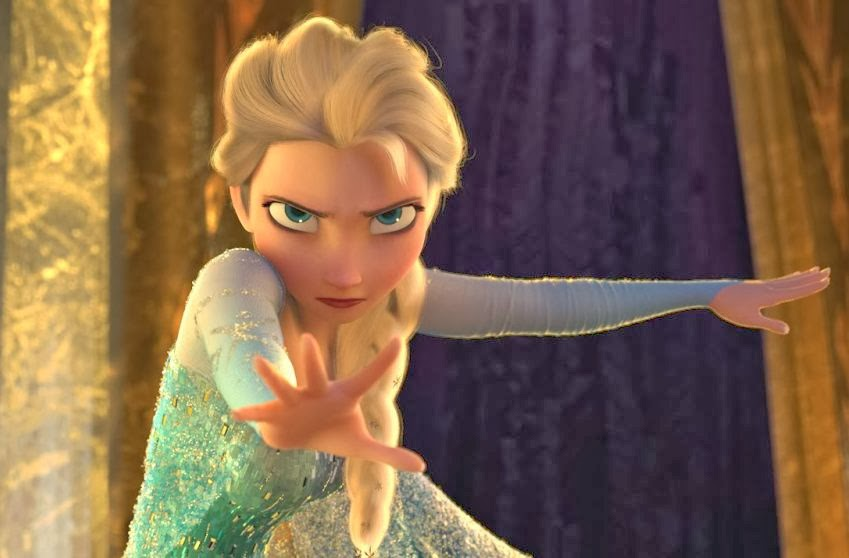
      Amy Good kicks off today’s musings with her thoughtful post about the challenge in writing supernaturally empowered characters.  While it’s important reading for anyone crafting a story that includes such elements (guilty), it got me thinking again about Frozen and what a pivotal moment for the cinematic portrayal of women the character of Queen Elsa actually is.  You’ll forgive the inklings of hyperbole creeping into that statement, but I don’t think I’m alone in feeling this way.  (For additional insightful reading on Frozen and its depiction of women, be sure to check out Emmie Mears’ take at Searching For Superwomen, Debbie Vega’s at Moon in Gemini and Liz Hawksworth’s at The Stretch for Something Beautiful.)  I touched on this briefly in my original take on the movie, written the evening after I saw it, but as the movie has sloshed around my subconscious for the last several weeks, and I’ve listened to “Let It Go” more times than should be healthy, I’ve realized that there’s a lot more here worth exploring in greater detail, and some of these other great posts have crystallized – pardon the obvious pun – my thinking on the subject.

      To delve more deeply into this character, we have to go back to her long-simmering genesis.  Hans Christian Andersen’s The Snow Queen has been around since 1845, and Walt Disney himself had long wanted to give the classic tale the animated treatment.  The stumbling block was always the title character, how to create a compelling version of her that would give modern audiences something to sink their teeth into, and several attempts fell by the wayside and were abandoned.  Even as the movie finally got underway in the latter half of the 2000’s, the story team still couldn’t crack the Queen.  The first stroke of inspiration involved making her the sister of the protagonist, Anna.  The second, and indeed the masterstroke, was in stripping Elsa of her villainy.  If you look at some of the original character concepts (just Google it, there are too many hyperlinks in this post already), Elsa was going to be your tired and typical wicked witch, with Anna presumably forced to fight and ruefully defeat her.  And then, so the legend has it, the songwriting team of Robert Lopez and Kristen Anderson-Lopez brought a draft of Elsa’s anthem “Let It Go” to the producers – planned originally as a “look how eeeeevil I am” strut in the vein of similar ditties belted out by Disney villains past.  Of course, that’s not what the Lopezes delivered.  “Let It Go” is a triumphant refrain of self-realization, not something you’d hear from the lips of Ursula, Gaston, Jafar, Scar or any of the Disney baddies that had come before.  Surely, then, Elsa could remain a good person, grappling with her own fears of who she’s become, and figuring out a way to integrate all the parts of her soul into a complete and confident being.  And to give that arc to a woman with magical powers is a blast of fresh Arctic air.  Full marks to screenwriter/co-director Jennifer Lee.

      The wicked witch is one of the most regrettable archetypes in literature, because it originates from a fundamental place of (male) discomfort with the idea of powerful women.  We dudes have to face it and deal – women are always going to have powers that we don’t.  They can bear children, i.e. create life; short of bad Arnold Schwarzenegger comedies we’re forever out of luck on that one.  To be completely candid and even a little NC-17, women can arouse us physically in a way we can’t really reciprocate.  And even more to the point, we will never figure them out, no matter how long we spend in their company, how many writings of theirs we read, how many times we beat our heads against the wall when they do something completely unexpected and seemingly out of character.  They’re piercingly right with that old refrain – we just don’t understand.  We won’t.  And everyone knows what the typical human reaction is to something we don’t understand.

      I recall reading once that the biggest driver of the persecution of witches in medieval Europe was that era’s version of the American Medical Association, that is, the assorted doctors of the time who were peeved that women were doing better at healing the sick with herbs and other natural lore than they were with the presumably university-endorsed “leech and bleed” treatment.  Invoking a mistranslated Bible verse and calling every second woman a witch was, to them, simply an effective way of eliminating the competition in the medical field.  To say nothing of how many other men probably hurled the charge when an innocent woman failed to return their romantic advances.  The witch became a catchall for everything men didn’t like about the opposite gender, and slithered her way into the darkest pages of the fairy tales that endure to this day.  Always out to cause mischief and throw up barriers to true love and occasionally eat a child or two.

      To be fair, Disney’s earliest animated efforts did little to dispel this archetype.  Snow White had the Evil Queen, Sleeping Beauty had Maleficent, both characters of tremendous power, beauty and irredeemable evil (noteworthy that Maleficent’s name comes from the Latin maleficium, which means “wrongdoing.”)  We also had the Wicked Witch from The Wizard of Oz, and a long, verging on infinite line of fantasy films both sumptuous and cheap featuring scantily-clad and/or hideous magical ladies waylaying our heroes with a combination of spells and wiles and cackling laughter, leading up to Tilda Swinton’s White Witch in the Narnia series, Charlize Theron’s Queen Ravenna in Snow White and the Huntsman, and Mila Kunis’ Theodora and Rachel Weisz’s Evanora in Oz: The Great and Powerful.  Such an easy path to tread for screenwriters half-assing their way through a script assignment.  What is the usual fate of these legions of empowered women?  Death.  Depowering and humiliation from time to time, but usually death.  It’s what they get for stepping outside the natural order, for interfering with the cause of love and freedom, baby.  When it’s at the hands of a man with a sword, the metaphor becomes even more painfully obvious.  Man conquering the unremitting darkness that is woman with his you-know-what.  Cue the Viagra ads.

      In Frozen, Elsa’s cryokinetic powers are vast, verging on goddess-level.  We’re not just talking a blast of ice cubes here and there.  She blankets an entire kingdom in an eternal winter.  In the “Let It Go” sequence, she builds a stunning palace of ice with a few waves of her hand and stamps of her feet.  She can defend herself easily against a squad of armed men, and most importantly, she can create life.  With a mere flicker of her magic she conjures Olaf the snowman, an autonomous being with his own unique personality, and also her hulking hench-monster Marshmallow (who, if you stayed till the end of the credits, proves he has a softer side as well.)  To my recollection, the last time a female character as powerful as Elsa appeared on screen was 2006’s X-Men: The Last Stand.  Like Elsa, Jean Grey in that movie was a woman born with incredible abilities she couldn’t control, and also like Elsa, attempted to live within constraints placed upon her by men, until her powers eventually exploded and injured those she cared most about.  Of course, how did that all work out?  Predictably, Jean turned evil, disintegrated a bunch of people, and had to be put out of her misery by a man with metal claws (more below-the-belt symbolism), after she begged him to kill her.  Impaled through the cold, dark heart just like the wicked witch deserves.

      Frozen does not end with Elsa being saved or murdered by a man, or losing her powers.  It ends, ironically, with Elsa becoming even more powerful – gaining strength from her sister’s love and learning to thaw what she has frozen.  Achieving a balance and serenity within herself.  One of the most delightful little moments from the end of the movie is watching Elsa create a skating rink for her subjects and them having fun with it, because it signifies that she hasn’t had to sacrifice what makes her special to find acceptance from the outside world.  In her review, Debbie mentioned that some critics of the movie have suggested that Elsa should have had a love interest.  I can’t think of anything that would have so wrecked the essential message.  A woman’s journey to realizing her power is one she has to take on her own, without some barrel-chested dingus patting her hand and telling her “there, there.”  Ultimately, Anna’s sacrifice was about showing Elsa she needed to love herself, and that she could, because her sister would always have her back.  I can’t see that having worked as well or resonated as deeply if Anna was Andy.

      What is Frozen telling us menfolk, then?  That a powerful woman isn’t someone we should fear, or try to cage.  That she isn’t someone we need to conquer or subdue in any way.  That we do best to help her figure out who she is and the extent of what she can do by staying the @#$@ out of her way.  And that the greatest thing we can do when she uses that power is cheer.

      Spread the word:

      • Click to email a link to a friend (Opens in new window) Email
      • Click to print (Opens in new window) Print
      • Click to share on X (Opens in new window) X
      • Click to share on Facebook (Opens in new window) Facebook
      • Click to share on LinkedIn (Opens in new window) LinkedIn
      • Click to share on Pocket (Opens in new window) Pocket
      • Click to share on Reddit (Opens in new window) Reddit
      • Click to share on Tumblr (Opens in new window) Tumblr
      • Click to share on Pinterest (Opens in new window) Pinterest
      Like Loading…
    • Save the father, save the world

      January 6th, 2014

      mrbanks

      “Winds in the east, mist coming in, like something is brewin’, about to begin… Can’t put me finger on what lies in store, but I fear what’s to happen, all happened before.”

      First uttered on screen by Dick Van Dyke in 1964, those words are whispered again by the unlikely voice of Colin Farrell as Saving Mr. Banks begins, over vistas of turn-of-the-last-century Australia and the dream-lost face of the young Helen Goff, who will grow up to become author P.L. Travers and the creator of Mary Poppins.  In short order we leap forward from the idyll to early 1960’s England, where the adult Travers (Emma Thompson) remains, after 20 years of attempts by Walt Disney (Tom Hanks) to purchase the film rights from her, stubborn in her determination to avoid having her beloved creation bowdlerized by uncouth Americans who don’t seem to understand what the story is about, or, more importantly, what it means to her.  Drawn in for the moment by the allure of some much-needed funds, Travers agrees to fly to Los Angeles to work with the creative team on the screenplay for Mary Poppins – “work with” meaning shoot down almost every single idea – while resisting Disney’s personal charm offensive.   The unstoppable force meets the immovable object, and as the movie proceeds along two time-separated narratives, we see the girl trying to save her treasured father from his deterioration, and the woman fighting to preserve his memory from people she thinks are only interested in exploiting it for the sake of a mediocre cartoon.

      Much like the movie whose conception it depicts, there are no villains in Saving Mr. Banks; only goodhearted people attempting to do the right thing, whether it is Farrell as Travers’ father reacting to every setback with a twinkle in his eye and spring in his step, or the increasingly exasperated but always smiling screenwriter Don DaGradi (Bradley Whitford) and composers Robert and Richard Sherman (B.J. Novak and Jason Schwartzman) struggling to meet the impossible conditions put forth by the uncooperative Travers during interminable meetings.  Particularly touching is the relationship that develops between Travers and her sunny limo driver Ralph (Paul Giamatti); while first treating him as an ill-informed Yankee, she comes to see him as a true friend, and is inspired to pass along to Ralph’s physically challenged daughter the proof that disabilities are not the same thing as limitations.  But misunderstandings abound, naturally, and this is probably the first screenplay in the history of Hollywood where the crisis point at the end of the second act involves whether or not penguins are to be animated.  (As an aside, it’s also the first screenplay to my knowledge where a character utters my last name:  checking into her room at the Beverly Hills Hotel only to find it’s been filled with Disney stuffed animals as welcome gifts, Travers shoves aside a Winnie the Pooh and grumbles “Ugh, A.A. Milne.”  I – what’s the expression – fangirl squeed?)

      I’m a sucker for movies about Hollywood, particularly old Hollywood, and the attention to detail in recreating the feel of the Disney production offices (and Disneyland itself) of the early 60’s is impeccable.  The performances, especially Thompson’s, are elegant, the cinematography is lush, and the score is full of life and hope.  Magic exudes from each frame.  But despite the central conflict between Travers’ obstinacy and Disney’s persistence that is the focus of the trailers, the movie is about fathers, and the complex relationships we continue to have with them long after they are gone.  That is where Saving Mr. Banks packs its most powerful emotional punch.  Like Hamlet, the ghost of the father looms in every scene – Travers Goff, the man who helped the young “Ginty” unlock her imagination and set her on the path to becoming a storyteller, honored posthumously in her choice of surname for her writing career.  Befuddled by the author’s seemingly irrelevant demands on the script, articulated by frustrated Bob Sherman who pointedly queries, “What does it matter?”, Walt Disney initially misses the mark, thinking that Mary Poppins comes to save the children.  We have the benefit of hindsight, having watched, dozens of times, David Tomlinson as George Banks evolve from curmudgeonly drone to a man full of life and wonder and joy.  The children don’t even say goodbye to Mary Poppins when she leaves, but they don’t have to, as her spirit has found a new home in their own dear father.  Late in Saving Mr. Banks, Disney relates to Travers a tale of his own upbringing in wintry Missouri and of his difficult relationship with his hard-driving father Elias, and the two creative forces finally find their connection – a shared desire to redeem the old man.

      Being someone’s child is taking on the responsibility of their legacy, willing or not.  In the movie, Ginty cannot understand why her beloved father is falling apart before her eyes, and she struggles to help him preserve his happiness and his dignity, even where her efforts are unintentionally harmful.  In creating the character of George Banks, P.L. Travers wanted (the movie posits, at least) to give her father the happy ending he could never find for himself.  When she sees him depicted on screen, and when she experiences the joy of the audience in watching him triumph, she weeps.  My father died when I was 11, and I’d be lying if I didn’t admit that a significant portion of why I do what I do is trying to ensure that his name is regarded in perpetuity as highly as I think it should be – the same name (though different family) P.L. Travers mouths onscreen.  He was the person I experienced stories with.  Reading to me, and with me, taking me to the movies, kindling a lifelong love of narrative and of imagination and promise lying within pages and celluloid.  He used to let me borrow his handheld dictaphone so I could record my own imaginary episodes of The A-Team (don’t ask).  He’d let me fill LP-sized floppy disks from his office computer full of chapters of an unfinished attempted novel about a boy and his racehorse.   And though he died long before I ever began to take writing seriously, every time I sit down at the keyboard I’m hoping that it will turn out to be something he would have liked, that he would have boasted to his friends and colleagues about.  (Knowing him, he’d boast about it even if it was an illiterate pile of tripe.)  And perhaps, beneath the veil of different characters in settings far removed from that available to a small-town attorney, I’m trying to give him his happy ending too.  In the theater, I felt in my soul that primal need of Travers to do right by her dad.  To save him.  And a tear escaped my eye as it did hers.

      For too short a time, they’re our whole world.  Eventually, our chances to talk with them are gone, to ask them questions that never would have occurred to us while they were alive, questions we thought we’d have time for someday.  When we were sharing a beer after staining the back deck together on a hot Sunday afternoon.  When we were tossing the football back and forth between three generations upon park grass touched with the first autumn frost.  Those scenarios aren’t possible now, so we try to replicate them in fiction.  We forge characters who ask the questions we can’t, and let them seek their answers, secure as we type that they will reach their destination and achieve the closure that eludes us.  When the stake is so personal, we comprehend why P.L. Travers did not want to give Mary Poppins up.  Mary wasn’t a character, she was a mission.  So was Mickey Mouse for Walt Disney.  It’s not easy to abdicate such a soulful responsibility, to hand over a legacy.  I wouldn’t be the first to volunteer for that, would you?  However, there may come a time when I’m willing to let go, to share the father I knew with a world that deserves to know him the way I did.  I can only hope that it’s in a manner as befitting as Mary Poppins, or Saving Mr. Banks.

      “Winds in the east, mist coming in, like something is brewin’, about to begin… Can’t put me finger on what lies in store, but I fear what’s to happen, all happened before.”

      Spread the word:

      • Click to email a link to a friend (Opens in new window) Email
      • Click to print (Opens in new window) Print
      • Click to share on X (Opens in new window) X
      • Click to share on Facebook (Opens in new window) Facebook
      • Click to share on LinkedIn (Opens in new window) LinkedIn
      • Click to share on Pocket (Opens in new window) Pocket
      • Click to share on Reddit (Opens in new window) Reddit
      • Click to share on Tumblr (Opens in new window) Tumblr
      • Click to share on Pinterest (Opens in new window) Pinterest
      Like Loading…
    • The WordPress (Non-Dysfunctional) Family Award

      January 4th, 2014

      family

      Happy 2014 everyone!  And what better way to start it off than being recognized by an incredibly talented peer?  The lovely Nillu Stelter nominated me for the WordPress Family Award.  So many people to thank:  my agent, my lawyer, my manager, my agent’s lawyer, my lawyer’s agent, my manager’s lawyer, my lawyer’s manager, the incredible electrical crews and the guy who gets me my blueberry danish every morning.  Free Tibet!  Okay, on a serious note, I am deeply grateful, and it reinforces the truth that when you put goodwill out into the world, it comes rushing back to you in a wave.  I admire Nillu’s talent for being able to pack a novel’s worth of emotion and imagery into her short pieces, and you should absolutely check them out instead of wasting your time here listening to me pontificate on whatever bee crawled into my bonnet this morning.

      Accepting the award mandates that you nominate six other bloggers you feel are deserving of the honor – people who have been welcoming and encouraging in your blogging efforts.  Ironically, Nillu herself nominated several of the folks that I would have included on my list.  Rather than re-nominating them, I’ll bestow upon them honorable mentions instead:  Rachael Spellman, Drew Chial, Jessica West and Amira Makansi, and defer to Nillu’s excellent encapsulations.  I also want to give shoutouts to two bloggers whose work and whose virtual friendships I treasure but who aren’t on WordPress so they technically don’t qualify:  Ksenia Anske and Heather Archuletta.  Heather’s site is a bit different from the rest as she writes about all things NASA and space exploration, and about her experiences as a “pillownaut,” i.e. a participant in NASA’s bed rest studies, which simulate the effects of low gravity on the human body over long periods of time.  It’s a whole area of space science I knew nothing about until I met her on Twitter, and it’s quite fascinating.  And she’s a fan of all things Star Trek as well, so, well worth your while.  Ksenia you probably know about already, so no sense retreading the obvious, other than letting you know that she just began writing her literary novel Irkadura two days ago and banged out an incredible four and a half chapters in a single sitting.  Something to think about the next time you’re lacking motivation.

      Introductions out of the way, let’s move on to my list:

      East Bay Writer – EBW merits a special place as she was the first WordPress blogger I really “connected” with when I started doing this back in 2011.  Absent the magical “Freshly Pressed” designation that points a massive spotlight on you out of the gate, you really do have to do the work and crawl your way out of the anonymous cellar in what is essentially complete darkness, fumbling for a grip and swinging wildly until you catch hold.  I’ll always be grateful to EBW for extending her hand and letting me know someone out there in the wilderness gave a damn.

      Tania Monaco – tania2atee – I first met Tania in 1999 when we both enrolled in the “Crafting a Novel” class taught by the next person down on my list, and we were part of a critique group that grew out of that class and continued for several years.  Her feedback helped to shape the novel I tinkered with for way too long before finally growing the spine needed to submit it to agents (ongoing as we type), and I’ll never forget one comment in particular she made that was manna for a man trying to write a book from a woman’s perspective:  “How do you know what we’re thinking?”  Tania blogs about parenting her two young children and her posts about favorite songs are always a treat.

      Lynda Simmons – I Love a Parade – My first creative writing teacher (at least, the first who wasn’t also trying to teach me to write essays about long-dead English novelists), a family friend from way back, and a by turns witty and poignant novelist whose book Island Girl is a rending story about a woman struggling to put her family back together before the ravages of Alzheimer’s Disease claim her memory and indeed her very soul.  The woman who told me to my chagrin to ditch the 400,000-words-and-counting pile of rambles that wasn’t going anywhere and start something fresh and new.  Everything that followed is essentially her fault, so address your angry comments to the address in the link.  Just kidding.  Thank you Lynda, for so much.

      Andrea Montgomery – My Simple Desires – Andrea doesn’t blog nearly enough, so my ulterior motive in nominating her is to try and give her a little nudge of inspiration.  She again is someone I have the fortune to know personally, and to envy from time to time since writing is her day job, as a communications professional.  There is a joyful touch to her blog posts which I’m finding myself missing, so, here’s hoping she gets back to it soon.

      Tele Aadsen – Hooked – One woman at sea, trolling for truth, and what a beautiful journey it is.  Like EBW, Tele was one of my first “blog friends” on WordPress and it has been a privilege to read this amazing woman’s words these past years.  Taking a sabbatical from her career in fishing off the Alaskan coast, she is currently in a writer’s residency at the North Cascades Institute in Washington and working on her memoir, also entitled Hooked, to be published by Riverhead Books.  Cannot wait to hold a signed copy of that in my hands.  Reading Tele’s posts or seeing her comments on my own site are like a chat with an old friend, the kind with whom you can pick up like it’s only been a day even though months and months have passed.

      And finally, the sixth blog on my list:  yours.  Yes, yours.  You, reading this right now – not the person next to you, you there.  Maybe I’ve stopped by yours in the past, maybe I haven’t.  But the fact that you’re doing it makes you a part of a family you may not even know you had.  You’re part of a tradition dating back to the first scratches on cave walls and extending far beyond the limits of our mortal shells.  We’re the reason our species has a history to remember, and dreams of the future to pursue.  We are writers, and whether we are read by millions or only a select few, we are each leaving our imprint upon a complex universe that is often difficult to understand.  Each book, each article, each post, even each thoughtful Twitter musing is a small step towards solving the greatest puzzle of all.  What does it mean to be us?  Choosing to enter into that conversation earns you a place at the table.  Welcome, friend; pull up a chair, pour yourself a drink and tell me a story.  Tell me what you think of mine.  And let’s create a new one together – as a family.

      Spread the word:

      • Click to email a link to a friend (Opens in new window) Email
      • Click to print (Opens in new window) Print
      • Click to share on X (Opens in new window) X
      • Click to share on Facebook (Opens in new window) Facebook
      • Click to share on LinkedIn (Opens in new window) LinkedIn
      • Click to share on Pocket (Opens in new window) Pocket
      • Click to share on Reddit (Opens in new window) Reddit
      • Click to share on Tumblr (Opens in new window) Tumblr
      • Click to share on Pinterest (Opens in new window) Pinterest
      Like Loading…
    • 2013: A Year Well Met

      December 31st, 2013

      A smidgen of wisdom from the good folks at WordPress:

      The concert hall at the Sydney Opera House holds 2,700 people. This blog was viewed about 16,000 times in 2013. If it were a concert at Sydney Opera House, it would take about 6 sold-out performances for that many people to see it.  Hopefully they’d put on something good.

      Click here to see the complete report, you know, if you’re interested in that sort of thing.

      The end of the year is that time when, bloated by festive treats and wearied by revels and revelers, we turn our collective gazes navel-ward to look back on what we managed to get done despite odds and what we hope to accomplish in the coming months (usually a laundry list of everything that wasn’t finished this past year, with “losing weight” at the top of the list.)  I could launch into a tremendously dull recapitulation of everything I wrote this year and which posts connected well and which didn’t, but I suspect there’s little interest out there in such a thing.  Really, you write something, you publish it, and either people like it or they don’t, and you move on to the next, with little time available for reflecting on past glories or hardships.  And just because something hits hard once is not a guarantee that anyone sticks around.  The beast must be fed, continuously, or it wanders on like a herd across the Serengeti in search of a more consistent food source.  That’s one of the hardest lessons we have to learn.  A fan of one good piece of writing is seldom a fan for life, unless we’re discussing enthusiasts of J.D. Salinger.  Even Stephen King never rests on his laurels.

      2013 will be a year recalled fondly not in terms of anything specific I did with my writing, but who it enabled me to meet.  Ksenia Anske, Rachael Spellman, Drew Chial, Jennifer Howard, Nillu Stelter, Rachel Thompson, Amy Good, Rachel Ott, Louise Gornall, Alicia Anderson, Amira Makansi, Jessica West, Colleen Albert and J. Edward Paul (and a bunch of other amazing folks I’m sure I’m forgetting, so sorry) were complete strangers a year ago and now they, their work and most importantly, their senses of humor, have become inextricable components of my journey across the pages.  They set the bar with their words, they motivate with their dedication, they inspire with their passion and they make me laugh whenever I need it.  If you have not heard of any of these incredible people, that will be remedied very soon, you can count on it.  And I’ll be right there cheering them on – from behind the 500 feet mandated by the restraining order, undoubtedly.

      For myself, the keyword for 2014 will be discipline.  Ksenia’s blogged extensively about the need for focus and routine as a writer, and it isn’t enough to say that I’ll do it when I get the time.  It truly is about making time; no small challenge when you have a regular job, a spouse, a son turning thirteen and a brand spanking new gym membership.  But as I am fond of telling my boy, he will not look back on his life and wish he’d spent more time lying on the couch.  There is simply too much to do; too much world to experience, too many words to write, and precious few minutes to do it all in.  Our lives aren’t getting longer; they’re ending, as the man says, one day at a time.

      So I won’t make a bunch of goals or resolutions that I can sit around on December 31st, 2014 ruing that I didn’t finish.  I’ll begin with changing my attitude about what’s possible through enough effort.  That agent didn’t like your novel?  Send it to 30 more.  Nobody cared the post about what’s wrong with Star Wars and Star Trek?  Reach deeper.  Make it more personal.  Readership drying up?  Introduce yourself to more strangers.  The great thing about Twitter is that it can give you the balls to speak to people you wouldn’t dare approach in real life.  Use that wonderful tool to make more and more lasting connections.  And read more.  Lots more.  Embarrass your Goodreads friends with the raw tonnage of literature you consume.  Talk, listen, discover, share, open up, advocate, take in, give back.  And damn the motherf@#$ing torpedoes.

      See you next year, my friends.  Limitless promise is only a few hours away.  And let’s see where the road takes us together.

      Spread the word:

      • Click to email a link to a friend (Opens in new window) Email
      • Click to print (Opens in new window) Print
      • Click to share on X (Opens in new window) X
      • Click to share on Facebook (Opens in new window) Facebook
      • Click to share on LinkedIn (Opens in new window) LinkedIn
      • Click to share on Pocket (Opens in new window) Pocket
      • Click to share on Reddit (Opens in new window) Reddit
      • Click to share on Tumblr (Opens in new window) Tumblr
      • Click to share on Pinterest (Opens in new window) Pinterest
      Like Loading…
    • Of Scrooge and holiday redemption

      December 23rd, 2013

      scrooge

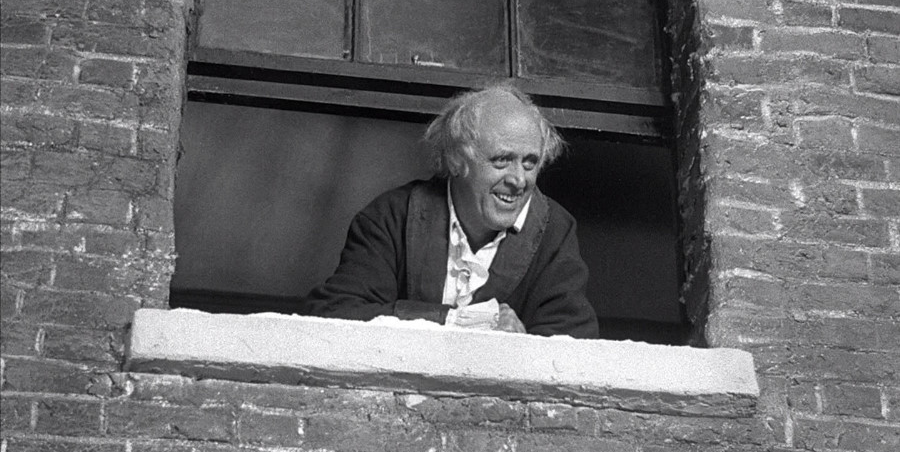
      I posted a few days ago about holiday memories being the best gift you can give yourself.  One of mine that I didn’t get into in great detail was my annual required viewing of the 1951 film adaptation of Charles Dickens’ A Christmas Carol.  This seminal tale, which has probably done more to shape how Christmas is celebrated worldwide than any other work of literature, has been adapted for stage, television and film hundreds of times, the earliest surviving movie being a 6-minute silent British version in 1901.  The version aired most often every 24th of December, and most beloved by both critics and families, is the 1951 remake, titled either Scrooge or A Christmas Carol depending on which print you happen to catch (avoid the colorized version at all costs), starring Alastair Sim as the pitiless miser who learns to change his ways following a 1:00 a.m. visit from three pesky spirits.  My father introduced me to it when I was very young; he and my uncle were fond of quoting it at length, badly imitated British accents and all, during family holiday gatherings.  Now, as a father myself, watching it is the last thing I do before turning out the light on Christmas Eve.  And while my son is not likely to understand why Dad’s making him watch this boring black and white thing that doesn’t feature Iron Man in any capacity, it’s important to me to carry this tradition forth for as many years as I’m able.

      Consequently it’s difficult for me, as it is with most of the movies that I look upon fondly, to sequester my emotions and memories and evaluate the movie from a strictly critical standpoint.  Since it was the version I grew up with, I was surprised to find scenes and characters missing and/or altered in later remakes (like the 2009 Jim Carrey CGI version) that turned out to be upon further investigation inventions of screenwriter Noel Langley and not part of the original story.  It might be sacrilege to suggest that anyone could improve on Charles Dickens (or would even dare to try), but for once, we have an example where exploring deeper into the background of an ostensible villain enhances the stakes of his journey.  Langley’s script switches the birth order of Scrooge and his sister, making Ebenezer the younger brother who is estranged from his father after his mother dies giving birth to him, paralleling Scrooge’s later disenchantment with his nephew Fred who has cost him the life of his beloved elder sister Fan in the same way.  We also see Scrooge, after apprenticing with the jolly old Mr. Fezziwig, come under the influence of the corrupt Mr. Jorkin (a Langley creation) who seduces him to the dark side of capitalism and ultimately introduces him to Jacob Marley, the man who will become his equally covetous business partner.  (Gosh, could this sound any more like Star Wars?)  But it all works.  Ebenezer Scrooge was not born a bad man; like so many of us he made bad choices and reacted adversely to what a cruel world threw at him.  He hardened his heart to avoid feeling sad and eventually to avoid feeling anything at all.  Langley’s insightful adaptation shows us more of what Scrooge has lost, deepening our desire to see him reconnect with the meaning and importance of Christmas.

      None of it would matter, however, if the performances weren’t there, and Alastair Sim’s is probably one of the best ever put to film.  His is without flaw, equally credible in full miser mode and giddily standing on his head upon achieving his catharsis, by turns terrifying and repulsive, then endearing and delightful.  And as I noted earlier, his inflections around choice lines are the stuff of impersonation fodder for both professionals and fathers and uncles decades onward.  He is matched perfectly by Kathleen Harrison, Cockney charm through and through, as Mrs. Dilber, Scrooge’s charwoman (i.e. housekeeper), another role greatly expanded from the Dickens original.  In fact, there isn’t a poor performance in the lot.  It’s a treat as well to see Peter Bull, perhaps best known as the Soviet ambassador in Dr. Strangelove, as the film’s narrator and the business acquaintance of Scrooge’s who insists he won’t go to the funeral unless lunch is provided, and Patrick Macnee, the original John Steed of British TV’s The Avengers, as the young Jacob Marley.  If you’re a detail-oriented James Bond fan as I am, you’ll also enjoy spotting Francis de Wolff, the leader of the gypsy camp in From Russia with Love, as the jovial Spirit of Christmas Present.  The acting by the ensemble is so good that it remains fresh and surprising even after dozens of viewings – you really feel the sorrow of the Cratchit family on the loss of Tiny Tim and revel in the triumph of watching him run towards the reformed Scrooge at the finale.  You hate Scrooge’s guts for treating everyone so poorly and laugh with him as he tries to contain his glee in finally figuring out the truth that has lain dormant beneath the Christmas snow.

      The possibility of redemption remains a powerful driver of human existence.  Most major religions, and the criminal justice system, are predicated on the concept that atonement and forgiveness are always within reach.  Even for the secular, Christmas can be a time where we can tally the events of the previous year, come to terms with them and resolve to make the necessary changes going forward, with a sense of renewal, optimism and hope.  No matter what kind of year I’ve had, whether it’s been a time of robust progress or of perceived stagnation, putting on A Christmas Carol and watching Alastair Sim’s Scrooge plead with the Ghost of Christmas Yet To Come that he’s not the man he was, is an important reminder of possibility, that it is never too late.  The challenge, however, is in making enough of those changes so that you begin to live your life as robustly as the post-ghost Scrooge.  So that you become, as Peter Bull intones, “as good a friend, as good a master, and as good a man, as the good old city knew, or any other good old city, town, or borough, in the good old world.”  Perhaps that’s the lesson my father wanted me to learn by making me watch the movie every year.  It’s certainly one I want to pass on, and I’ll make my son watch it until he gets it too.

      Merry Christmas and happy holidays, everyone.

      Spread the word:

      • Click to email a link to a friend (Opens in new window) Email
      • Click to print (Opens in new window) Print
      • Click to share on X (Opens in new window) X
      • Click to share on Facebook (Opens in new window) Facebook
      • Click to share on LinkedIn (Opens in new window) LinkedIn
      • Click to share on Pocket (Opens in new window) Pocket
      • Click to share on Reddit (Opens in new window) Reddit
      • Click to share on Tumblr (Opens in new window) Tumblr
      • Click to share on Pinterest (Opens in new window) Pinterest
      Like Loading…
    • Unfreezing creativity

      December 21st, 2013

      You can emerge from a great movie in any number of frames of mind:  stirred to action, moved to tears, smiling ear to ear or even enraged beyond words.  And then there are those movies that have a different and in some ways, more profound effect.  They come along at just the right moment, when you’re a bit discouraged by a recent course of events, when the well is drying out and replenishing itself with doubt instead.  Movies that embrace your simmering creativity and stoke your desire to tell stories, because they remind you of the possibilities inherent in the blank canvas by pushing the limits of what can be done with it.  They disarm and enchant the cynic and turn him into a dreamer again, fingers twitching to fill hard drives with a wealth of new words.  Frozen, Disney’s magnificent animated retelling of Hans Christian Andersen’s The Snow Queen, did that for me.

      The story of a bond of sisterhood tested by fate, magic, misunderstanding and a heck of a lot of snow and ice, Frozen is visually sumptuous, befitting the pedigree of its studio, and uncommonly emotionally profound.  The two princesses of the vaguely Nordic realm of Arendelle are the playful young Anna (voiced by Kristen Bell) and her elder sister Elsa (Idina Menzel), who possesses the power to create ice and snow.  They are inseparable until Elsa accidentally injures Anna with her magic, at which point their well-meaning royal parents decide that the two would be better off kept apart, for their own safety, and Anna’s memory altered to remove her awareness of her sister’s abilities.  Years later, after the girls have been orphaned, Elsa is poised to be named Queen of Arendelle until a confrontation with Anna over a rash decision to marry a handsome prince she’s just met results in Elsa’s long-suppressed powers bursting forth and blanketing Arendelle in eternal winter.  Shunned by her people, Elsa flees to the distant mountains, pursued by Anna who has faith that her sister can be convinced to bring summer back to the realm.  I’d prefer not to say more at the risk of being spoilery, but despite some red herrings dropped early on that suggest you’re in for the typical schmaltz about princesses in towers and the conveniently available square-jaws they always fall for, and despite the prominence in advertising of the goofy living snowman Olaf (Josh Gad), the story goes in a much more mature and welcome direction, keeping the relationship between the sisters as the emotional linchpin – while dazzling your eyes with some breathtaking animation work, especially in any scene involving Elsa’s magic.

      Given what I’ve discussed at length here before in terms of the onscreen portrayal of women, how refreshing indeed to find a story that both passes the Bechdel test and gives depth and complexity to a female character with supernatural powers!  The clip I’ve linked above is my absolute favorite moment in the movie, because not only is it a terrific song belted out by a sublimely talented Broadway veteran at the top of her game (even calling back a little to her famous interpretation of Wicked‘s “Defying Gravity”), but it’s a scene of a young woman embracing everything about who she truly is and reveling in the wonders of what she can do with her amazing gifts.  A triumphant coming out of a sorceress, if you will, and a scene of unbridled joy.  We don’t get to see that very often, if ever.  Women with powers in movies are usually punished for them – they have to give them up to attain the life they really want, or, they choose to use them for evil and must therefore be destroyed (usually by… sigh, a virtuous man).  While Elsa does cause some inadvertent mayhem that must be undone, the resolution of the story thankfully doesn’t require her to abandon what makes her unique.  She adds to her life instead of taking something away.

      As a man writing a novel in first-person from a woman’s point of view (a fantasy about a woman with magical powers, no less), those issues are always top of mind for me.  It’s too easy to venture down the well-trodden, familiar path at the end of which lies the execrable Mary Sue; the collection of cliches guaranteed to please no one, least of all the author.  Experiencing Frozen, though, shows me that it can be done, and done extremely well, and the positive response to the movie by both audiences and critics proves that these kinds of characters can touch hearts.  Magic has always had a lingering visceral appeal, and too often literature and cinema adhere to the conservative religious view that there is something fundamentally wrong about it, forever at odds with how the world is supposed to function.  Yet it’s something that we all still seem to want in our lives – in the first encounter with a new love, in the twinkle in the eye of a child waiting for Santa, in the wish made on the shooting star.  Why can’t the world be magical?  Why can’t we make it that way?

      Writers have our own magic to offer.  We have these crazy ideas and wild emotions that we are somehow able to transmogrify into a collection of permutations of 26 letters that cast spells upon those who read them, with the very effects I mentioned off the top.  When we’ve suppressed that nature for too long, because day jobs and other obligations have gotten in the way, or we’ve just been too downright lazy to keep doing what we’re supposed to be doing, we risk not a catastrophic explosion like Elsa, but a gradual withering away of our spirit.  We get mopey and find little to be happy about in what should be fulfilling lives.  What we need to do is have a “Let It Go” moment instead and revel in what we love and what we know we’re meant to be.  Sometimes it takes a reminder; a movie like Frozen that assures you that storytellers are capable of some wondrous things.  And then you want to get back to your own fictional universes and start pushing your own limits again, typing until your fingers fall off and you’ve created magical palaces of skyscraping prose.  Hoping somewhere in the back of your mind that one day your story will have the same impact on somebody else – and the cycle of creativity will continue, forever unfrozen.

      Spread the word:

      • Click to email a link to a friend (Opens in new window) Email
      • Click to print (Opens in new window) Print
      • Click to share on X (Opens in new window) X
      • Click to share on Facebook (Opens in new window) Facebook
      • Click to share on LinkedIn (Opens in new window) LinkedIn
      • Click to share on Pocket (Opens in new window) Pocket
      • Click to share on Reddit (Opens in new window) Reddit
      • Click to share on Tumblr (Opens in new window) Tumblr
      • Click to share on Pinterest (Opens in new window) Pinterest
      Like Loading…
    • Weighing in on Wonder Woman

      December 19th, 2013

      ww

      “Don’t let them screw it up,” was producer Albert R. “Cubby” Broccoli’s advice to his daughter Barbara as he handed her the reins of the James Bond franchise.  The same six words tremble on the lips of every comic book fan who dreams of seeing Wonder Woman represented on a theatre screen with hundreds of millions of dollars and a booming Hans Zimmer score behind her.  While the last three decades have seen Superman and Batman go through their cinematic paces with both triumphs and nadirs, WW remains shackled in the vault, a victim of Hollywood’s utter inability to figure out how to handle her.  While her comic continues to sell, and she’s seen some action in animated form, the leap to live action feature remains daunting.  Big industry movers and shakers like David E. Kelley and Joss Whedon have tried and failed to bring her to life.  But as everyone with even a passing interest has heard, Israeli actress Gal Gadot, best known from the recent spate of Fast & Furious franchise offerings, has been signed to appear as Wonder Woman in the next Superman movie, alongside Henry Cavill reprising his role from Man of Steel and Ben Affleck taking over for Christian Bale as Batman.  That’s all we know at this point.

      What we can offer by way of conjecture is that the role for Wonder Woman in a film already top-heavy with marquee characters and A-list names, built around a conflict between DC’s two heaviest hitters, is not fated to be of the substance her biggest fans crave.  Firstly, the movie is intended as a sequel to Man of Steel, so it’s not meant to be an ensemble piece with each character having his and her requisite beats.  Superman remains the lead part with Batman as a second lead/supporting player.  The primary character arc, the hero’s journey, will be Superman’s.  The demands of a limited running time mean Wonder Woman is unlikely to be given much of an origin story; she’s likely to merely show up at some critical point (or be disguised as Diana Prince, new reporter for the Daily Planet and Lois Lane rival, for the majority of the plot before a third-act costumed reveal).  And the character’s Greek mythological (i.e. fantasy) background is an uneasy fit in between Superman’s science fiction nature (at least, as it was depicted in MoS) and Batman’s hard-boiled detective leanings.  The Justice League animated series adopted a “just go with it” approach whereby the characters simply got on with battling whatever military/magical/alien villain happened to show up this week, without stopping to explain how all these genres could logically coexist.  But I doubt that an intended-for-mainstream-audiences movie will be satisfied with that.  Marvel’s The Avengers had the advantage of five different introductory movies to get the exposition out of the way so you could accept the idea of Thor and Iron Man together; MoS II or whatever it’s going to be called has no such luxury.  (Part of the problem is that the rollout of the DC properties has been haphazard, first with the mediocre Superman Returns, then the abysmal Green Lantern, and the incompatibility of Nolan’s wildly successful Dark Knight trilogy with an overarching story, and now they are struggling to play catch-up to Marvel’s much more strategic approach.)

      The thought, then, is that her extended cameo in Man of Steel vs. Dark Knight, or whatever they’re calling it, may serve as a springboard for her own standalone spinoff.  That puts a heckuva lot of pressure on Gadot to deliver a performance that stands out just enough amidst the testosterone-fueled Kryptonian/Gothamite smackdown without taking so much focus off the two male leads that we lose interest in their story.  And she has to accomplish that herculean (hera-ian?) task while competing for attention with Amy Adams, no slouch she with screen presence.  While the trolls trashing the relatively unknown Gadot for not having the right look or not being American or not being insert favorite large-breasted actress you’d love to sleep with here need to open a window in that basement of theirs (seriously folks, have we learned nothing from the short-lived backlash over Heath Ledger and The Dark Knight?), legitimate questions can be asked about how the character will be written for her to play.  For one of the most difficult characters for any person to write well is an empowered woman, and especially difficult is a superpowered woman.  Going back to my mention of James Bond earlier, while he may be held up as an aspirational example of a certain kind of masculinity (he shouldn’t, in my view), hardly anyone in criticism writes of Bond as a template for Man.  But every time a woman of significance appears on screen in a role that calls for slightly more than “focus group-required love interest,” critics leap to immediately assign her a greater significance in the canon of All That Is Female.  Woman becomes Everywoman.  So too, we expect, will Wonder Woman.

      And they won’t be able to help themselves.  Wonder Woman is essentially, a goddess; flawless beauty and figure combined with indomitable strength and abilities, an aspirational, unachievable paradigm of feminine perfection.  You’re the writer of Man of Steel 2: Batman Boogaloo or whatever.  Now quick, go pen some dialogue for this character.  Dialogue that, you know, intrigues and endears audiences but doesn’t send them bolting for the exits with a preachy collection of dumbed-down feminist stereotypes, or turns a beloved icon into a brainless git making sure to point her shapely hind end provocatively at the camera while slam-punching supervillains through buildings.  Fancy that assignment?  Particularly when we’re still operating within the restraints noted above, that she has to be memorable but not so memorable that she diminishes Batman and/or Superman, the latter of whom the movie is mainly supposed to be about?

      If it sounds like I’m not holding out a lot of hope for Wonder Woman circa 2015, you’d be partially correct.  I hope she’s the most awesome version of the character we’ve ever seen, leaving folks asking Lynda who? and begging for Wonder Woman Begins.  What I’m missing is the faith that this can be executed properly by the creative team handling her live-action feature debut, or indeed by any creative team in the realistic position to handle this potential franchise.  Because too often in the past, we’ve seen them (the generic them) screw it up.  They screw it up by refusing to invest female action heroes with humanizing nuance, by writing them as archetypes instead of as people.  Broad caricatures who have to lose what makes them women in order to compete on the same playing field as men.  Or, they venture too far the other way, where femininity is cranked up to vampy extremes for the benefit of naught but teenage boys.  The Lara Croft movies presented a lead utterly without warmth or any discernible charm and consequently any audience empathy.  Catwoman put its lead in bondage gear and involved her not in a battle for the fate of the world, but in a silly plot about toxic makeup.  (And the failures of these films set back the female action genre by years, as shortsighted executives figured people weren’t going to see them because they didn’t like action movies with female heroes, not the real reason – because the movies themselves just sucked.)

      What I’d like to see, and what I expect folks who are far greater fans of Wonder Woman than I am would want to see as well, is a character who despite her superpowered trappings still possesses emotions that we can understand and encounters situations we can recognize.  (You know, like walking to work one day and running into a massive, marauding interstellar beast.)  A character with some real weight and depth.  A goddess who is still human where it counts most, in her heart and in her head.  That’s what will make us love her and want to see more of her.

      Over to you, Zack Snyder, David S. Goyer, Christopher Nolan and Gal Gadot.  Show us the Wonder.

      Spread the word:

      • Click to email a link to a friend (Opens in new window) Email
      • Click to print (Opens in new window) Print
      • Click to share on X (Opens in new window) X
      • Click to share on Facebook (Opens in new window) Facebook
      • Click to share on LinkedIn (Opens in new window) LinkedIn
      • Click to share on Pocket (Opens in new window) Pocket
      • Click to share on Reddit (Opens in new window) Reddit
      • Click to share on Tumblr (Opens in new window) Tumblr
      • Click to share on Pinterest (Opens in new window) Pinterest
      Like Loading…
    • What to get yourself for Christmas

      December 18th, 2013

      picardchristmas

      A cynic has no easier target than Christmas.  As November wanes and December waxes, garlands rise incrementally around the malls, Fox renews its annual War on Christmas™ coverage and the radio stations shuffle over to endless repeats of Mariah Carey’s “All I Want for Christmas is You,” the holiday season reboots with all the originality and fervor of the latest superhero remake.  As the ornamented train shambles into the station, it brings with it the usual trappings of tinsel, spiked eggnog, impossible toy wish lists tailored by marketers and advertisers, hour-long quests for parking spots and harried photographers trying to capture the split second between tantrums as the toddler squirms on the lap of the weird bearded guy in the fuzzy red suit.  Movie studios roll out their usual December double act of just-in-time-for-awards-consideration artsy pieces and cheaply-cobbled- usually-starring-someone-from-a-failed-sitcom holiday fare for our consumption along with the millions of slain turkeys, pigs and tofu sloths we will burn for five hours and set amidst the plastic paraphernalia of our impeccably adorned dining room tables.  We will then gather the clan of people we’d ignore on the street if they weren’t related to us and consume our approximate body weight in shortbread and stuffing while hoping we don’t have to be subjected to yet another lecture about kids these days from the annoying uncle who dips too deeply into the punch bowl.

      I nearly succumbed to this attitude the other night, while propelling our otherwise efficient and modestly economic vehicle at a funereal pace over gray sludge-strewn streets behind a throng of other roving metal boxes bent on the same destination.  Patience burned away to embers, and if not for the presence of my son in the back seat I have no doubt a few choice profanities would have splattered across the inside of my windshield.  Other than the exhaustion brought on by the end of the work day fused with sub-zero temperature and the (excuse the hyperbole) sheer inhumanity of total darkness at 5 p.m., there was no reason for it.  But for that brief moment, my Christmas spirit was absent, as though I’d left it in my other pants.  It is, I realized, a challenge to keep it.  No wonder Scrooge needed three scary-ass poltergeists to get him back into shape.

      Christmas, as we’ve come to know it now, practically dares you to hate it.  It dares you to throw your hands up in resignation at the consumerism, the kitsch, the frequently awful music, the endless toys demanded from Santa that will be forgotten by February and the obsessive desire of some to recreate a neo-Dickensian display of forced family unity.  The pursuit of the “perfect Christmas” can be more of an exercise in stagecraft, as in designing the ideal movie set to permit the spontaneous eruption of merriment.  The “spirit” of Christmas is codified in a series of boxes to be ticked off:  tree, lights, cards, food, brown paper packages tied up with string.  I’m an atheist as you well know, but I sympathize sometimes with the Christians who put the “Keep Christ in Christmas” signs up out on their lawns alongside the backlit nativity scenes.  What are we celebrating, really?  The desperation of retailers to make up for months-long dry spells with one orgiastic year-end blow-out?  The ritual removal of millions of trees from the ecosystem to spend a few weeks inside living rooms before they are ground up for mulch?  Nerves frayed to the point of splitting in ensuring that everything goes exactly as planned and the turkey doesn’t catch fire?

      To me, Christmas is best enjoyed broken down into small moments that form a series of triggers of positive emotions, both in connections to Christmases past and the forging of new memories to be cherished in the future.  The indelible scent of pine caught in the faintest whiff as you stroll into the kitchen for breakfast.  The adorable hand-crafted googly-eyed gingerbread man ornament smiling with a red felt mouth from within the branches.  The glow of candles and garland lights saturating the house with warmth as banks of frozen white pile up outside the windows.  The glint of those lights reflecting off the shiny wrap of the piles of gifts crowding the base of the tree.  Snowmen standing valiant guard outside.  The taste of cranberry, of red wine, of orange and of chocolate, popped into one’s mouth when no one is looking.  The scratches and pops on an old vinyl recording of a favorite holiday tune performed by a long-deceased crooner.  The telltale rattle of Lego in an unopened gift.  Fighting drowsy eyes to watch the 1951 A Christmas Carol for the thirtieth time while clad snug in brand new pj’s.  The silence of a house asleep, waiting for the arrival of Mr. Claus.  The face of the exuberant child beholding the bounty for the first time as cracks of sunlight spill through the windows and yawns escape lips.  The hug exchanged following the reveal of that most treasured item on the list that justifies in a heartbeat the hours spent combing the stores to find it.  And at the end of everything, sitting back on the couch, hot cocoa in hand, spouse curled up alongside, reflecting on a year of significant ups and dreary downs and thinking about the promise of new days to come.  Your mileage may vary, of course, but like the song says, these are a few of my favorite things.

      You have to look for these little slices of wonder, be aware when they manifest and relish them before they disappear.  It’s the only way to avoid getting caught up in the pressure cooker that can often be the holiday experience and the overall dread of the inevitable January credit card bill.  But even the most notorious of failed Christmases will have its sublime moments hidden amidst the veil of falling snowflakes.  So grab a few this year and put them in your stocking.  They’re the best gift you can give yourself.

      What are yours going to be?

      Spread the word:

      • Click to email a link to a friend (Opens in new window) Email
      • Click to print (Opens in new window) Print
      • Click to share on X (Opens in new window) X
      • Click to share on Facebook (Opens in new window) Facebook
      • Click to share on LinkedIn (Opens in new window) LinkedIn
      • Click to share on Pocket (Opens in new window) Pocket
      • Click to share on Reddit (Opens in new window) Reddit
      • Click to share on Tumblr (Opens in new window) Tumblr
      • Click to share on Pinterest (Opens in new window) Pinterest
      Like Loading…
    • For want of One Great Phrase

      November 30th, 2013

      Untitled

      We hear a lot about what writers need, about their obsessive, soul-shaking compulsion to empty their brains of neatly arranged consonants and vowels in as many media as possible, in pursuit of the phenomenon of connection.  Author Layla Messner has a nice, simple, resonant line about it in her Twitter bio:  “Words have been known to come out of my fingers” – they pour, unfiltered from the tap, emptying onto the page in sometimes messy, sometimes poetic splashes.  If we couldn’t type our stories, we’d talk them, if we couldn’t talk them, we’d resort to mime, gesticulating wildly until someone got the idea.  Every moment spent not writing only aggravates the junkie’s craving and fills one with the sense of precious, elusive time misspent.  Family night?  Stuff that, I’ve got eighteen pages to edit and the problems of a fictional unemployed karaoke-obsessed spot welder from Scranton, Pennsylvania to wrestle with.  Few outside “the profession” can comprehend it; those of us on the inside share our compounding frustrations with secret winks and nods and commiserations offered in the digital cafe.  And when we find ourselves without anything substantial to say, we write about what’s wrong with the plumbing, trying to dislodge the creative clog, to rediscover the reassurance of free flowing literary neurosis.

      With so much energy expended on exploring writers’ need, what then of what the writer wants?  Not a subject that gets discussed with nearly as much fervor.  Perhaps no one can articulate it in a way that doesn’t sound like the selfish, capitalistic, materialistic desires for fame and fortune and universal acclaim – the seven-figure book deal, the gushing reviews and self-indulgent television interviews, the gala premiere of the movie adaptation, the legions of followers begging to be sated by the next volume in your ongoing saga.  And all that is outside the art itself; fleeting external validation that does little to advance the craft, sharpen your skills or contribute to a legacy that will outlive your just as fleeting mortal shell.  What then, is the want, stripped of the external trappings, boiled down to its essence?  What aspiration keeps the writer awake late at night when the world has gone to sleep, the caffeine has metabolized into ether and the glow of the laptop saturates his face with a cold blue veneer?

      Greatness.  Not, I think, the notion of being a great person, but of creating something that takes figurative flight and soars far beyond your little fragment of the world.  Something that becomes.

      There’s no such thing as the perfect novel, or even the perfect sentence, hyperbolic critics to the contrary.  There is, however, the ineffable quality of a phrase well-turned – the witty line, the fragment of repartee, the utterance of a slice of wisdom that lasts through generations.  We all harbor memory banks of quotations we can rely upon to spice our own work with a fragment of someone else’s literary manna – the ubiquitous sayings of Shakespeare, Wilde, Twain, Parker, Churchill, Hemingway, Fry, Hitchens, Sorkin (naturally), even Marx (Groucho) and Lennon (John), to name but the merest few.  One need not even be exceptionally well-read to draw on one’s betters – websites like BrainyQuote are an ample buffet, whatever’s on the verbal menu.  How too, do we long to be included in that pantheon.  To one day have high schoolers begin essays with, “As Milne once wrote…”  There’s a reason they call these immortal phrases.  The heart yearns to birth one of its own.

      It’s amusing, as a contributor of the occasional column to The Huffington Post, to see which sentence is plucked from the piece by the blog editors to characterize its tone and message on the sidebar.  Which they feel is most likely to draw the maximum amount of click-interest.  I don’t get a say.  Sometimes it turns out to be one that was labored on intensely; others were tossed off in fractions of seconds and result in embarrassed cringes.  When Tony Bennett shared the review I wrote of his performance on his Facebook page, he included this extract as a teaser:

      From where does that intensity, that passion, that sheer emotional dynamite come?  If only the man could bottle it and sell it…

      Is that the greatest thing that I’ve ever written?  It’s probably not even the greatest sentence in the whole piece.  And did I spend a lot of time and thought and energy creating it or did it just kind of tumble out of me onto the ground to be bypassed like a rusty mile marker on the journey to a more scintillating conclusion?  Regardless, Tony Bennett liked it.  And because he shared it, a great number of people saw it.  But it still fell short of that maddening goal of crossing into the zeitgeist, of tearing itself away from my humble custody to bequeath itself into the care of the ages.  Truthfully, it was never worthy of that honor.  It was of a singular moment and nothing more.  We shall have to try again.

      Speaking of attempts, Twitter has become a terrific venue for the creation of quirky, real time bon mots.  Inspiration strikes – we think up something amusing, either on our own or in reaction to somebody else’s comment, we send it out, we eye our Mentions tab for retweets and favorites (and pretend that we don’t, because who wants to admit that we crave the attention).  And it becomes a popularity contest, a battle of digits, with champions determined less by intrinsic and lasting value and more by whose thumbs typed it.  The most I’ve ever had anything retweeted – 19 times – was a snarky castigation of Mitt and Ann Romney during the 2012 presidential election campaign, and hardly something I’d want to be remembered for, nor will anyone else remember it.  Indeed, the tearing down of others has never been the path to the light of universal inspiration.

      I’ve written things that I’ve thought were pretty good, I’ve written things that I’ve despised with unbridled bile that rivals the contempt in which I hold certain members of certain political parties in certain parts of the world.  I have yet to write what I consider to be my One Great Phrase, my lasting entry for the Big Book of Quotations.  As usual, what my audience thinks of my work never matches what I think of it.  And I could point to the work of acquaintances of superior skill for examples of what I might consider to be their One Great Phrase which they would scoff at and then ask me for a helping of whatever I might be smoking.  The object of the pursuit remains then an ever-rising mountaintop, the Holy Grail teetering on the edge of the precipice, the Ark you daren’t open lest your face melt off (and any other Indiana Jones metaphors you can think of.)  I suppose it’s just as well – the day you’re satisfied is the day you stop.

      Say, that’s not a bad line.  Use it if you like.  But don’t call it great.  We’re not there yet.

      Spread the word:

      • Click to email a link to a friend (Opens in new window) Email
      • Click to print (Opens in new window) Print
      • Click to share on X (Opens in new window) X
      • Click to share on Facebook (Opens in new window) Facebook
      • Click to share on LinkedIn (Opens in new window) LinkedIn
      • Click to share on Pocket (Opens in new window) Pocket
      • Click to share on Reddit (Opens in new window) Reddit
      • Click to share on Tumblr (Opens in new window) Tumblr
      • Click to share on Pinterest (Opens in new window) Pinterest
      Like Loading…
    ←Previous Page
    1 … 12 13 14 15 16 … 39
    Next Page→

    Blog at WordPress.com.

    Privacy & Cookies: This site uses cookies. By continuing to use this website, you agree to their use.
    To find out more, including how to control cookies, see here: Cookie Policy
     

    Loading Comments...
     

      • Subscribe Subscribed
        • Graham's Crackers
        • Join 6,280 other subscribers
        • Already have a WordPress.com account? Log in now.
        • Graham's Crackers
        • Subscribe Subscribed
        • Sign up
        • Log in
        • Report this content
        • View site in Reader
        • Manage subscriptions
        • Collapse this bar
      %d