So we begin this 30-day, 26-song collection with what might seem a fairly obvious choice; indeed, an immensely popular, zeitgeist-entrenched piece of music that means pretty much the same thing to millions of people all over the world. But rather than attempt some lurching, musical-snob faux-hipster, high-falutin’ rationale of why “All You Need is Love” is more significant to me than it is to the rest of you posers who only got into the Beatles after they became popular, I can merely set the scene and leave the judgment to my dear readers.
What is the meaning of “All You Need Is Love”? Is it a tremendous oversimplification, cynical pablum for the forlorn masses, or is it a justifiable mantra, a truth keyed into by four Scouse musicians and shared, prophet-like, in the Our World broadcast of 1967 – in a performance where author John Lennon can be seen nonchalantly chewing gum, conveying perhaps his true opinion of its significance (or maybe just trying to soothe a dry mouth)? No matter; once the sound flies from the amplifiers it no longer belongs to its creators, but to the world. We puzzle over the strains of “La Marseillaise” leading into that undanceable 7/4 time introduction, and Lennon’s litany of pronouncements. “There’s nothing you can do that can’t be done.” Reminds us a little of the opening of Waiting for Godot: “Nothing to be done.” But what’s he really saying? That there are no horizons left to conquer, or that there is nothing beyond accomplishment? Does it matter? It’s still a killer tune no matter how you interpret it.
But there’s one line that gets me. “There’s nowhere you can be that isn’t where you’re meant to be.” It’s not the easiest of ideas to hear, let alone believe, particularly in the moments when the excrement is weighing us down to the point we can barely lift our legs to take the next step. You have to come to accept the notion that the worst of experiences are essentially mid-terms for the soul. However, the news isn’t all bad, because where you’re meant to be applies equally to the best of times. On a warm summer day, roundabouts five in the afternoon, sandwiched between a bocce tournament and a family picnic, beneath blue sky and upon green grass I looked out over the faces of sixty-four treasured family and friends, clutched the gentle hand of the woman I’d just pledged myself to and heard this song play. The first song I heard as a married man. The first song for the next step.
“Want to know about politics in Washington? Four words: Watch your back, Jack.” – Admiral James Greer (James Earl Jones), Clear and Present Danger
Having just released its second complete season, House of Cards remains a meal that refuses to go down smoothly, no matter how sumptuous it might appear. You can admire the artistry in the execution, but afterwards, you always feel like you need a shower – rather like looking at a painting hung in a porta-potty. For years the optimism and hope of The West Wing was my lifeblood and so experiencing a show like HofC that responds to that philosophy by essentially defecating on it (again with the toilet metaphors, dude) will always be a fundamentally unsettling experience. You just don’t want to believe that people are capable of that sort of thing, even though grasping the promise of the light mandates the acknowledgement of the existence of darkness.
WARNING: Massive Season 2 Spoilers follow. Abandon all hope (of being surprised), ye who enter here.
The sociopathic Francis “Frank” Underwood (Kevin Spacey) and his wife Claire (Robin Wright) are the focal point of that darkness, emerging from it literally as the first episode of Season 2 begins. Frank has been appointed Vice-President of the United States following his elaborate scheme in the previous season that saw his predecessor maneuvered into stepping down to run for his old office of Governor of Pennsylvania. There remain several loose ends, in the form of journalist Zoe Barnes (Kate Mara) and her associates, and call girl Rachel Posner (Rachel Brosnahan), both instrumental in Frank’s secret wheelings and dealings. Rachel is whisked into exile by Frank’s majordomo Doug Stamper (Michael Kelly), while Zoe, growing increasingly convinced that Underwood murdered troubled Congressman Peter Russo last season, is dealt with in one of the most brutally shocking twists in episodic TV in years. (How many other shows have the audacity to kill off the opening credits third-billed lead – played by a rising young actress – in a season premiere?) Culminating in a closing shot of Frank’s monogrammed cufflinks (that read, unsubtly, “F.U.”), the implication to the audience is that this year, all bets are off.
And yet, oddly, they’re not.
Frank is back to business as usual, getting Jackie Sharp (Canadian actress Molly Parker), his preferred choice for replacement as Majority Whip in place, and driving wedges between the frustratingly naive President Garrett Walker (Michel Gill) and his mentor and friend of many years, billionaire Raymond Tusk (Gerald McRaney) by nearly starting a war with China. Claire works on the First Couple from her end as well, cultivating a friendship with Mrs. Walker (Joanna Going) and motivating her to convince her husband to attend couples therapy – the revelation of which will ultimately prove politically toxic. As with the previous season, the endgame for the Underwoods is never fully articulated until the closing moments of the final episode, yet there is a sense of inevitability about where the story is going that renders the proceedings a bit pat, and moot. Compounding this notion is the fact that Frank always wins, and never at any point do we get the sense that he is in any danger of losing. The only real consequence Frank suffers throughout the season is when his beloved rib joint has to close its doors – and nary more than a moment is spent ruing that.
Half the problem, and this affected the first season as well, is a budgetary one. Spacey and Wright are major stars and don’t work cheap, and with their salaries devouring the lion’s share of the casting budget, the remainder must be spread around sparingly, resulting in a roster of supporting players who are well-meaning and capable but simply don’t have the raw wattage of the two leads, and can’t hope to outshine (or even strike within a country mile of equaling) them. Gill in particular doesn’t have the gravitas we’ve come to expect in the portrayal of a President (no Martin Sheen he), and it’s difficult to keep in mind that this is supposed to be a man whom Underwood championed for the Oval Office, and supported without hesitation until being passed over for the job of Secretary of State – let alone one who managed to win a national election. (Unless he was running against an anthropomorphic sheet of drywall.)
The other half of the equation lies in the writing of Frank’s adversaries, who for reasons of plot necessity allow themselves to be duped, make stupid decisions and side with the Underwoods rather than with the truth. The animosity generated by Frank between President Walker and Raymond Tusk could have been swept aside by the long-term friends sharing one private phone call, but naturally, this doesn’t happen, and in the end Walker abandons Tusk to a perp walk after one dark-heart-felt personal letter from Frank. It also strains credulity that a ruling party would be so quick to bring its own President up on impeachment charges, as is threatened in the finale. Granted, in the show it’s the Democrats doing it (their real-life contemporaries ever ready to cut allies loose in the interest of political expediency instead of walking lock-step into the flames like the Republicans do), but you’d think at least one loyal Walker soldier might be able to assemble the pieces and realize that all the trouble originates from the moment a certain Mr. Underwood stepped onto the stage. No matter – in the end, all enemies are swept or willingly step aside, Walker resigns, and a duplicitous double-murderer takes the Oath of Office, pounding the Resolute Desk in the season’s final shot in a gesture of either triumph or foreboding, depending on your interpretation.
House of Cards has been renewed for a third season, with rumors that it will be its last. I find it difficult to imagine it could venture any further. Once you’ve ascended the mountain, the only way to go is down. I’m mindful though of the comments made by David Chase of The Sopranos, who scoffed at the idea that audiences should crave a comeuppance for Tony Soprano after they cheered on his spree of theft, betrayal and murder for season after season. What will happen to Frank Underwood? Like Dexter Morgan, there is no sufficient legal reciprocity for the magnitude of his crimes. A mea culpa is beyond his capacity. And it simply isn’t dramatically interesting to watch him keep winning battle after battle – the machinations of an untouchable god, become, after a time, unengaging television.
If you’re looking for clues to his demise, you can see seeds sown in the closing moments of this season’s final chapter, with Doug being killed and left to rot in the woods by Rachel, the end of a somewhat pitiable obsession with her that had developed over several episodes. (That storyline reveals another intriguing notion about the portrayal of men and women, given that Rachel remains under Doug’s thumb until the split second she realizes that he wants her sexually – then his downfall begins. A post for another time.) If season 3 is to be The Fall of Frank Underwood, then the reason for keeping Rachel front and center in the storyline becomes clear. Those who manage to undo powerful men will never be powerful themselves – they will arise from the unexpected corner, seemingly insignificant and non-threatening. Not to be forgotten either is the besieged hacker Gavin Orsay (Jimmi Simpson) who begins to reassert his independence from the feds and has unfettered access to where everyone’s digital bodies are buried. The advantage also of focusing on either of these characters is that they remain virtually the only two people in this corrupted universe you can find yourself rooting for – even though they have both committed crimes themselves.
Or, Frank’s undoing will come in the shape of his one indispensable ally: Claire. As the Second Lady, Wright seemed a little sidelined this season, particularly in its latter half, as her character’s journey took a backseat to the increasingly complex web spun by her husband. But apart from one fleeting moment of remorse that when past hardened her heart even further, Claire remains as vicious as Frank and as dedicated to the idea of absolute power. Two such identical forces cannot remain together forever, as anyone who’s tried to clap magnets against one another is well aware. They have already shown, in the episode that climaxed (sorry, bad pun) in a threesome with their Secret Service agent Meecham, that either one of them is not enough for the other. Perhaps the ultimate house of cards to be toppled is the Underwoods’ commitment to each other.
It’s telling about our nature that even in stories about bad guys, we crave the triumph of the good. And good never wins on House of Cards. Frank’s manipulations succeed at every turn because he has a gift for recognizing weak points and flickers of evil in others, and like the classic tempter, convincing them to make the wrong choice of their own free will. The conventions of drama, however, lead us to wonder how this plays out. Psychological need asks whether good will indeed crawl out from under the bed after taking a pummeling for two straight seasons. The Sopranos, which chose an open endingwith the scales of morality tilted permanently out of balance left an unpalatable taste in many mouths. As much as TV audiences might relish watching Frank Underwood slice and dice his way to his diabolical goals, Americans as a whole likely aren’t comforted by the idea that such an archetypally evil person could manipulate his way into the Presidency in real life (regardless of your partisan opinions of occupants of 1600 Pennsylvania past and present). They’ll want to see him go down, brutally, in a spectacular orgy of cathartic release, as charming as that come-and-go South Carolina drawl may be. It might finally lend that terribly bitter pill a teensy touch of candy coating.
In any case, a question to be left to series creator Beau Willimon and his writing staff. Besides, if I need my idealism fix, I’ll always have my complete West Wing DVD set.
Amy Good kicks off today’s musings with her thoughtful post about the challenge in writing supernaturally empowered characters. While it’s important reading for anyone crafting a story that includes such elements (guilty), it got me thinking again about Frozen and what a pivotal moment for the cinematic portrayal of women the character of Queen Elsa actually is. You’ll forgive the inklings of hyperbole creeping into that statement, but I don’t think I’m alone in feeling this way. (For additional insightful reading on Frozen and its depiction of women, be sure to check out Emmie Mears’ take at Searching For Superwomen, Debbie Vega’s at Moon in Gemini and Liz Hawksworth’s at The Stretch for Something Beautiful.) I touched on this briefly in my original take on the movie, written the evening after I saw it, but as the movie has sloshed around my subconscious for the last several weeks, and I’ve listened to “Let It Go” more times than should be healthy, I’ve realized that there’s a lot more here worth exploring in greater detail, and some of these other great posts have crystallized – pardon the obvious pun – my thinking on the subject.
To delve more deeply into this character, we have to go back to her long-simmering genesis. Hans Christian Andersen’s The Snow Queen has been around since 1845, and Walt Disney himself had long wanted to give the classic tale the animated treatment. The stumbling block was always the title character, how to create a compelling version of her that would give modern audiences something to sink their teeth into, and several attempts fell by the wayside and were abandoned. Even as the movie finally got underway in the latter half of the 2000’s, the story team still couldn’t crack the Queen. The first stroke of inspiration involved making her the sister of the protagonist, Anna. The second, and indeed the masterstroke, was in stripping Elsa of her villainy. If you look at some of the original character concepts (just Google it, there are too many hyperlinks in this post already), Elsa was going to be your tired and typical wicked witch, with Anna presumably forced to fight and ruefully defeat her. And then, so the legend has it, the songwriting team of Robert Lopez and Kristen Anderson-Lopez brought a draft of Elsa’s anthem “Let It Go” to the producers – planned originally as a “look how eeeeevil I am” strut in the vein of similar ditties belted out by Disney villains past. Of course, that’s not what the Lopezes delivered. “Let It Go” is a triumphant refrain of self-realization, not something you’d hear from the lips of Ursula, Gaston, Jafar, Scar or any of the Disney baddies that had come before. Surely, then, Elsa could remain a good person, grappling with her own fears of who she’s become, and figuring out a way to integrate all the parts of her soul into a complete and confident being. And to give that arc to a woman with magical powers is a blast of fresh Arctic air. Full marks to screenwriter/co-director Jennifer Lee.
The wicked witch is one of the most regrettable archetypes in literature, because it originates from a fundamental place of (male) discomfort with the idea of powerful women. We dudes have to face it and deal – women are always going to have powers that we don’t. They can bear children, i.e. create life; short of bad Arnold Schwarzenegger comedies we’re forever out of luck on that one. To be completely candid and even a little NC-17, women can arouse us physically in a way we can’t really reciprocate. And even more to the point, we will never figure them out, no matter how long we spend in their company, how many writings of theirs we read, how many times we beat our heads against the wall when they do something completely unexpected and seemingly out of character. They’re piercingly right with that old refrain – we just don’t understand. We won’t. And everyone knows what the typical human reaction is to something we don’t understand.
I recall reading once that the biggest driver of the persecution of witches in medieval Europe was that era’s version of the American Medical Association, that is, the assorted doctors of the time who were peeved that women were doing better at healing the sick with herbs and other natural lore than they were with the presumably university-endorsed “leech and bleed” treatment. Invoking a mistranslated Bible verse and calling every second woman a witch was, to them, simply an effective way of eliminating the competition in the medical field. To say nothing of how many other men probably hurled the charge when an innocent woman failed to return their romantic advances. The witch became a catchall for everything men didn’t like about the opposite gender, and slithered her way into the darkest pages of the fairy tales that endure to this day. Always out to cause mischief and throw up barriers to true love and occasionally eat a child or two.
To be fair, Disney’s earliest animated efforts did little to dispel this archetype. Snow White had the Evil Queen, Sleeping Beauty had Maleficent, both characters of tremendous power, beauty and irredeemable evil (noteworthy that Maleficent’s name comes from the Latin maleficium, which means “wrongdoing.”) We also had the Wicked Witch from The Wizard of Oz, and a long, verging on infinite line of fantasy films both sumptuous and cheap featuring scantily-clad and/or hideous magical ladies waylaying our heroes with a combination of spells and wiles and cackling laughter, leading up to Tilda Swinton’s White Witch in the Narnia series, Charlize Theron’s Queen Ravenna in Snow White and the Huntsman, and Mila Kunis’ Theodora and Rachel Weisz’s Evanora in Oz: The Great and Powerful. Such an easy path to tread for screenwriters half-assing their way through a script assignment. What is the usual fate of these legions of empowered women? Death. Depowering and humiliation from time to time, but usually death. It’s what they get for stepping outside the natural order, for interfering with the cause of love and freedom, baby. When it’s at the hands of a man with a sword, the metaphor becomes even more painfully obvious. Man conquering the unremitting darkness that is woman with his you-know-what. Cue the Viagra ads.
In Frozen, Elsa’s cryokinetic powers are vast, verging on goddess-level. We’re not just talking a blast of ice cubes here and there. She blankets an entire kingdom in an eternal winter. In the “Let It Go” sequence, she builds a stunning palace of ice with a few waves of her hand and stamps of her feet. She can defend herself easily against a squad of armed men, and most importantly, she can create life. With a mere flicker of her magic she conjures Olaf the snowman, an autonomous being with his own unique personality, and also her hulking hench-monster Marshmallow (who, if you stayed till the end of the credits, proves he has a softer side as well.) To my recollection, the last time a female character as powerful as Elsa appeared on screen was 2006’s X-Men: The Last Stand. Like Elsa, Jean Grey in that movie was a woman born with incredible abilities she couldn’t control, and also like Elsa, attempted to live within constraints placed upon her by men, until her powers eventually exploded and injured those she cared most about. Of course, how did that all work out? Predictably, Jean turned evil, disintegrated a bunch of people, and had to be put out of her misery by a man with metal claws (more below-the-belt symbolism), after she begged him to kill her. Impaled through the cold, dark heart just like the wicked witch deserves.
Frozen does not end with Elsa being saved or murdered by a man, or losing her powers. It ends, ironically, with Elsa becoming even more powerful – gaining strength from her sister’s love and learning to thaw what she has frozen. Achieving a balance and serenity within herself. One of the most delightful little moments from the end of the movie is watching Elsa create a skating rink for her subjects and them having fun with it, because it signifies that she hasn’t had to sacrifice what makes her special to find acceptance from the outside world. In her review, Debbie mentioned that some critics of the movie have suggested that Elsa should have had a love interest. I can’t think of anything that would have so wrecked the essential message. A woman’s journey to realizing her power is one she has to take on her own, without some barrel-chested dingus patting her hand and telling her “there, there.” Ultimately, Anna’s sacrifice was about showing Elsa she needed to love herself, and that she could, because her sister would always have her back. I can’t see that having worked as well or resonated as deeply if Anna was Andy.
What is Frozen telling us menfolk, then? That a powerful woman isn’t someone we should fear, or try to cage. That she isn’t someone we need to conquer or subdue in any way. That we do best to help her figure out who she is and the extent of what she can do by staying the @#$@ out of her way. And that the greatest thing we can do when she uses that power is cheer.
“Winds in the east, mist coming in, like something is brewin’, about to begin… Can’t put me finger on what lies in store, but I fear what’s to happen, all happened before.”
First uttered on screen by Dick Van Dyke in 1964, those words are whispered again by the unlikely voice of Colin Farrell as Saving Mr. Banks begins, over vistas of turn-of-the-last-century Australia and the dream-lost face of the young Helen Goff, who will grow up to become author P.L. Travers and the creator of Mary Poppins. In short order we leap forward from the idyll to early 1960’s England, where the adult Travers (Emma Thompson) remains, after 20 years of attempts by Walt Disney (Tom Hanks) to purchase the film rights from her, stubborn in her determination to avoid having her beloved creation bowdlerized by uncouth Americans who don’t seem to understand what the story is about, or, more importantly, what it means to her. Drawn in for the moment by the allure of some much-needed funds, Travers agrees to fly to Los Angeles to work with the creative team on the screenplay for Mary Poppins – “work with” meaning shoot down almost every single idea – while resisting Disney’s personal charm offensive. The unstoppable force meets the immovable object, and as the movie proceeds along two time-separated narratives, we see the girl trying to save her treasured father from his deterioration, and the woman fighting to preserve his memory from people she thinks are only interested in exploiting it for the sake of a mediocre cartoon.
Much like the movie whose conception it depicts, there are no villains in Saving Mr. Banks; only goodhearted people attempting to do the right thing, whether it is Farrell as Travers’ father reacting to every setback with a twinkle in his eye and spring in his step, or the increasingly exasperated but always smiling screenwriter Don DaGradi (Bradley Whitford) and composers Robert and Richard Sherman (B.J. Novak and Jason Schwartzman) struggling to meet the impossible conditions put forth by the uncooperative Travers during interminable meetings. Particularly touching is the relationship that develops between Travers and her sunny limo driver Ralph (Paul Giamatti); while first treating him as an ill-informed Yankee, she comes to see him as a true friend, and is inspired to pass along to Ralph’s physically challenged daughter the proof that disabilities are not the same thing as limitations. But misunderstandings abound, naturally, and this is probably the first screenplay in the history of Hollywood where the crisis point at the end of the second act involves whether or not penguins are to be animated. (As an aside, it’s also the first screenplay to my knowledge where a character utters my last name: checking into her room at the Beverly Hills Hotel only to find it’s been filled with Disney stuffed animals as welcome gifts, Travers shoves aside a Winnie the Pooh and grumbles “Ugh, A.A. Milne.” I – what’s the expression – fangirl squeed?)
I’m a sucker for movies about Hollywood, particularly old Hollywood, and the attention to detail in recreating the feel of the Disney production offices (and Disneyland itself) of the early 60’s is impeccable. The performances, especially Thompson’s, are elegant, the cinematography is lush, and the score is full of life and hope. Magic exudes from each frame. But despite the central conflict between Travers’ obstinacy and Disney’s persistence that is the focus of the trailers, the movie is about fathers, and the complex relationships we continue to have with them long after they are gone. That is where Saving Mr. Banks packs its most powerful emotional punch. Like Hamlet, the ghost of the father looms in every scene – Travers Goff, the man who helped the young “Ginty” unlock her imagination and set her on the path to becoming a storyteller, honored posthumously in her choice of surname for her writing career. Befuddled by the author’s seemingly irrelevant demands on the script, articulated by frustrated Bob Sherman who pointedly queries, “What does it matter?”, Walt Disney initially misses the mark, thinking that Mary Poppins comes to save the children. We have the benefit of hindsight, having watched, dozens of times, David Tomlinson as George Banks evolve from curmudgeonly drone to a man full of life and wonder and joy. The children don’t even say goodbye to Mary Poppins when she leaves, but they don’t have to, as her spirit has found a new home in their own dear father. Late in Saving Mr. Banks, Disney relates to Travers a tale of his own upbringing in wintry Missouri and of his difficult relationship with his hard-driving father Elias, and the two creative forces finally find their connection – a shared desire to redeem the old man.
Being someone’s child is taking on the responsibility of their legacy, willing or not. In the movie, Ginty cannot understand why her beloved father is falling apart before her eyes, and she struggles to help him preserve his happiness and his dignity, even where her efforts are unintentionally harmful. In creating the character of George Banks, P.L. Travers wanted (the movie posits, at least) to give her father the happy ending he could never find for himself. When she sees him depicted on screen, and when she experiences the joy of the audience in watching him triumph, she weeps. My father died when I was 11, and I’d be lying if I didn’t admit that a significant portion of why I do what I do is trying to ensure that his name is regarded in perpetuity as highly as I think it should be – the same name (though different family) P.L. Travers mouths onscreen. He was the person I experienced stories with. Reading to me, and with me, taking me to the movies, kindling a lifelong love of narrative and of imagination and promise lying within pages and celluloid. He used to let me borrow his handheld dictaphone so I could record my own imaginary episodes of The A-Team (don’t ask). He’d let me fill LP-sized floppy disks from his office computer full of chapters of an unfinished attempted novel about a boy and his racehorse. And though he died long before I ever began to take writing seriously, every time I sit down at the keyboard I’m hoping that it will turn out to be something he would have liked, that he would have boasted to his friends and colleagues about. (Knowing him, he’d boast about it even if it was an illiterate pile of tripe.) And perhaps, beneath the veil of different characters in settings far removed from that available to a small-town attorney, I’m trying to give him his happy ending too. In the theater, I felt in my soul that primal need of Travers to do right by her dad. To save him. And a tear escaped my eye as it did hers.
For too short a time, they’re our whole world. Eventually, our chances to talk with them are gone, to ask them questions that never would have occurred to us while they were alive, questions we thought we’d have time for someday. When we were sharing a beer after staining the back deck together on a hot Sunday afternoon. When we were tossing the football back and forth between three generations upon park grass touched with the first autumn frost. Those scenarios aren’t possible now, so we try to replicate them in fiction. We forge characters who ask the questions we can’t, and let them seek their answers, secure as we type that they will reach their destination and achieve the closure that eludes us. When the stake is so personal, we comprehend why P.L. Travers did not want to give Mary Poppins up. Mary wasn’t a character, she was a mission. So was Mickey Mouse for Walt Disney. It’s not easy to abdicate such a soulful responsibility, to hand over a legacy. I wouldn’t be the first to volunteer for that, would you? However, there may come a time when I’m willing to let go, to share the father I knew with a world that deserves to know him the way I did. I can only hope that it’s in a manner as befitting as Mary Poppins, or Saving Mr. Banks.
“Winds in the east, mist coming in, like something is brewin’, about to begin… Can’t put me finger on what lies in store, but I fear what’s to happen, all happened before.”
I posted a few days ago about holiday memories being the best gift you can give yourself. One of mine that I didn’t get into in great detail was my annual required viewing of the 1951 film adaptation of Charles Dickens’ A Christmas Carol. This seminal tale, which has probably done more to shape how Christmas is celebrated worldwide than any other work of literature, has been adapted for stage, television and film hundreds of times, the earliest surviving movie being a 6-minute silent British version in 1901. The version aired most often every 24th of December, and most beloved by both critics and families, is the 1951 remake, titled either Scrooge or A Christmas Carol depending on which print you happen to catch (avoid the colorized version at all costs), starring Alastair Sim as the pitiless miser who learns to change his ways following a 1:00 a.m. visit from three pesky spirits. My father introduced me to it when I was very young; he and my uncle were fond of quoting it at length, badly imitated British accents and all, during family holiday gatherings. Now, as a father myself, watching it is the last thing I do before turning out the light on Christmas Eve. And while my son is not likely to understand why Dad’s making him watch this boring black and white thing that doesn’t feature Iron Man in any capacity, it’s important to me to carry this tradition forth for as many years as I’m able.
Consequently it’s difficult for me, as it is with most of the movies that I look upon fondly, to sequester my emotions and memories and evaluate the movie from a strictly critical standpoint. Since it was the version I grew up with, I was surprised to find scenes and characters missing and/or altered in later remakes (like the 2009 Jim Carrey CGI version) that turned out to be upon further investigation inventions of screenwriter Noel Langley and not part of the original story. It might be sacrilege to suggest that anyone could improve on Charles Dickens (or would even dare to try), but for once, we have an example where exploring deeper into the background of an ostensible villain enhances the stakes of his journey. Langley’s script switches the birth order of Scrooge and his sister, making Ebenezer the younger brother who is estranged from his father after his mother dies giving birth to him, paralleling Scrooge’s later disenchantment with his nephew Fred who has cost him the life of his beloved elder sister Fan in the same way. We also see Scrooge, after apprenticing with the jolly old Mr. Fezziwig, come under the influence of the corrupt Mr. Jorkin (a Langley creation) who seduces him to the dark side of capitalism and ultimately introduces him to Jacob Marley, the man who will become his equally covetous business partner. (Gosh, could this sound any more like Star Wars?) But it all works. Ebenezer Scrooge was not born a bad man; like so many of us he made bad choices and reacted adversely to what a cruel world threw at him. He hardened his heart to avoid feeling sad and eventually to avoid feeling anything at all. Langley’s insightful adaptation shows us more of what Scrooge has lost, deepening our desire to see him reconnect with the meaning and importance of Christmas.
None of it would matter, however, if the performances weren’t there, and Alastair Sim’s is probably one of the best ever put to film. His is without flaw, equally credible in full miser mode and giddily standing on his head upon achieving his catharsis, by turns terrifying and repulsive, then endearing and delightful. And as I noted earlier, his inflections around choice lines are the stuff of impersonation fodder for both professionals and fathers and uncles decades onward. He is matched perfectly by Kathleen Harrison, Cockney charm through and through, as Mrs. Dilber, Scrooge’s charwoman (i.e. housekeeper), another role greatly expanded from the Dickens original. In fact, there isn’t a poor performance in the lot. It’s a treat as well to see Peter Bull, perhaps best known as the Soviet ambassador in Dr. Strangelove, as the film’s narrator and the business acquaintance of Scrooge’s who insists he won’t go to the funeral unless lunch is provided, and Patrick Macnee, the original John Steed of British TV’s The Avengers, as the young Jacob Marley. If you’re a detail-oriented James Bond fan as I am, you’ll also enjoy spotting Francis de Wolff, the leader of the gypsy camp in From Russia with Love, as the jovial Spirit of Christmas Present. The acting by the ensemble is so good that it remains fresh and surprising even after dozens of viewings – you really feel the sorrow of the Cratchit family on the loss of Tiny Tim and revel in the triumph of watching him run towards the reformed Scrooge at the finale. You hate Scrooge’s guts for treating everyone so poorly and laugh with him as he tries to contain his glee in finally figuring out the truth that has lain dormant beneath the Christmas snow.
The possibility of redemption remains a powerful driver of human existence. Most major religions, and the criminal justice system, are predicated on the concept that atonement and forgiveness are always within reach. Even for the secular, Christmas can be a time where we can tally the events of the previous year, come to terms with them and resolve to make the necessary changes going forward, with a sense of renewal, optimism and hope. No matter what kind of year I’ve had, whether it’s been a time of robust progress or of perceived stagnation, putting on A Christmas Carol and watching Alastair Sim’s Scrooge plead with the Ghost of Christmas Yet To Come that he’s not the man he was, is an important reminder of possibility, that it is never too late. The challenge, however, is in making enough of those changes so that you begin to live your life as robustly as the post-ghost Scrooge. So that you become, as Peter Bull intones, “as good a friend, as good a master, and as good a man, as the good old city knew, or any other good old city, town, or borough, in the good old world.” Perhaps that’s the lesson my father wanted me to learn by making me watch the movie every year. It’s certainly one I want to pass on, and I’ll make my son watch it until he gets it too.
You can emerge from a great movie in any number of frames of mind: stirred to action, moved to tears, smiling ear to ear or even enraged beyond words. And then there are those movies that have a different and in some ways, more profound effect. They come along at just the right moment, when you’re a bit discouraged by a recent course of events, when the well is drying out and replenishing itself with doubt instead. Movies that embrace your simmering creativity and stoke your desire to tell stories, because they remind you of the possibilities inherent in the blank canvas by pushing the limits of what can be done with it. They disarm and enchant the cynic and turn him into a dreamer again, fingers twitching to fill hard drives with a wealth of new words. Frozen, Disney’s magnificent animated retelling of Hans Christian Andersen’s The Snow Queen, did that for me.
The story of a bond of sisterhood tested by fate, magic, misunderstanding and a heck of a lot of snow and ice, Frozen is visually sumptuous, befitting the pedigree of its studio, and uncommonly emotionally profound. The two princesses of the vaguely Nordic realm of Arendelle are the playful young Anna (voiced by Kristen Bell) and her elder sister Elsa (Idina Menzel), who possesses the power to create ice and snow. They are inseparable until Elsa accidentally injures Anna with her magic, at which point their well-meaning royal parents decide that the two would be better off kept apart, for their own safety, and Anna’s memory altered to remove her awareness of her sister’s abilities. Years later, after the girls have been orphaned, Elsa is poised to be named Queen of Arendelle until a confrontation with Anna over a rash decision to marry a handsome prince she’s just met results in Elsa’s long-suppressed powers bursting forth and blanketing Arendelle in eternal winter. Shunned by her people, Elsa flees to the distant mountains, pursued by Anna who has faith that her sister can be convinced to bring summer back to the realm. I’d prefer not to say more at the risk of being spoilery, but despite some red herrings dropped early on that suggest you’re in for the typical schmaltz about princesses in towers and the conveniently available square-jaws they always fall for, and despite the prominence in advertising of the goofy living snowman Olaf (Josh Gad), the story goes in a much more mature and welcome direction, keeping the relationship between the sisters as the emotional linchpin – while dazzling your eyes with some breathtaking animation work, especially in any scene involving Elsa’s magic.
Given what I’ve discussed at length here before in terms of the onscreen portrayal of women, how refreshing indeed to find a story that both passes the Bechdel testand gives depth and complexity to a female character with supernatural powers! The clip I’ve linked above is my absolute favorite moment in the movie, because not only is it a terrific song belted out by a sublimely talented Broadway veteran at the top of her game (even calling back a little to her famous interpretation of Wicked‘s “Defying Gravity”), but it’s a scene of a young woman embracing everything about who she truly is and reveling in the wonders of what she can do with her amazing gifts. A triumphant coming out of a sorceress, if you will, and a scene of unbridled joy. We don’t get to see that very often, if ever. Women with powers in movies are usually punished for them – they have to give them up to attain the life they really want, or, they choose to use them for evil and must therefore be destroyed (usually by… sigh, a virtuous man). While Elsa does cause some inadvertent mayhem that must be undone, the resolution of the story thankfully doesn’t require her to abandon what makes her unique. She adds to her life instead of taking something away.
As a man writing a novel in first-person from a woman’s point of view (a fantasy about a woman with magical powers, no less), those issues are always top of mind for me. It’s too easy to venture down the well-trodden, familiar path at the end of which lies the execrable Mary Sue; the collection of cliches guaranteed to please no one, least of all the author. Experiencing Frozen, though, shows me that it can be done, and done extremely well, and the positive response to the movie by both audiences and critics proves that these kinds of characters can touch hearts. Magic has always had a lingering visceral appeal, and too often literature and cinema adhere to the conservative religious view that there is something fundamentally wrong about it, forever at odds with how the world is supposed to function. Yet it’s something that we all still seem to want in our lives – in the first encounter with a new love, in the twinkle in the eye of a child waiting for Santa, in the wish made on the shooting star. Why can’t the world be magical? Why can’t we make it that way?
Writers have our own magic to offer. We have these crazy ideas and wild emotions that we are somehow able to transmogrify into a collection of permutations of 26 letters that cast spells upon those who read them, with the very effects I mentioned off the top. When we’ve suppressed that nature for too long, because day jobs and other obligations have gotten in the way, or we’ve just been too downright lazy to keep doing what we’re supposed to be doing, we risk not a catastrophic explosion like Elsa, but a gradual withering away of our spirit. We get mopey and find little to be happy about in what should be fulfilling lives. What we need to do is have a “Let It Go” moment instead and revel in what we love and what we know we’re meant to be. Sometimes it takes a reminder; a movie like Frozen that assures you that storytellers are capable of some wondrous things. And then you want to get back to your own fictional universes and start pushing your own limits again, typing until your fingers fall off and you’ve created magical palaces of skyscraping prose. Hoping somewhere in the back of your mind that one day your story will have the same impact on somebody else – and the cycle of creativity will continue, forever unfrozen.
I’ve got the world on a string today, as I can finally tuck a rarefied, finely plumed feather into my cap – or, if you prefer a more current reference, scratch a prominent item off my bucket list. Because last Friday, I saw Tony Bennett live.
Stop a moment and read that name again. Tony Bennett. The Tony Bennett.
You can’t write a piece on Tony Bennett or review his show without dropping the adjective “legendary” more than a thesaurus would like. There may be other words with similar meaning, but none truly epitomize the man and the voice. Dear gods, that voice, projected from an 87-year-old body with none of its power diminished by time. My grandmother died when she was 86, confined to a wheelchair and barely able to feed herself. A year her senior, Tony Bennett can stand on a bare stage with a quartet of backing musicians and blow a few thousand jaded audience members out of their padded seats. From where does that intensity, that passion, that sheer emotional dynamite come? If only the man could bottle it and sell it, he’d be far richer than he already is. But what is physically impossible to package, instead he shares, and how lucky are we to be the recipients of his generosity.
Tony Bennett is our last nostalgic link to the era of Frank and Ella and Bing, when men and women took their natural talent, refined it through years of vocal training, hard living and humiliating gigs and polished it into a perfect instrument that could be applied to some of the most elegant pieces of musical poetry ever composed. Songs that were universal because they weren’t about bling or the thug life or some fantasized notion of puppy love auto-tuned within an inch of sheer roboticness. These were songs written by people like the Gershwins, Cole Porter, Sammy Cahn, Rodgers & Hart, Harold Arlen – scribes who understood the purity and universality of feelings found in simple moments, like noticing the way your love looks tonight. That beautiful perception in songwriting, which Tony Bennett’s ongoing career continues to celebrate, has seemingly become an archaic notion. For heaven’s sake, it took 11 people to write “Jenny From the Block” and they couldn’t even make the lyrics rhyme. A song can’t be simple anymore, it has to be big, broad, even histrionic to get anyone’s attention. However, Tony Bennett understands the lasting value of these old songs. He’s been singing them so long he knows them inside out, back to front, syllable to syllable, note to note. He knows how they were meant to be performed – in fact, he’s defined how they’re meant to be performed – and as he’s said himself, he treats them as classical music. And they’re still playing Mozart 400 years on, why shouldn’t Gershwin receive the same accord? Bennett always acknowledges the writer of a song when he performs it. As terrific as he obviously is, he never sees himself as better than the notes and the words he’s delivering, and recognizes that he’d be nothing without the hard work of others. Genuine humility just endears him to us even more. The greatest ones always see themselves as eternal apprentices – the man who believes he has nothing left to learn is the man who needs to learn the most.
Last Friday, for an hour and twenty minutes without a break, and accompanied only by piano, guitar, standup bass and drums, Bennett led the audience on a guided tour of his most famous songs – standards like “I Left My Heart in San Francisco,” “That Old Black Magic,” “Boulevard of Broken Dreams,” “The Way You Look Tonight,” “How Do You Keep the Music Playing” and more – tunes you’ve heard a thousand times on radio, record, tape, CD, iPod, but managed to sound brand new and at the same time, for lack of a better word, classical. He is traditionally economical in his delivery – no unneeded notes, no elongated frills or scats or anything other than the sheet music asks for – just the ineffable meaning that an old, weathered soul can provide. His stage patter was likewise minimal, the only real anecdote a touching story about a letter he received from the composer of “Smile,” thanking him for making the song popular again – signed, Charlie Chaplin. While one would love to have dinner with the man and listen to his stories, when he’s on stage you just want him to sing. And sing he does. Bennett achieves the impossible feat of bringing so much of himself to the performance yet somehow staying out of the way of the music, letting it and not his impeccably tailored self take center stage. He is keen to divert the spotlight away from himself to the ones who back him up – the appropriately-named Lee Musiker on piano, Gray Sargent on guitar, Marshall Wood on bass and “Count Basie’s favorite drummer” Harold Jones. And as much as his repertoire might be rooted in the past, he does not shy from the bright lights of the future, promising a forthcoming collaboration with Lady Gaga (though we can safely assume it will be firmly on his turf, not hers).
To hear Tony Bennett sing in person is to be transported; to be connected with a golden era of music that dances ever further from reach with each passing year. They don’t write songs like that anymore, and they don’t make folks like Tony Bennett to sing them, either. We shall not see his like again, but, given the energy and vitality obviously still coursing through those 87-year-old veins, Bennett is determined to sing, you sinners, until they pry the microphone from his cold, dead fingers. Ironically, my wife and I had talked a mere handful of weeks ago about ensuring that no matter what it took or what the cost, we would make it out to see him one day – and soon. Serendipity delivered us Bennett tickets shortly thereafter. And we sat together in the darkened auditorium, hands clasped, listening to the man whose music accompanied our wedding six years ago and makes us to this day reach for each other and share a slow dance in the kitchen whenever he comes on. To hear that stuff is to be reminded of the depth of love two people can share, to strive to say it and show it to each other much more often. And so we thank Tony Bennett and say, that’s how you keep the music playing.
UPDATE: I posted this to The Huffington Post yesterday and received this response:
That thud you heard was me fainting. Tony Bennett!!!!
Jon Stewart once said about Bruce Springsteen that when the Boss performs on stage, he empties the tank. Some performers endure with unapproachable intensity, defying their age and it would seem even the limits of physics as they keep the needle in the red long after most of the audience is ready to collapse from sheer exhaustion. Paul McCartney remains that in his 70’s. And so does Henry Rollins. From the moment he walks out on the bare stage and grabs his instrument – the microphone – Rollins seizes his audience by the balls, locks them in a vice and doesn’t give them nor himself a single breath until he’s done, two and a half hours later; at which point he marches off without looking back, point made, job done. Rollins is a rare breed and like the most fascinating people, a walking contradiction – a master raconteur absolutely without cynicism; an angry, tattooed punk who rages for the cause of hope. He spits in the face of authority not out of misguided emo angst, but because he’s been to every corner of the world he’s been warned not to visit and has found a common humanity wherever he’s walked. Rollins is a modern pilgrim and is only too eager to share what he’s learned, to put it out there without judgement and have you decide for yourself whether you think he’s onto something or not.
I’m not going to pretend that I have any kind of penetrating insight into punk rock; apart from occasionally digging the odd Sex Pistols, Iggy Pop or Ramones tune it’s a stratum of society that is pretty foreign to a kid whose chosen muses growing up were James Bond and Star Trek. But it’s an interesting exercise to compare the sentiments of someone like Johnny Ramone, who admired George W. Bush and opined that punk was essentially right wing at heart, to Rollins, who rejects the absolutism that frames a conservative’s morality (he refers to Mitt Romney as a “feckless douche” and mocks the Republicans’ deep-seeded fear of “le vag”) and understands that people everywhere just want a better life for their kids and are at their best when they work together for the benefit of everyone. One could hardly find a sharper contrast to the Ayn Randian mentality that characterizes today’s right wing (and contributed greatly to their shellacking down south on November 6th). What I suspect informs at least some of Rollins’ more collectivist thinking as it applies to punk rock is the ability of music to unite everyone, regardless of background, in a shared experience. To show that someone else gets it. Rollins’ spoken word shows carry on that tradition as well. He admits that he both loves and fears his audience, but one thing is for certain: he can unite them.
Perhaps atypically for what one (or, more accurately, “the man”) would expect from a punk, Henry Rollins doesn’t believe in anger without purpose; he quotes Iggy Pop, who, when asked why he was so angry all the time, replied that “I work at it.” We’ve all felt that directionless anger many times in our lives, and rather than throwing up his hands and deciding that humanity is headed to its smouldering doom in the proverbial flaming handbasket, rather than simply stumbling out drunkenly in the night looking for an innocent face to throw a punch at, Rollins channels his anger into positive work. He relates a tale of bringing soap and soccer balls to a shattered community in Haiti, and laments playfully lifting a child into the air when a line of hundreds of them then formed expecting a similar ride from an increasingly sore back that wasn’t physically up to the challenge. He talks about befriending the driver of a broken-down tour bus in Cuba who could only manage a few phrases of broken English (among them “baseball”). He shares a story of meeting a fan who listened to Rollins’ records to gather the courage to come out to his staunchly conservative parents. He tells of a troubled young girl who sent him an email full of naked pictures of herself asking if he thought boys would like her, and of his response, both fatherly (gently assuring her that she doesn’t need to run at that part of her life when it will come naturally in time) and terrifying (talking about the permanence of the Internet and painting a graphic picture of what might happen should the wrong person decide to take an interest in her). And he finds the most clever ways to stick it to the man, as in when requesting that his share of the profits from a poster promoting a festival in Austin, Texas be donated to the local chapter of Planned Parenthood in order to give a smirking middle finger to Governor (and Planned Parenthood foe) Rick Perry. One thing I do understand about punk that many seem to miss is its wry sense of humor, and Rollins could easily be thought of as punk’s happy warrior. For a guy who looks like he’d just as soon kick your ass as look at you twice, Rollins does a magnificent job of making people laugh – not with puns or punch lines or observations about airline food, but with tales of the richness and the wackiness that is the life available to us if we’re willing to leap at it the way he does – even if we’re not all as eager to throw back two shots of cow urine on camera.
I’ve seen Henry Rollins live six times now, trying to make it out to his show every time he’s in the neighbourhood, and fortunately, as the self-professed “work slut” and Canada enthusiast proclaims, that’s often, usually once a year. The stories change but the message remains the same, and it continues to simmer in the recesses of one’s thoughts long after Rollins has said good night and soldiered back to his utilitarian hovel. Seeing Henry Rollins is not a passive experience where you let the words wash over you, laugh a few times and then forget it as soon as you’ve left the theatre. What Rollins wants, and the gauntlet that he lays down, is for each person sitting there listening and laughing to join with him in the spirit with which he journeys through life. To cast aside the filter of fear erected to obscure the truth of our world by people who are trying to sell us things. To come together in the common cause of getting everyone a little bit further up the road. Fundamentally, to find and latch onto that little piece of punk inside that Rollins knows can be harvested to do amazing things. And if nothing else, to rock out to the Ramones. I don’t know about you, but that makes me seriously consider getting some ink – or at least cranking up “Blitzkrieg Bop.”
I can’t speak for you of course, I can only offer my own opinion. And if you haven’t seen it yet, I’d encourage you to bookmark this, close the window and come back later. Skyfall is a movie loaded with surprises, and it would be a shame to spoil any of them for you. Go on then, go check it out. I’ll be here when you get back.
When MGM was forced to file for bankruptcy in 2010, it looked for Bond fans as though we might be in for a repeat of the long dark night of the early 90’s. Those whose appetites were left wanting by Quantum of Solace were forced to grapple with the notion that it could possibly be the last one for a long time. But as has happened before, events for 007 had a way of working themselves out, and this case, very much for the better. The most inspired stroke was the hiring of director Sam Mendes, a veteran of the British theatre whose first movie American Beauty had secured Academy Awards for Best Picture, actor Kevin Spacey, screenwriter Alan Ball and of course himself as Best Director. Mendes had followed up on this achievement with the visually captivating Road to Perdition, which featured in its star-studded cast an up-and-comer at the time named Daniel Craig. Mendes’ name got the A-list to sit up and take notice, and so for Skyfall, instead of the usual roster of capable if mostly unknown performers, we have the most pedigreed assemblage of genuine movie stars to ever take part in a Bond adventure; actors who would likely have turned up their noses in decades past. And Mendes gets everyone to give their absolute all – there is no phoning it in, no dodgy line delivery, no short-shorted twenty-year-olds trying to explain nuclear physics phonetically. It’s critical because Skyfall is a story, like the best of the stage, that depends on great acting. It is not a battle for the fate of the world – it’s a struggle for the life of one very important person.
As the movie opens, Bond and junior field agent Eve (Naomie Harris) are struggling to clean up an operation gone bad in Istanbul, where a gun-for-hire named Patrice (Ola Rapace) has murdered several British agents and made off with a hard drive that contains a list of every embedded NATO agent in every terrorist cell across the entire world. The mission goes truly awry when on orders from M (Judi Dench), Eve shoots and appears to accidentally kill Bond. Patrice escapes, and M is hauled on the carpet by Gareth Mallory (Ralph Fiennes), the bureaucratic chairman of the British intelligence service. His government is convinced that the kind of human intelligence that MI6 represents is no longer needed in the absence of clearly defined enemies like those of the Cold War. Returning to the office, M receives a mysterious transmission telling her to “think on your sins” and watches helplessly as MI6’s London headquarters explodes, killing several of her operatives. A very much alive Bond, who has used his presumed death to disappear to a remote part of the world and has become addicted to painkillers and drink, finds out about the attack and decides to return to service, although he is a worn out shell of the specimen he once was. Despite failing his physical and mental readiness tests, Bond is sent by M to Shanghai to follow up on the location of Patrice. It’s there that Bond meets the beautiful yet emotionally scarred Sévérine (Bérénice Marlohe), who reluctantly leads him to her employer – Raoul Silva (Javier Bardem), a former MI6 agent (and former “favourite” of M) who was abandoned to torture after his identity was compromised, now living only for vengeance against “mommy.” Although he cannot save Sévérine, Bond is successful in capturing Silva and returning him to London, thanks to a revolutionary gadget supplied by the young Q (Ben Whishaw) called a “radio.” However, the capture of Silva seems to be a component of the villain’s master plan, which sees him promptly escape custody and go after M as she is attending a government hearing on her competency as head of MI6. Bond realizes he needs a home field advantage, and so absconds with M to Skyfall Lodge, his empty childhood home in cold, rural Scotland, which is still being tended by gruff but lovable gamekeeper Kincade (Albert Finney). Armed with only a handful of hunting rifles, Bond’s Aston Martin DB5 and a good helping of ingenuity, Bond, M and Kincade stand off against Silva and his men in a final brutal showdown which sees everything Bond believes in tested one final time, and his world changed forever – ironically bringing him back after a three-movie arc to where James Bond 007 as we know him truly begins.
In reviewing the preceding 24 Bond films over the last month, the trend that has emerged most strongly for me is the struggle to maintain balance between spectacle and substance; to ensure that along with the dessert goes a healthy but not too plodding serving of meat and potatoes. The problem is that the eye candy is diverting, but we need a compelling reason to care about what’s going on in front of us, apart from just thinking that James Bond is cool and we don’t want him to die. In Skyfall, as befits the CV of Sam Mendes, the stakes have never been more personal or more emotional for James Bond – you know going in you’re not going to get the downright stupid antics of A View to a Kill or even the mind-numbing kill-a-thon of Tomorrow Never Dies. And the story is crafted by screenwriters Neal Purvis & Robert Wade (their 007 swan song, apparently) and John Logan (Gladiator, The Aviator, Star Trek Nemesis) to move away from mechanics and big machines – the villain as a mere extension of evil technology – to hinging on the consequences of personal choices. In fact, the McGuffin of the stolen hard drive is more or less forgotten about by the middle of the second act, but by that point we realize it doesn’t matter in the larger scheme, because we care more about the people than the plot.
My own Bond girl observed to me that she was most impressed by the calibre of acting this time around, that there isn’t a weak performance in the bunch, and she’s correct. Fiennes gets to dial it down a notch after finally escaping from Voldemort purgatory to portray a public servant struggling with the demands of accountability to a public (and a government) that sees the world in black and white and his recognition of the world of shadows within which M and MI6 operate. Finney, with whom working was apparently an unfulfilled lifelong ambition of the late Albert R. “Cubby” Broccoli, is wonderful as the cranky old Scotsman who raised Bond after the death of his parents, and his chemistry with Judi Dench provides a gentle human contrast to the pyrotechnics of the final act. Harris is a flirty and fun companion to Bond, and their relationship, which consists largely of verbal sparring (and one close shave) is clearly never going to progress to Vesper Lynd levels, but the reason why makes perfect sense as the movie draws to a close. I don’t have the words to capture even a fragment of Bérénice Marlohe’s exotic, soul-shattering looks, but her Sévérine is a classic tragic Bond girl in the tradition of the Ian Fleming novels, her inner wounds elevating her from vampy, dragon-manicured femme fatale to a richly rounded human being, whose only failing is she isn’t on screen long enough for my liking – although perhaps that’s just my hormones talking. The competing spy series XXX tried to introduce the idea of a young gadget-master in the vein of Q, but wound up with an unfunny scenery-chewing hack; Whishaw shows how to do it right, with low-key self-awareness that never veers into the smug smartassed techno-geekery that would make you want to punch him. He is, like the other supporting players, the perfect foil for 007.
But Skyfall is the trifecta of performances that form its sad emotional core – the mother and her two sons. Raoul Silva is perhaps the most unique Bond villain in decades; a former agent, once dedicated to the cause, who has suffered tremendously and is now driven and remorseless – his own kind of blunt instrument. Yet Silva is also flamboyant and colourful in a way that none of 007’s foes have been in recent memory, prone to fits of tortured laughter as he struggles to hold himself against the insanity that boils beneath the surface, the inner physicality ravaged by a failed cyanide capsule, keeping himself together long enough to complete his mission of vengeance against M, a woman for whom he once held tremendous feelings of loyalty and the love one would have for a mother. Particularly telling is his final confrontation with her, when he notices that she is wounded and still finds it within himself to care about her pain – seeking, at the end, to free them both from it. As the audience we too feel sympathy for Silva despite his acts of terrorism; we cannot fully condemn the path he has chosen, as much as we don’t want to see him win. With his complex and layered performance here, by turns charming and skin-crawlingly creepy, Javier Bardem has set a bar for James Bond villains as high as that achieved by Heath Ledger as the Joker in The Dark Knight, and one does not envy the task awaiting the next actor or actress who must don this imposing mantle.
When Judi Dench was first cast as M for Goldeneye, it was a novelty – here was the world’s most famously sexist spy taking orders from a woman for a change. The filmmakers quickly wised to the capabilities of the actress they had enlisted for this previously inconsequential role and beefed up M’s contributions from film to film. The World is Not Enough was the first real attempt to expand the role of M, but like the rats so frequently mentioned by Silva in this movie, it only scratched very tenuously at her surface. Casino Royale and Quantum of Solace recognized the maternal aspect of M and began to subtly play up this new angle, but in Skyfall that metaphor is the crux of the movie: M is the leading lady this time. It is Bond’s loyalty to her that brings him back to her side over the cynicism and disillusionment he feels, inasmuch as it is Silva’s loyalty to her that lies at the heart of his feelings of betrayal. However, M’s loyalty has always been to the mission – the greater good of queen and country – and Bond’s and Silva’s inability to comprehend that the devotion shown to them is not personal leads both men to choose radically different paths; only one on the side of the angels. Dench is magnificent as this most inscrutable of mothers, who clearly cares about the agents whose careers she has nurtured but fights to keep that sentimentality under control, and is filled with regret for the decisions she’s had to make that have gone against the mother’s instinct to protect her children. Does M’s gender make her a better intelligence chief or a lesser one? Skyfall seems to suggest that despite the predictable harsh consequences to a woman’s soul, it favours the former – M’s final confession to Bond being the proof.
Famous actors who have allegedly turned down the role of James Bond have described him by turns as boring, frivolous or simply immoral. I would argue that Bond is in fact one of the deepest, most fascinatingly ambiguous characters on the silver screen, and with Skyfall, Daniel Craig has finally nailed him. If in Casino Royale he was figuring himself out, and if in Quantum of Solace he was simply angry, Craig is confident enough here to play Bond torn apart – almost literally by bullets – and reassembled piece by shattered piece, emerging at the end as James Bond in all his classic glory and ready for new adventures bold. Craig asked for more humour in the script this time, and Bond is much quicker with his wit than he has been for a while, with Craig surprisingly deft with a clever, well-written wisecrack after having seemingly cemented himself as the brooding man’s James Bond. His Bond is also refreshingly less than superhuman, his strength failing and his marksmanship suffering, with sheer determination and adrenaline making up for what his skills lack. The “old ways” which come so sharply into focus in the finale are in fact the only way to defeat a techno-genius like Silva, much as one needs a Daniel Craig in comfortable, fighting form to share the screen with a performer like Javier Bardem and not be completely blown off it. If any doubts yet remained, Daniel Craig is James Bond for our generation, and the last two or three people left in the world who don’t agree can frankly suck it.
Skyfall is such a sumptuous feast of a 007 movie that I could probably go on for paragraphs more in dissecting its every precious component and why it is such a triumph, but rather than risking the old tl;dr, I have to make at least a brief mention of the cinematography of Roger Deakins, which is the most polished and gorgeous photographic work seen in a Bond movie likely ever. Whether it’s in the neon flash of the lights of Shanghai, the bleak moors of Scotland or simply making Bérénice Marlohe look like a goddess made flesh, Deakins crafts a sublime palette for the story to unfold upon. It’s been suggested that he should receive an Oscar nomination for his work here and I heartily agree. I also want to note the welcome return of Daniel Kleinman to the position of main titles designer after the boring one-off that was MK12’s contribution to Quantum of Solace – Kleinman has always treated the titles as a chance to advance the story through abstract, artful imagery instead of just a “commercial break” with random silhouetted women gyrating in shadows, and he backs Adele’s haunting theme song with a sequence that plays almost like a graphic journey into the depth of Bond’s soul. And last but not least, everlasting gratitude to Sam Mendes and second unit director Alexander Witt for holding the camera still. My eyeballs thank you, and my stomach thanks you.
So that’s it, and after a month of journeying through the highs and lows of 50 years of movies I’m saying goodbye to James Bond for now. I may have further reflections at a future time, once the memory of Skyfall has firmly entrenched itself in my brain and whether my opinion evolves upon further viewings. Since we started this voyage back in the middle of October, the world has tumbled onward and given me plenty of new things to write about, and it’s time to get on with that. As the new M tells Bond at the end of the movie, there’s plenty of work to do, and as Bond replies in turn, it’s my pleasure.
Cue the explosive horns and electric guitar of the James Bond theme. Over and out.
Daniel Craig aiming at the 185235th person to complain about the movie’s title.
Those who prefer their film franchises with rock-solid continuity are best steering clear of James Bond. It is impossible to square the various circles that arise each time a new movie is released, even with the occasional tip of the hat to Bond’s past that might be included. Roger Moore’s seemed to be if you consider the opening of For Your Eyes Only, but is Timothy Dalton’s James Bond meant to be the same man who married and then lost Tracy di Vicenzo? How are we to believe that Blofeld could not recognize Bond in On Her Majesty’s Secret Service when they just met in You Only Live Twice – and what happened to his scar? Is Felix Leiter a short old guy with a dorky hat or is he Christian Shephard from Lost or McGarrett from Hawaii 5-0? Is Judi Dench’s M the same person who managed Pierce Brosnan’s veteran James Bond for four adventures and then promoted Daniel Craig’s James Bond to 00-status? The mind wants to see logical connections, and will grasp at the flimsiest rationale to justify them. But James Bond never cooperates. It’s best – to preserve one’s sanity – to approach each movie as its own, individual entity. Of course that doesn’t work when considering Quantum of Solace, the first direct Bond sequel. Taking its title but nothing else from the Ian Fleming short story about James Bond attending a boring dinner party, it picks up literally five minutes after Casino Royale ended and sees Bond criss-crossing the world in pursuit of the shadowy terrorist organization that robbed him of his love Vesper Lynd.
Delivering the wounded Mr. White (Jesper Christensen) to an MI6 safe house in Italy, Bond and M are shocked when M’s personal bodyguard turns out to be in league with White and allows the mysterious bagman to escape. A clue among the bodyguard’s possessions leads an angry but determined Bond to Haiti, where he encounters Camille Montes (Olga Kurylenko), a Bolivian secret service agent in pursuit of the exiled General Medrano (Joaquin Cosio), the former dictator of Bolivia who was responsible for the murder of her father and rape of her mother and sister. Medrano is being aided in an imminent coup d’etat in his former nation by environmentalist Dominic Greene (Mathieu Amalric), whose organization is arranging Medrano’s return to power in exchange for a supposedly worthless tract of Bolivian desert. Eager for this coup to go forward are the CIA’s South American station chief Gregg Beam (David Harbour) and his deputy Felix Leiter (Jeffrey Wright, reprising the role), in exchange for a share of the oil bounty rumoured to exist beneath the desert. Following Greene to Austria, Bond snoops on a meeting Greene attends at a lavish lakeside production of Tosca – whose other participants are global power players and members of the secret organization to which Mr. White belongs, including a senior advisor to the British Prime Minister. When Bond blows their cover and is blamed for the death of the advisor’s security man, M cuts off all 007’s financial support and forces him to seek the aid of former ally René Mathis (Giancarlo Giannini). The two journey to Bolivia, where it turns out that talk of oil is smoke and mirrors to fool the superpowers into looking the other way: Greene is after Bolivia’s water supply, which he intends to sell back to Medrano for twice the current price after installing him as President of Bolivia. However, Greene’s people are deeply entrenched – Mathis and fellow agent Strawberry Fields (Gemma Arterton) are murdered, Bond is held responsible and the CIA is closing in. Tipped off by the ever-reliable Leiter, and with little but Camille’s help and the lingering trust of M, Bond pursues Greene to an explosive showdown in the middle of the desert, where he must stop the coup, allow Camille to have her vengeance, and find out just who is masterminding this secret terrorist organization, called Quantum. A coda in Russia sees Bond confronting Vesper’s former boyfriend, also a Quantum operative, who is being used as a honey trap to seduce highly placed female agents into giving up valuable classified information. Bond finishes his adventure alone once again, leaving Vesper’s necklace behind in the snow before the famous gunbarrel roars across the screen to close this second chapter of James Bond 2.0.
Deleted scenes on a DVD are a fascinating glimpse into the filmmaking process, but it’s readily apparent why they were lopped out of the movie – they weren’t necessary to advance the story. In much the same way, Quantum of Solace feels like the deleted scenes of Casino Royale. Bond himself has taken a step backwards from where he found himself at the end of the first movie, as Vesper had proven, even in death – by giving up Mr. White – that her love for Bond was genuine, as was her remorse for betraying him. But here Bond seems to have forgotten all of that; it’s as though the last twenty minutes of Casino didn’t happen, and he is still furious with her and unable to forgive. And quite frankly, James Bond is not really a pleasant person in this movie. He is cold, distant and often silent, a blunt, charmless instrument. I suppose these traits are appropriate given Bond’s presumed state of mind, but the movie doesn’t take the time to address them. Director Marc Forster has said he wanted the movie to be tight and fast, and true enough, Quantum is lean and mean at 107 minutes versus Casino’s 145, but part of the joy of watching a Bond movie is taking the time to appreciate the locations, the characters and the atmosphere. Quantum of Solace feels a bit like the film projector is running too fast, it’s in such a hurry to get to the end. Part of the issue as well was that the movie laboured under the Writers’ Guild strike of 2008, and scenes were being rewritten minutes before being shot, with Daniel Craig confessing that with the writers on the picket line, the task was left largely to him and Forster. Even though Paul Haggis receives official writing credit (along with the apparently tenured Neal Purvis and Robert Wade again) what dialogue there is feels clunky and disjointed and has none of the zip and panache that accompanied the exchanges of Casino Royale. Characters contradict each other, forget things they’ve just learned and offer witticisms that make no sense. (There is really only one good line in the movie, and it’s in Spanish – when Bond explains how “teachers on sabbatical” can supposedly afford to stay at La Paz’s most palatial hotel.)
Without a solid script this time, Forster has to focus on what he can do with the action and the visuals. Despite an unfortunate borrowing of technique from the Bourne movies and their damnable shaky cameras, for the most part the action scenes are well-executed, if routine and lacking somewhat in innovation. Forster uses an interesting approach in that each of the movie’s four major action beats are based on a classical element of nature – the opening foot chase (earth), the Haiti boat pursuit (water), the battle in the skies above Bolivia (air) and the final explosive showdown (fire). But Forster’s best work is to be found in the Tosca sequence, with villains hiding in plain sight as the brutal imagery of Puccini’s famous drama plays itself out in front of them, and the striking chase and gunfire exchange that follows with no sound but that of operatic voices singing their lament. Here, Quantum of Solace nears the realm of exceptional cinema, even if the rest of the movie doesn’t quite live up to the promise.
The actors try their best despite the underwritten material, but the only real standout this time is Judi Dench, as the motherly M who both frets over and grows frustrated with her prodigal “son.” The angle of a villain character pretending to care about the environment to hide the destructive nature of his true ambition is worth much more exploration than it receives here – while he is an excellent actor, Amalric doesn’t have much opportunity to develop his sinister power broker, and the only moment in which Greene reveals anything about his background is interrupted. The filmmakers also missed their chance, given the South American setting, to feature the first Latina Bond girl, casting Ukrainian-born Olga Kurylenko with a spray tan and wobbly accent as Camille instead (and explaining it with a throwaway line about her Bolivian father having a “beautiful Russian wife… a dancer.”) The characters of Bond and Camille seem to be in two different movies – indeed, they have two different missions – and their physical interaction is limited to one little kiss after the quest has ended and they are about to part company forever. Camille herself has little personality; the more exuberant of the standard two Bond girls is Arterton as Fields, who unfortunately isn’t on screen very long. Nor is Italian film legend Giannini, returning as Mathis only long enough to be killed off by Greene’s thugs (in a glaring continuity error that smacks of deleted scenes, Mathis turns up battered and bruised in the trunk of Bond’s car only about two minutes after we see him alive and well at Greene’s party – that was one quick beating!) The remainder of the cast is unmemorable – particularly pointless is Anatole Taubman as Greene’s henchman Elvis, who has a silly bowl cut hairdo, follows Greene around in silent awkwardness while trying to look menacing and gets blown up before he even gets the chance to fight Bond.
What is most frustrating about Quantum of Solace is that one can see the seeds of a better movie scattered throughout, and a few alternate creative choices might have made for a more robust experience. Had the story not been tied so irrevocably to Casino Royale, had the pace slowed and given the characters more time to flesh themselves out, and most importantly, had Bond himself had a different journey instead of the too-familiar path of vengeance, it’s very possible that Quantum could have met or even exceeded the expectations left in its parent movie’s wake. As it stands, Quantum of Solace is like how many viewed the last half hour of The Lord of the Rings: The Return of the King, keeping an old story going on and on long after the audience has arrived at a satisfactory emotional conclusion, and diminishing the impact of Casino Royale. Even at the end, Mr. White is still missing and there are lingering questions of how far Quantum’s reach stretches inside the British government, suggesting that there is still more to tell, long after our interest has waned. I’m encouraged that Skyfall is its own stand-alone story, with this movie’s ghosts put to rest for the time being.
Speaking of which – John Lennon says life is what happens when you’re making other plans, and as much as I was looking forward to seeing Skyfall tonight, because of other personal commitments it won’t be happening. So you’ll have to wait till the beginning of the week for my take on it. Sorry about that, folks, but I figure if you’ve been with me up until now, you don’t mind waiting a few more days. In the meantime, thanks for coming with me on this retrospective, which hopefully has been as fun to read as it was to write, and if you are heading out to Skyfall tonight, I hope I’ve helped get you a little in the mood. Stay shaken, not stirred.

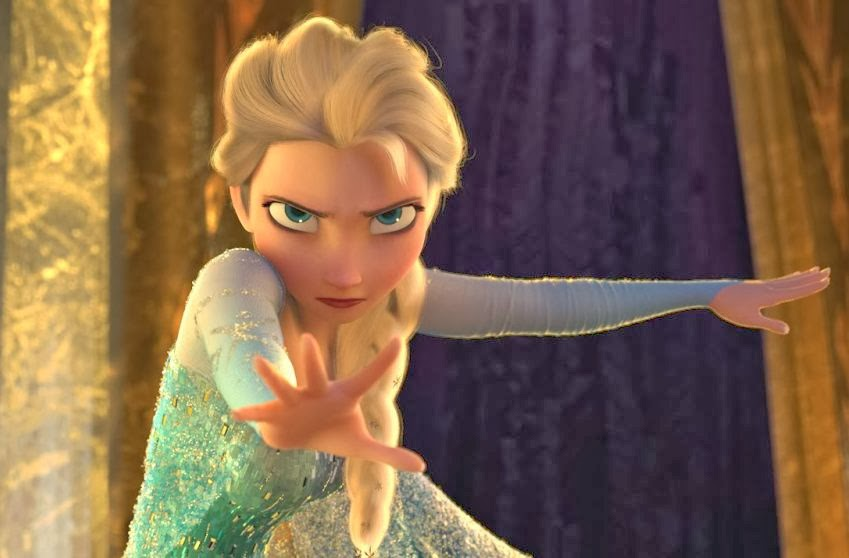

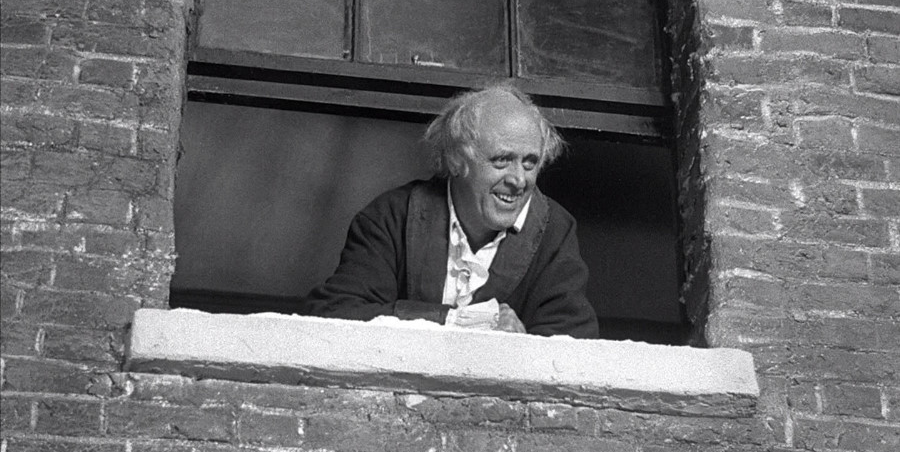
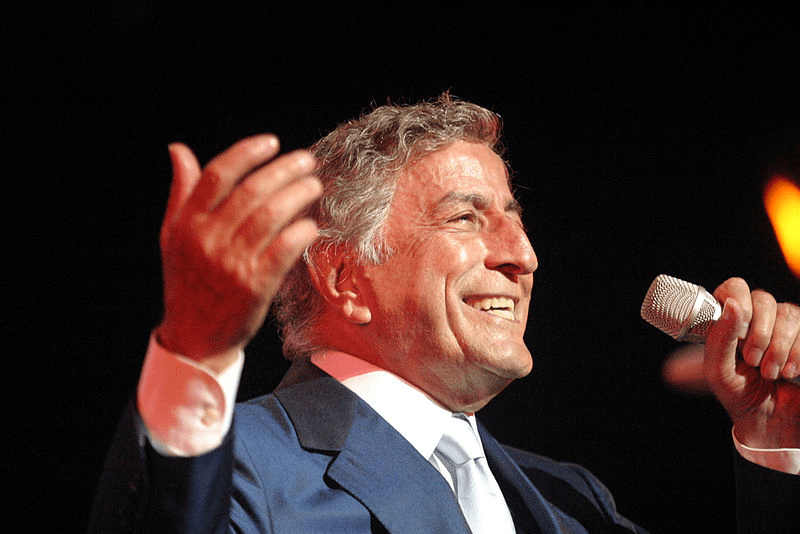


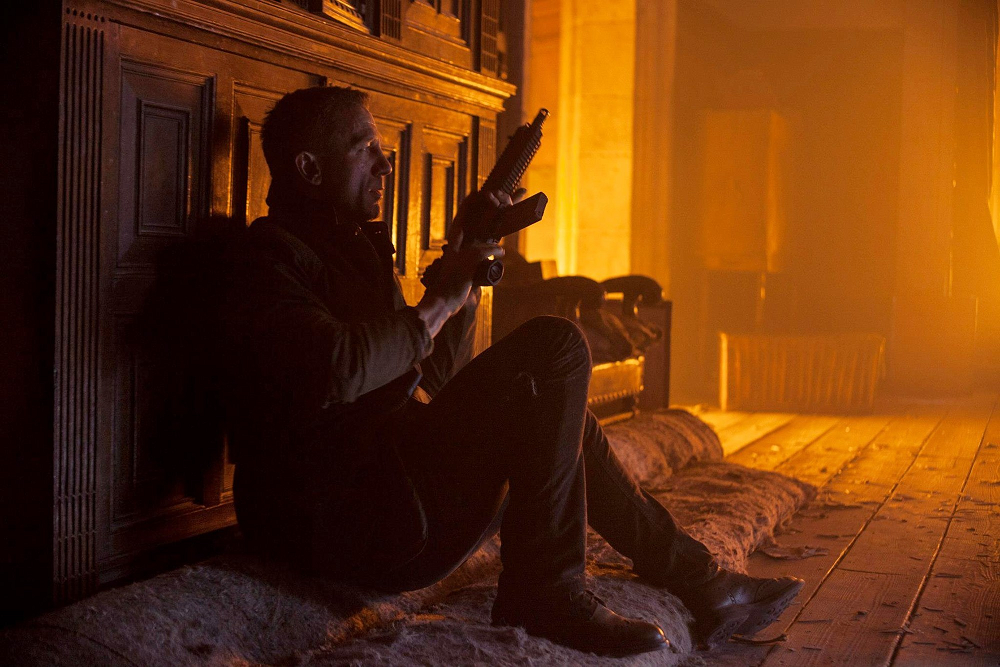

 Graham's Crackers